Myth 1: "Minus 10 cm after one session" — a promise that doesn't exist physically
This claim appears in adverts with remarkable regularity. And it sounds convincing, because the idea is simple: one visit, a measurable result, something concrete. The problem is that no honest technology produces a lasting loss of 10 cm from a single session — and there's a very straightforward biological reason for that.
The fat tissue that a treatment is meant to help reduce doesn't disappear overnight. The body needs weeks to clear away what the technology has disrupted — whether through cooling, acoustic energy, or RF heat. Collagen that needs to rebuild, and skin that needs to tighten, do so on the body's own timeline, not in step with an advert. The result develops over the weeks following the series — not in tens of centimetres after a single visit.
What adverts sometimes measure as "minus X cm" is very often a temporary drainage effect: after a lymphatic session, a vacuum massage, or a warm wrap, water leaves the tissue, the measurement drops, and the before/after photo looks dramatic. Once hydration returns to normal a day later, the measurement returns with it. That's not a worthless effect — a lighter, less swollen body is a real relief — but it's not what "minus 10 cm of lasting reduction" implies. The difference is fundamental, and it's worth understanding before choosing a salon.
Myth 2: "Cryolipolysis will replace a diet" — not for everyone, and not for every goal
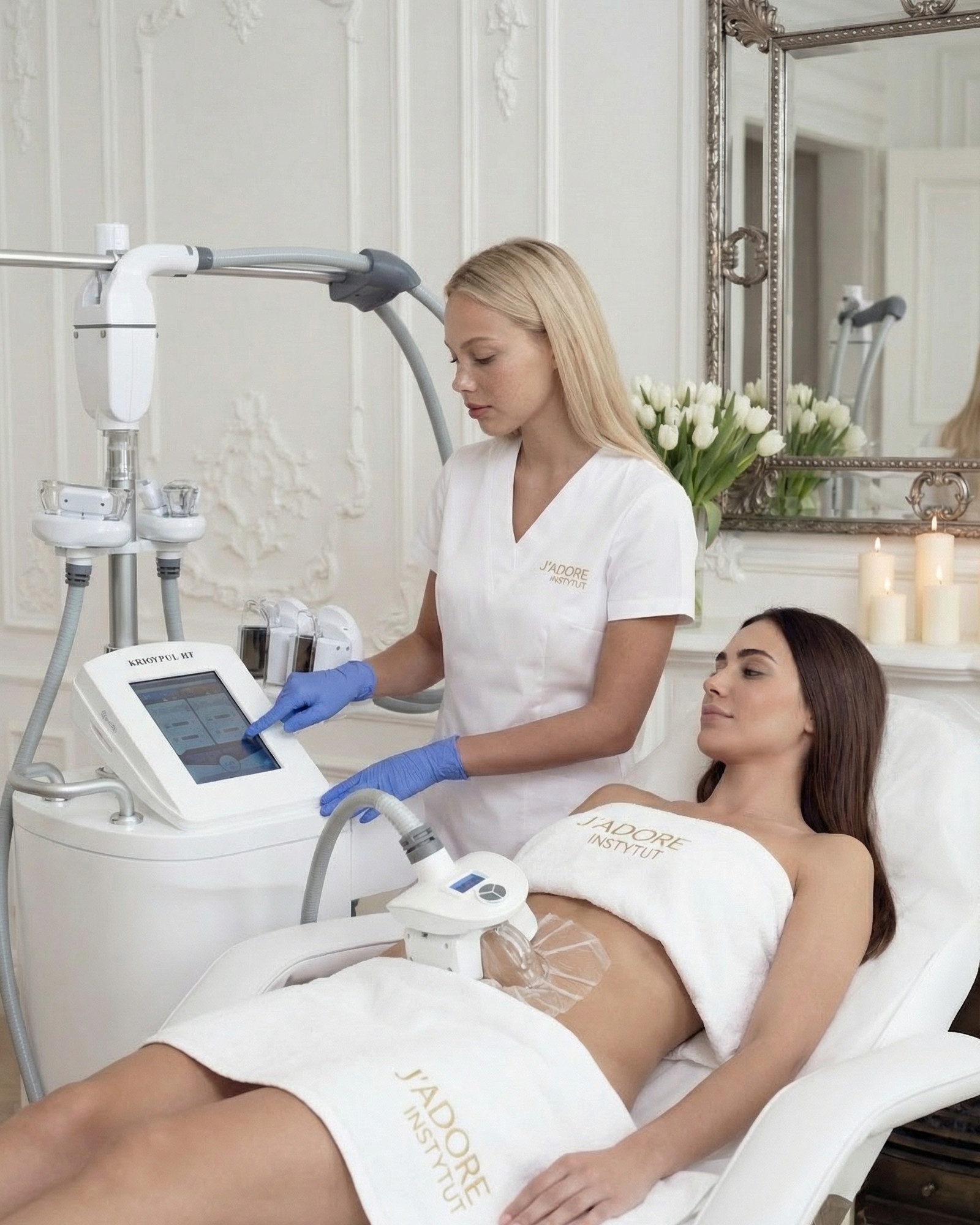
Cryolipolysis is a method with genuinely solid scientific grounding, and it does work — but for a very specific indication: a localised pocket of fat in someone with a normal or close-to-normal body weight. Abdomen, love handles, thighs — areas where a single, well-defined deposit persists despite a sensible diet and activity level. Used this way, it's an honest, proven tool.
Problems start when this picture is stretched to cover "weight loss". Cryolipolysis is not a method of reducing body mass — and no honest specialist would call it that. If someone has several kilograms to lose and is looking for a tool that will "do the diet for them", cooling a localised pocket of fat won't solve the problem — and might even delay it unnecessarily, by giving a false sense that "something is happening" instead of focusing on the lifestyle change that would actually reshape the body.
The other side of this myth is the expectation that measurements will keep shrinking after the treatment, with no changes to diet or activity. Fat tissue doesn't exist in a vacuum — the body can readily rebuild what cryolipolysis has removed, if daily habits still favour storing it. Targeted contouring makes sense as the finishing touch on an already well-functioning lifestyle, not as a substitute for its foundations. That's not a flaw in the method — it's simply honest biology.
Myth 3: "Shockwave therapy removes cellulite for good" — maintenance is still needed
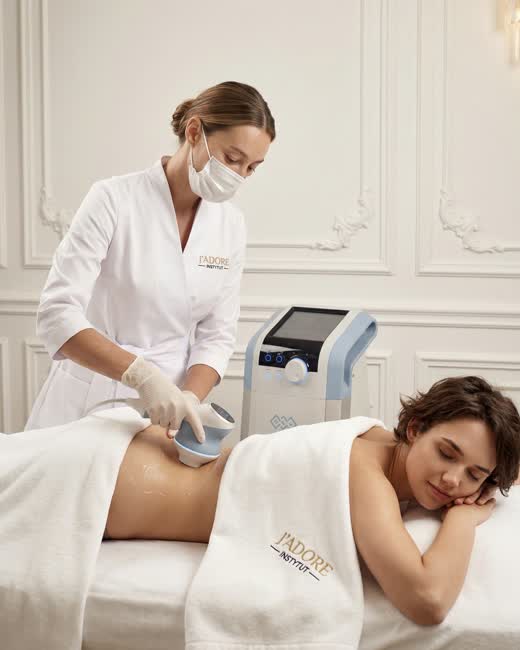
Shockwave therapy (ESWT) is one of the better-studied methods for treating cellulite — it loosens fibrotic connective tissue septa, stimulates microcirculation, and encourages collagen rebuilding. Results after a properly conducted series are real and can be noticeable. The myth isn't that the method doesn't work — it's about what happens after the series.
Cellulite has biological causes reinforced by lifestyle: connective tissue septa that naturally run vertically in women, blood flow, hormones, water retention. Shockwave therapy addresses the mechanism of fibrosis and stagnation — but it doesn't rewrite biology for good. If a sedentary lifestyle, poor hydration and low activity return after the series ends, cellulite will gradually return to its previous state. That's not a flaw in the treatment — it's simply physiology.
That's why specialists talk about maintaining the result, not a "one-off fix". Once the main series is complete, it's worth scheduling maintenance sessions at appropriate intervals, combining this with regular movement and hydration, and treating your home routine — drainage, skincare, activity — as the foundation that in-salon treatments build on. Body contouring is ongoing work — and that's the honest answer, one that social media before/after photos rarely mention.
Myth 4: "LPG is only for legs" — endermology works on the whole body
Endermology LPG is strongly associated with thighs and buttocks — that's where cellulite most often features in adverts for the method, and where results are very visible and readily photographed. But limiting it to legs alone significantly underestimates what this technology can do.
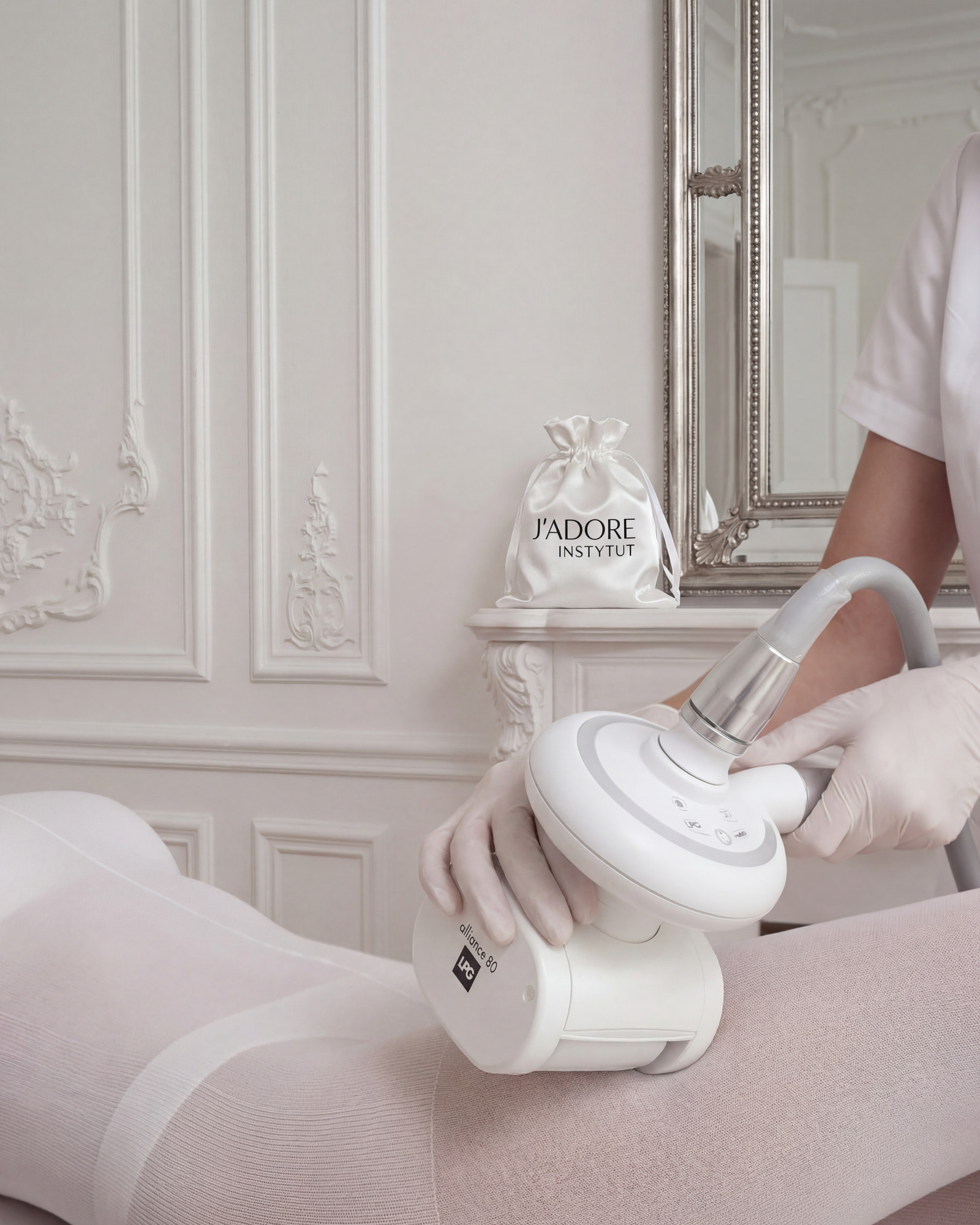
The mechanism behind endermology — a rolling, suction handpiece that lifts and kneads a fold of skin — works just as well on the abdomen and waist, on love handles and hip areas, on arms and the décolletage, and even on the face (with a specialised head). Many clients who start with a series for the thighs discover, after a few visits, that contouring the whole body is one cohesive process — not a collection of separate "sessions for specific spots".
Why is this myth so persistent? Probably because marketing communication focuses on one recognisable "problem" (thigh cellulite) and one result. The reality is broader: endermology brings drainage and firming wherever there's subcutaneous tissue — which is everywhere. A good endermology session plan covers the whole body, or specifically chosen areas — not just the legs. It's worth discussing this at your consultation.
Myth 5: "More sessions is always better" — plateaus exist, and a plan matters
This myth is the opposite of the previous ones — instead of hoping for a quick miracle, it pushes you to "just book more, to be safe". The logic goes: if one session does something, ten sessions will do ten times more. Unfortunately, tissue biology doesn't work that way.
Every contouring method has a window of effectiveness — a number of sessions after which the body and tissue respond to the stimulus. Beyond that window, adding more sessions without a break doesn't bring a proportionally bigger effect, and the tissue sometimes needs time to respond before being stimulated again. Specialists call this a plateau — and it's natural. It's not a failure, and it doesn't mean "something went wrong".
In practice, this means a reliable series plan has a set number of sessions and sensible intervals between them. Standard series exist for a reason — they're not invented to sell as many visits as "sound like a lot". Once a series ends, we assess the result, give the tissue time to mature, and then — if it makes sense — plan maintenance or the next stage of work on a different concern. More than the plan calls for isn't always more results — and a salon that tells you this openly earns less in the short term, but gives you real value.

What you can realistically expect — no sugar-coating
Now that the five myths are out of the way, it's time for the positive part — because body contouring really does make sense, as long as you plan it differently from what the adverts promise. Here's an honest set of expectations to bring to your first conversation with a salon.
- 01
A genuine improvement in appearance and how you feel
A well-chosen series can visibly smooth out cellulite, improve skin firmness, reduce swelling and the feeling of "heavy legs", and — for the right indications — reduce a localised fold. This is real and achievable. It isn't, however, a permanent "removal" of the problem.
- 02
Results that develop over time
The first changes may become visible during the series, but the full effect is assessed a few weeks after the final session. Collagen and tissue work to their own rhythm — not to your holiday schedule.
- 03
An individual result
Two people with an apparently similar concern can see different results from the same method — it depends on tissue condition, skin age, lifestyle and starting point. A good specialist assesses this before the series, not after.
- 04
Maintaining the result takes effort
Regular movement, hydration, skincare, and maintenance sessions at appropriate intervals help results last. Without this, the effect gradually fades — and that's the honest answer, not an invitation to buy endless series.
In short: body contouring is a tool, not a magic button. It works well when chosen correctly, for the right indications, with a realistic plan and no false expectations. That's enough — provided you go in with a well-thought-through conversation rather than a brochure.
Life stories: when the plan really worked
How to tell a reliable salon apart from marketing
After five myths and a picture of what to realistically expect, one practical question remains: how do you tell, before booking, whether a salon plays fair? This matters, because the difference between disappointment and satisfaction often starts not with the equipment, but with the conversation — before the series even begins.
Signs of reliability: a consultation before any series is proposed — with questions about your health, expectations and lifestyle, not straight to an offer. A specialist who says "this method suits this concern, but not that one" instead of "we have everything, and everything works on everything". Clear information on how many sessions it takes and when results are assessed, what supports the result between visits, and what maintenance looks like. No promises like "we guarantee results" — good salons talk about a realistic range, not guarantees, because they know results are individual.
Warning signs: dramatic before/after photos with no information about the time between them, the client's lifestyle, or the number of sessions. Slogans like "minus X cm in one session" or "lasting results after one session". Pressure to buy more sessions mid-series without any assessment of results. No questions about contraindications. A "today only, if you book now" discount — because an honest plan doesn't need time pressure to make sense.
A good salon earns money from your results and your loyalty, not from a one-off transaction built on unfounded promises. That's exactly why it should tell you plainly when something doesn't make sense for your specific case — instead of selling everything to everyone. If you leave a consultation with a concrete plan, realistic expectations, and an answer to "why this method and not another" — you're in good hands.