
What cellulite is — and what it isn't
Let's start with a definition, because that's where most of the confusion begins. Cellulite — also known as gynoid lipodystrophy — is a change in the structure of subcutaneous tissue, visible on the skin as an uneven, dimpled surface resembling orange peel or a quilted mattress. It appears most often on the thighs, buttocks, abdomen and arms.
Importantly: cellulite is not synonymous with obesity or being overweight. Slim, active women have it. People with low body fat have it. Runners and triathletes have it. On the other hand, some people who are overweight have minimal cellulite. That's because the root cause isn't how much fat you have — it's how the tissue surrounding it is organised.
Anatomy of the problem: what happens under the skin
To understand cellulite, picture the subcutaneous tissue as an irregularly quilted mattress. Beneath the dermis lies a layer of fat divided into compartments by vertical partitions of connective tissue — known as fibrous bands (septae). In healthy, elastic tissue, these partitions are springy and keep the fat evenly "in check".
- Fibrous bands stiffen. Over time — under the influence of hormones, ageing, inflammation, poor circulation — these partitions lose their elasticity and become rigid, almost like taut cords beneath the skin. They pull the skin down to the deeper layers unevenly, at specific points.
- Fat cells enlarge and "bulge". Fat trapped between stiff partitions has nowhere to spread evenly. It pushes the skin upward wherever a partition doesn't block it. That's where a "bulge" forms. Where a partition holds the skin down tightly, a "dimple" forms instead. This contrast between dimples and bulges is what creates the orange-peel effect.
- Microcirculation weakens. Tissue affected by cellulite often shows localised disruption in blood and lymph flow. Fat cells that are poorly nourished and poorly "cleared" grow even larger, and connective tissue loses its regenerative impulse — feeding a vicious cycle.
- Inflammation and fibrosis intensify. In more advanced cases, chronic inflammation and fibrosis enter the picture — connective tissue becomes even stiffer, almost "set in concrete". These are the stages where cellulite becomes noticeable to the touch.
Why training doesn't reach where it needs to
Physical activity does countless good things for the body — it improves circulation, lowers body fat percentage, strengthens muscles and regulates hormones. Each of these benefits indirectly affects cellulite too: less fat means less "material" to bulge, and better circulation means more oxygen for the tissue. That's why active people often have less severe cellulite.
But — and this is the crux of it — training doesn't touch what drives cellulite structurally. It won't loosen the stiffened fibrous bands anchoring the skin to the depths below. It won't rebuild the architecture of connective tissue. It won't improve local microcirculation in fibrosed, "set" tissue. The muscle beneath cellulite can be rock-hard — and the orange-peel texture will stay exactly where it is, because the problem isn't in the muscle. It's in the layer between the muscle and the skin.
What training can do
indirect effect on cellulite
- Reducing overall body fat levels
- Improving systemic circulation
- Hormonal regulation (including oestrogen levels)
- Strengthening the muscle beneath the cellulite area
- Reducing fluid retention with regular exercise
What requires other tools
structural cause of cellulite
- Stiff, fibrous partitions (septae) binding skin to deeper layers
- Disrupted microcirculation and lymphatic flow in the tissue
- Localised inflammation and fibrosis of connective tissue
- Uneven pressure within fat compartments
The same applies to diet. Healthy eating and maintaining a healthy body weight are valuable for many reasons — but diet alone doesn't "fix" connective tissue that has already stiffened and fibrosed. You can eat perfectly and exercise five times a week — and still have cellulite, because the mechanism that creates it operates independently of these factors.
Hormones, genes and age — factors beyond your control
One reason cellulite can feel so frustrating is that its appearance and severity depend on factors we have limited control over. That doesn't mean we're powerless — but it's worth knowing these factors, so you don't put all the blame on yourself.
- Oestrogen. Female sex hormones encourage fat storage around the thighs and buttocks, and affect fluid retention and connective tissue structure. This is why cellulite appears in most women around puberty and intensifies during pregnancy, hormonal shifts, and menopause.
- Genetics. A tendency towards cellulite is partly inherited. If your mother and grandmother had visible cellulite, you're more likely to develop it too — regardless of diet and activity. What's inherited includes metabolic rate, connective tissue architecture and blood vessel reactivity.
- Age. As you age, skin naturally thins and loses elasticity — so even minor changes in the structure of subcutaneous tissue become more visible on the surface. At the same time, collagen and elastin production declines, and blood vessels weaken. Cellulite that was barely noticeable in your twenties can become clearly visible by your forties — without any change in lifestyle.
- Circulation and a sedentary lifestyle. Prolonged sitting, tight clothing, low physical activity — these factors worsen microcirculation and lymphatic flow in the tissue, fuelling the mechanism described above.
What actually works — the logic behind effective methods
Since cellulite has a specific structural cause — stiffened partitions, disrupted microcirculation, enlarged fat compartments — it follows that effective methods should address exactly these mechanisms, not their surface effects. That gives us three approaches that genuinely make sense:
- 01
Loosening and remodelling connective tissue
Goal: change the structure of the stiffened fibrous bands, so they stop pulling on the skin unevenly. Tools that work at this level can, for many people, reduce the visibility of the dimples characteristic of cellulite.
- 02
Improving microcirculation and lymphatic flow
Goal: restore normal blood and lymph flow in the tissue, so fat cells are better nourished and more efficiently cleared, allowing local inflammation to settle. This is often the first method used, as a foundation for further treatment.
- 03
Reducing and remodelling local fat tissue
Goal: reduce the volume of fat cells pushing the skin upward, while preserving the body's natural contour. This is targeted action, not general weight loss.
Different treatments address these three mechanisms in different ways — and some work on several layers at once. That's why choosing a method should start with assessing which link in the cellulite chain plays the leading role for a given person: mainly fibrosis, circulation problems, excess fat tissue, or all of these at once. This is the difference between treating a symptom and addressing a cause.
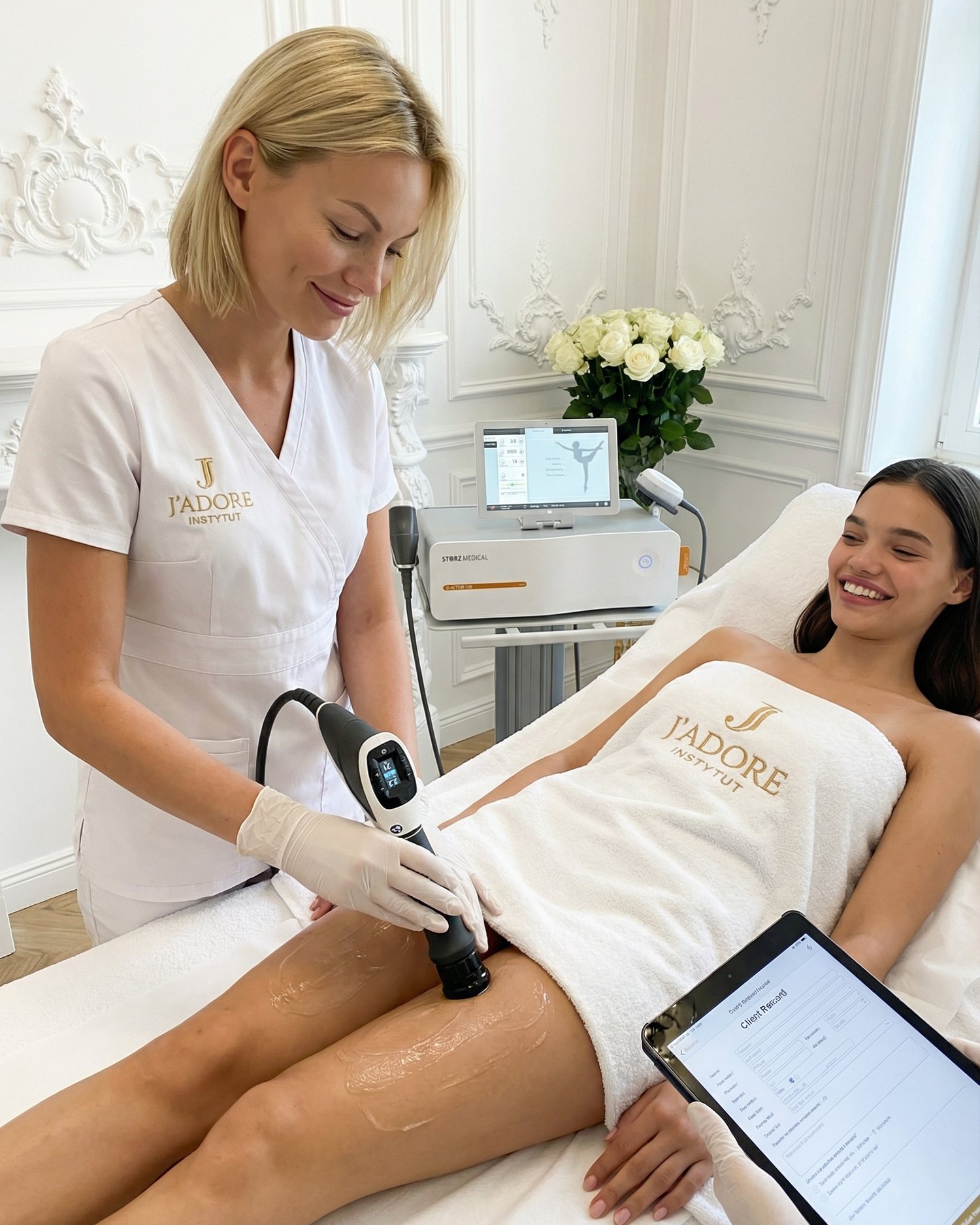
Shockwave therapy
Works directly on fibrous bands — breaking down stiffened structures and stimulating connective tissue remodelling. Often used as a starting point, before other methods are added.
Thermal body treatments (laser, RF)
Affect the deeper layers of tissue — stimulating collagen rebuilding and supporting fat tissue remodelling, while improving skin elasticity.
Lymphatic drainage / pressotherapy
Addresses the circulatory factor — improving lymph flow and microcirculation, reducing fluid retention. Often enhances the effects of other methods.
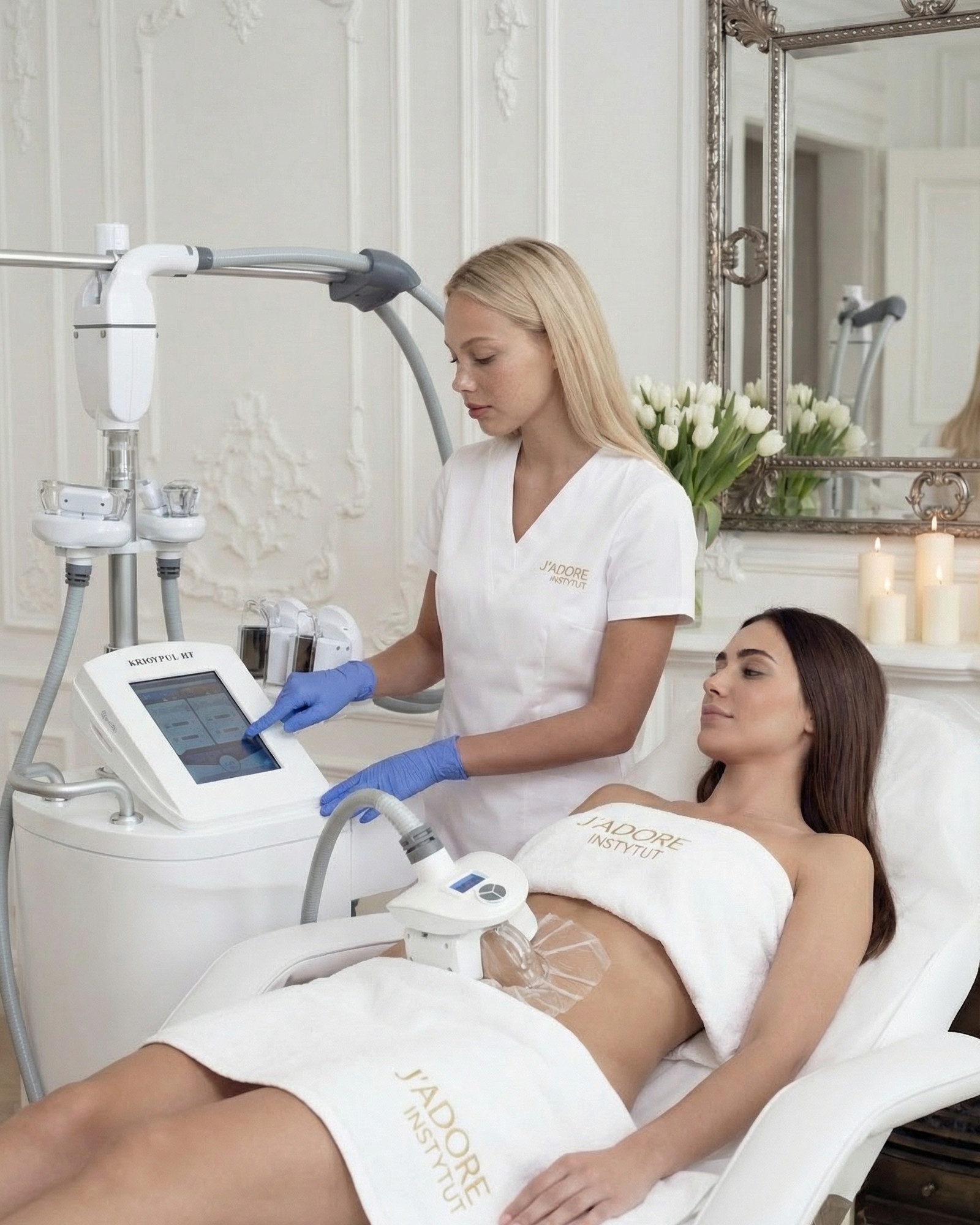
Body contouring (cryolipolysis, cavitation)
Targeted fat reduction without surgery — addressing the volume component when fat pushes the skin upward.