What cellulite actually is — from the inside
Beneath the skin, between the dermis and the muscle, lies a layer of fat tissue. It isn't uniform. It's divided into chambers by vertical bands of connective tissue called septae. Picture a quilted mattress: the fabric is the skin, and the threads that gather it are the septae. Now imagine those threads shrinking and stiffening while the mattress filling is slightly too large for its chambers. The fabric gathers unevenly, puckers, bulges. That's exactly the mechanism you see on the thighs or the abdomen.
- FAT CELLS (adipocytes) — the filling. These can grow or shrink depending on diet and activity. As they grow, they put more pressure on the skin. Diet can shrink them — and this is the one part of the puzzle where weight loss actually does something. But it's only one piece.
- CONNECTIVE TISSUE SEPTAE — the quilting threads. In women, these run mostly perpendicular to the skin (vertically), so any overfilling of the chambers produces a very visible "gathering" effect. In men, the septae run at an angle — which is why cellulite is far less common in men, even at the same fat content. This difference is genetic and hormonal, not a matter of lifestyle.
- THE DERMIS — the mattress fabric. The thicker it is, the more elastic and rich in collagen, the better it masks the irregularities underneath. Thin skin with little firmness lets every irregularity show through. That's why cellulite often becomes more visible with age — not because there's "more fat", but because the skin loses thickness and elasticity.
- CIRCULATION AND LYMPH — the system's power supply. Poor circulation within the fat tissue encourages fluid retention between the cells, which stiffens the septae further and worsens the appearance of cellulite. That's why cellulite is often worse in the morning — after a night spent motionless — and improves after physical activity.
Four types of cellulite — and why not everyone responds the same way
Cellulite isn't a single, uniform problem. Specialists distinguish several forms, which differ in dominant mechanism, depth, tissue firmness and — most importantly — what actually works on them. Confusing the types is one reason people end up disappointed with a chosen method: they use something effective, just not for their particular problem.
Soft / oedematous
fluid retention dominates
- Visible at rest, moves with the skin
- Often worse in the morning, better in the evening after movement
- Accompanied by a feeling of heavy legs
- Responds to improved circulation and drainage
Hard / fibrous
fibrosis of the septae dominates
- Skin feels firm to the touch, doesn't move much
- Also visible when the muscle is tensed
- Often seen in young, active women
- Hardest to treat — requires breaking down fibrous bands
Most people have a mixed form, with elements of several types. That's why a one-sided approach (massage alone or diet alone) rarely gives satisfying results: it addresses only one mechanism, leaving the others unanswered. This isn't a failure of the method — it's a mismatch between the method and the full picture of the problem.
Why diet and exercise aren't enough
Let's be clear: diet and physical activity make sense and aren't a waste of time. They shrink fat cells, which reduces pressure on the septae. Regular movement improves circulation, which limits tissue swelling. You can realistically expect cellulite to become less visible. That's a genuine, worthwhile effect.
The problem starts when diet and exercise are credited with power they don't have. The two structures that really determine how cellulite looks — stiffened connective-tissue septae and skin quality itself — barely respond to diet at all. You can lose a few kilograms and your cellulite can stay exactly the same: the fat cells have shrunk, but the steel-like threads gripping them haven't changed. And the skin above them is still just as thin.
What diet and exercise can do
real effects
- Reduce fat cell volume
- Improve circulation and reduce swelling
- General improvement in skin condition (indirectly)
- Slow the formation of new cellulite
What needs other tools
beyond the reach of diet
- Fibrous connective-tissue septae
- Loss of collagen and skin elasticity
- Deep remodelling of tissue structure
- Lasting improvement in appearance, without the yo-yo effect
The role of collagen — a bridge between skincare and treatment
One of the keys to improving cellulite's appearance is the dermis — that "mattress fabric". Thick, collagen-rich skin acts as a natural filter: it effectively masks the irregularities in the tissue beneath. Thin skin with little elasticity lets every bulge show through. That's why cellulite often becomes more visible with age, even without any weight gain — the skin simply loses thickness.
Collagen is the protein that builds the skin's scaffolding — and its amount and quality largely determine how thick and firm the dermis is. The problem is that collagen production naturally declines from around the age of twenty-five, and sun exposure, stress and smoking speed up this process. The good news is that skin can be stimulated to produce new collagen — and this is exactly where a treatment can go further than a cream or a diet.
What can actually change cellulite — the logic of three actions
Since cellulite has three components — fat cells, stiffened septae and skin quality — a complete approach should address all three. In practice, it rarely makes sense to focus on just one. The tools that actually deliver results work through three logics:
- 01
Breaking down fibrous septae
Stiffened connective tissue needs a physical stimulus — heat, mechanical pressure or specific wave types. The goal is to literally loosen and remodel the septae pulling the skin downward. This is a logic that diet can't replace.
- 02
Stimulating collagen production
When skin becomes thicker and more elastic, the cellulite beneath it is less visible. Treatments that stimulate fibroblasts work from within — they don't mask, they improve the quality of the dermis itself. Results build up over weeks, because collagen needs time.
- 03
Improving circulation and reducing swelling
Fluid retained in the tissue makes cellulite worse — it stiffens it and makes it more prominent. Lymphatic drainage and treatments that improve microcirculation don't repair the structure, but they genuinely improve appearance — especially in the oedematous type.
The best results come to those who combine several of these logics — both in the salon and at home. Movement and hydration support circulation (logic 3). In-salon treatments can address logics 1 and 2, which no home routine can reach. It's not "either–or" — it's a system of complementary layers.
What to realistically expect — without unfounded promises
Cellulite is one of those topics surrounded by a particularly large amount of marketing exaggeration. The word "elimination" appears too often in adverts for treatments that, in reality, can bring visible improvement — but not permanent "removal". That's why it's worth knowing what you can realistically expect.
- Improvement in how cellulite looks — for many people, visible and lasting for months after a series of treatments. The skin can become smoother, firmer, with less noticeable irregularities.
- Results build up gradually — especially those linked to collagen and connective-tissue remodelling. The first clearer changes tend to appear a few weeks after finishing the series, not after the first visit.
- Maintaining results takes ongoing care — cellulite tends to return, especially without physical activity and proper hydration. Maintenance sessions and an active lifestyle extend the results.
- There's no single "miracle" solution — not a treatment, not a diet. The best results come from a multi-layered approach, tailored to a person's dominant cellulite type.
Treatments that work on different levels of cellulite
Below, we've grouped treatments by the three mechanisms described above. Not every one is suitable for every case — which is why the first step is always a consultation, to assess the dominant cellulite type and match the method to the specific tissue.
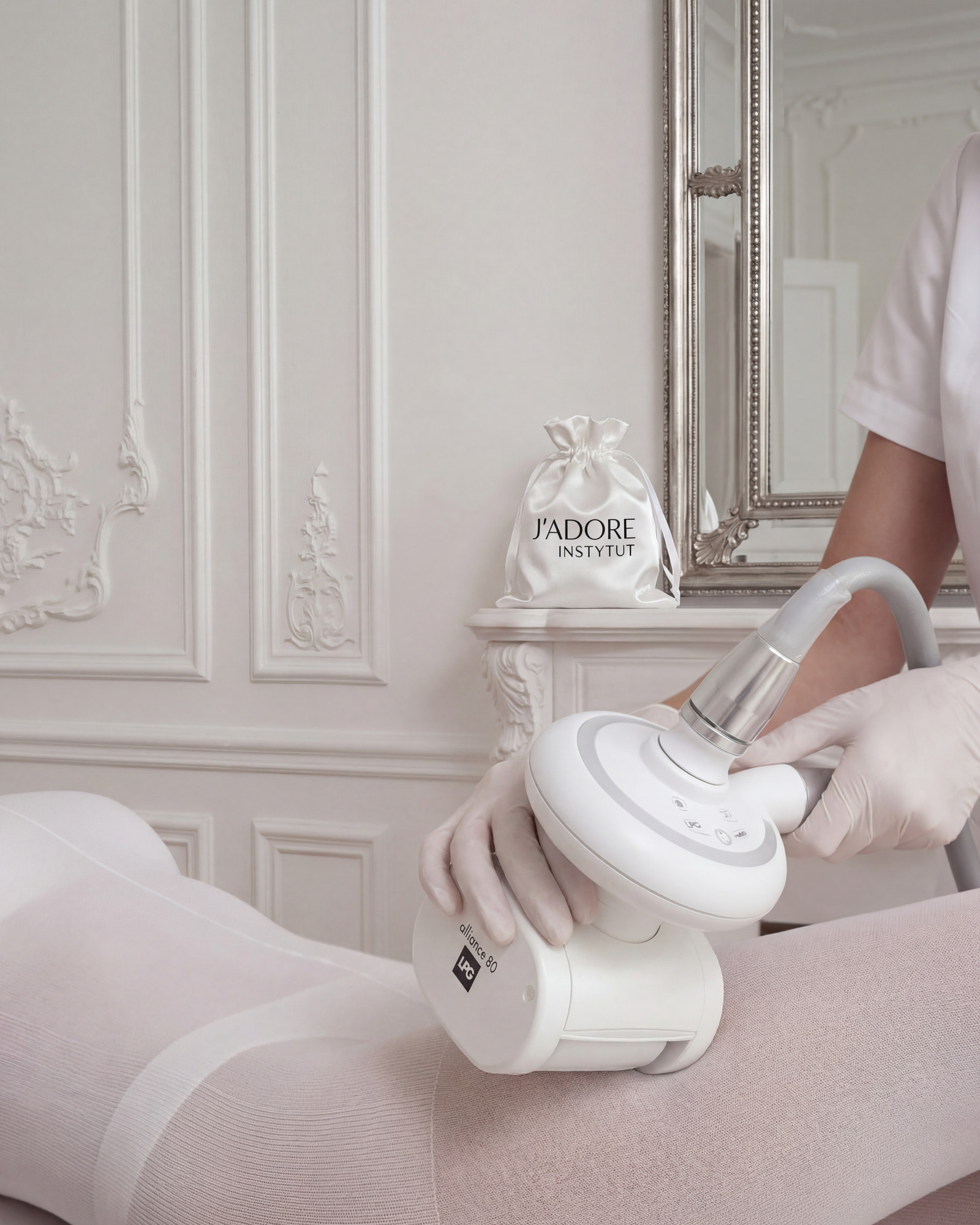
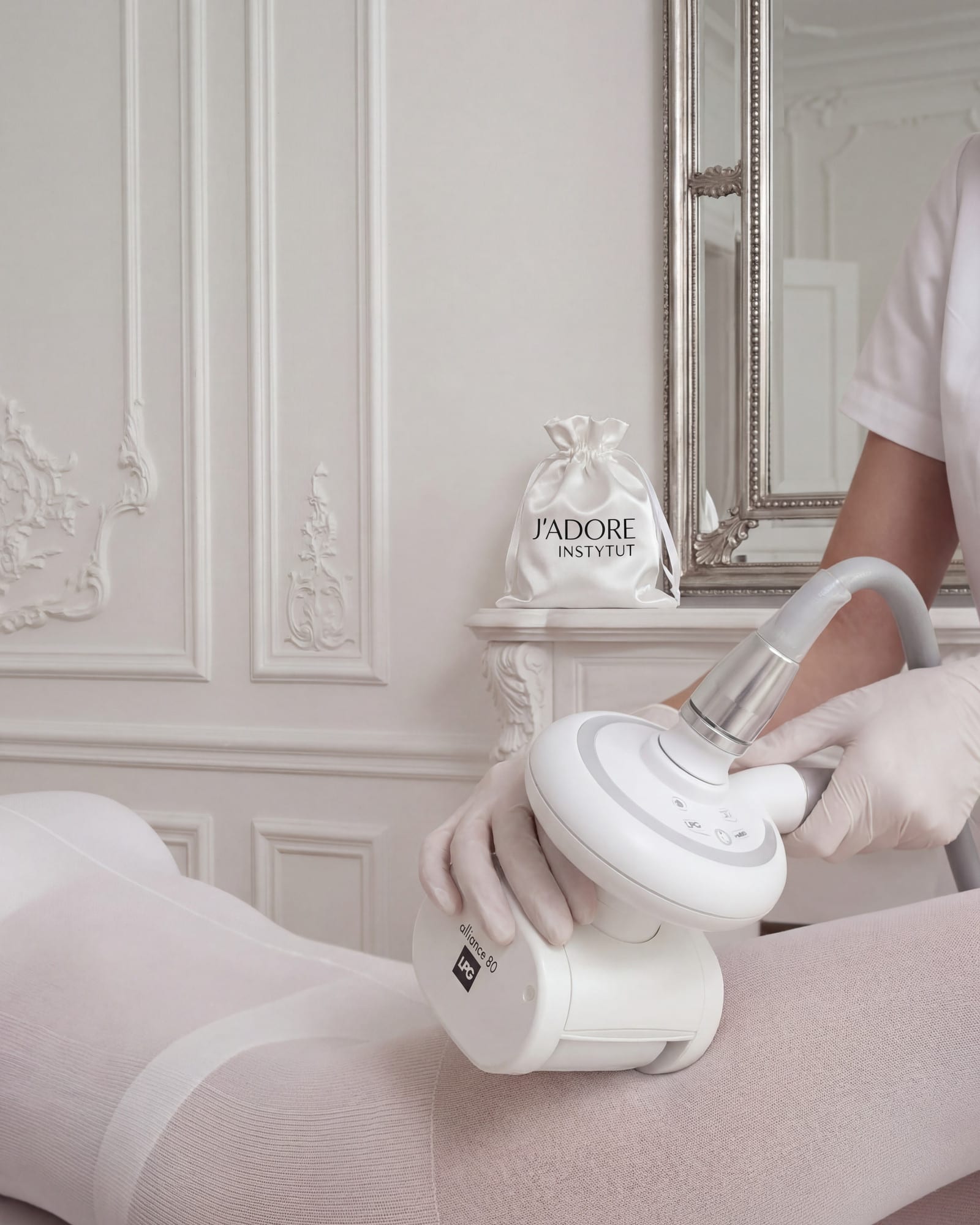
Endermology (LPG)
Mechanical tissue massage that improves lymphatic circulation and softens stiffened septae at the same time. It works on logics 1 and 3; a series of visits brings gradual improvement in skin smoothness.
Shockwaves
Mechanical impulses reach deep into the connective tissue, breaking down fibrous structures and stimulating remodelling. Particularly useful for hard, fibrous-type cellulite.
Radiofrequency (RF)
Heat generated in the deeper layers of the skin and tissue stimulates fibroblasts to produce collagen. The skin can become thicker and firmer — which indirectly improves the appearance of cellulite beneath it.
Ultrasonic cavitation
Ultrasonic waves act on fat cells, reducing their volume in the treated area. It reduces the fat component where diet alone hasn't kept up.
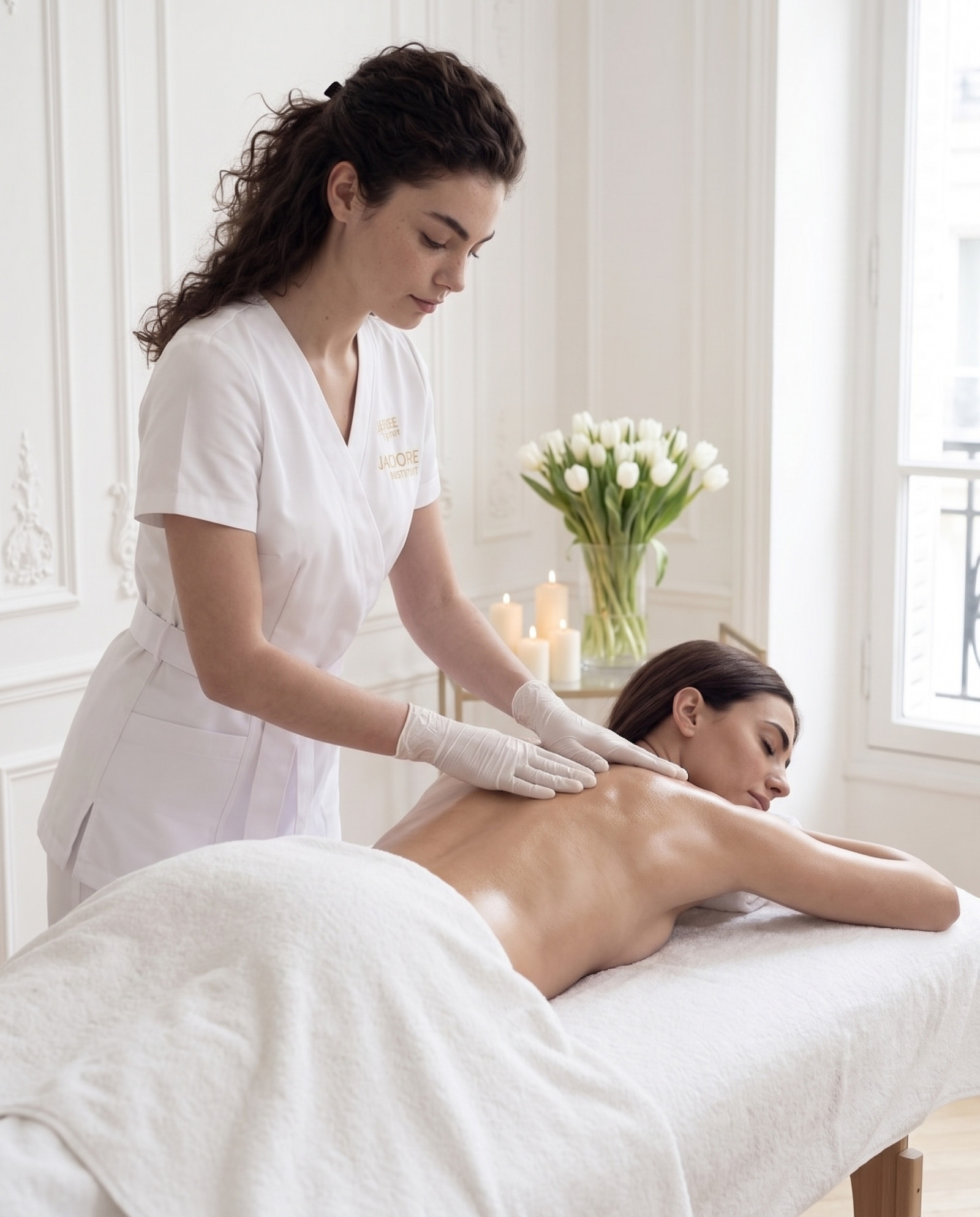
Lymphatic drainage
Massage with a draining protocol reduces tissue swelling and speeds up the outflow of fluid retained between cells. Works best for the soft/oedematous type.
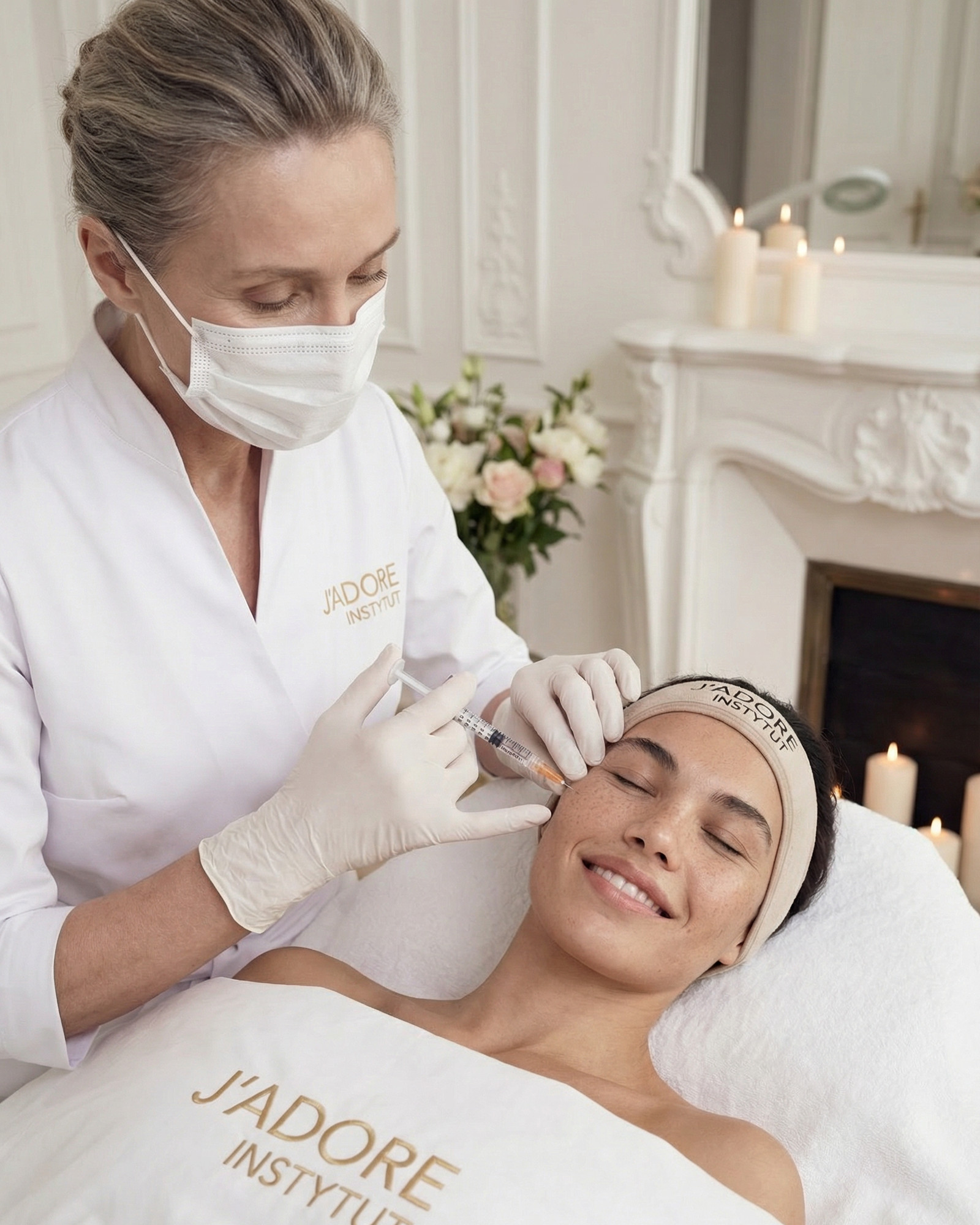
Body biostimulators
Injections that stimulate fibroblasts in the skin to get to work — rebuilding skin quality from within. A good addition when skin elasticity is also being lost.