What's actually happening to your face
A man's face past forty doesn't "gain weight" — it sags. Fat tissue that once sat high under the cheek skin gradually slides downward. The result: a blurred jawline, softened features, dark circles that never fully go away, no matter how much you sleep. At the same time, skin loses collagen and elastin, so it holds the structures beneath it less firmly. This isn't about "good or bad ageing" — it's anatomy, and it works the same way for everyone.
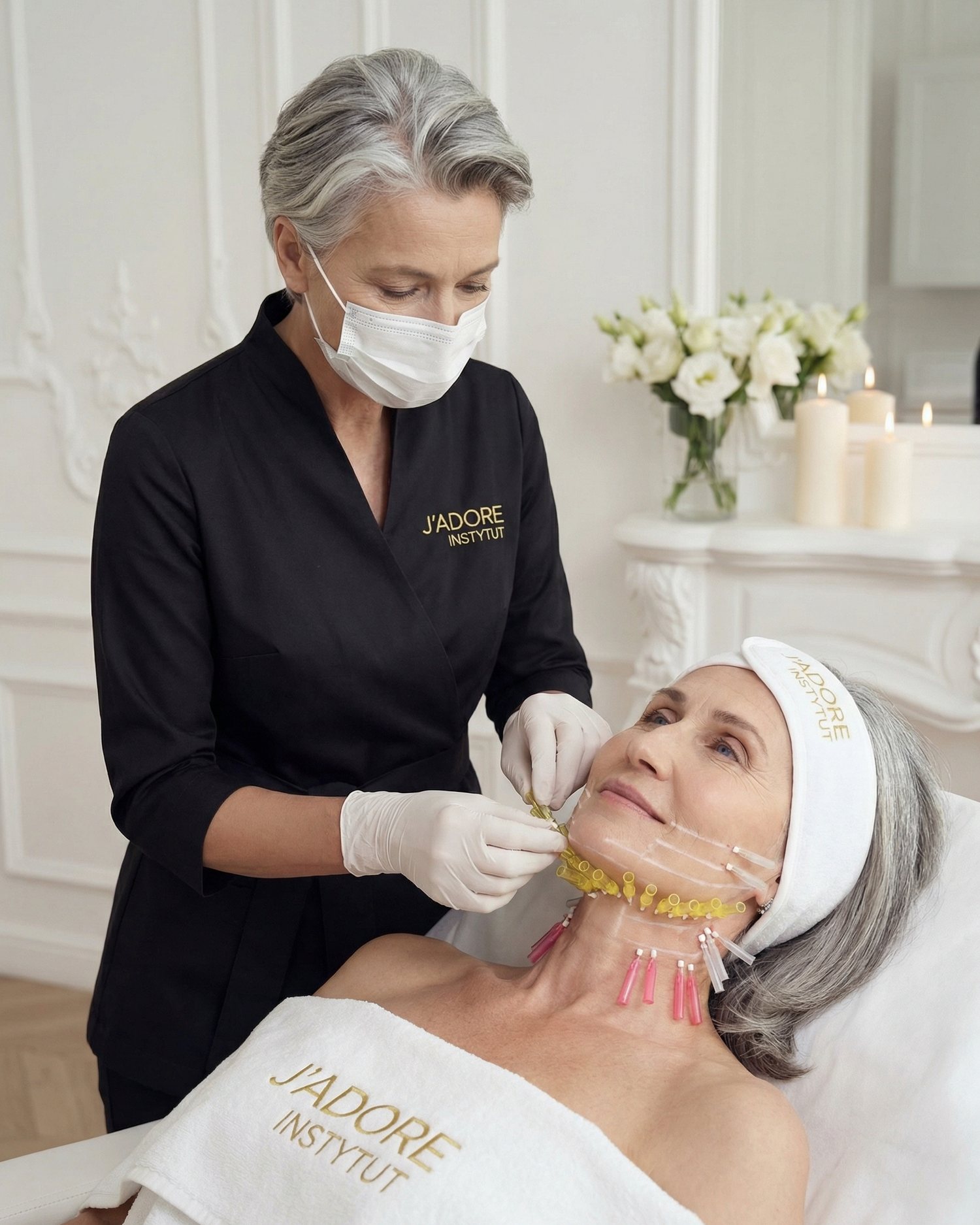
Lifting threads work directly on this mechanism. Special threads with micro-hooks or cones are inserted under the skin and mechanically lift sagging tissue, anchoring it higher. At the same time, inserting the threads triggers collagen production around the implant — a second, slower lifting effect that builds over several months after the treatment.
Why threads work for men — specifically
Men come in for threads for one reason: they want to restore contour, not change their face. This distinction matters — the treatment isn't about creating something new. It's about reversing what gravity has done. And that's exactly what threads can do.
When threads make sense
the right indications
- sagging facial contour — the jawline blurs
- cheeks have "slid down" — the lower face looks heavier
- a visible nasolabial fold made worse by sagging tissue
- Aged 40–55, skin still elastic — a delaying effect, not a surgical one
What threads do NOT do
realistic limits
- they don't remove excess skin after major weight loss
- they won't replace a surgical lift in advanced cases
- they won't change bone structure or proportions
- they won't eliminate deep static wrinkles
Timing is key. Threads work best when sagging is moderate — skin still has some firmness, tissue is still elastic, but contour has started to blur. With significant sagging, mechanical lifting alone may not be enough. It's worth discussing a combination of methods with your doctor, or assessing whether this is already an indication for plastic surgery.
What it looks like in practice — from start to finish
A doctor performs the treatment after a consultation — and that consultation is essential. The doctor assesses skin quality, degree of sagging and lift direction, then selects the right thread type and placement. There's no fixed template here — every face has different anatomy and different needs.
- 01
step
Consultation — the doctor assesses your face, indications and expectations. You discuss a realistic scope of results and a lifting plan. No pressure to decide on the spot.
- 02
step
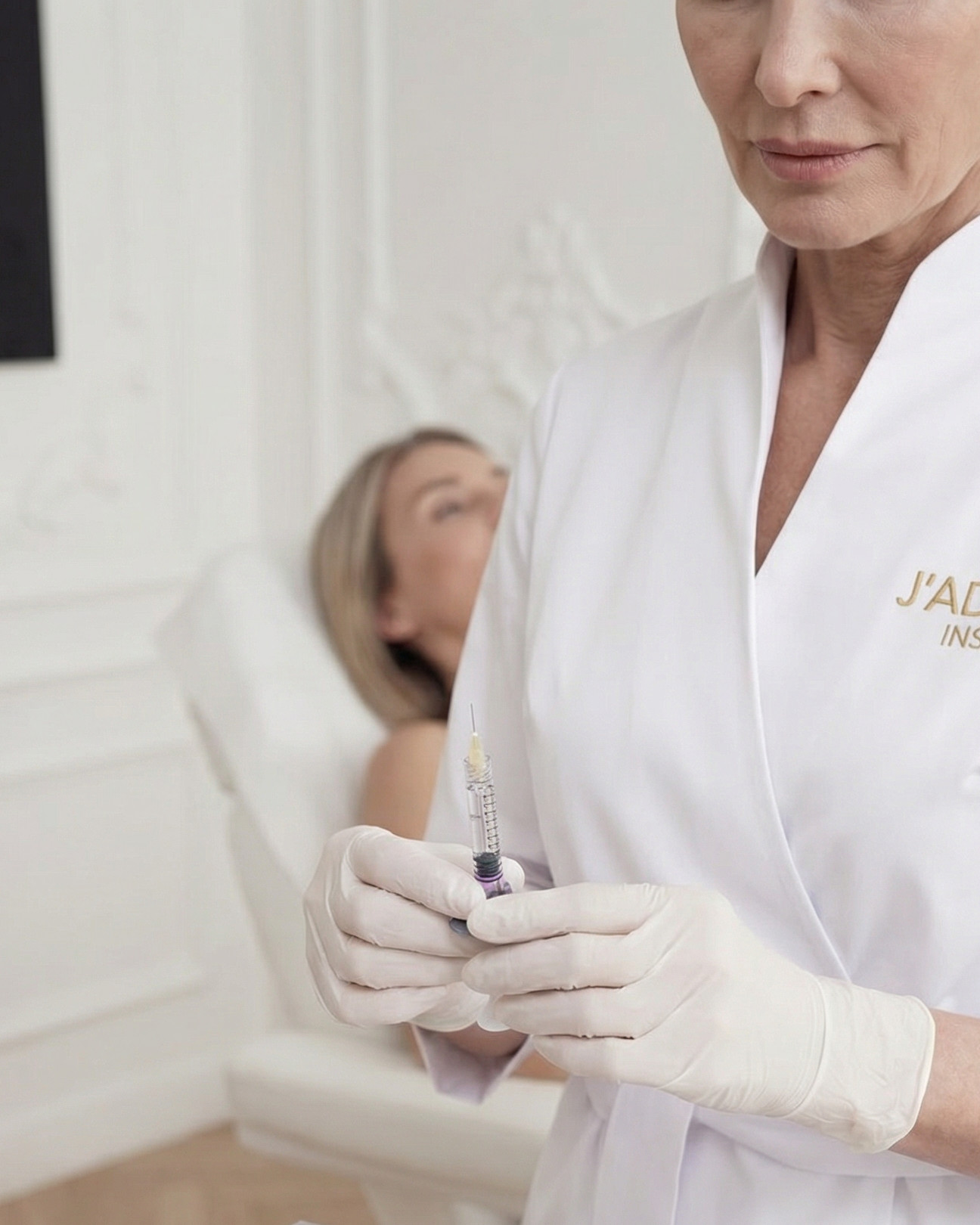
Treatment day — local anaesthesia, threads inserted through small punctures, tension adjusted. The procedure takes place with you sitting up — the doctor checks symmetry throughout.
- 03
step
Immediately after — swelling and redness at the puncture points, often slight asymmetry caused by swelling. This is normal. Your face may look "over-lifted" for the first few days — this settles.
- 04
step
One week after — swelling subsides, tissue adapts to its new position. For the first week, avoid contact sports, the sauna, large amounts of alcohol and sleeping face-down.
- 05
step
Months 2–3 — collagen neostimulation kicks in. Contour keeps improving even as the threads are already being absorbed. This is often when the result makes the biggest impression.
Jawline and lower face — why it's the priority for men
Women often direct threads at the cheeks and cheekbone arch. For men, the priority is usually the lower third of the face — the jaw area, the mandibular line, the lower cheeks. That's where sagging blurs a man's facial character.
A well-executed thread lift in this area can significantly restore jaw definition — the same line that fades as tissue drops. The effect isn't dramatic, and that's the point: your face is still yours, just sitting higher and with a sharper contour.
Important for anyone weighing this up financially: results from lifting threads last from one year to as long as two or three, depending on skin quality, lifestyle and the pace of ageing. After that, the treatment can be repeated. There's no "dependency" mechanism and no rebound effect — if you decide not to repeat it, your face simply returns to its natural ageing process.
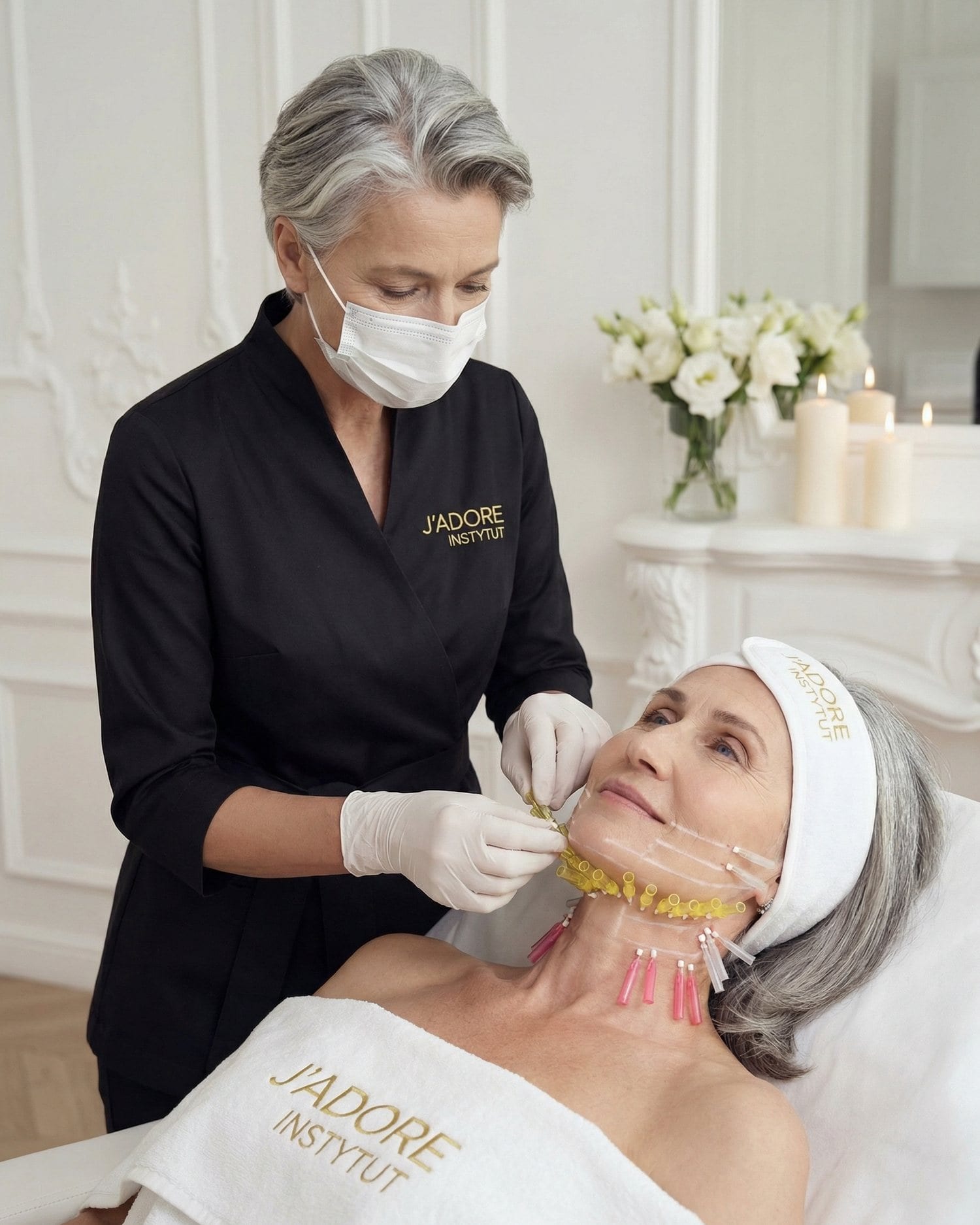
Threads versus other methods — what's worth knowing
Lifting threads rarely work in isolation — during consultation, the doctor often suggests combining them with other treatments that complement the result. It's worth knowing how the available options differ, so you can discuss them with your doctor with confidence.
- Hyaluronic acid — replaces volume where it's missing; threads lift what has sagged. Often used together — the acid rebuilds the "scaffolding", the threads restore tissue position.
- Biostimulators (Sculptra, Radiesse) — stimulate collagen production throughout the treated volume, without mechanical lifting. A good choice for volume loss, with a weaker effect where sagging dominates.
- HIFU / Ultherapy — ultrasound targets deeper skin layers and fascia, triggering contraction and neostimulation. No punctures, but the effect builds more slowly and is less predictable where sagging is pronounced.
- Surgical lift — the only solution for significant excess skin. Long-lasting, but with weeks of downtime and scarring. Threads are often chosen as a way to postpone surgery by several years.
What not to do — and what to ask before the treatment
Lifting threads are a medical treatment with a real recovery period. Not a dramatic one — but a real one. A few things worth knowing before you walk into the salon:
- Blood and anticoagulant medication — if you regularly take aspirin, ibuprofen, or vitamin E or omega-3 supplements, tell your doctor. These thin the blood and increase the risk of bruising.
- Dental work — leave at least 2 weeks between dental treatments and threads, both before and after. An infection in the mouth area is a potential risk with any facial treatment.
- Physical activity — take a week off exercise that engages the face: running (vibration), contact sports, weight training (straining facial expressions). You don't need to stay in bed, but skip intense training.
- Massage and facial treatments — for a few weeks after the treatment, avoid strong facial manipulation: intense massage, ultrasound devices, warming treatments near the puncture sites.