WarszawaŻelazna 59WarszawaMińska 29AKrakówKarmelicka 45Warszawa · Kraków

Careers

ENPL

Warsaw · KrakowSkin Clinic & Med Spa

PLEN
PDO threads / thread lift — treatment at J'adore Instytut

PDO threads / thread lift

Lifting threads lift sagging tissue and stimulate the skin to produce collagen at the same time — a scalpel-free lift for moderate skin laxity. The lifting effect is often visible immediately, and new collagen strengthens it further over time.

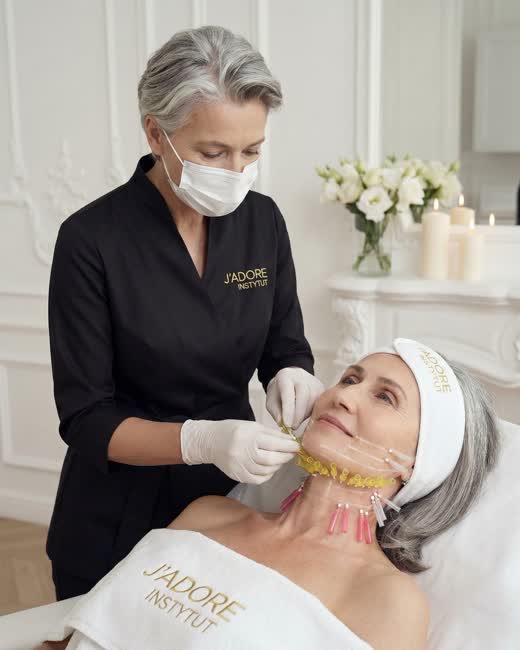
PDO threads / thread lift — treatment at J'adore InstytutA treatment room at J'adore

AESTHETIC MEDICINE

Tissue lifted
“a lift, no scalpel”

A contour that starts to "slip", a jawline that blurs, sagging cheeks and jowls, lax neck skin, a tired look from drooping brows — these are classic signs of gravity at work. Lifting threads are thin, absorbable threads (PDO, PCL or PLLA) that a doctor inserts under the skin to lift sagging tissue and, at the same time, stimulate the skin to produce collagen.

The effect works on two levels: an immediate lift (especially with barbed threads) and a longer-term strengthening of the skin from new collagen, which remains even after the threads dissolve. The most important myth to dispel: threads are not a surgical lift — they work well for moderate laxity, not for significant excess skin. At J'adore Instytut, the treatment is performed by an aesthetic medicine doctor. Below you'll find everything worth knowing before your first visit.

  • A sagging contour and an undefined jawline
  • Jowls and drooping cheeks
  • Lax neck skin
  • Drooping brows
  • Moderate laxity

1 session; repeat after a year or so

Book an appointment
Duration
from around thirty minutes to about ninety minutes
Result
usually around 12–24 months (depending on the thread type)
Recovery
a few days of swelling and tenderness; be mindful of wide facial expressions for around 2 weeks
Sessions
1 session; repeat after a year or so
Performed by
aesthetic medicine doctor

How it works

How it works

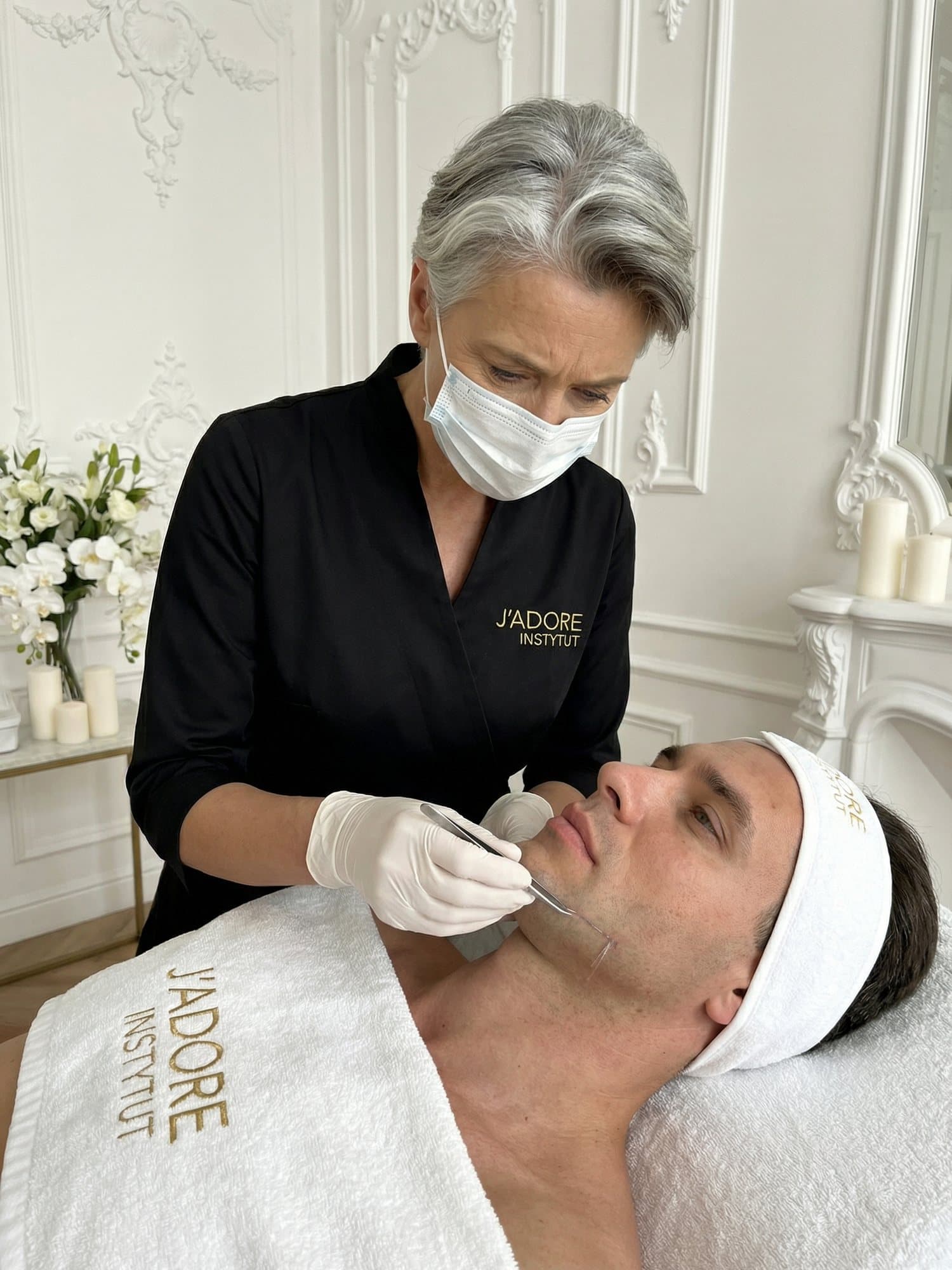
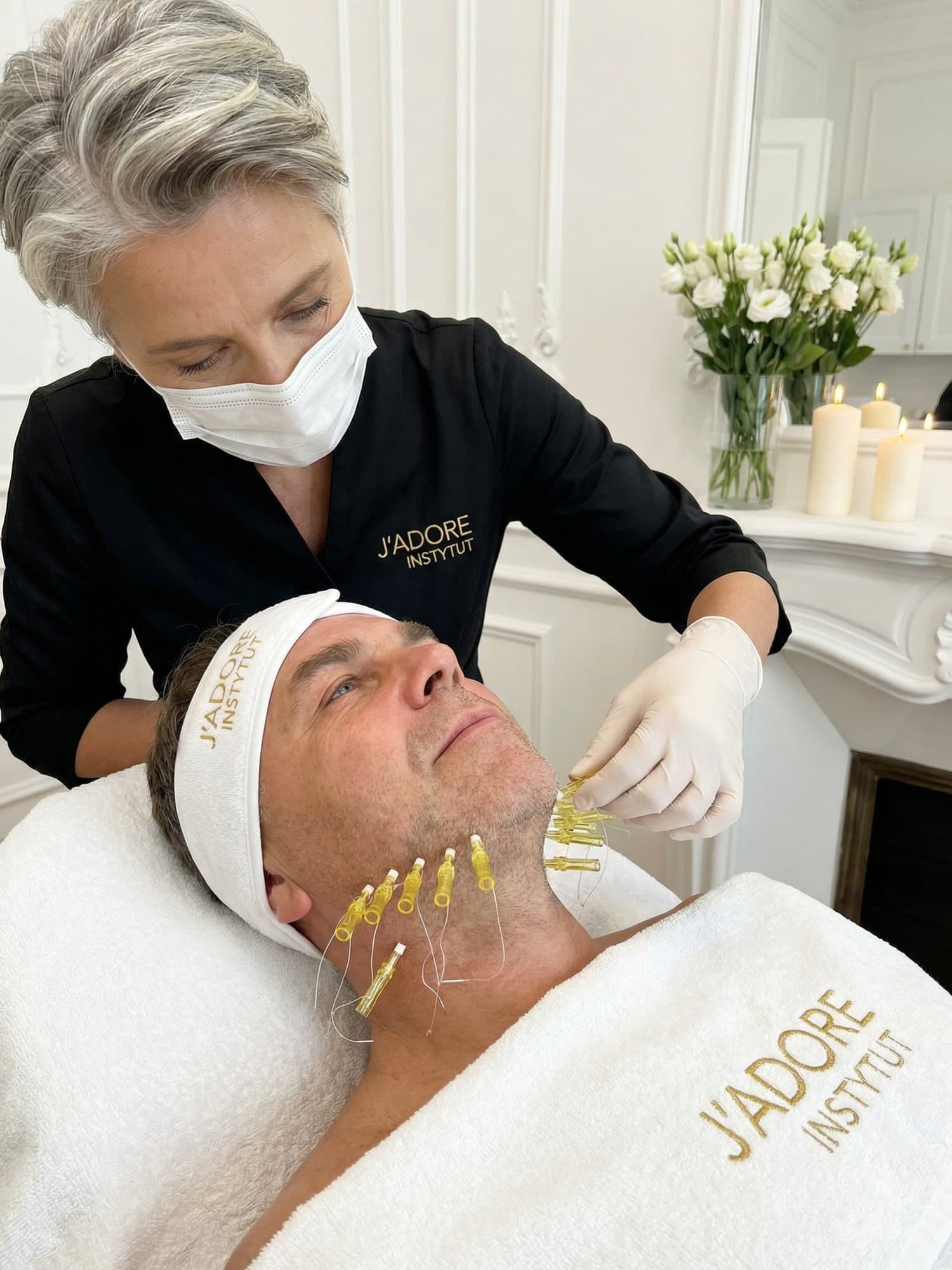
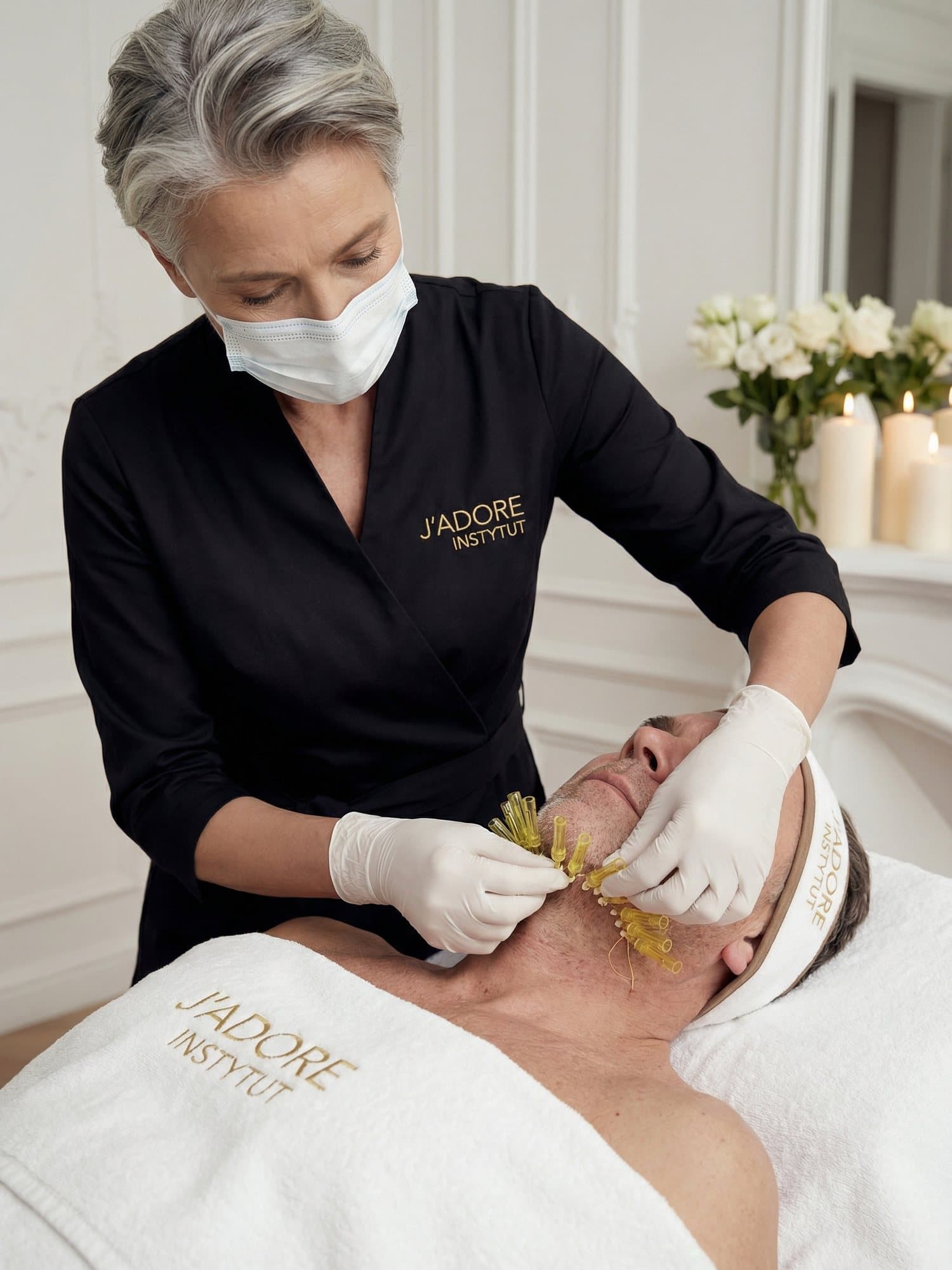
Lifting threads are thin, absorbable threads that a doctor inserts under the skin using a cannula or needle. Threads with microscopic barbs (known as cog / barbed threads) catch sagging tissue and gently lift it, anchoring it in a more stable position — which is why the effect is visible right away. Regardless of the thread's design, its mere presence in the skin acts as a stimulus for neocollagenesis: along its path, the body builds new collagen, which thickens and firms the skin.

That's why the effect doesn't fade sharply over time — even though the thread itself dissolves (over several months to about a year), the collagen it built sustains the result for longer. The more slowly the material absorbs, the longer the collagen stimulation lasts — and this is exactly where the differences between thread types begin. This is a medical procedure and a technically advanced one — that's how we approach it.

Three layers in cross-section: the epidermis at the surface, the dermis beneath it, and deepest of all the subcutaneous layer. The cannula travels beneath the dermis and leaves an absorbable thread in that layer. The doctor chooses the level at which the threads sit during the consultation.
  1. Epidermisthe surface the thread leaves intact
  2. Dermisthe layer the cannula is guided through
  3. Subcutaneous layerthe level the thread is placed at

Ideal for

Ideal for

  1. A sagging contour and an undefined jawlinewhen the jawline starts to blur.
  2. Jowls and drooping cheeksthe first signs of gravity in the mid-face.
  3. Lax neck skinloss of firmness while the skin still has good quality.
  4. Drooping browsthat give a tired, "heavy" look to the eyes.
  5. Moderate laxityin people whose skin still has good quality and elasticity.
  6. When is a surgical lift the better choice? With significant excess skin and advanced sagging — threads won't resolve this. When the skin is very thin or excessively lax, the doctor may advise against threads. This assessment happens at consultation — and if threads aren't the right method, we say so directly.

The female zone and the male zone

What's different

For her

Your skin, your anatomy — why threads work differently for women

The goal is most often to lift the contour and "refresh" it while keeping your natural features — a subtle reversal of the signs of gravity, not a change of character. These are the classic lifting threads for women.

The areas we support

  1. lifting the contour and sharpening the jawline;
  2. raising the cheeks and reducing jowls;
  3. improving neck skin firmness;
  4. a subtle brow lift for a more rested look.
For him

Thicker skin, stronger tissue — how we plan the treatment for men

The male focus is different: a sharper, more defined jawline and a masculine contour, kept discreet. Skin is thicker and tissue heavier, so the thread plan can differ. These are lifting threads for men.

The areas we support

  1. sharpening and strengthening the jawline;
  2. reducing jowls and a tired look;
  3. improving the structure and sharpness of the facial contour;
  4. discretion — strengthening the line, not changing your character.

Interesting fact: the thread that lifts the tissue only does half the job. The other half happens over the following weeks — the body "stitches" its own collagen along the thread's path. That's why the effect can outlast the thread itself in the skin.

Safety

What really determines the result

With threads, the result and safety depend on several factors worth asking about at any salon:

  1. Who performs it

    This is an advanced procedure — technique determines both the result and safety (avoiding asymmetry, irregularities or thread displacement). At J'adore, threads are placed by an experienced aesthetic medicine doctor, not "just any salon".

  2. Whether the qualification is honest

    Threads work for moderate laxity — a good doctor will honestly assess whether they'll give you a real result in your case, and refer you for a surgical consultation if the excess skin is significant.

  3. Which type and how many threads

    There's no single "thread in a syringe" solution. The doctor chooses the material (PDO, PCL, PLLA), the design (smooth or barbed) and the number of threads to match your anatomy and goal — which is why consultation is mandatory.

A red flag: suspiciously cheap threads or a "thread lift" performed by a beautician · A thread lift is a medical procedure — performed by a doctor, not a beautician. A bargain price often signals savings on the type of thread, the number used, or the practitioner's experience. You have every right to ask what threads will be used, how many, and who will perform the treatment. A good salon will answer without hesitation.

Contraindications

When to postpone the treatment

Some contraindications are permanent (or require individual qualification), and some are temporary — in which case we simply postpone the treatment until the situation passes.

We don't perform it
  • Pregnancy and breastfeeding
  • Autoimmune conditions in an active flare-up
  • A tendency to keloid scarring
  • Clotting disorders and anticoagulant medicationrequire assessment by the doctor.
  • Very thin or excessively lax skinthe doctor may advise against threads as a method.
  • Active cancer or ongoing oncology treatmentindividual qualification required.
  • Active herpes (cold sores)even in a location other than the injection site (such as the lip or near the nose), not only in the treated area; we wait until it has fully healed.
  • Active infections, inflammation and unhealed woundsin the treatment area, as well as fever and general illness.
  • Recent isotretinoin treatmentrequires an appropriate waiting period.

From the doctor's chair

The most commonly forgotten issue: cold sores. People often think, "I only have one on my lip, and the threads are for my contour — surely that doesn't matter." It does. An active virus is a risk regardless of where it appears. It's better to postpone by a few days.

This isn't a complete list — we'll go through your medications, health conditions and previous treatments individually at consultation, based on your medical history and a skin assessment.

The visit

What to expect during your visit

  1. PDO threads / thread lift — treatment at J'adore Instytut — Consultation and qualification

    Consultation and qualification

    the doctor assesses the degree of laxity and skin quality, and plans the thread type, material, number and placement. This is the moment for an honest conversation about whether threads are the right method.

  2. PDO threads / thread lift — treatment at J'adore Instytut — Local anaesthesia

    Local anaesthesia

    numbing cream and injections at the entry points make the treatment comfortable.

  3. PDO threads / thread lift — treatment at J'adore Instytut — Thread placement

    Thread placement

    the doctor inserts the threads using a cannula or needle and shapes tissue tension while checking symmetry. The whole process usually takes from around thirty minutes to about ninety minutes — depending on the number of threads and the area treated.

  4. Guidance and departure

    no bandages; some swelling and tenderness are possible in the first few days.

  5. Guidance for the first days and weeks

    including sleeping on your back and being mindful with facial expressions, covered in more detail below.

What to expect

No surprises

Most important: the lift is usually visible right away, but swelling dominates the first few days. The full lifting effect emerges once the swelling subsides, and new collagen strengthens it further over the following weeks.

  1. Faza 1.first few daysswelling and tenderness at their strongest; the lift is visible, but "masked" by swelling
  2. Faza 2.after a few daysswelling subsides, revealing the true lifting effect
  3. Faza 3.following weeksnew collagen thickens and firms the skin — the result becomes established
  4. Faza 4.a year or sothe thread has dissolved; the collagen already built sustains the result
The most common moment of panic is day two or three, when swelling is at its peak and a client messages to say "one side looks different". This is usually asymmetric swelling, not the threads themselves. We assess the result only once the swelling has subsided — before that, there's really nothing to assess.
From the doctor's chair

Portfolio

Frames from the institute

A record of the work in our salons — the place where we publish treatment frames and, after photo sessions, results.

01
02
03
04
01 / 04

A record of results — in preparation. We publish photographs of our clients only with their consent.

What's normal right after the treatment

  • swelling and tenderness — strongest for the first twenty-something to several dozen hours;
  • minor bruising at the thread entry points (the fine cannula can hit a small blood vessel);
  • temporary awareness of the threads under the skin, along with slight irregularities or "puckering" that fade along with the swelling.

How long the result lasts depends on the type of thread used: PCL and PLLA generally last longer than PDO. After a year or so, the treatment can be repeated, and with consistent skincare the intervals between sessions often lengthen.

Threads and your lifestyle

What you can and can't do, and when

The most common questions aren't about the treatment itself, but about what comes after: eating, laughing, training, saunas, dentist visits, facial massage. There's one guiding rule — for the first few days and weeks, we protect freshly placed threads from displacement, and we avoid making swelling or bruising worse.

  1. Wide facial expressions and opening your mouth

    be mindful for ~2 weeks

    This matters: limit loud laughing, yawning and shouting for around two weeks. Book your dentist's appointment beforehand — opening your mouth wide can disturb the thread placement.

  2. Facial massage, Kobido, lasers

    hold off for longer

    Facial massage, Kobido, and aggressive treatments or lasers can displace the threads — we put these on hold for a few weeks, at the doctor's discretion.

  3. Hard foods

    keep it soft for the first few days

    Choose soft foods for the first few days, so you don't put heavy strain on your facial muscles or work your jaw intensely.

  4. Sleeping

    on your back for a few nights

    Sleep on your back for the first few nights — avoid pressing your face into the pillow over the freshly placed threads.

  5. Gym, sauna, hot baths

    hold off for a few days

    High temperatures and faster circulation increase swelling and encourage bruising — hold off for a few days.

  6. Sun and skincare

    SPF and a gentle routine

    Use SPF 50+ daily along with gentle skincare. Before the treatment, discuss with your doctor whether to stop any products that increase bleeding risk, to help minimise bruising.

PDO threads / thread lift

Frequently asked questions

  1. QuestionWill threads replace a surgical lift?
    AnswerNo. They work for moderate laxity. For significant excess skin, surgery is more effective — which is exactly why we start with an honest qualification. If threads won't give you the result you're hoping for, we'll tell you directly.
  2. QuestionIs the result immediate?
    AnswerYes — the lift is usually visible right away (allowing for swelling in the first few days), and new collagen strengthens it further over the following weeks. We assess the full result once the swelling has subsided.
  3. QuestionHow long does it last?
    AnswerUsually around 12–24 months, depending on the type and material of the thread. PCL and PLLA absorb more slowly and last longer than PDO. After this time, the treatment can be repeated.
Have another question?Ask at your consultation

Price list

Treatment options

Brows – up to 10 threads

1 h

Treatment prices

Choose your treatment and price it

Area and salon — we'll show the price straight away.

Area
Brows – up to 10 threads800 złPrice from the Warsaw · Żelazna price list. The choice of product and the number of sessions is decided by your specialist at the consultation.
Salon

Warsaw, Żelazna 59 · 800 zł

Prefer to call? Żelazna 573 569 431 · Mińska 732 228 806 · Karmelicka 732 228 846

Gift voucher

Gift this treatment

Buy a voucher for this treatment in the J'ADORE online boutique — an elegant gift, redeemable at the salon of your choice.

Purchase and payment take place in the J'ADORE online store. The voucher is valid for 12 months from purchase and covers the selected treatment variant.

Start with a consultation

The result lastsusually around 12–24 months (depending on the thread type)J’adore Instytut

Medical information. A thread lift is a medical procedure using absorbable surgical threads (PDO, PCL, PLLA); it is performed exclusively by a doctor. The text above is for informational purposes only and does not constitute medical advice. Qualification, the choice of thread type and number, and contraindications are all determined by the doctor during an individual consultation.