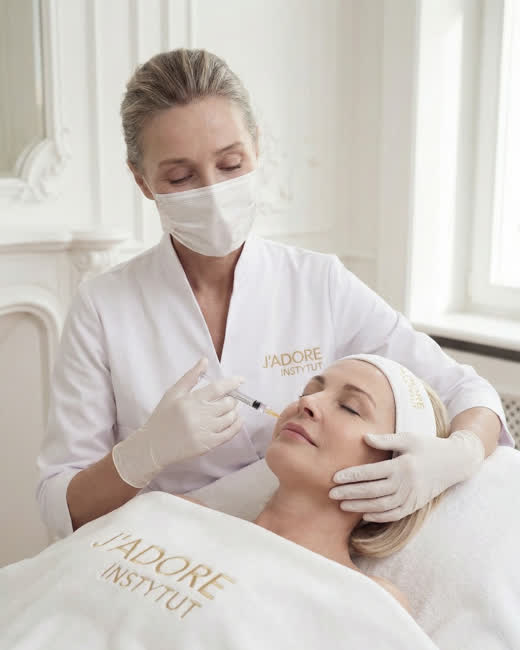
Why one injection attracts so many legends
Botox myths feed on three things. First, the word "toxin" — it sounds alarming, even though half of medicine works because a substance does something useful at the right dose, something that would be harmful in excess. Second, photos of celebrities with frozen faces — the result of overdosing, which has about as much to do with a well-performed treatment as a burnt dinner has to do with good cooking. Third, the lack of conversation: it's easier to gossip about Botox than to ask about it.
Seven myths, one by one
Myth 1: "Botox freezes your face." This is the most common fear — and the most common misunderstanding. A frozen, mask-like expression is the result of overdosing or poorly chosen injection points, not the toxin itself. A properly judged dose relaxes the muscle just enough to smooth the wrinkle, but gently enough that expression remains. A good doctor's aim is the opposite of a "stone face": you should look well-rested, not like you've "had something done". Aesthetic medicine follows a rule worth remembering: less is more.
Myth 2: "Botox is a poison that stays in the body." Botulinum toxin works strictly locally — only where it's injected — and breaks down naturally over time. It doesn't "circulate", it doesn't "build up", and it doesn't accumulate with repeated sessions. The doses used in aesthetics are a fraction of those used in neurology for decades. Safety isn't determined by "whether it's a toxin", but by who administers it, how much, and where.
Myth 3: "Once you start, you have to keep doing it forever." There's no mechanism that makes Botox "addictive". The effect usually lasts a few months and fades on its own — the face returns to how it was before. If you stop, nothing bad happens: the muscle simply works as it did before. What people mistake for "addiction" is simply wanting to keep an effect they liked — and that's a choice, not a compulsion.
Myth 4: "If you stop, your skin will suddenly age all at once." The opposite of what the rumour claims is true. A muscle that has tensed less for a while may take longer to set deep furrows in place. Once you stop, your skin simply returns to its natural course. It doesn't "catch up" on ageing, and it doesn't age any faster than skin that never had Botox.
Myth 5: "Botox fills in wrinkles." This is the single biggest misunderstanding in all of aesthetic medicine. Botox fills nothing — it relaxes the muscle, so it works on expression lines caused by movement (forehead lines, frown lines, crow's feet). If a wrinkle is visible even when the face is still — nasolabial folds, for instance — that's a job for a filler or a biostimulator, not Botox. Confusing the two is the fastest route to disappointment: "Botox just didn't work".
Myth 6: "Botox is only for women, and only for the face." First, more and more men are using it — for a tired, "harsh" forehead expression, but also for bruxism (jaw clenching) and excessive sweating. Second, facial aesthetics is only part of the picture: the same substance eases tension headaches, tooth wear and excessive sweating. Botox can be a therapy, not just a cosmetic treatment — which is exactly why it stays in a doctor's hands.
Myth 7: "It's the same everywhere, so shop for the lowest price." This is a myth that can genuinely cause harm. "Botox" isn't a single off-the-shelf product — it's several preparations that differ in formula and units, given at a dose and in points chosen for your anatomy. The result depends on the authenticity of the preparation, correct storage (the cold chain) and the doctor's hand — not the lowest price in the area. A suspiciously cheap offer usually means someone is cutting corners on one of these three things.
What actually separates good Botox from bad
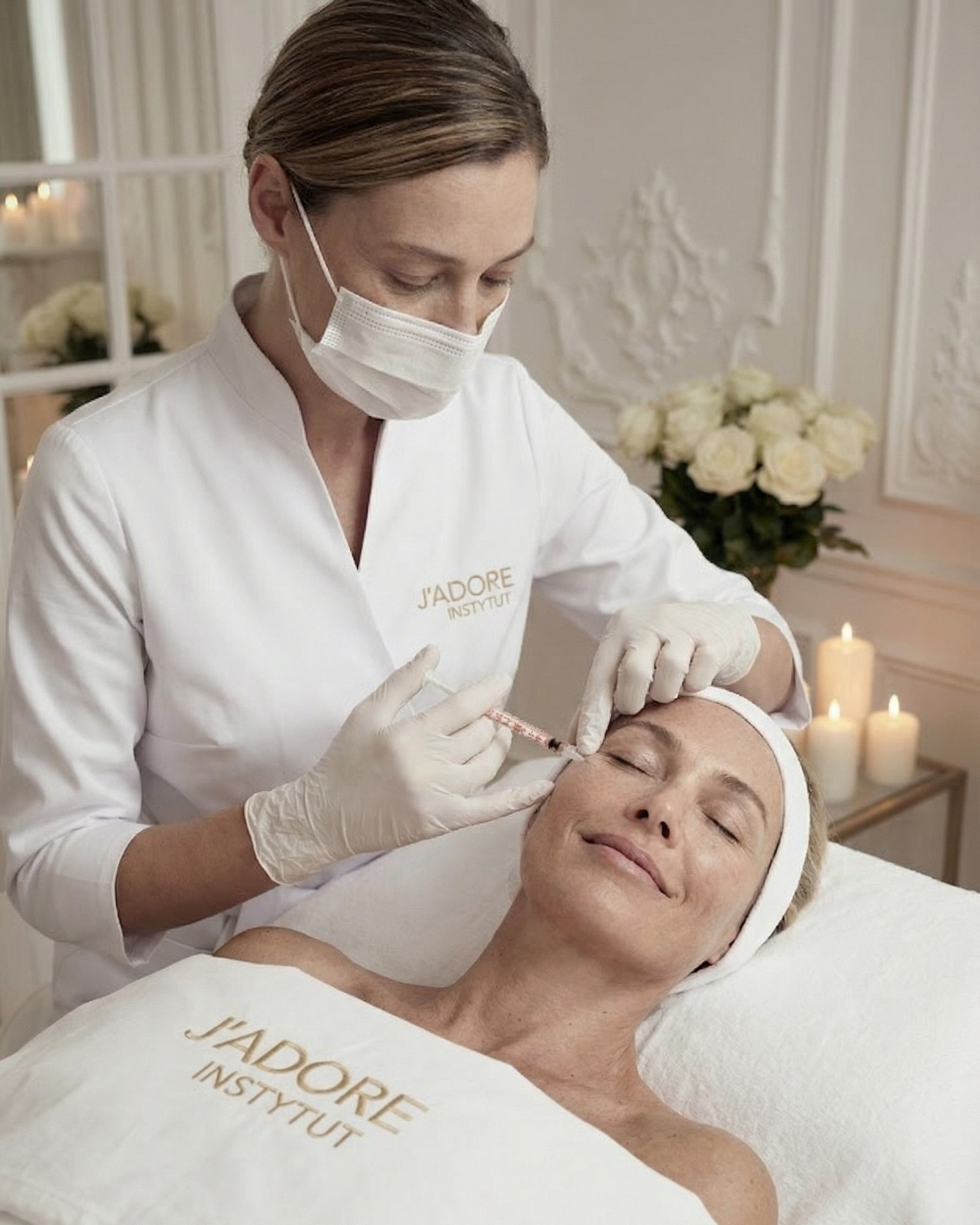
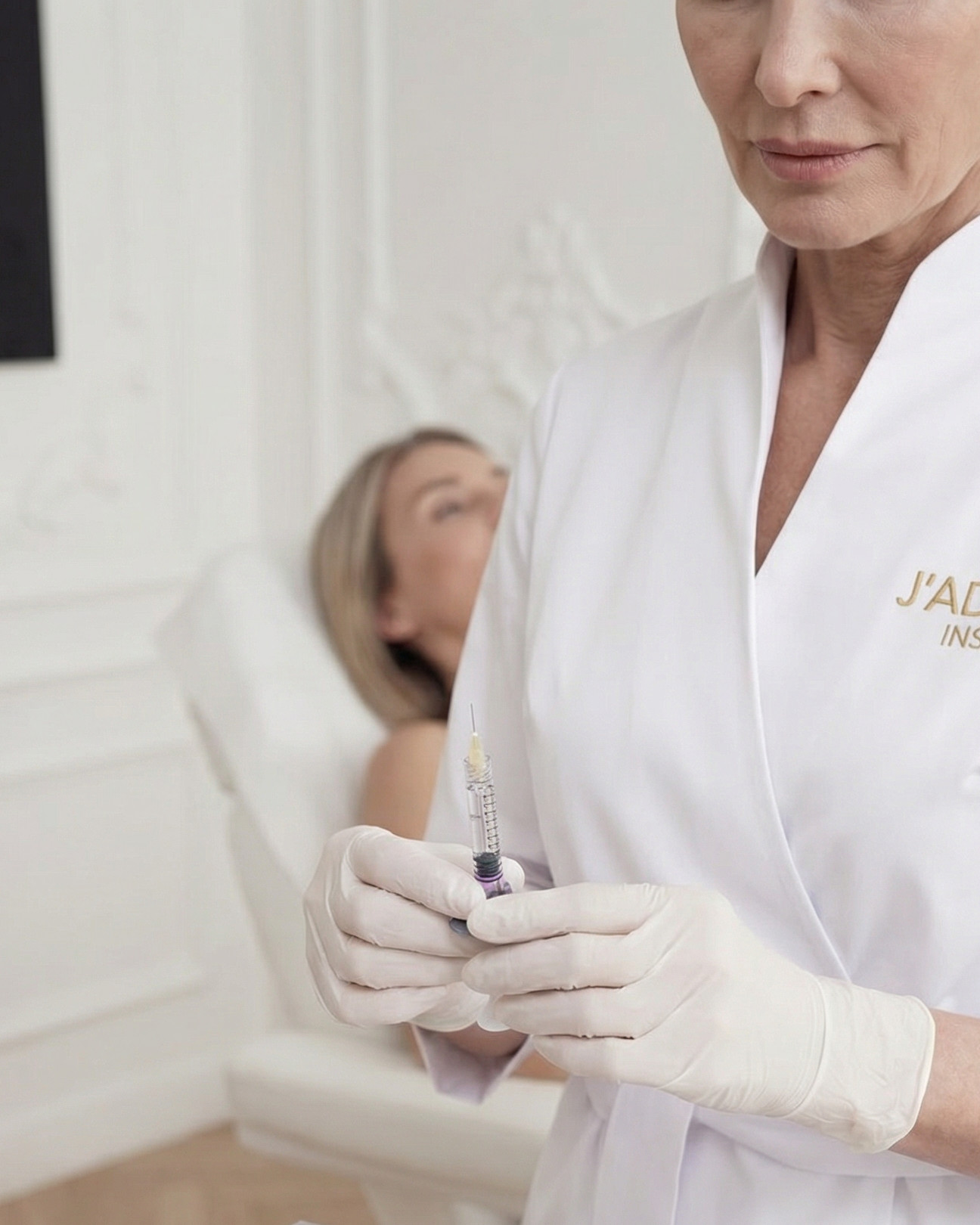
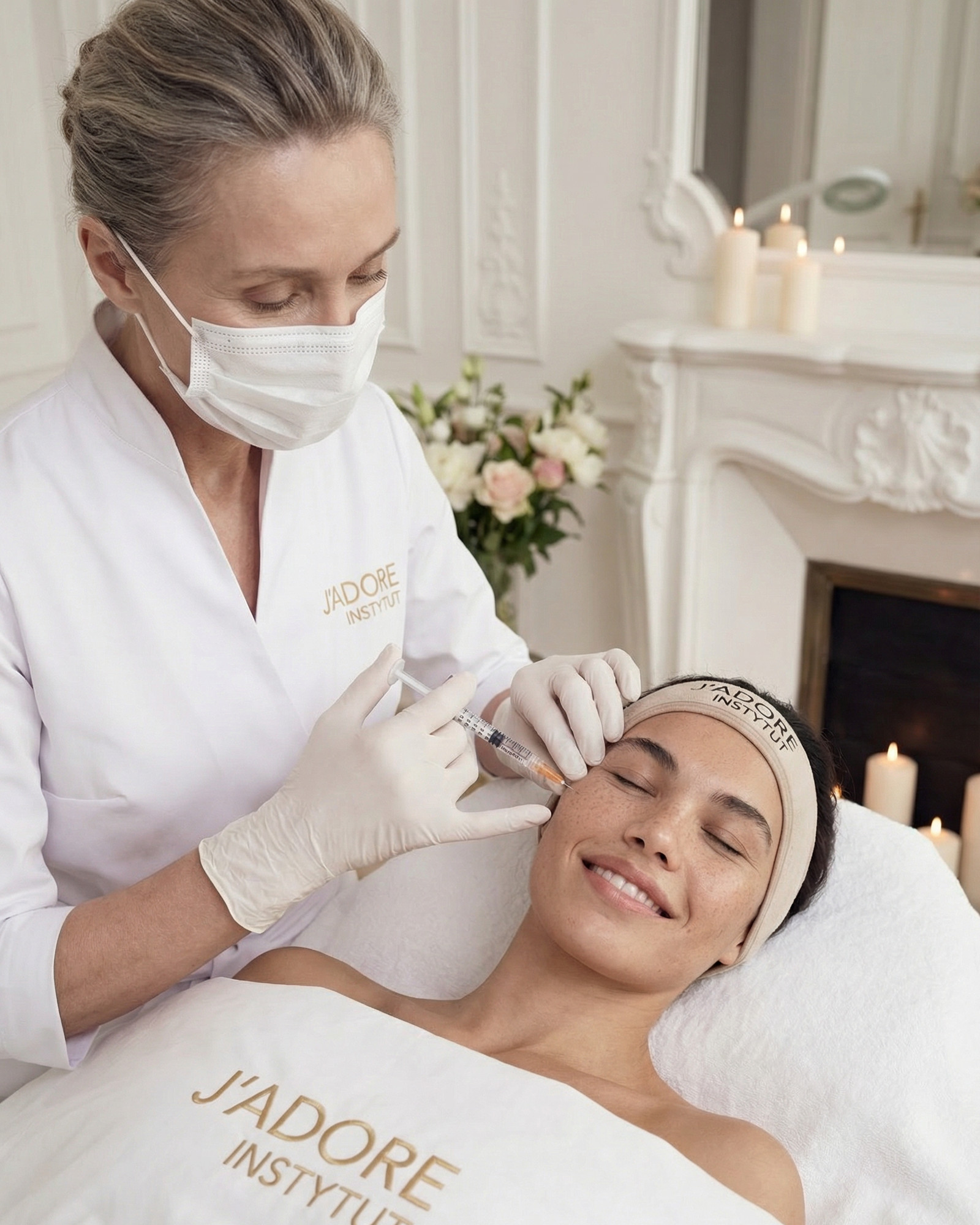
Since most myths come down to "who and how", it's worth knowing what to ask in any salon. These three things say more about safety than any review online. First — who performs the treatment. Botulinum toxin is a medicinal product; it should be administered by a doctor who assesses your anatomy, chooses the dose and takes responsibility for any touch-up. At J'adore, Botox is administered exclusively by an aesthetic medicine doctor. Second — what the preparation is, and where it comes from. You have every right to ask about the name, expiry date and storage method. An original, certified preparation from a proper cold chain behaves predictably; a product "from an unknown source" doesn't. Third — whether there's a consultation and a follow-up. A good treatment starts with a conversation and ends with a follow-up around two weeks later, once the effect is fully in place. That's when small dose adjustments happen — a normal part of the craft, not a complication.
Same word, two different fears — for women and for men
Interestingly, the Botox myth sounds different depending on who's repeating it — and a good doctor answers each version differently, because the treatment itself is planned differently too. For women, the most common fear is "I'll end up looking artificial, like a magazine cover." The answer lies in the dose: gentle, well-placed micro-injections smooth the wrinkle while leaving expression intact. Facial muscles are more delicate, so doses are lower, and the result is easier to shape towards a natural look — hence the popularity of "baby Botox", micro-doses aimed at a "well-rested" look rather than a "done" one. The goal: you should look good, not like you've "had something done".
For men, the fear runs in the opposite direction: "will I lose my masculine expression, will someone notice." Anatomy plays its part here too — men's facial muscles are stronger and their skin is thicker, so doses tend to be higher and the point pattern different. The goal is a less tired, less "harsh" expression without losing character — sometimes called "brotox". Men also more often arrive with a specific problem to solve: jaw clenching, worn teeth, excessive sweating. A well-judged dose is just as invisible for them as it is for women — people simply see a man who looks well-rested, not one who's "been to the beautician".
Before you decide — what's worth knowing
If, after all this, you're considering Botox, start with the simplest question: does my wrinkle disappear when I relax my face? If yes, that's a job for Botox. If it stays visible at rest, you probably need a filler or an improvement in skin quality instead, with Botox as an add-on at most. This distinction prevents most disappointment — and it's the first thing we establish during consultation.
Second: Botox doesn't work instantly. Muscles relax gradually — the first changes appear after a few days, with full results only after around two weeks. So don't judge it "the next day", and if you're planning around a big event, leave yourself plenty of time. And third, most important of all: it's a reversible choice. No other aesthetic treatment offers this kind of comfort — if you don't like the result, you simply don't come back.