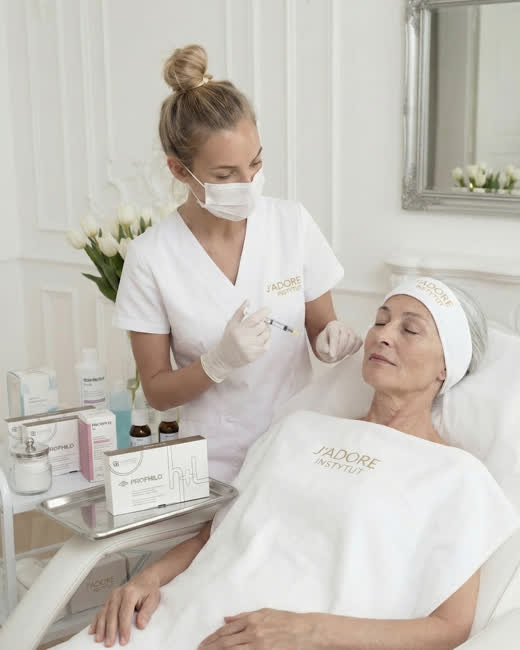
Where the misinformation about the eye area comes from
The eye area is a gift for marketing — and a challenge for accuracy. Everyone sees it instantly, and everyone judges it. A poor night's sleep, a salty diet or one stressful week is enough to cause the swelling we commonly call "bags". But that's a completely different problem from true anatomical under-eye bags — a fat herniation through weakened ligaments. This is exactly where the confusion starts: two conditions sharing the same name, with entirely different causes, and, as a result, entirely different treatment options.
Six myths, one by one
MYTH 1: "Mesotherapy removes under-eye bags." This is the most common misunderstanding, and it needs the most precise explanation. Fact: true anatomical under-eye bags develop when a weakened ligament allows fat from the eye socket to push forward, creating a visible bulge. This is a structural change, not a surface one. Mesotherapy improves skin quality and hydration, stimulates collagen production and can support microcirculation — but it cannot reverse a fat herniation. If your "bags" are actually swelling caused by poor lymphatic circulation or skin laxity, though, mesotherapy can genuinely help. The difference is established by a doctor during consultation — not online.
MYTH 2: "Dark circles are just a circulation problem — mesotherapy will cure them." Fact: dark circles have at least three different causes, each requiring a different approach. Vascular circles (small blood vessels showing through thin skin) can indeed respond well to circulation-boosting mesotherapy. Pigmented circles (melanin overproduction) call for different active ingredients, and sometimes lasers. Structural circles, caused by a deepened tear trough, are a job for hyaluronic acid filling that space. Mesotherapy can be part of the therapy for any of these, but it isn't the only solution, and it isn't universal.
MYTH 3: "One session is enough." Fact: this myth applies to most aesthetic treatments, not just mesotherapy. The skin around the eye is thin and constantly exposed to expression movement — it needs ongoing support, not a one-off intervention. The standard protocol is a series of several sessions at set intervals, followed by maintenance visits. Results build gradually: better skin quality, deeper hydration, more visible density. Expect a dramatic change after one session, and you'll be disappointed. Treat mesotherapy as regular in-salon care, and you'll see progress.
MYTH 4: "More active ingredients means a better result." Fact: the eye area calls for particular care in choosing and dosing ingredients. The skin here is thin, reactive, and sits close to the eye's mucous membrane. "More equals better" doesn't apply — precision and individual selection do. The cocktails used in this area are formulated differently from those used to revitalise the cheeks or neck. A good specialist matches concentration and composition to the specific problem, rather than "injecting everything that might help" — which is a quick route to irritation.
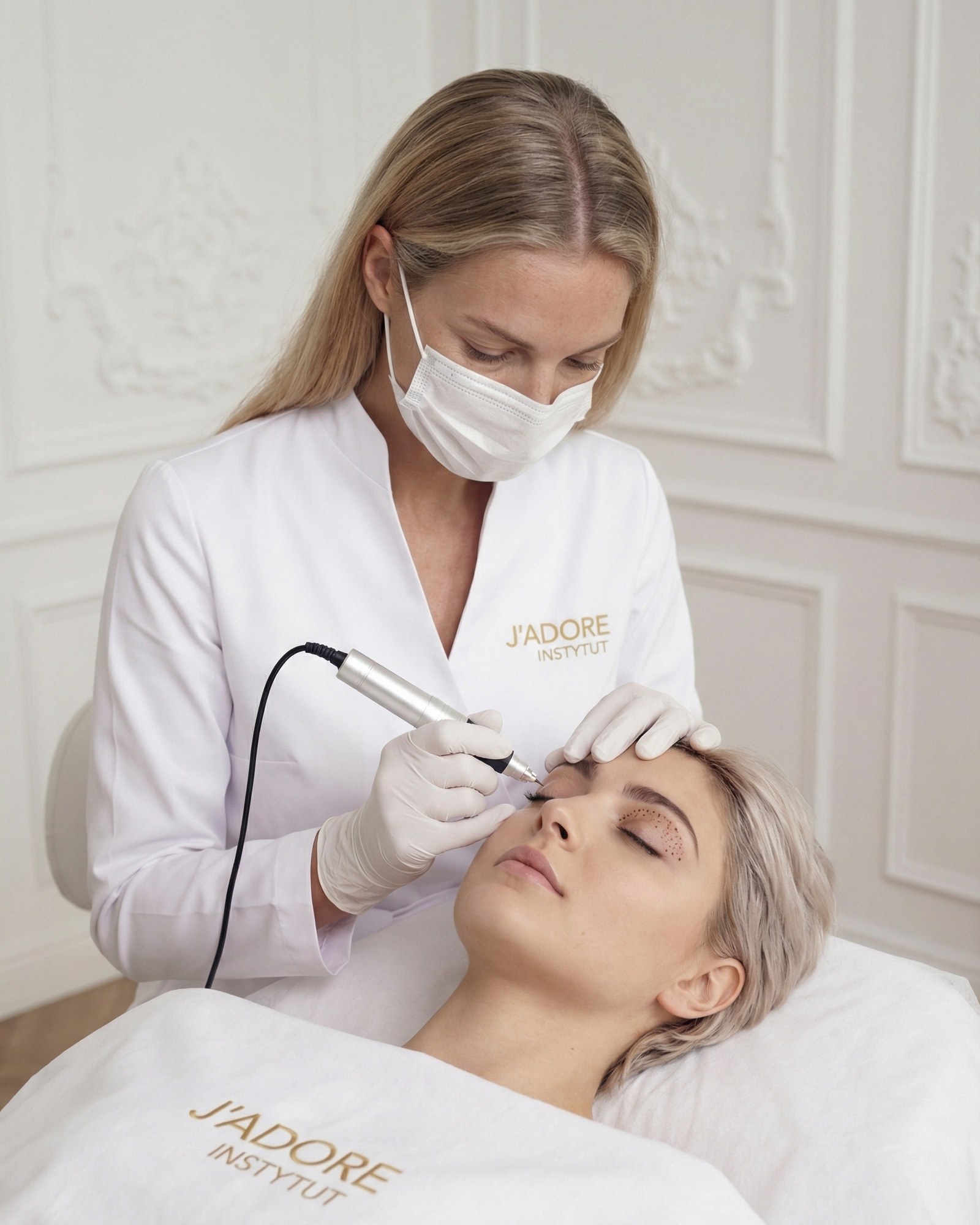
MYTH 5: "Mesotherapy is pain-free because the needles are tiny." Fact: the eye area is one of the more sensitive parts of the face, owing to its thin skin and dense nerve supply. Most people describe the treatment as noticeable but tolerable — especially with numbing cream, which is applied as standard before the session. Discomfort is usually brief and fades quickly afterwards. But expecting complete painlessness, especially at your first session, wouldn't be realistic. An honest specialist will tell you this upfront.
MYTH 6: "Eye area mesotherapy can replace surgical correction." Fact: the two approaches address entirely different causes and aren't interchangeable. Lower eyelid surgery (blepharoplasty) removes excess skin and/or fat — it changes the structure. Mesotherapy improves skin quality and condition — it works at the level of surface tissue. There's no competition between them: they have different indications. Mesotherapy sometimes forms part of preparation for surgery, or aftercare following it — but it isn't a substitute for surgery where anatomical changes are advanced.
What eye area mesotherapy can genuinely offer
With realistic expectations, eye area mesotherapy can bring noticeable improvement in several areas. Deeper hydration — thin, dry skin around the eye loses elasticity and develops fine lines faster; hyaluronic acid-based cocktails replenish this loss and restore bounce. Improved microcirculation — ingredients that support blood and lymph flow can reduce the tone of vascular dark circles and light morning swelling. Collagen stimulation — skin becomes denser, fine lines shallower, and tissue holds its shape better. Skin brightening — brightening ingredients can help with pigmented dark circles.
None of these results is guaranteed, and none appear after the first session. Skin responds individually, and the outcome depends on the starting condition of the tissue, lifestyle, how regularly you attend sessions, and — crucially — whether the problem you're addressing is actually one mesotherapy can influence. An honest consultation is a necessary condition, not a formality.
Different for women, different for men
The eye area ages differently depending on sex — and this isn't only a matter of anatomy, but also lifestyle and the point at which someone first comes in for treatment. In women, changes often start earlier and are more subtle: thin, dehydrated skin, the first fine lines from laughing, light shadows. This is a good moment to start mesotherapy preventively, before the skin loses density. Women also more often come to maintain the results of previous treatments, or to complement hyaluronic acid therapy in the tear trough.
In men, the skin is thicker and masks changes better for longer — but once changes appear, they tend to be more advanced. Men rarely come in "preventively"; more often they arrive with a specific concern: a visible bag, deep shadows, a tired expression that affects how they're perceived at work. The goal is also framed differently — not "I want to look nicer", but "I want to look less tired and more focused". Mesotherapy can help with this, but here too, what's achievable depends on what's anatomically behind the "bag" or "shadow".
Before you come in — what to ask and what to expect
If you're considering eye area mesotherapy, start with one question to yourself: what exactly is bothering you? Morning swelling that fades during the day? A constant bulge, regardless of the time of day? Dark skin under the eye? Fine lines when you close your eyes? Each of these answers points to a different mechanism — and different treatment options. Writing this down before your visit saves time, and lets your doctor focus on the right problem straight away.
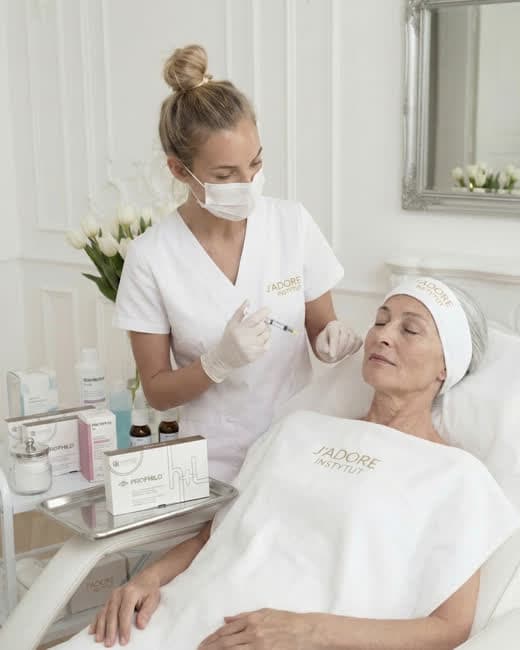
During consultation, your doctor will assess the type of change — swelling, herniation, pigmentation, skin laxity, or a combination — and propose a treatment plan. Importantly, they'll tell you honestly if your problem needs a different approach than mesotherapy. A good consultation is one you leave with a realistic plan, not a promise of a miracle transformation. Treatment in the eye area calls for precision, patience and regularity — but with the right indications, results can be visible and lasting.