Myth 1: “Nucleofill is an expensive cream in injectable form”
This is the most common misunderstanding, and also the most misleading one. A cream — even an expensive one with an excellent hydrating formula — works on the surface of the skin or just beneath it. It can improve epidermal hydration, smooth texture and soothe irritation. This is valuable, but it is not comparable with what a polynucleotide injection does.
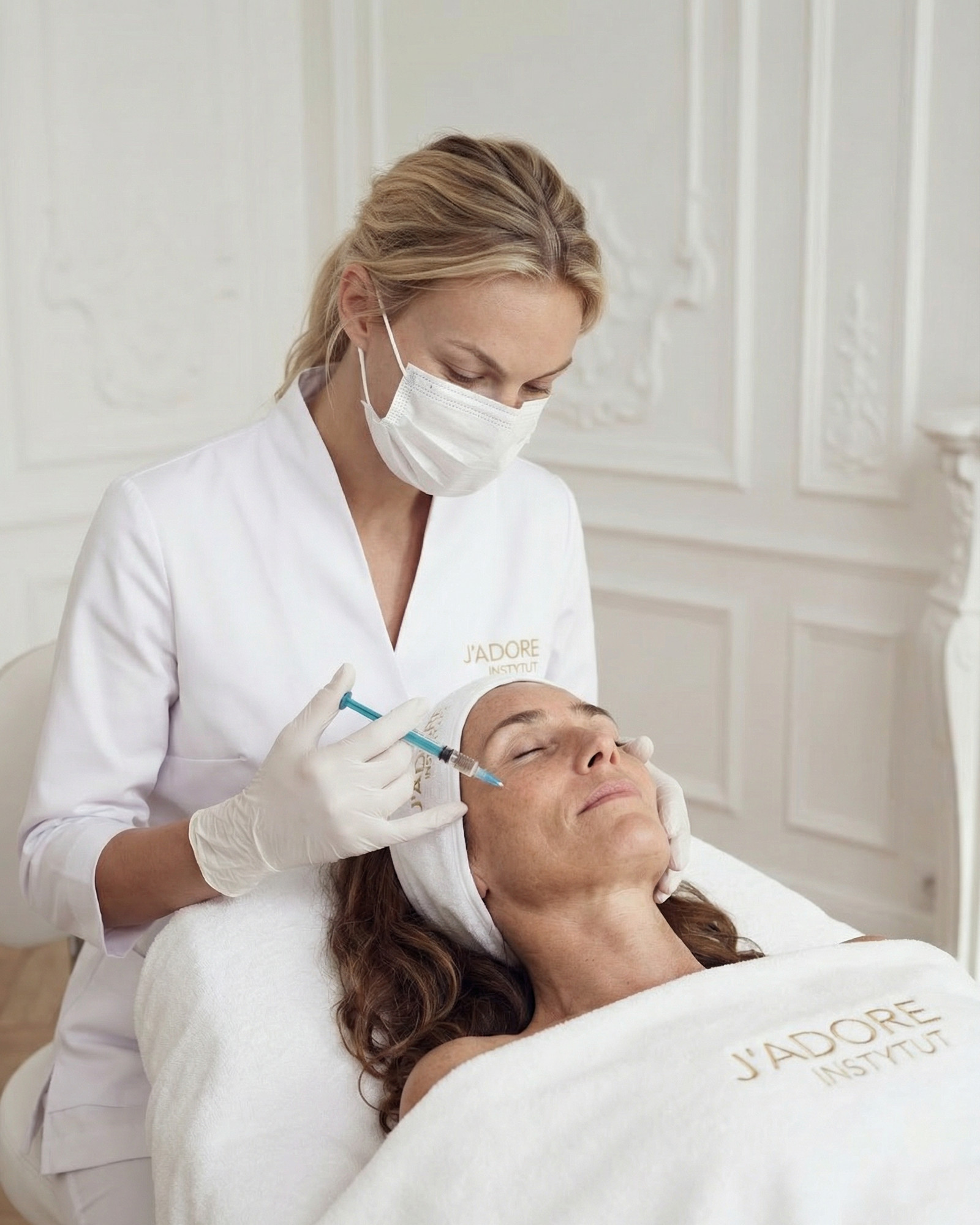
Nucleofill reaches the dermis — where fibroblasts are found, the cells responsible for collagen and elastin production. Once there, it does not “deliver” something ready-made to the skin. It activates processes your skin performs itself: it stimulates fibroblasts, improves the ability to bind water from within, calms inflammation and supports microcirculation. This is regeneration at a cellular level — not moisture delivered from the outside.
This is why Nucleofill — like every injectable treatment — is performed by a doctor or experienced specialist. It is not a “cosmetic salon plus” with a more expensive ampoule. It is a medical treatment with a genuine clinical pathway.
Myth 2: “The result is visible immediately after the treatment”
This is where many people fall into a trap. It causes more disappointment than all the other myths combined. Immediately after the treatment, your skin may look refreshed, more hydrated and gently radiant. This is true and real. But it is not the final result — it is only the first sentence in a longer conversation.
The true Nucleofill result — restored density, firmness and skin quality — is cumulative. Fibroblasts need weeks to turn the signal they receive into real collagen and elastin production. Skin remodels slowly, at its own biological pace. This is why judging the result after one session is like assessing the effects of the gym after a single workout — technically possible, but not very meaningful.
Hyaluronic acid (filler)
immediate result
- visible immediately after the treatment
- adds volume or fills a wrinkle at the injection site
- the result lasts until the product is resorbed
Nucleofill (PDRN)
result builds over time
- first hydration and radiance effects — relatively early
- structural regeneration — after completing the series, after several weeks
- the result lasts for a long time and fades gradually
Myth 3: “Nucleofill can replace lifting”
This myth causes harm in two ways. First, someone who needs lifting and chooses a polynucleotide instead will be disappointed. Second, someone who could benefit from an excellent Nucleofill result may decide against it because they expected something it cannot provide.
Nucleofill changes skin quality — not its geometry. It improves density, hydration, radiance and surface firmness. If your facial contour is sagging, your cheeks are hollow or a wrinkle is a deep fold — no polynucleotide can fill or lift it. This requires treatments that work on facial volume and support: fillers, volumetry, tissue stimulators such as sculptra, or possibly lifting threads or surgery.
Nucleofill can, however, be an excellent companion to lifting — before it takes place, by preparing the skin and improving its condition, or afterwards, by supporting regeneration and maintaining tissue quality. These are not competing treatments. They are different tools for different tasks, and they often work well together.
Myth 4: “The more sessions, the better — with no limit”
This is an understandable instinct: if it works, more must be better. But regenerative products do not work this way. Nucleofill — like any therapeutic tool — has its treatment protocol: a defined number of sessions, intervals between them and maintenance phases. This protocol is not a clinical formality. It reflects how skin actually remodels.
Treatments performed too frequently do not speed up results. Your skin still needs time to process each regenerative signal. Sessions performed as a shortcut may also disrupt natural healing processes. They may not allow the skin to fully respond biologically to the previous session. As a result, the patient spends more, while the result does not increase proportionally.
After completing the appropriate series and achieving the therapeutic goal, you typically move into a maintenance phase — single treatments every few to several months. Your skin does not become “dependent” on the product. Without a reminder, it simply begins to gradually return to its natural ageing pace. Maintenance helps prevent this. It is like exercise — stopping does not erase results overnight, but without continuation your condition slowly returns to its starting point.
Myth 5: “Nucleofill is the same as PRP”
Both treatments are often placed in the same “regeneration” category — and it is easy to understand why. Both work on skin quality. Neither fills nor changes facial features. Both require a series and patience. This is where the similarities end.
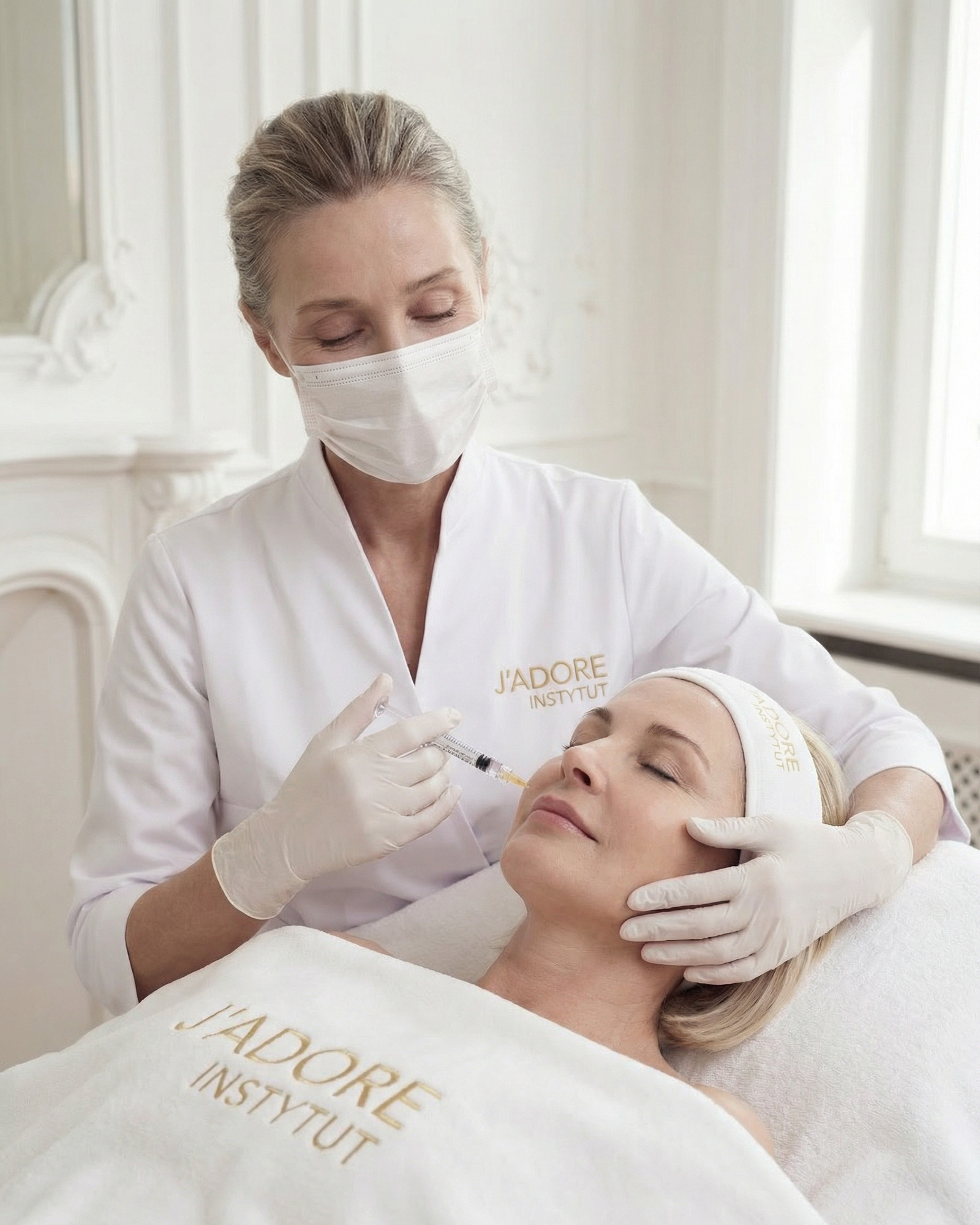
PRP (platelet-rich plasma) is an autologous treatment — we collect the patient’s blood, centrifuge it to obtain plasma rich in growth factors, then inject it back. Growth factors contained in platelets stimulate tissue regeneration, healing and skin remodelling. It is a biological product “from the patient” — strongly angiogenic, well tolerated and highly effective for hair loss, scars and overall revitalisation.
Nucleofill is an external product based on purified fish polynucleotides. It works through different receptors and a different molecular pathway. In simple terms: PRP delivers growth factors that directly initiate regeneration; PDRN stimulates adenosine receptors on fibroblasts, activating collagen production and providing antioxidant and anti-inflammatory effects. Two routes towards a similar goal — but not by the same pathway.
Nucleofill (PDRN)
external product — fish polynucleotides
- stimulates fibroblast receptors — collagen production
- strong hydrating and antioxidant action
- well tolerated by reactive skin
- effective for hair loss, scars and revitalisation
PRP — platelet-rich plasma
autologous product — from the patient’s blood
- growth factors directly initiate regeneration
- strong angiogenic action — stimulates vascularisation
- ideal for the scalp in cases of hair loss
- complements Nucleofill in comprehensive plans
What is more, Nucleofill and PRP can work very well together. Salons often combine both as part of one course because they complement each other. PRP “switches on” regeneration through growth factors. Polynucleotides maintain skin quality and prolong the result. A specialist decides whether this is a suitable plan in a particular case after assessing your skin condition.
When Nucleofill truly makes sense — and for whom
Now that we know what Nucleofill is not — it is time to look at where it truly stands out. When it is used on the right skin for the right concern, results can be clear and long-lasting. But the “right skin” is not about gender or age. It is about a specific deficit.
For many people, Nucleofill brings a clear result for tired, dull skin lacking radiance — skin that looks “lifeless” despite good skincare. It is similarly suitable for thin skin that is losing density and firmness, and for deeply rather than only superficially dehydrated skin. It works very well for scars — post-acne scars, post-operative scars and stretch marks — where the aim is tissue remodelling rather than concealing the defect. It is also sometimes used on the scalp for hair loss, where hair follicle regeneration follows the same mechanism as facial skin regeneration.
For women, Nucleofill most often forms part of a skin quality improvement plan: more radiance, firmer facial contours and a “rested face” with no signs of intervention. The result should be imperceptible from the outside. You notice that the skin looks healthier, not that “something has been done to it”. For men, the goals can be slightly different: skin affected by years of unprotected sun exposure, daily oxidative stress from shaving and more pronounced texture. Here, Nucleofill acts as a reset for skin condition — creating a denser, better-nourished foundation that simply copes better with daily demands.
Its preventive role is also worth mentioning. Choosing Nucleofill before the skin has time to become significantly “worn out” is an increasingly common and well-founded strategy. Skin in good condition responds more easily to stimulation. It regenerates faster and maintains results for longer. The earlier you maintain its quality, the fewer aggressive interventions may be needed in several years’ time.
If you recognise any of the situations described above — tired-looking skin, scars, thinning hair or loss of skin density — a good starting point is a consultation with a specialist. They will assess your skin and tell you directly whether Nucleofill is the right option. Another product or a combination of several methods may deliver a better result. Below, we have gathered treatments that address the same goal.