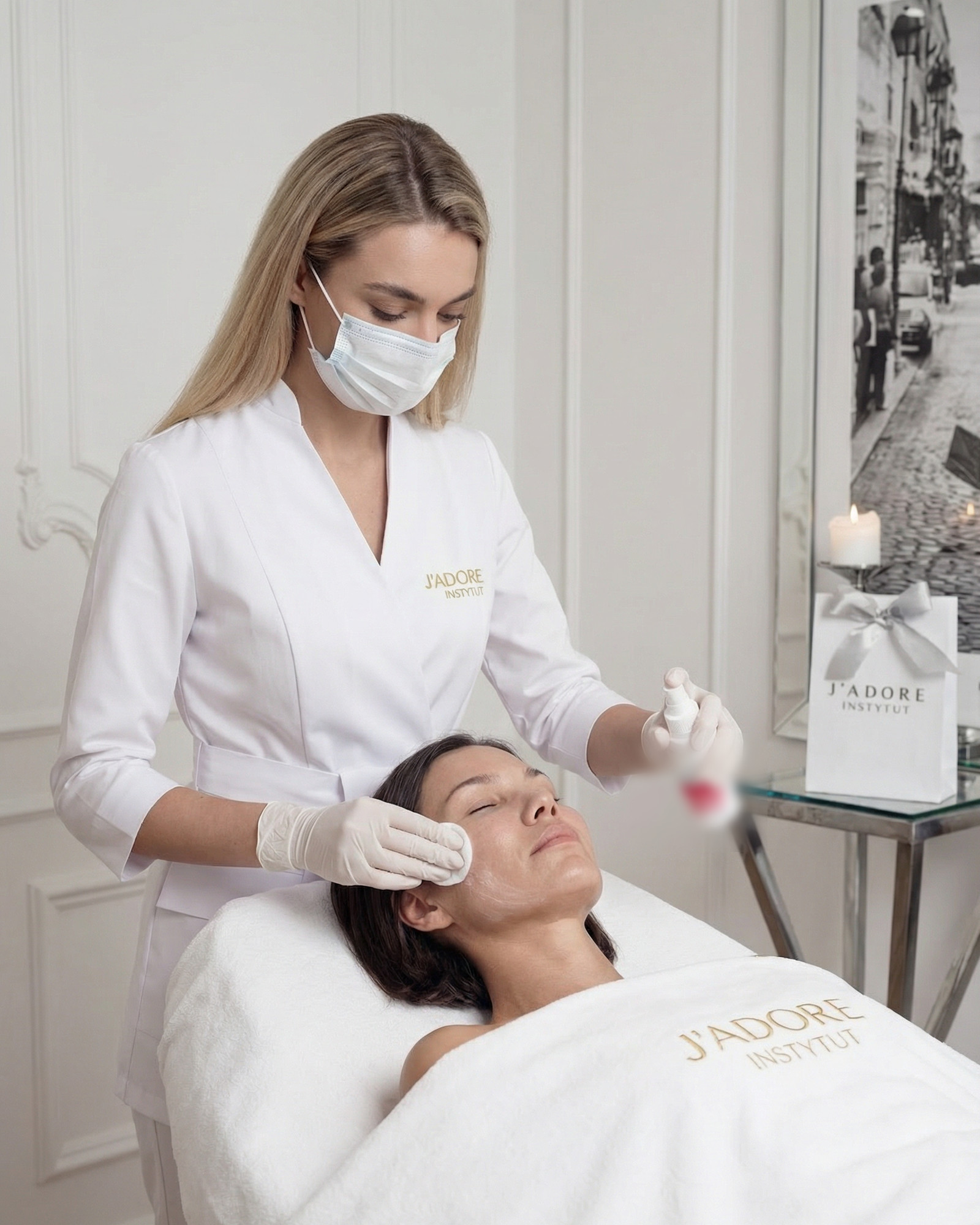

What men notice after 35–40
Male skin ages differently to female skin — and stays hidden for much longer. Testosterone makes skin thicker and oilier, so it looks good for longer. But once it starts to decline, the change is often fast and visible. The first signs men usually notice themselves: skin turns dry and rough where it used to be oily; facial features become less defined as soft tissue loses volume and tone; nasolabial folds deepen; wrinkles appear around the eyes that weren't there a year ago.
There's also something harder to describe — skin loses its "life". It turns grey, dull, and loses the density it had in your thirties. This isn't about specific wrinkles; it's about the overall condition of the tissue. This is exactly where biostimulators work: they don't remove symptoms, they address the cause — the loss of collagen, elastin and the skin's natural ability to regenerate.
How biostimulators work — without oversimplifying
The word "biostimulator" describes exactly what it does: a preparation that stimulates the skin's biological processes. In practice, this means the active substance — depending on the type, this could be specially structured hyaluronic acid, PDRN polynucleotides or exosomes — is injected into the dermis. There it activates fibroblasts, the cells responsible for producing collagen and elastin.
This is a fundamental difference from fillers. A filler physically adds volume — wherever it's injected, there's simply more of it. A biostimulator doesn't fill anything mechanically; it tells fibroblasts, "start producing". The effect builds gradually over several weeks, because skin needs time to rebuild its structure. In many people, though, it lasts considerably longer than a filler effect — and there's no risk of the face looking "empty" once it's absorbed, because the tissue has replenished itself.
For men worried about looking "done", this is the key difference. A biostimulator doesn't change your features. It doesn't add volume to your cheeks or lift the corners of your mouth. After the treatment you have the same face — just skin in better condition. No one asks "what did you have done"; people simply say you look well.
Skin biostimulator, PDRN, exosomes — three different tools
The biostimulator market has grown considerably in recent years. It's worth knowing how the three most common options differ, since each works through a slightly different mechanism.
Skin biostimulator
hydration + biostimulation
- highly concentrated hyaluronic acid with a non-terminally cross-linked structure
- absorbs deep into the skin and stimulates collagen and elastin production
- improves skin hydration and density — usually visible after 2 sessions
PDRN / Nucleofill
regeneration at cellular level
- polynucleotides (salmon DNA fragments) activate skin cell growth receptors
- stimulate regeneration and new vascularisation — skin can become denser and better nourished
- particularly valued for tired, grey skin after intense sun exposure
Exosomes are a third category — newer and drawing increasing attention. These are nanoparticles secreted by stem cells that carry regenerative signals. They work at a deeper level than classic biostimulators and, in some people, can give a stronger effect on skin quality and hair loss. At J'ADORE we use exosomes both in facial treatments and in scalp treatments.
Which one should you choose? There's no answer to this without examining your face and understanding your skin's history. During consultation, the doctor assesses skin condition, thickness, hydration level and the nature of the changes — then selects a preparation based on this, not on trends or price. Some men end up with a combination: skin biostimulator followed by PDRN in later sessions, for example, to activate several mechanisms at once.
What the treatment involves and when you return to your normal day
The first treatment starts with a consultation — take it seriously, as it's not a formality. The doctor assesses your skin and asks about your medical history, medications, supplements and lifestyle. This determines whether a biostimulator is the right solution, which preparation to use, and how many sessions you need. The usual protocol is a series of 2–3 visits a few weeks apart, followed by maintenance sessions every few months.
The treatment itself involves injecting the preparation through fine needles at a dozen or so points, positioned so the substance spreads evenly through the skin. In men, thicker skin and a stronger vascular network mean discomfort can be slightly more noticeable than in women, though most men describe it as tolerable. Numbing cream is used where needed.
For a few hours after the treatment, injection points may be visible — slight redness, sometimes small bumps, which fade quickly. Some people develop minor bruising, less commonly swelling. You don't need to take time off. Most men return to work the same day; intense gym sessions, saunas and alcohol are usually avoided for the first 24 hours. Otherwise, normal activity resumes immediately.
One exception: if you have an important event coming up — a presentation, a conference, photos — book the treatment at least 7–10 days in advance. Fresh injection marks fade much sooner than that, but a bit of buffer time gives you peace of mind.
When results appear and how long they last
After the first session, some men notice improved hydration fairly quickly — skin becomes less dry and rough. But this is only the beginning. The main effect — better skin quality, density, and reduced fine lines — usually builds over several weeks after completing the series, peaking for many people 1–2 months after the last session.
The duration of changes and the need for maintenance sessions depend on the product, skin condition and individual response. This applies to HA skin biostimulators as well as PDRN or exosome preparations. No single duration of results or lasting collagen rebuilding can be attributed to an entire category.
What you do outside the salon also affects the biostimulator's results. Chronic sleep deprivation, intense sun exposure without SPF, and smoking can noticeably shorten the effect and block regeneration processes. There's little point investing in a biostimulator and then spending six months cycling with no SPF at all — results will be weaker than for someone with comparable skin who protects it from UV.