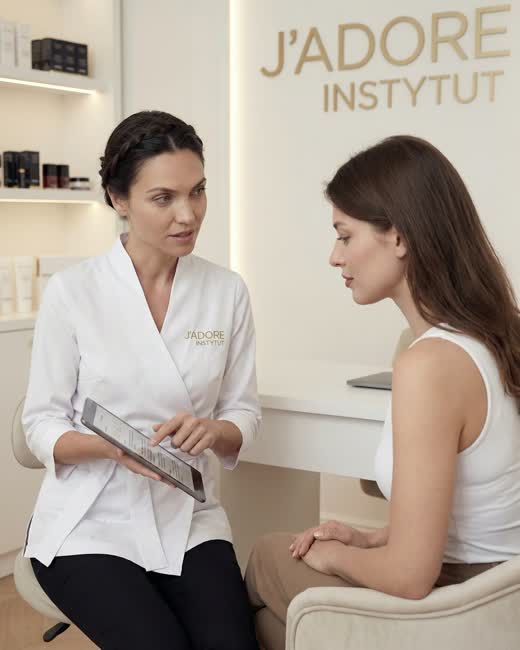
Why pregnant skin requires a different approach
Progesterone and oestrogens reach levels during pregnancy unlike any other time in a woman’s life. For the skin, this means two main things. First — sebaceous glands work at a higher rate. More sebum means more nourishment for bacteria and more blocked pores. For women who have not previously experienced acne, this may be their first encounter with blackheads — and quite a surprise. Second — the rate of keratinisation accelerates. Dead skin cells build up faster than the skin can remove them naturally. Pores become blocked, and typical home skincare products are no longer enough.
Higher skin pH during pregnancy, changes in the microbiome, swelling and — for some women — increased sensitivity also play a role. Skin is quite literally in a different biological state. A skincare routine that worked for years often stops being effective. This is where a question we often hear in the salon arises: what else can be done?
The prohibited list — and why manual extraction is not on it
Pregnancy excludes a significant proportion of what modern cosmetology offers. This is not because doctors are overly cautious. For many methods, there is simply a lack of clinical data confirming safety for the foetus — and the principle of “better not when we do not know” is sensible here. The most commonly mentioned restrictions include:
- Chemical peels — especially higher concentrations of acids (e.g. TCA, salicylic acid at high concentrations) are absorbed through the skin, and some may enter the bloodstream.
- Needle mesotherapy and platelet-rich plasma — no clinical studies involving pregnant women.
- Laser treatments and high-intensity light therapy — risk of tissue overheating and unknown systemic effects.
- Botox and fillers — injectable substances with no established safety protocols during pregnancy.
- Laser hair removal — not recommended due to hormonal skin changes and sensitivity.
- Retinol and vitamin A at high concentrations — both topical use in large amounts and oral isotretinoin are absolutely contraindicated.
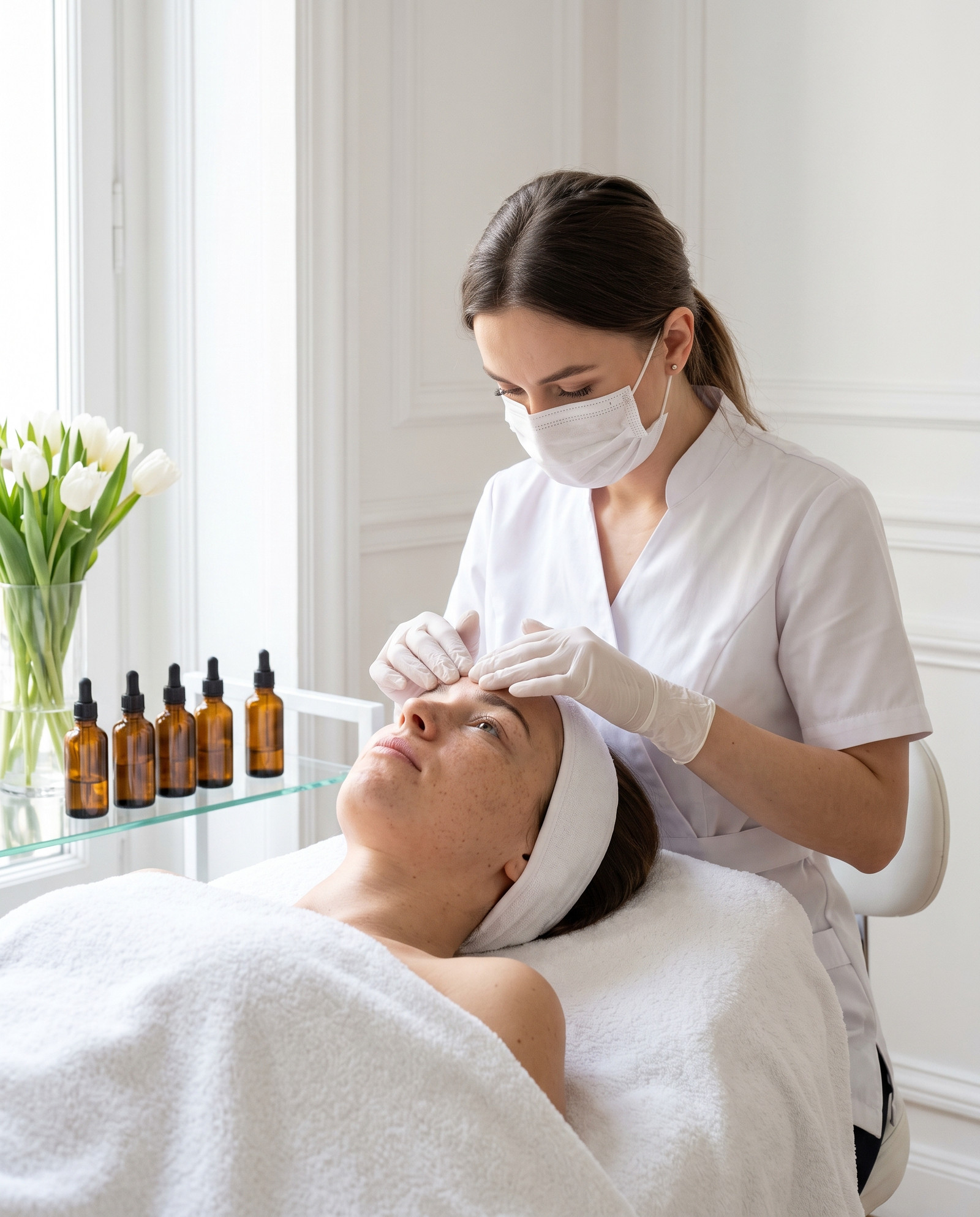
Manual extraction has no place among them — not because it has been overlooked, but because it is a purely mechanical treatment performed on the skin’s surface, without substances absorbed systemically and without energy (laser, heat, ultrasound) that could reach deeper layers. The cosmetologist works on the epidermis using their hands, a lancet or a Volkmann spoon. This is its strength during pregnancy: it is precise, localised and fully controlled.
Seven myths about cleansing during pregnancy
Myth 1: “Extraction hurts, so it must hurt even more during pregnancy”. Pain perception is subjectively higher during pregnancy — that is true. However, pain during manual extraction does not result from the method itself. It depends on the depth and number of blackheads, skin tension and the cosmetologist’s technique. Well-prepared, steamed skin and gentle, precise extraction may be noticeable, but do not have to be painful. A cosmetologist working with a pregnant woman adjusts pressure and pace to the skin’s current tolerance. They also respond to your feedback throughout. The myth of unbearable pain most often comes from experiences with poorly prepared skin or a rushed treatment.
Myth 2: “Skin looks worse after extraction because it is red”. Redness after the treatment is a normal effect of local tissue irritation — not damage and not an alarm signal. Blood vessels are more reactive during pregnancy due to increased blood flow through the skin. Redness may therefore be more pronounced and last slightly longer than usual. It usually subsides within a few to several hours. Cleansing performed in the morning gives the skin time to settle before the evening. After the treatment, the cosmetologist applies a soothing mask and an appropriate cream — this shortens the duration of redness.
Myth 3: “Extraction spreads bacteria and causes infections”. This scenario is possible — but only with incorrect technique and a lack of disinfection. In a professional salon, tools are sterile or disposable. The skin is disinfected before and after extraction, and the cosmetologist’s working method minimises the transfer of contents between pores. At-home “squeezing” is different. The risk increases because there is no sterility, no knowledge of the blackhead’s depth and no appropriate pressure. This myth confuses two completely different settings: the salon and the bathroom.
Myth 4: “Extraction permanently enlarges pores”. This is one of the most persistent cosmetic myths — and one of the least true. Pore size depends on genetics, skin thickness, the tension of surrounding collagen and the amount of accumulated sebum. Manual extraction removes the contents of a pore. This can make it appear more visible briefly, as it is emptied and relaxed. However, it does not permanently stretch it. On the contrary: regularly cleansed skin with healthy sebum metabolism is less likely to develop blockages that mechanically stretch the gland opening. “Enlarged pores after cleansing” are a temporary optical effect.
Myth 5: “During pregnancy, skin cleans itself anyway — hormones take care of it”. This popular view confuses “pregnancy glow” with having no need for skincare. For women whose skin responds to hormones with excess sebum production, the opposite is true — skin requires more support than usual, not less. Blackheads and micro-inflammation do not disappear simply because you are pregnant. Without regular cleansing, they can build up and lead to lasting changes — enlarged pores, post-inflammatory discolouration and, for some women, deeper inflammation that is more difficult to treat during pregnancy than outside it.
Myth 6: “Everything will return to normal after birth, so it is not worth investing”. Some skin changes during pregnancy do resolve after birth and once breastfeeding ends — but not all, and not automatically. Post-inflammatory discolouration after pregnancy acne can persist for months. Enlarged pores caused by long-term sebum build-up do not close on their own. The habit of neglecting your skin during pregnancy can easily continue into the first months after birth — a time when your skin has twice as much catching up to do. Regular skincare during pregnancy is simply less expensive than treating its consequences afterwards.
Myth 7: “This is not a good time for a treatment — it is stressful for the body”. Manual extraction performed by an experienced cosmetologist is one of the least stressful treatments available in a salon. It does not require anaesthesia, does not affect the circulatory or nervous system in any specific way, and requires no recovery time. During the first trimester — especially with nausea and high sensitivity — it is worth waiting until you feel more stable. The second trimester is the classic “golden mean”: the body is usually more stable, while the skin is only beginning to respond to hormonal changes. During the third trimester, it is a matter of comfort in the chair, but extraction itself is not contraindicated.
What pregnancy-adapted cleansing looks like
Manual extraction during pregnancy follows the same principles as it does outside pregnancy — with several important modifications. This is not about simplifying the treatment. It is about adapting every stage to altered skin physiology and to the safety of mother and child.
- 01
Make-up removal and skin analysis
Make-up is removed with products safe during pregnancy, without excessive essential oils or high concentrations of alcohol. The cosmetologist assesses your skin — the type of blackheads, zones, sebum level and sensitivity.
- 02
Steaming or warming
Classic steam treatment is safe. Its intensity and duration are adjusted to avoid overheating — a pregnant woman’s body temperature responds more strongly to external heat. Warm compresses can be used as an alternative.
- 03
Enzymatic or mechanical exfoliation
An exfoliating product adapted for pregnancy: enzymatic, with papain or bromelain, or a gentle physical peel. No salicylic acid at high concentrations, no retinol and no AHA above the safe minimum concentration.
- 04
Manual extraction
Cleansing pores of blackheads and micro-inflammation. Sterile tools and disinfection are used. Precision and gentleness are the priority — without excessive pressure or working on zones where the skin is clearly irritated or inflammation is deep.
- 05
Toning and soothing
An alcohol-free toner without substances that may potentially be absorbed systemically. Pores are closed and the skin’s pH is restored.
- 06
Soothing mask
A mask based on aloe vera, panthenol, thermal water or ingredients with soothing and regenerative effects. No substances with strong biological activity, such as niacinamide at high concentrations during the first trimester — use with caution.
- 07
Finishing cream
Moisturising and protection. The formula is selected for your skin’s current condition — oily or combination skin is treated differently from dehydrated skin. The latter is surprisingly common with pregnancy-related changes to the lipid barrier.
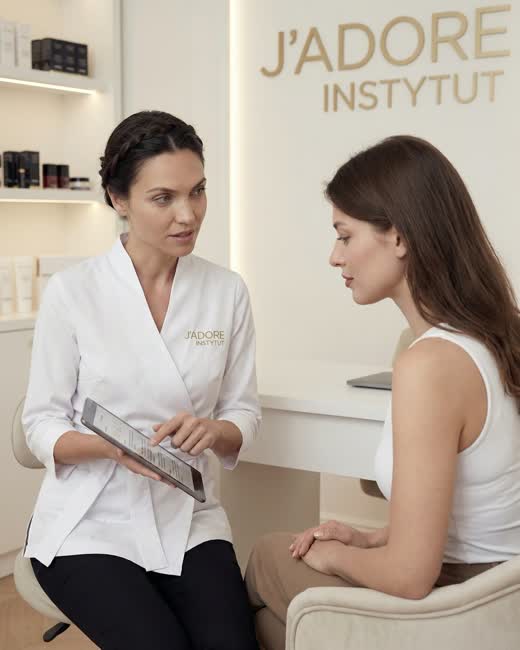
An important rule: the cosmetologist selects products after being informed about your pregnancy, not before. The list of ingredients worth avoiding during pregnancy is long and changes depending on the trimester. A professional salon should have this knowledge and should not require you to arrive with your own list of prohibited substances.
When cleansing is particularly recommended — and when it is worth waiting
A good time for cleansing
Situations where treatment is recommended
- Second trimester — you usually feel more stable, while your skin begins to respond to hormonal changes
- A visible increase in blackheads and blocked pores
- Oily or combination skin prone to inflammation
- Your regular home skincare routine is no longer enough
- An initial consultation before setting a pregnancy skincare plan
When it is worth waiting or seeking advice
Situations that require caution or a gynaecologist’s decision
- First trimester with severe nausea and heightened sensitivity to heat
- Active, deep inflammatory or cystic acne — requires a doctor’s consultation
- Highly reactive skin with allergic symptoms during pregnancy
- Before or after surgery (e.g. after cervical correction, in a high-risk pregnancy)
- A flare-up of skin conditions such as rosacea or atopic dermatitis

Between visits — home skincare that supports, not harms
Manual extraction works best when performed regularly and supported by appropriate home skincare. During pregnancy, this rule is twice as important. Your skin changes from week to week, and your pre-pregnancy routine often needs reviewing. Here are a few principles we often repeat:
- Wash your face twice a day — morning and evening. Do not cleanse more often, as excessive cleansing disrupts the hydrolipid barrier. This can paradoxically increase sebum production.
- Alcohol-free toner — denatured alcohol dries the epidermis and is unnecessary when you use a well-chosen cleanser or gel.
- Moisturise even oily skin — dehydration of oily skin is one of the most common mistakes. Skipping moisturiser because your skin looks “shiny” increases sebaceous gland activity.
- SPF every day — pregnant skin is more prone to hyperpigmentation (pregnancy melasma). Physical filters, such as zinc oxide and titanium dioxide, are safe during pregnancy.
- Avoid aggressive squeezing — home extraction without sterile tools and knowledge of the blackhead’s depth increases the risk of infection and scarring far more than not extracting it.
- Consult a cosmetologist or gynaecologist about new ingredients — retinol, salicylic acid in higher concentrations and strong exfoliating acids should be postponed until after childbirth and breastfeeding.
What remains after pregnancy — and what to do about it
Hyperpigmentation, enlarged pores, and changes in hydration and the lipid barrier — skin after pregnancy and breastfeeding can be surprising, even if you managed well during pregnancy. This is the time to return to the full range of cosmetology methods. You can also address what was postponed for several months.
Chemical peel
After breastfeeding ends — removal of post-inflammatory hyperpigmentation and pregnancy melasma. Selected individually according to the type of hyperpigmentation and skin phototype.
Cleansing with sonophoresis or electroporation
Enhances the cleansing effect — can be introduced after childbirth, when the skin is noticeably thicker and oilier after breastfeeding ends.
Biostimulators and mesotherapy
Restores skin quality after hormonal changes — improves hydration, firmness and epidermal structure.
Regular manual extraction during pregnancy is also an investment in your starting point: skin that has been regularly cleansed and supported throughout these months needs less intensive treatment of concerns after childbirth. It also needs less time to return to good condition. This is not a cosmetic whim — it is part of long-term skincare.