Three mechanisms, three different results
The simplest way to remember it: cavitation removes impurities with ultrasound, microdermabrasion abrades dead epidermis, HydraFacial does both at once — and hydrates too. Each treatment works on a different "layer" of the problem. That's why they so often complement each other rather than replace one another.
Ultrasonic cavitation
cleanses pores without mechanical friction
- blackheads, an oily T-zone, excess sebum
- sensitive skin that doesn't tolerate abrasion
- preparing skin to absorb active ingredients
- many people notice an immediate feeling of "unclogged" pores
Microdermabrasion
mechanical exfoliation of dead epidermis
- grey, dull skin with a build-up of dead epidermis
- shallow acne scars, uneven texture
- stimulates cell renewal — for many people, skin becomes smoother after a series
- results visible after the first session
HydraFacial
cleansing + exfoliation + hydration in a single protocol
- dehydrated, tired skin lacking radiance
- thorough cleansing without irritation
- visible hydration immediately after the treatment
- a good choice before an important occasion
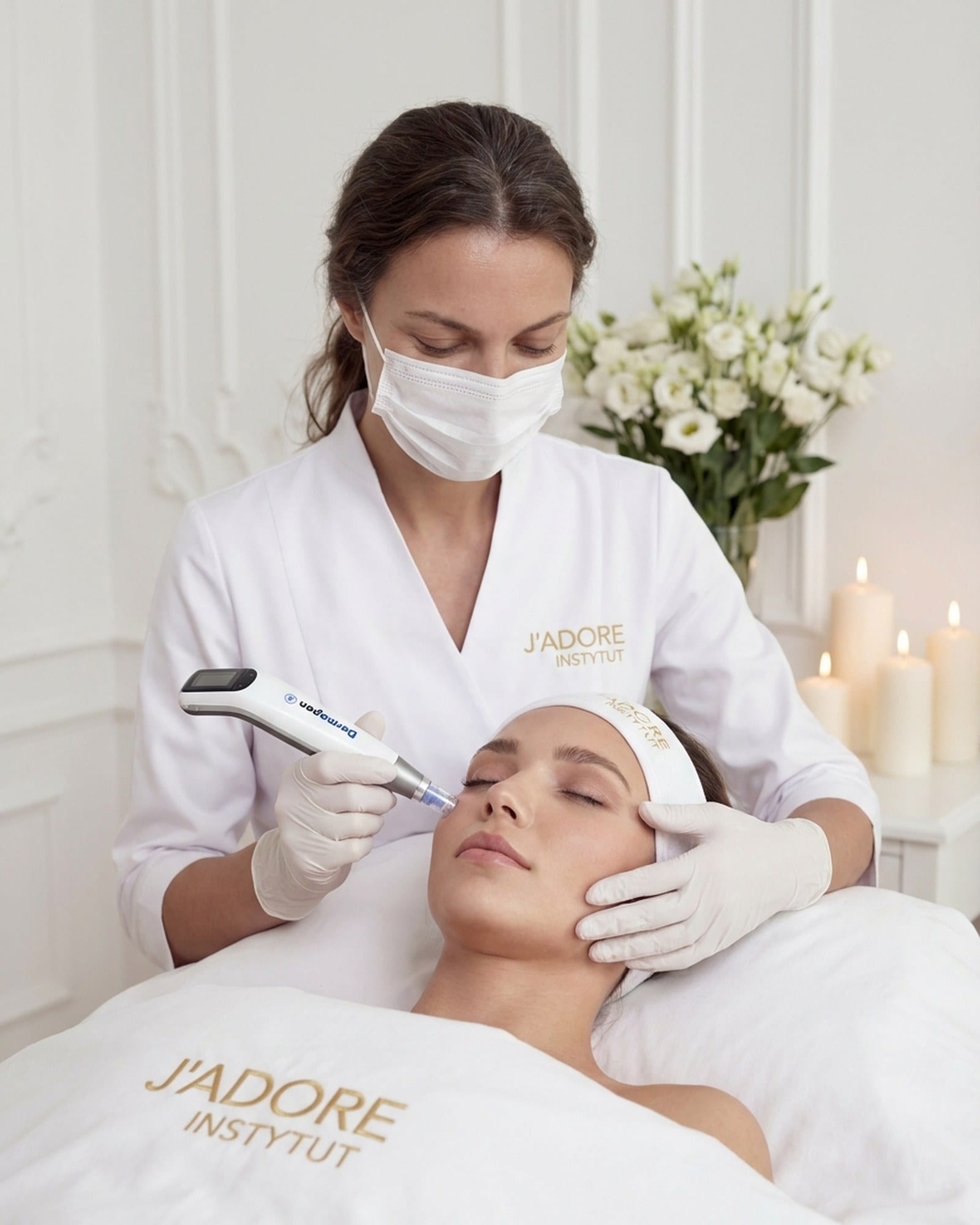
How to recognise what your skin needs
Before choosing a treatment, spend a moment observing your skin throughout the day — that's enough to steer your conversation with a cosmetologist in the right direction:
- Visible pores, shine in the T-zone, blackheads appear often → the main issue is clogged pores and excess sebum → direction: ultrasonic cavitation.
- Dull, "grey" skin that doesn't hold makeup as well as it used to, uneven texture → this is a build-up of dead epidermis → direction: microdermabrasion.
- Tight skin, no radiance, cream absorbs quickly but the skin still looks "flat" → this is mainly dehydration plus fatigue → direction: HydraFacial.
- Several issues at once: pores + dullness + lack of radiance → worth considering a combined series, or starting with HydraFacial as a skin check-up.
It's also worth remembering that skin changes with age, the season and general health. A treatment that worked perfectly on oily skin in summer might be too aggressive in winter, when the epidermis is more prone to dryness. That's why a good salon doesn't offer one protocol forever — it adjusts the approach to your skin's current condition.
What your skin at different ages is telling you
The type of treatment is one thing — age and skin condition are another. The same issue (say, dullness) can have different causes in a twenty-year-old and a forty-year-old, and may call for a different approach.
- 20+
Oily skin, prone to blackheads
Often responds well to cavitation as a regular treatment — it cleanses pores without irritating acne-prone skin. Microdermabrasion can be added if texture is uneven.
- 30+
A change in skin rhythm — dullness and early dehydration
Skin starts to "forget" how to renew the epidermis on its own. This is often where a series of microdermabrasion sessions makes sense — it stimulates regeneration. HydraFacial works well as a reset between series.
- 40+
Priority: radiance and hydration, not just cleansing
HydraFacial with richer serums can be a good choice here — it combines cleansing with intensive hydration. Microdermabrasion still has a place for thickened skin prone to rough patches.
- Every age
Regularity matters more than intensity
For many people, a series of regular, moderate treatments works better than occasional, intensive sessions. Consistency is the key to long-term results.
When it's best to combine them
The three treatments aren't mutually exclusive — on the contrary, they often give the best results when combined. The logic behind combining them is simple: first we cleanse deeply, then we exfoliate the epidermis, then we hydrate and regenerate. In this order, each step works on better-prepared skin.
Cavitation + microdermabrasion
Cavitation loosens blackheads and cleanses pores, microdermabrasion removes layers of dead epidermis — together they achieve a result that neither treatment reaches as quickly on its own. Often performed in a single session.
Cavitation + HydraFacial
A combination for skin that's both oily and dehydrated — cavitation removes excess sebum, HydraFacial finishes with hydration and barrier repair. For many people, skin after this combination looks like it's had a day-long detox.
Microdermabrasion + HydraFacial
Intensive exfoliation plus immediate hydration. A good choice when skin is thick, grey and dehydrated at the same time. HydraFacial as the finishing step minimises the risk of dryness after microdermabrasion.
Three-step series (full cleansing protocol)
Planned over several weeks — each treatment plays a different role, performed alternately or sequentially depending on your skin's current condition. For many people, results are significantly better than one intensive treatment every few months.
A good salon doesn't sell a treatment — it sells a result. That means before anything is planned, someone first looks at your skin and identifies what's happening on it. The three treatments described here are tools — and their value depends on whether they're matched to the right problem at the right time.