Why acne attracts so many myths
Acne has bad luck: it's visible, common, and appears at an age when acceptance matters most. Perfect conditions for myths. Everyone "knows something" about it because everyone has seen it on someone — and from there it's a short step to home theories that sound logical but have little to do with what's actually happening in the skin.
And quite a lot happens at once. Acne isn't "dirty pores" — it's a combination of several processes: the sebaceous glands produce too much sebum, the follicle opening becomes blocked with dead skin cells, bacteria multiply, and inflammation sets in — often driven by hormones. Four mechanisms, not one. That's why "one miracle tip" is never enough, and most myths collapse the moment we understand this is a condition, not neglect.
Eight myths, one by one
Myth 1: "Acne is a hygiene issue — you have it because you don't wash properly." This is the most damaging myth on the list, because it adds undeserved shame to a skin condition. Acne isn't caused by dirt. Blackheads and papules form inside the hair follicle, beneath the skin's surface — no amount of scrubbing from outside reaches that far. Worse, aggressive washing irritates the skin barrier and can make lesions worse. A clean face is, of course, essential — but "more washing" isn't a cure for acne.
Myth 2: "Acne-prone skin needs stripping — the drier, the better." Intuitive, and wrong. Strip your skin's entire lipid layer with harsh toners and alcohol-based products, and it reads this as an alarm signal — it produces even more sebum, the opposite of what you wanted. On top of that, dryness and irritation add fuel to inflammation. Acne-prone skin doesn't need "drying out" — it needs regulating, often with the right, light hydration.
Myth 3: "Acne comes from chocolate and fatty food." No theory deserves debunking more than this one. Fat on your plate doesn't "translate" into fat in your pores. Diet can play a role, but a subtler one: in some people, lesions worsen with a high-glycaemic-index diet (sugars, sweet drinks), and in some, with dairy. It isn't "punishment for a chocolate bar" — it's individual sensitivity. Blaming diet as the sole cause pushes people towards restriction instead of actually treating their skin.
Myth 4: "It'll pass with age — just wait it out." This is the myth that costs the most. Sometimes it really does clear up. But "sometimes" isn't enough to gamble your skin on. While you wait, deep inflammatory lesions keep working — and the longer inflammation persists in the dermis, the higher the risk it leaves a permanent mark. Acne scars don't fade "with age" the way breakouts do. Waiting isn't neutral — it's an active choice that can turn a reversible problem into an irreversible one.
Myth 5: "Just squeeze it and it'll be gone." Squeezing spots yourself is the fastest route from a single pimple to a permanent mark. Pressing pushes inflammatory content deeper into the skin and spreads inflammation to surrounding areas, damaging tissue along the way — this is exactly how pits form. Professional extraction at a salon, after proper preparation and softening of the follicle opening, is a completely different matter from late-night "picking" in front of a mirror. Some lesions — painful, deep, red nodules — shouldn't be touched at all.
Myth 6: "Sun exposure heals acne." The sun creates an illusion: skin briefly looks better because a tan masks redness and slightly dries out lesions. But this is a loan at a very high interest rate. First, sun exposure worsens post-inflammatory hyperpigmentation (PIH) — which is exactly why acne marks are so hard to fade afterwards. Second, skin responds to dryness by producing even more oil, so lesions often return with double the intensity once summer ends. Many anti-acne products and treatments require consistent sun protection, not sun exposure.
Myth 7: "It's just a cosmetic issue — a beauty flaw, not a health one." Acne is classified as a skin disease, not a cosmetic whim. Yes, mild forms can be cosmetic and respond well to skincare. But there are also forms that require dermatological care and treatment — and that, left untreated, leave extensive scarring. Reducing everything to a "beauty flaw" trivialises something that, for some people, genuinely affects not just their skin but also their wellbeing and confidence.
Myth 8: "Expensive cosmetics alone will sort it out — you just need to find the right one." Home care matters, but it's rarely a complete answer — especially with moderate to severe lesions. Acne involves several mechanisms at once (sebum, blocked follicles, bacteria, inflammation), so an effective approach usually combines tailored skincare with in-salon treatments, and sometimes dermatological treatment. A "miracle cream" is a marketing hook. What actually works is a plan tailored to your skin, not another jar off the shelf.
Why "waiting" is the most expensive myth of all
All the myths above share one outcome: they delay action. Hygiene "will sort it out", diet "is enough", the sun "will dry it up", age "will cure it" — every one of these statements is permission to wait a little longer. And with acne, the stake on that wait is a scar.
The mechanism is simple and unforgiving. A deep, long-lasting inflammatory lesion damages the dermis — the structure where collagen lives. When skin heals such damage, it doesn't always rebuild it perfectly: sometimes too little tissue forms (a pit, an "atrophic scar"), sometimes too much (a thickening). The longer and deeper the inflammation, the higher the risk a mark remains. That's why the best "scar treatment" is preventing scars from forming in the first place — calming active acne early.
Same acne, two different scenarios — in women and in men
Acne doesn't discriminate by sex, but it tends to look and behave a little differently in women and men — and it's worth knowing this, because it changes what to look out for. In women, hormonal adult acne is common: lesions settle along the jawline, chin and around the mouth, tend to flare at certain points in the cycle, and can resist "ordinary" cosmetics because the source lies deeper. This is the type of acne where it's especially worth combining skincare with a consultation — sometimes a hormonal one too.
In men, skin is thicker, has more sebaceous glands and produces more sebum, so acne tends to be more intense and more often spreads to the back and chest. There's also a factor that's easy to overlook: shaving. A blade passing over inflamed skin spreads the inflammation and irritates it further, and ingrown hairs can mimic or worsen breakouts. Men also tend to dismiss the problem for longer, until marks have already formed — and by then, "repairing" takes longer than early calming would have. The good news: the rule is the same for both sexes — the earlier, the less there is to make up for.
Where to actually start — without the myths
If, after all this, you want to step out of "waiting for it to clear up on its own" mode, start with a diagnosis, not another cosmetic. Acne comes in degrees and forms — mild, blackhead-type acne is treated differently from deep, painful, papulo-cystic acne. A consultation establishes exactly what you're dealing with, whether hormones are involved, and whether dermatological care is needed alongside cosmetology. It's a five-minute conversation that saves months of trial and error.
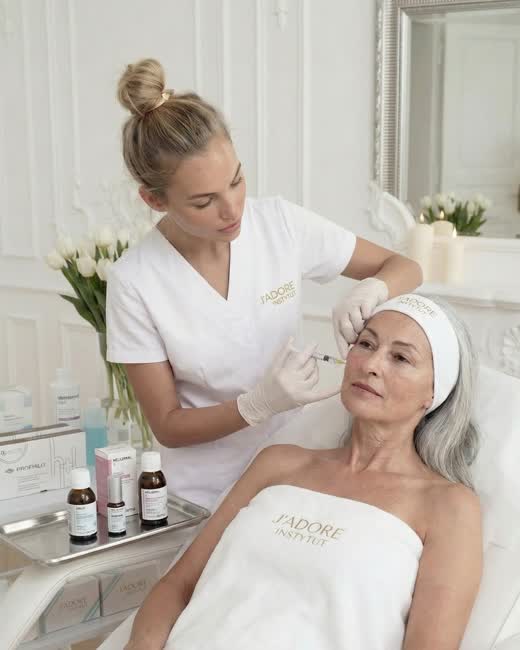
Second, think in terms of a plan, not a single shot. An effective approach to acne is usually a series, not one treatment: regular, controlled cleansing and calming of the skin, tailored home care, and — once inflammation is under control — work on marks and skin quality. Treatments such as a dedicated anti-acne programme or gentle cleansing combining a peel with serum infusion work best in a rhythm, not as an occasional extra.
Third — and perhaps most important — stop punishing your skin for having acne. Harder scrubbing, harder stripping, harsher "home peels" aren't a route to clear skin; they're a route to an irritated barrier that defends itself with… even more oil. Acne-prone skin needs consistency and gentleness, not force. And if you ever hear "just wait, it'll clear up on its own" again — take it as a signal to do exactly the opposite.