Where the "it's all the same" myth comes from
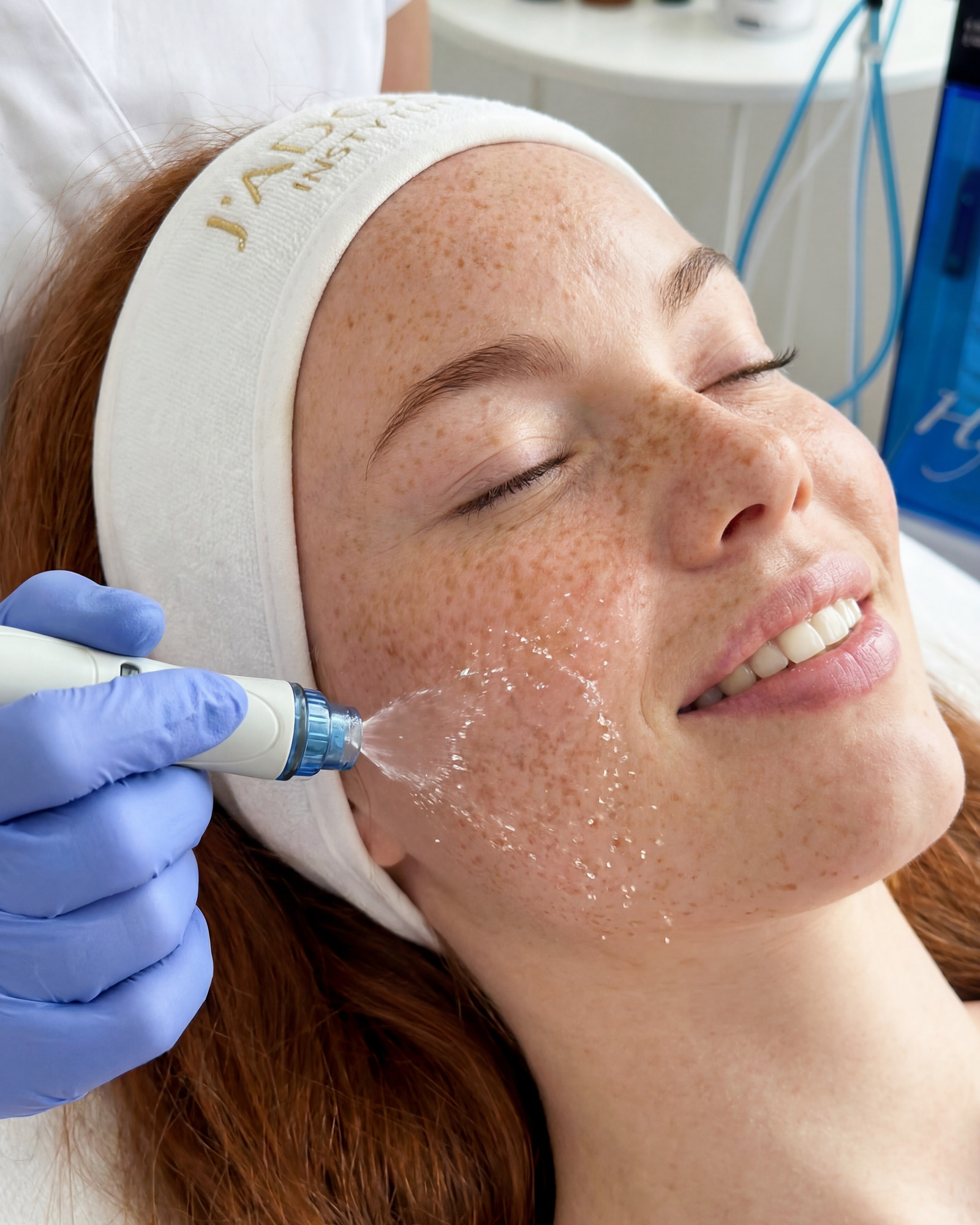
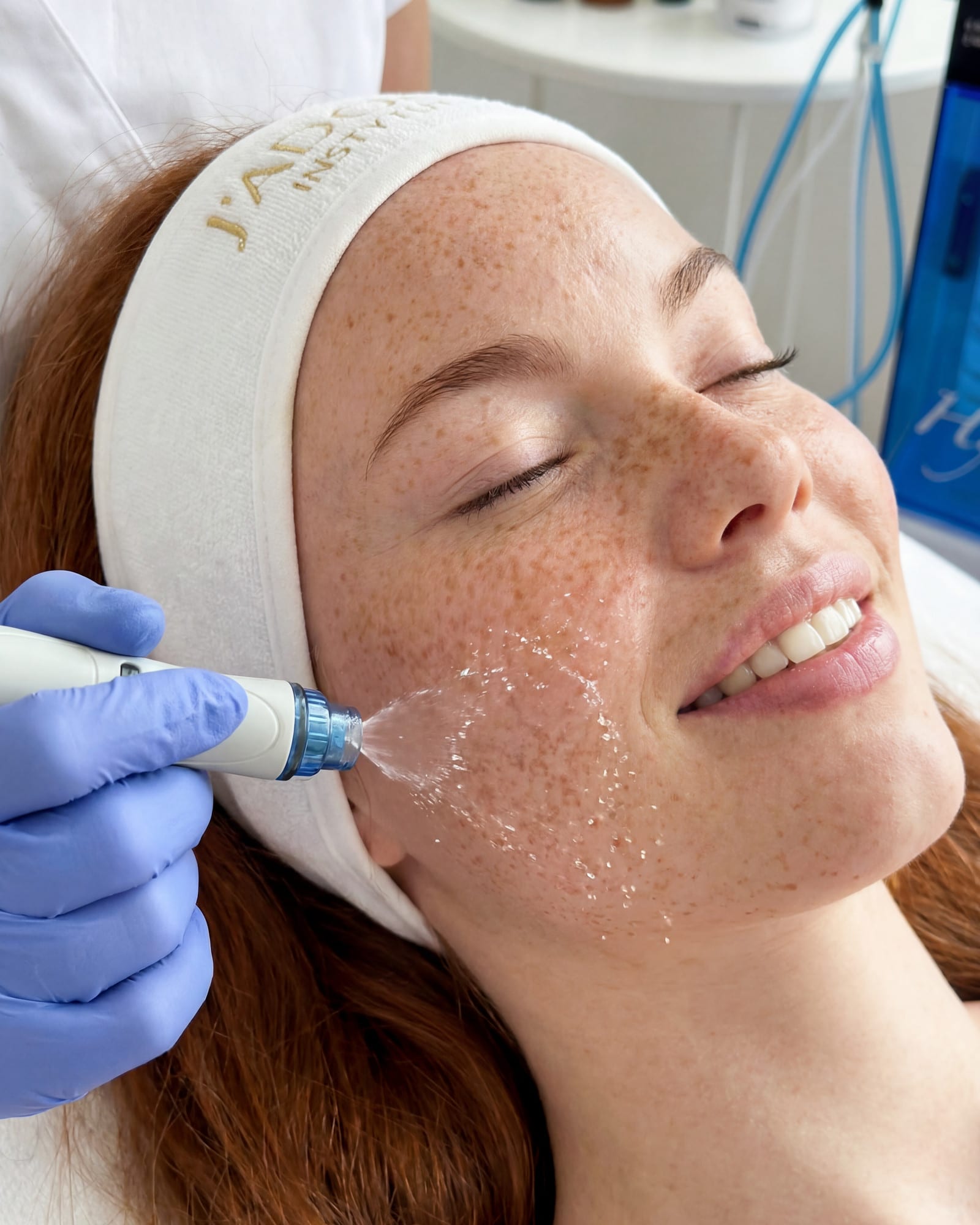
The spiral Vortex tip is HydraFacial's signature feature — and the reason imitations sell so well. Any treatment head that looks similar triggers the same mental shortcut: "ah, that's the HydraFacial from TikTok." Visual similarity, though, doesn't mean technical or formula parity. The original HydraFacial technology relies on a patented flow, specific pressure and — crucially — a closed serum system, each product designed for a particular stage of the treatment. Cheaper alternatives may copy the shape of the tip, but they don't have access to the same formulas.
The effect right after the treatment — radiant, hydrated, smoothed skin — can look similar regardless of the device. That's exactly why the difference is invisible after a single session. It shows up with regular series, with more demanding skin types (acne-prone, hyperpigmented, lax), and whenever what matters isn't just a quick effect but lasting improvement in skin condition.
Four things that really separate the original from the copy
First — the serum. The original HydraFacial system works with serums developed by the manufacturer (including GlySal, BetaHD, Antiox+ and Dermabuilder), formulated so that each stage of the treatment does a specific job — cleansing, exfoliation, extraction, hydration, antioxidant protection. Alternatives use their own or generic ingredients — these may work well, but they aren't verified within a closed system. The serum's formula is the core of the treatment — not a decoration. You don't see what's going onto your skin; you have to trust that the salon knows.
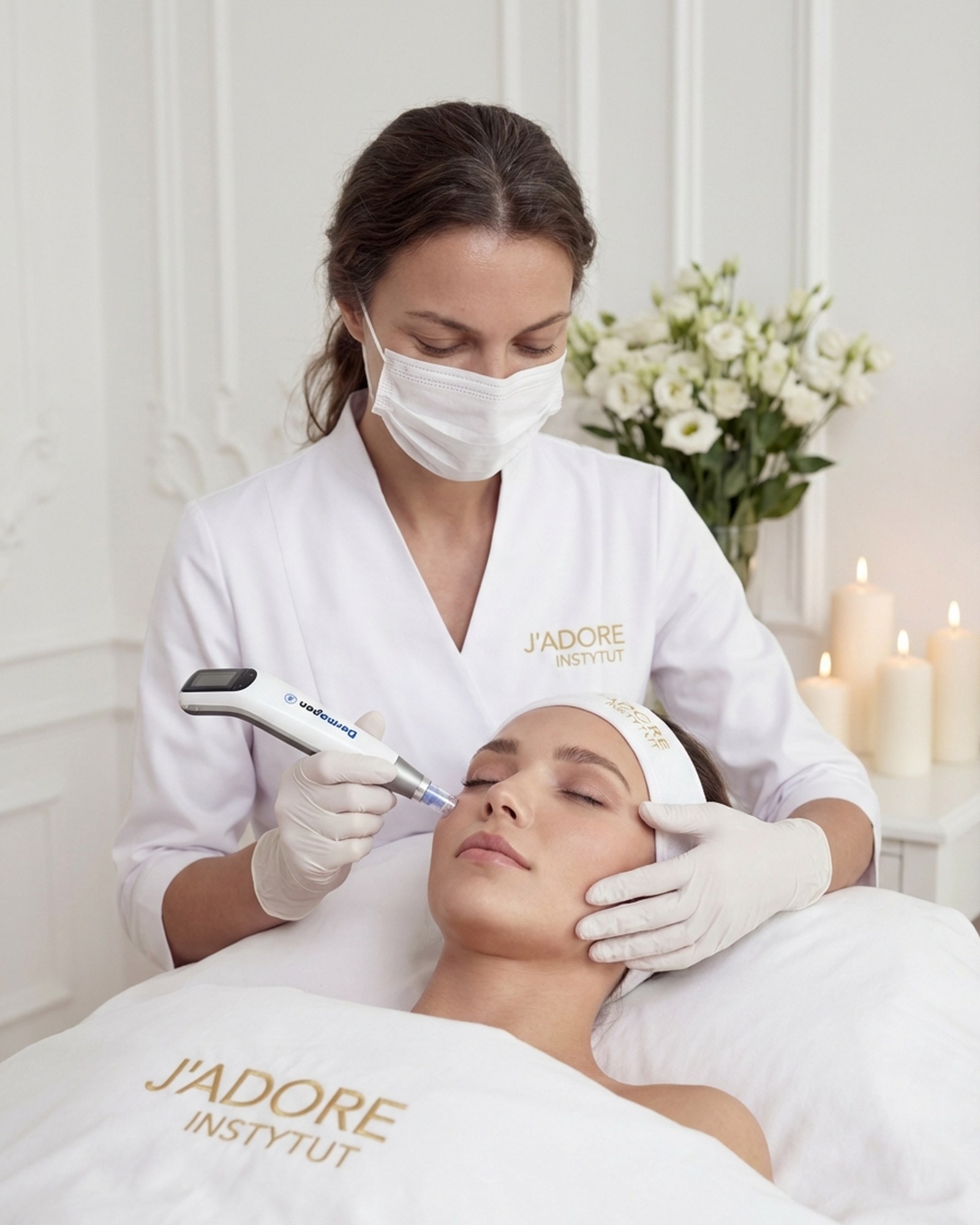
Second — the tips and their certification. The original HydraFacial spiral tip is single-use and certified. Copycat devices use their own heads — often reusable and sterilised, but not always with the same flow and suction parameters. This, in turn, affects extraction efficiency and depth of hydration. It's not a disastrous difference for cleansing normal skin; it can matter for more demanding skin, where the precision of flow counts.
Third — device certification. Original HydraFacial MD devices are covered by manufacturer servicing and regular technical checks. Non-certified devices can run correctly for a long time — but they don't come with the manufacturer's quality control. In practice, this means the salon buys the device once and has no certainty how its parameters change over time.
Fourth — the protocol. A good HydraFacial result isn't just about the equipment — it's skin diagnostics before the treatment and a protocol matched to the skin's current condition. Certified system operators go through manufacturer training; non-certified operators get the device without that background. So the difference between salons isn't only about the machine — it also lies in what the cosmetologist does before switching the tip on.
When the difference really matters
If you're after quick radiance before an important event, a one-off effect can be achieved with various devices. Healthy, hydrated skin with no special requirements can respond well to most spiral devices. But in a few situations, the system's authenticity genuinely makes a difference:
- Acne-prone skin or skin prone to blackheads — the precision of extraction and the composition of BetaHD serum affect whether impurities are removed or irritated
- Skin with hyperpigmentation — the Brite (brightening) protocol in the original system uses a specific combination of ingredients that can't be recreated in an alternative
- Mature or lax skin — the Dermabuilder protocol, with peptides and growth factors, works differently from a generic serum using the same ingredients
- A series of treatments planned over several months — only on the original system can you compare results between visits in a standardised protocol
- Reactive skin or skin after medical procedures — a trained cosmetologist knows the indications and contraindications of the system
Myth two: "if the effect looks the same, it is the same"
This is one of the most common mistakes when assessing cosmetology treatments — we focus on what's visible on the day of the visit, not on what happens to the skin over the following weeks. Right after the treatment, every spiral device gives a similar "glow" — a result of mechanical cleansing and hydration of the epidermis, which reacts immediately. The real difference starts to show after a few weeks, and with a series of sessions.
Someone who has the treatment once a year before a holiday won't notice a difference between systems. Someone planning a series to improve skin tone or reduce hyperpigmentation might. Not because the "better" device does anything magical, but because consistent, repeatable protocol and serum composition have a cumulative effect that an alternative can't guarantee.
Cheaper alternative
A device with a similar spiral head, using an in-house or generic serum
- Good cleansing and hydration results after a single session
- Lower cost per visit
- Widely available across many salons
Original HydraFacial
Certified HydraFacial MD device, manufacturer's closed serum system
- Standardised protocol, customisable with up to 10 boosters
- Serum formulated for each stage of the treatment
- Cosmetologist trained by the manufacturer
- Consistent results across a series — real comparison between sessions
Myth three: "certification is just marketing"
A device certificate carries two practical implications that go beyond a plaque on the salon wall. First — safety. A certified device has passed the approval procedures required for the European market (CE), meaning its electrical parameters, pressure and materials have been verified. Cheaper alternatives are sometimes imported outside certified distribution channels — with no service history and no guarantee that parameters stay stable after a year of use. Second — accountability. A cosmetologist working on a certified system can go back to the manufacturer in the case of unexpected reactions, protocol improvements or new clinical information. Working on non-certified equipment, they're on their own.
This isn't an argument that every non-certified device is bad. There are solid alternatives on the market, run by excellent, experienced cosmetologists. The point is different: for facial treatments, where the skin responds to the serum's composition and the device's parameters, you know what you're paying for when the salon can show you a document to prove it — not just an assurance.
How to talk about HydraFacial before booking
Whether you go for the original or an alternative, a few questions before your visit will help you understand what to actually expect. First question: which serum is used, and at what stage? A good salon can answer precisely. If the reply is "different ones, depending on the skin" with no further detail — that tells you nothing. Second question: does the cosmetologist carry out diagnostics before the treatment? HydraFacial isn't a single protocol — it's a system with several paths for different skin types. Diagnosis before treatment is the starting point, not an optional extra. Third question: is the device certified, and what's its service history? You don't need to be a technical expert — it's enough that the salon knows you're asking. Professional places answer this question calmly and without getting defensive.
- 01
Ask about the serum
Which specific ingredients are used, and at what stage of the treatment. This question separates salons that genuinely know what they're doing from those that just operate the machine.
- 02
Ask about the diagnosis
A good cosmetologist wants to know about your skin before the treatment — tendency towards acne, sensitivity, the cosmetics you use. If the salon doesn't ask, that's a signal.
- 03
Ask about the device
Asking about a device's certificate and service history is a normal question, not an eccentric demand. A trustworthy salon has this documentation in order.
- 04
Compare by asking questions — not by price
You'll get a better sense of the difference between salons from a conversation with the cosmetologist than from the price on a website. Where they answer readily, they probably genuinely know what they're doing.
A cheap HydraFacial can end up costing more — but how?
To sum up the myth we're debunking: a lower price doesn't make a treatment bad, but it does make it different. If you're after a one-off cleanse and glow, an alternative may fully meet that need. If you're planning a series with a specific goal — hyperpigmentation, acne-prone skin condition, strengthening the structure of mature skin — the difference between systems starts to carry weight. The "cheapness" of the treatment then shows up not in your wallet, but in time: more visits for a result a certified protocol reaches faster. And in risk: a serum with unknown parameters on sensitive skin is always a gamble, even if it pays off for the first few weeks.