Two treatments, two mechanisms
Before comparing effectiveness, it helps to understand what each treatment actually does physically. This isn't a question of "stronger vs gentler". These are fundamentally different approaches to cleansing the skin.
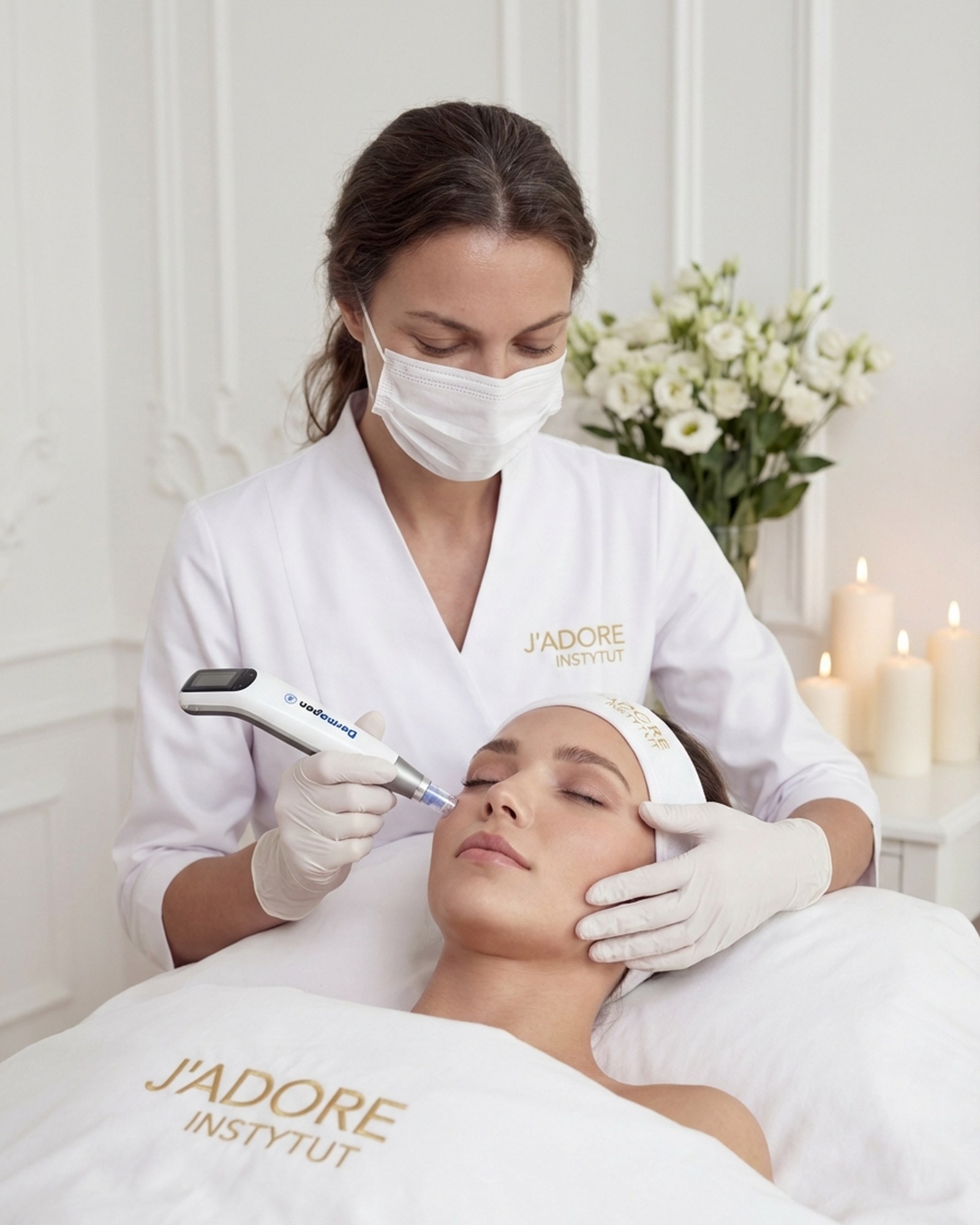
Microdermabrasion
Mechanical exfoliation of the epidermis
- Removes the top layer of dead skin cells
- Evens out texture and smooths irregularities
- Can help with rough, congested pores
- Stimulates cell renewal and collagen production
- Visible smoothing effect right after the treatment
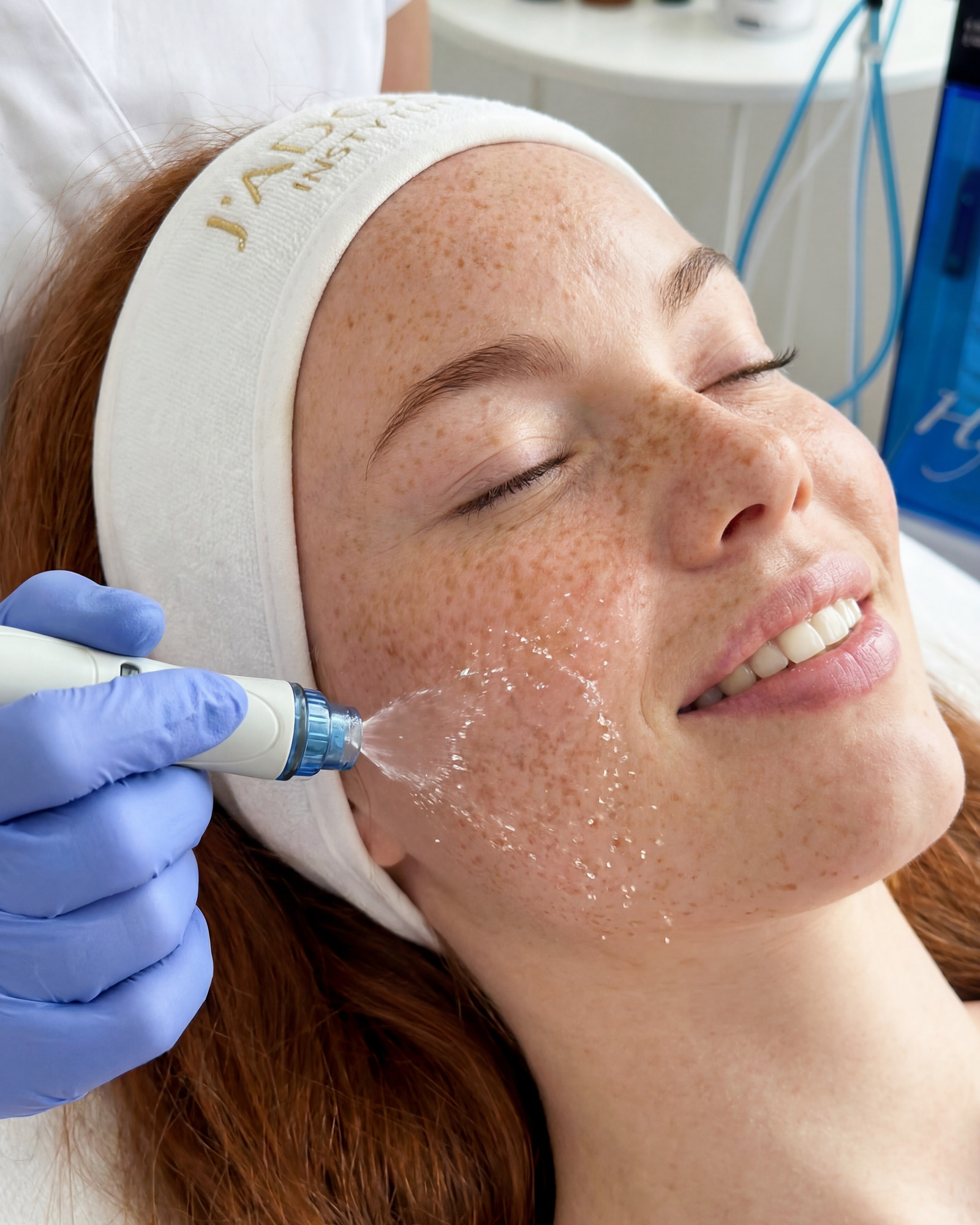
HydraFacial
Hydrodermabrasion with suction and infusion
- Combines gentle exfoliation with suction to remove sebum and impurities
- Delivers a hydrating, antioxidant serum at the same time
- Can address different skin concerns within a single session
- Gentler for sensitive and reactive skin
- Often used when oily skin is combined with dehydration
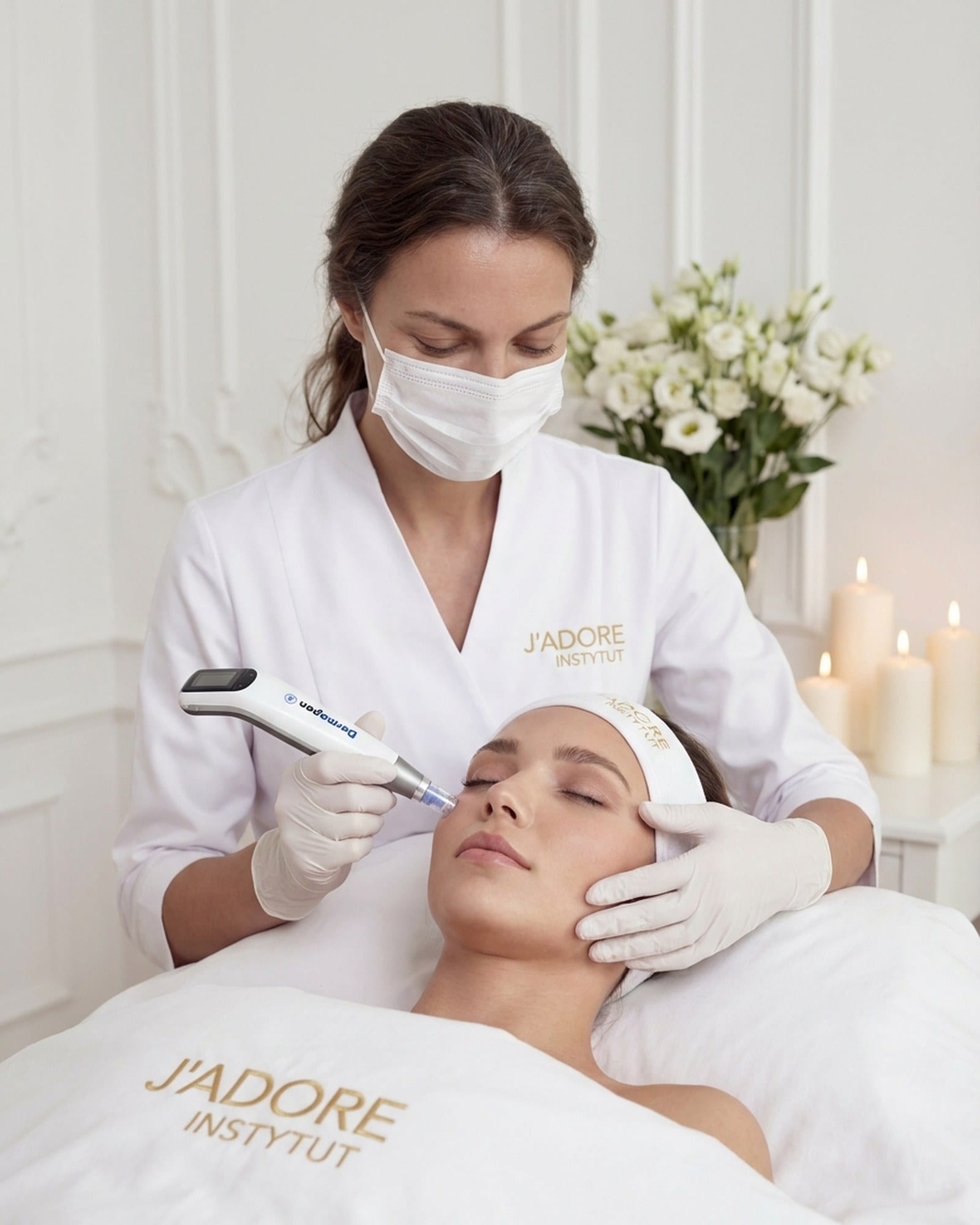
When to choose microdermabrasion, when to choose HydraFacial — and when to combine both
The choice between these treatments is rarely all-or-nothing. It's more about priority: what does your skin need most right now? Here's a simplified decision guide:
- 01
Uneven texture, rough pores, dullness
This is classic microdermabrasion territory. Mechanical exfoliation visibly smooths the surface of the epidermis. For many people, skin looks noticeably smoother and brighter after just a few sessions of the series.
- 02
Clogged pores, blackheads, an oily T-zone
HydraFacial often has the advantage here — its suction mechanism draws out pore content without mechanical pressure. For people with active acne, this can be the safer choice.
- 03
Oily skin combined with dehydration or sensitivity
HydraFacial handles this better — it cleanses and delivers hydration at the same time. Microdermabrasion on sensitive or reactive skin can be too much stimulation, especially at the start.
- 04
Evening out skin tone, shallow post-acne marks
A series of microdermabrasion sessions can help with surface-level discolouration and uneven skin tone. Deeper marks need other methods — your doctor or cosmetologist can advise.
Series or single session — how it works in practice
One of the most common misunderstandings: expecting a lasting change after a single treatment. For oily skin — skin with a tendency to overproduce sebum — a single session gives a temporary effect, but real regulation takes time and a series.
- A series of microdermabrasion sessions (usually several treatments spaced a few weeks apart) gradually evens out texture and reduces the visibility of pores. For many people, results build up session by session.
- A series of HydraFacial sessions allows work on different aspects of the skin: sometimes the priority is deep cleansing, other times intensive hydration or regulating action. The steps can be adjusted each time.
- Gaps between sessions matter just as much as the treatment itself — skin needs time to recover. Your cosmetologist adjusts the frequency to your skin's current condition.
- Home care supports the series — without it, results fade faster. This matters especially for oily skin: light hydration, SPF protection, and avoiding overly drying products.
When it's worth combining both treatments
Microdermabrasion and HydraFacial aren't in conflict — in many cases, they complement each other within a skincare plan. The logic behind combining them is simple: one works on texture and epidermal renewal, the other cleanses pores and hydrates. Alternating sensibly between the two can give better results than relying on just one method.
Microdermabrasion + HydraFacial in an alternating plan
Microdermabrasion for texture and skin tone, HydraFacial for pore cleansing and hydration — alternating methods every other session, for example. This allows you to work on several aspects at once without overloading the skin.
HydraFacial as a starting treatment, microdermabrasion as a follow-up
For very congested pores or reactive skin, it's worth starting with HydraFacial (a gentler stimulus, combining cleansing and hydration), then introducing microdermabrasion once the skin is better prepared.
Cleansing plus supporting home care
Every series works better with the right home care. For oily skin, the key points are: light hydration without heavy creams, daily SPF, and avoiding drying products (which, paradoxically, increase sebum production).