What exactly are spider veins — brief anatomy
Spider veins, medically known as telangiectasias or commonly called “thread veins”, are enlarged small blood vessels just beneath the skin’s surface. They are not veins in the everyday sense. They are capillaries and the smallest veins which, for various reasons, have permanently lost their ability to contract properly. Instead of flowing freely away, blood partly remains within them. This makes the vessel enlarge and become visible through thin skin.
In terms of appearance and location, spider veins form characteristic patterns: stars radiating from a central point, tree-like branches along the calf, or spiderweb-like networks on the thighs. Their colour — from pinkish red through deep purple to bluish grey — depends on how deeply the vessel lies and whether it is a small vein or a capillary. The closer it is to the surface and the more oxygenated blood it contains, the redder the shade. The deeper it lies and the more deoxygenated blood it contains, the darker it appears.
Where do they come from — what really damages blood vessels
Spider veins rarely have one specific cause. More often, they result from several factors that together cross the point at which a vessel becomes permanently enlarged and does not return to normal. It is worth knowing them — not to blame yourself for each one, but to understand what can be modified and what cannot.
- Genetics (the foundation). This is the starting point we do not choose. If spider veins and varicose veins are common in your family, you are clearly more likely to develop them. This is not about one genetic defect. It is an inherited weakness of vessel walls and venous valves — the tissue is simply less elastic and less resistant to strain.
- Prolonged standing and sitting. Gravity is a constant challenge for blood vessels in the legs. When you stand or sit for many hours, blood must travel an exceptionally long way upwards, against gravity. Venous valves help. Yet with prolonged exposure, pressure builds up, the vessel wall stretches and may eventually fail to return to its original shape.
- Pregnancy. The growing uterus puts pressure on vessels in the pelvis, reducing blood flow from the legs. At the same time, pregnancy hormones, especially progesterone, relax vein walls. Together, these effects create ideal conditions for spider veins to develop. This is why many women first notice them during their first pregnancy.
- Hormones and hormonal medication. Oestrogen and progesterone affect the elasticity of vessel walls. Hormonal contraception, hormone replacement therapy and hormonal fluctuations during the cycle may encourage enlarged vessels. This is why spider veins are much more common in women than in men.
- Body weight and a sedentary lifestyle. Excess weight increases pressure in the venous system, especially in the legs. Lack of movement also means less calf muscle activity. The calf muscle pump is responsible for actively moving blood upwards.
- Injuries and micro-injuries. Bruising, ankle sprains and even prolonged pressure from narrow footwear can locally damage small vessels. This may initiate the development of spider veins in a particular area.
Summer as an aggravating factor — why heat makes a difference
Spider veins are present throughout the year — summer simply makes them more visible and often genuinely worsens them. This is not an optical illusion caused by wearing shorter skirts. Several specific mechanisms lie behind the summer increase in spider veins.
- 01
Heat dilates blood vessels
High temperatures cause blood vessels in the skin to dilate. This is a natural mechanism that helps the body release heat. Healthy vessels return to their previous size after cooling down. Vessels with already weakened walls may enlarge permanently — or at least remain clearly visible for a long time.
- 02
Sun weakens tissue
UV radiation damages collagen and elastin in the skin and vessel walls. Legs regularly exposed to the sun have thinner, less elastic skin and weaker vessels. They are more prone to permanent enlargement. This is why spider veins on the legs are clearly more common in people who have spent a great deal of time in the sun without protection.
- 03
Hot baths and saunas
Long hot baths, saunas or soaking your legs in very warm water work much like a heatwave — they rapidly dilate blood vessels. In people with a predisposition, each episode places additional strain on vessel walls. A cool shower on the legs after exercise works in the opposite way. It helps vessels return to normal more quickly.
- 04
Gravity and heat while travelling
Long flights or car journeys in summer involve a double risk. Heat dilates blood vessels, while lack of leg movement prevents the muscle pump from draining blood effectively. Venous thrombosis is not without reason a genuine risk during long journeys. Spider veins are a milder but related manifestation of the same mechanism.
Why “I will wait until autumn” is not always a bad idea
Many people admit that they intended to address spider veins long ago. Yet the summer fear of being seen at the beach passes, legs are covered by trousers and the matter returns to the drawer until the following summer. There is, however, a practical reason to plan treatments specifically for autumn and winter — and not because they cannot be performed in summer.
This does not mean that nothing can be done in summer. It can — and many people do so. However, if you have a choice, planning ahead offers greater comfort and a better final result. The key is not to let “I will wait until autumn” become “maybe next year”. It is worth booking in advance, before waiting lists grow after the season.
How treatments work — mechanism, not magic
Before discussing specific methods, it is worth understanding one shared principle: no spider vein treatment “repairs” a vessel. It is permanently damaged and its wall cannot be repaired. Instead, the aim is to close the vessel and allow the body to gradually absorb it. Blood that flowed through it is redirected to healthy vessels lying deeper beneath the skin. The treated vessel becomes scarred, invisible and fades after a few weeks.
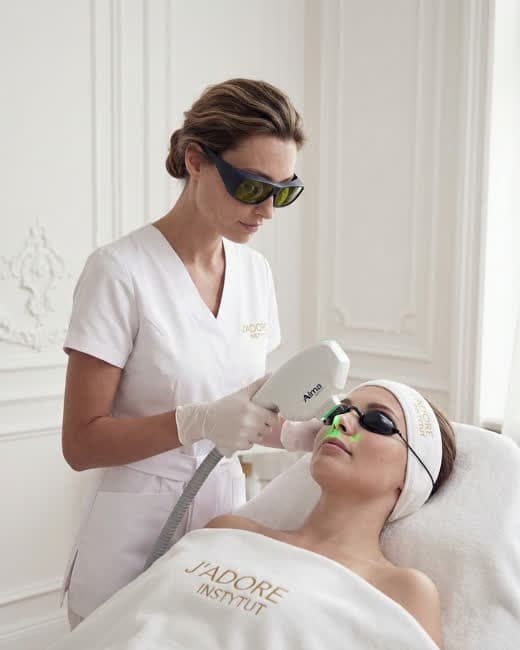
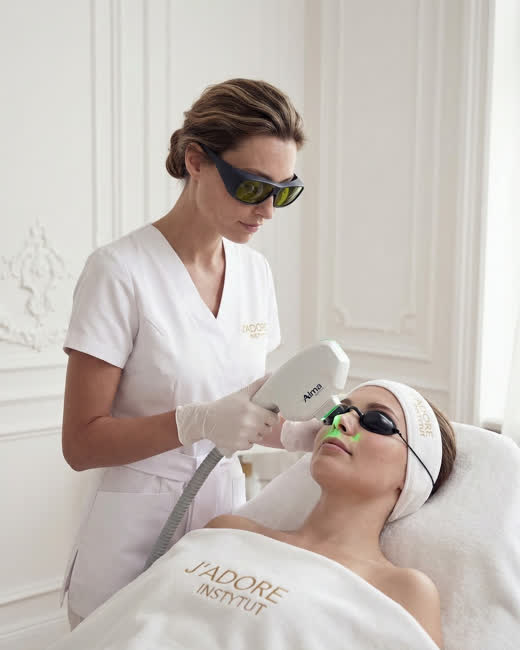
Vascular laser
light energy closes the vessel
- Laser energy is absorbed by haemoglobin in the vessel
- The vessel heats up and closes
- No injections required, works externally through the skin
- Effective for small, superficial vessels (red spider veins)
- May require several sessions for a larger area
Sclerotherapy
an injected substance closes the vessel
- The preparation is injected directly into the vessel
- It irritates the small vein wall and causes sclerosis (scarring)
- Precise — reaches vessels regardless of their depth
- Effective for larger spider veins and reticular veins
- The vessel gradually fades over several weeks
In practice, both methods complement each other. Laser treatment works very well for small, red surface vessels. Sclerotherapy may be more effective for larger, deeper networks. A good consultation should assess what predominates in your case. It should then propose an approach tailored to this specific presentation, rather than one scheme for everyone.

What you can do every day — prevention that works
Treatments remove what is already there. Prevention slows the development of new spider veins. For people with a genetic predisposition, it will not eliminate the problem completely. However, it can genuinely reduce its rate of progression. Several habits are well supported enough to be worth knowing.
- A cool shower for your legs after exercise or on a hot day. Cold causes vessels to constrict and helps them recover after widening due to heat. It does not need to be icy. Water noticeably cooler than body temperature is enough, applied from the knees down for several seconds.
- Avoid very long hot baths and saunas if you are prone to spider veins. Saunas are not prohibited, but it is worth finishing with a cold rinse for your legs and avoiding excessive temperatures.
- Keep moving. The calf muscle pump naturally supports your veins — every step helps blood return upwards. Sitting for 8 hours without getting up is particularly unfavourable for leg vessels. Regular walks, swimming and cycling are especially recommended for vascular concerns.
- Avoid crossing your legs while sitting. This habit puts local pressure on vessels and restricts blood flow. When repeated regularly, it may contribute to spider veins appearing in characteristic areas.
- Sun protection for your legs — especially if you have fair, thin skin and are prone to spider veins. UV radiation accelerates the breakdown of vessel walls and connective tissue in the skin.
- Elevate your legs while resting. The familiar advice to “put your legs on a pillow” makes sense. It reduces pressure in the leg vessels and supports blood drainage. Several minutes a day can make a difference if you are prone to swelling.
When it is worth coming for a consultation
Not every spider vein requires immediate action. However, some signs should prompt a consultation sooner rather than “someday”. It is worth booking an assessment when:
- There are noticeably more spider veins each season — if the area is expanding, it is worth finding out what drives this process.
- They are accompanied by general symptoms: a feeling of heavy legs in the evening, ankle swelling, night cramps, tingling or itching over a vein. These may indicate a deeper venous concern.
- They have appeared in a new area without an obvious cause — especially in younger people without clear risk factors.
- You have doubts about what you are seeing — it is not always easy to distinguish spider veins from reticular veins, and the approach differs for each.
- You simply want to know what options you have — with no commitment to anything. A good consultation is an assessment, not a sale.
It is worth remembering that the results of vascular treatments depend largely on how early you start acting. A small, recent spider vein is easier and quicker to close than an extensive, established network. This is one of those cases where postponing it until “someday” makes things harder, not easier.
Leg mesotherapy
Support for the condition of the skin and tissue around vessels — it may complement vascular treatments, especially when the skin is thin and needs nourishment.
Vascular Laser Therapy
The first-choice method for small, superficial spider veins — often combined with sclerotherapy for more extensive concerns.
Phlebology consultation
When spider veins are accompanied by general symptoms or a deeper venous concern is suspected — assessment of the entire venous system provides a basis before deciding on a cosmetic treatment.