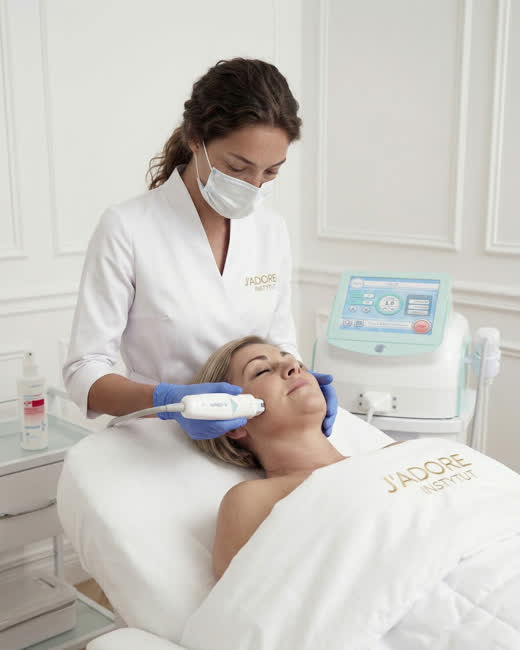
Where hyperpigmentation actually comes from — a quick anatomy lesson
Hyperpigmentation is a build-up of melanin — a pigment produced by melanocytes in the basal layer of the epidermis. Melanin is your natural filter. It protects cell nuclei from UV radiation. The problem starts when melanocytes produce too much of it, or produce it unevenly. The result is dark spots, patches, melasma, or post-inflammatory hyperpigmentation after acne.
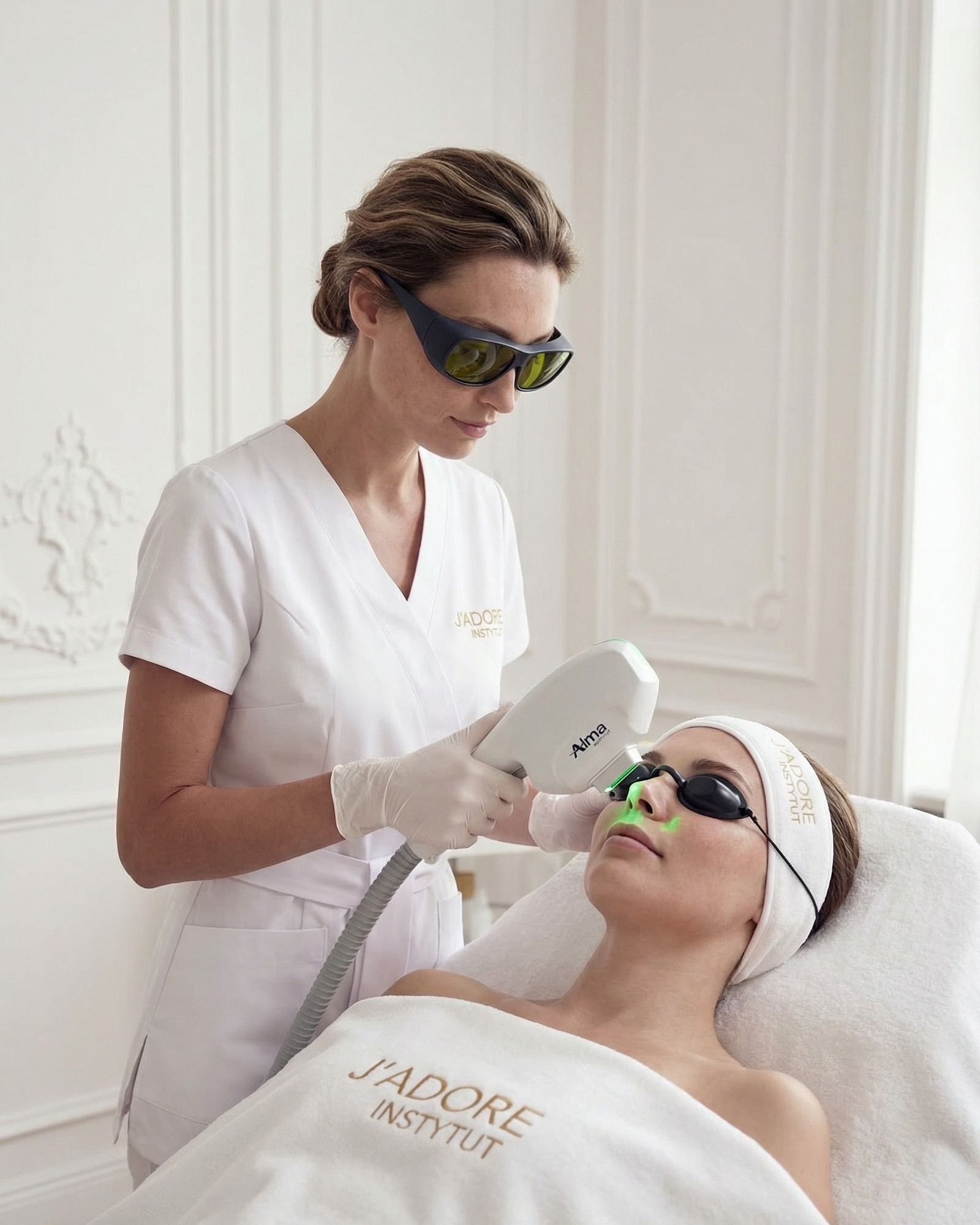
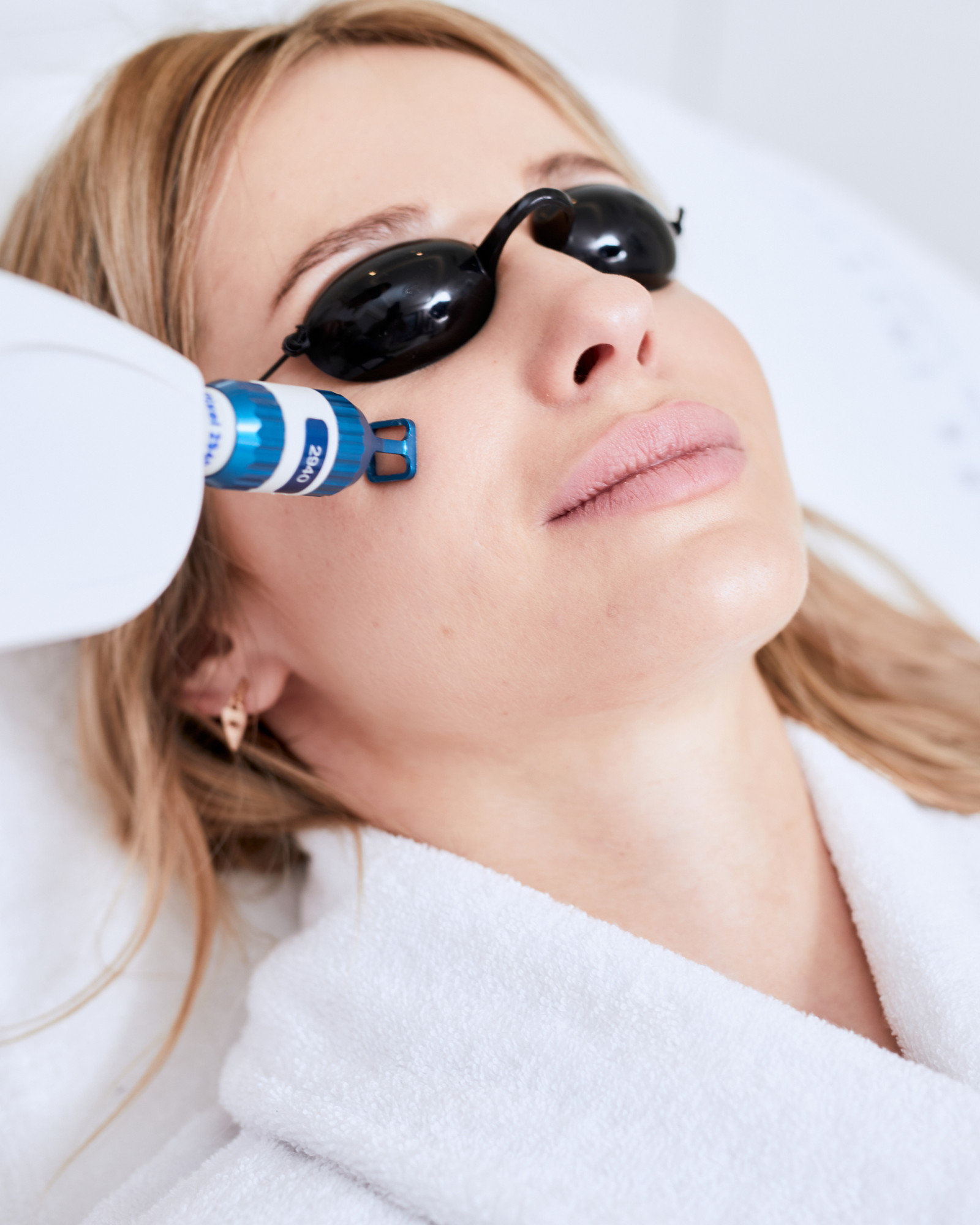
Importantly, melanin settles in several layers — some close to the surface, some deeper. It's the deeper layer that responds poorly to brightening creams, but responds well to laser light or intense pulsed light. This explains the difference in effectiveness between a drugstore cream and a professional treatment. It isn't about the strength of an ingredient — it's about whether it reaches the layer where melanin actually sits.
Myth 1: "The sun bleaches hyperpigmentation — maybe it'll go away on its own"
This is one of the most persistent myths. The sun doesn't bleach hyperpigmentation — it deepens it. UV radiation is the main signal that tells melanocytes to produce more melanin. If a dark spot was barely visible in March, after a week's holiday it can look noticeably darker. Not because the skin is "reacting" or "working through the problem" — simply because it's adding more layers of pigment.
A common trap is false tone-evening from tanning: as the whole face darkens, the spot looks less obvious against the tan. That's only contrast, not a therapeutic effect. Once summer ends and the tan fades, the spot comes back — often darker than the year before.
Myth 2: "You can't do anything about hyperpigmentation in summer"
This is also an oversimplification — though it contains a grain of truth. In summer, you can have some treatments: gentle low-concentration chemical peels, laser therapy at low settings, mesotherapy with brightening active ingredients. Not every treatment requires a winter break.
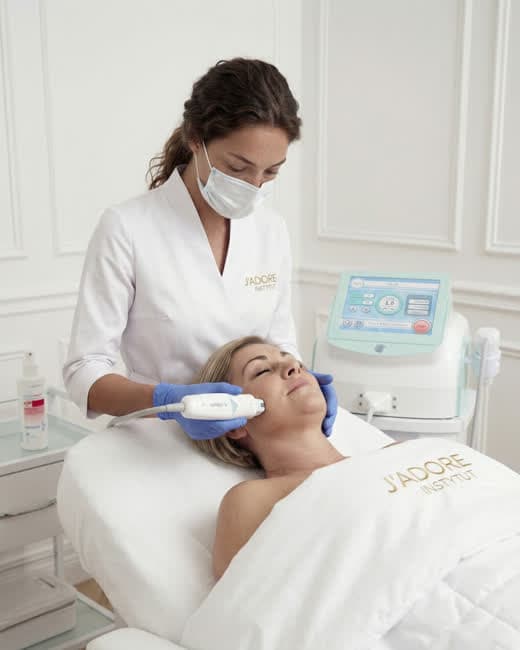
But the key treatments for deeper, more stubborn hyperpigmentation — intensive IPL, ablative lasers, stronger chemical peels — require skin that hasn't been exposed to the sun, both before the session and for several weeks after. This is where the season matters fundamentally. Not because "that's how it's always been done", but because skin in recovery is more sensitive than usual, and melanocytes are irritated.
Why autumn and winter are biologically better — three reasons
- 01
Less UV — less "noise" for melanocytes
In autumn and winter, UV radiation is many times weaker than in summer. Your skin doesn't receive daily signals that push melanocytes to produce pigment. Treatments land on calmer, less reactive ground — which helps results last.
- 02
Recovery without exposure
After a treatment, your skin needs time to rebuild — from a few days to a few weeks, depending on the type and intensity. In winter, it is easier to limit accidental exposure to intense sun during recovery. Any ski trip can be planned in advance, with your skin prepared using sunscreen.
- 03
A full series fits in before summer
Effective treatment for hyperpigmentation rarely means one session — it's usually a series of several sessions spaced a few weeks apart. Starting in autumn means you can complete the full series calmly, and enter summer with skin that's already rebuilt — instead of leaving treatment half-finished.
Myth 3: "I have dark skin / a strong tan — this won't work for me"
This myth is only partly true. Skin with a higher phototype (naturally darker, or heavily tanned) does require an individual approach, because it responds differently to light energy. But "different" doesn't mean "won't work" or "no effect". It means selecting the right settings, the right type of laser or device, and often splitting the process into more sessions at lower intensity.
The risk behind this myth is real: choosing the wrong energy level for a skin phototype can cause post-treatment hyperpigmentation — a new, reactive dark patch appearing after treatment. That's why a consultation before starting a series is essential. But there's no barrier to effective treatment — it's one that a properly tailored protocol can overcome.
Myth 4: "One treatment is enough"
A dark patch that took months or years to form rarely disappears after one session. Melanin settles in layers — a treatment reaches a certain depth and breaks up the layers within its range. The next session reaches deeper layers, or ones that appeared after the previous session.
Hence a rule worth remembering: a series is the standard, not the exception. For many types of hyperpigmentation, we're talking three to five sessions with intervals between them. Starting in autumn gives you space to complete a full series without rushing — and you go into spring with skin that's finished treatment, not halfway through it.
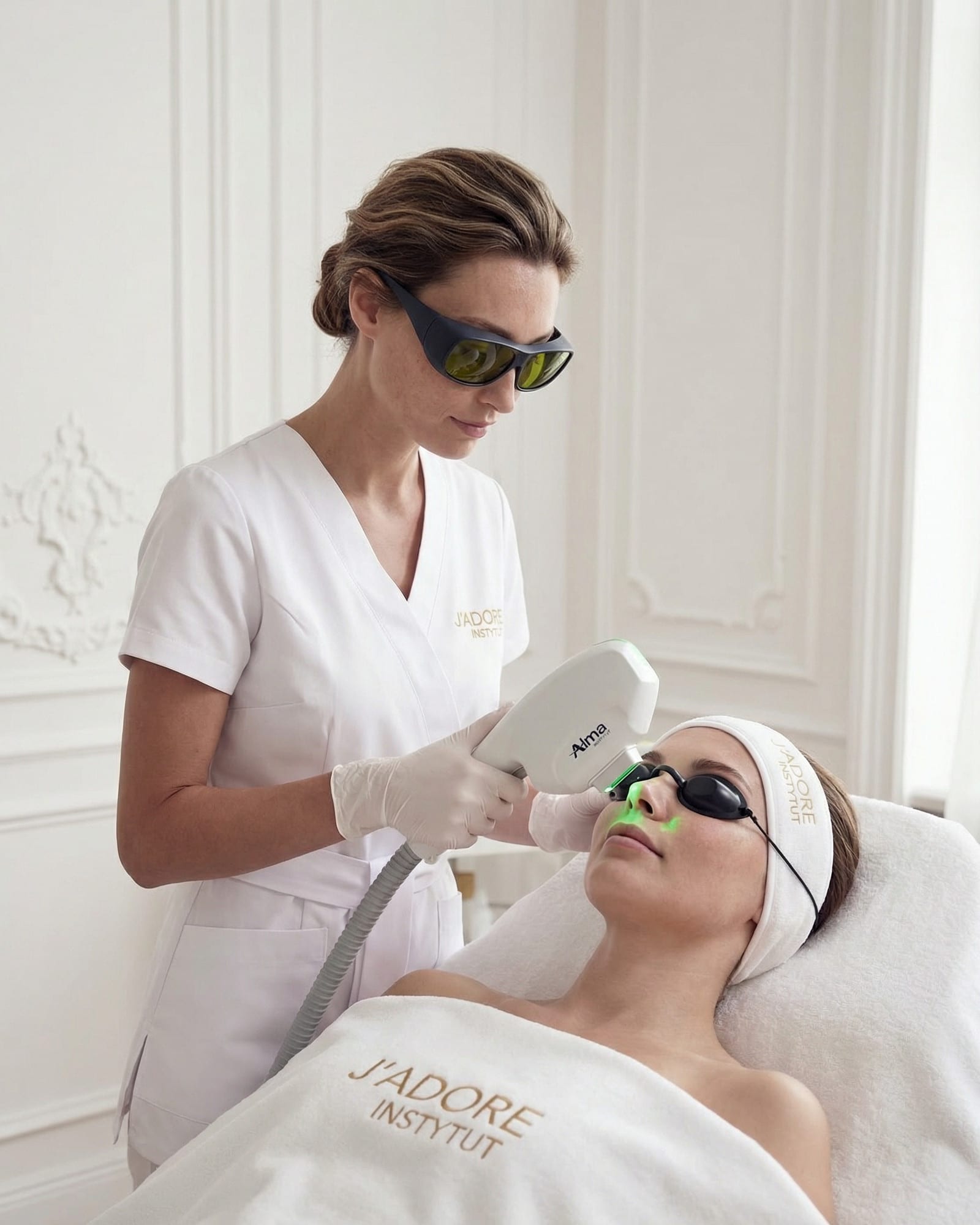
Myth 5: "A brightening cream will achieve the same thing"
Brightening creams with active ingredients — vitamin C, arbutin, kojic acid, retinol, niacinamide — have documented effects on surface-level hyperpigmentation. Used regularly, they can gradually lighten shallow spots and even out skin tone. This is a valuable tool, but one with limited reach.
Brightening cream
home care
- Works on the surface of the epidermis
- Results after a few weeks to months
- Requires daily consistency
- Works well on shallow, recent hyperpigmentation
Professional treatment (laser, IPL)
in-salon therapy
- Reaches deeper skin layers
- Results visible after a series of sessions
- Requires an aftercare routine following treatment
- Effective for deeper, older, more stubborn hyperpigmentation
The most effective approach combines both: a series of treatments in autumn and winter, plus well-chosen home care all year round. One without the other still delivers results — together, for many people, they deliver lasting ones.
How to prepare your skin before a series — and how to care for it after
Before your first session, it helps to give your skin a few weeks of "quiet time" — cutting back on tanning if you had intense sun exposure over summer, and making sure your skin is in good condition. If you've been using retinol, your specialist will tell you whether to take a break — this isn't always necessary, but for some treatments it is.
- SPF 30–50 all year round — not just after treatment. This is the foundation of both prevention and maintaining results.
- Hydration: skin with a healthy barrier responds better to treatment and recovers faster.
- No self-tanner before your consultation — an artificial tan makes it harder to assess how deep the hyperpigmentation sits.
- Diet and hydration — melanocytes are part of living tissue, and well-hydrated skin regenerates faster.
- After treatment: no scrubbing or exfoliating for the period your specialist recommends.
Who especially benefits from starting in autumn
Timing matters most for specific types of hyperpigmentation and specific people. There are a few groups for whom an autumn-winter start is particularly helpful.
People with post-inflammatory hyperpigmentation from acne — dark marks left behind by breakouts. This type of hyperpigmentation often returns in summer, when heat and sweat aggravate inflammation in the skin. In winter, skin is calmer, and treatment lands on a better-controlled base.
People with liver spots and lentigines (on hands, décolletage, arms) — this type of hyperpigmentation responds very well to laser but needs several sessions. Winter allows you to complete them without needing to cover your arms or hands from the sun every day.
Before you decide — what's worth knowing upfront
A few things worth keeping in mind before you book your first visit. Results aren't guaranteed — your skin's response depends on the type of hyperpigmentation, phototype, the depth of the melanin, and your skincare history. A good specialist will tell you honestly what to expect — and won't promise miracles after one session.
After treatment, your skin may be red, slightly swollen, or lightly flake for a few days. This is a normal, controlled process — not a complication. During this time, it's important not to scrub your skin and to protect it from the sun.