Why men's skin is a different matter
Before getting into the details of peels, it's worth understanding one fact: male skin differs from female skin anatomically, not just statistically. It's around 25% thicker, has more collagen fibres and — crucially — produces significantly more sebum throughout life. Sebaceous glands are larger and more active, which directly translates into clogged pores, oiliness and a tendency towards acne — even in adult men, not just teenagers.
Then there's shaving. If you shave several times a week, you regularly disrupt the epidermis — micro-injuries, potential follicle infection, ingrown hairs. Hygiene or the tools aren't to blame: it's the skin's mechanics, which regenerate daily after a razor or trimmer and are either well prepared for that or not.
What is a mandelic acid peel — and why "mandelic"?
Mandelic acid comes from bitter almonds — hence the name. It belongs to the AHA (alpha-hydroxy acid) family, the same group as glycolic and lactic acid peels. The difference matters: mandelic acid has the largest molecule of all the popular AHAs, so it absorbs more slowly and acts more gently. Less stinging, less irritation — suited to sensitive skin, and to skin that's just been shaved.
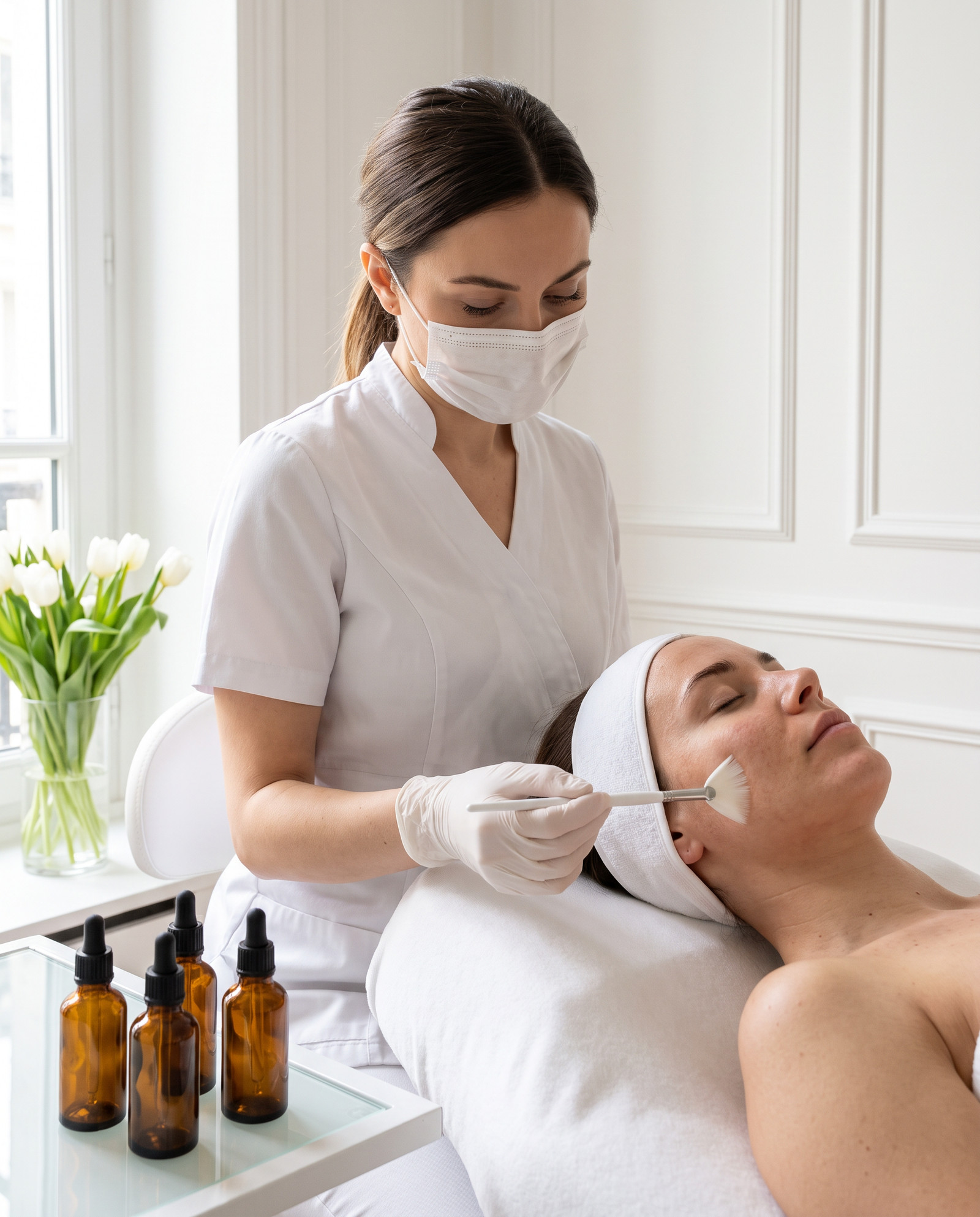
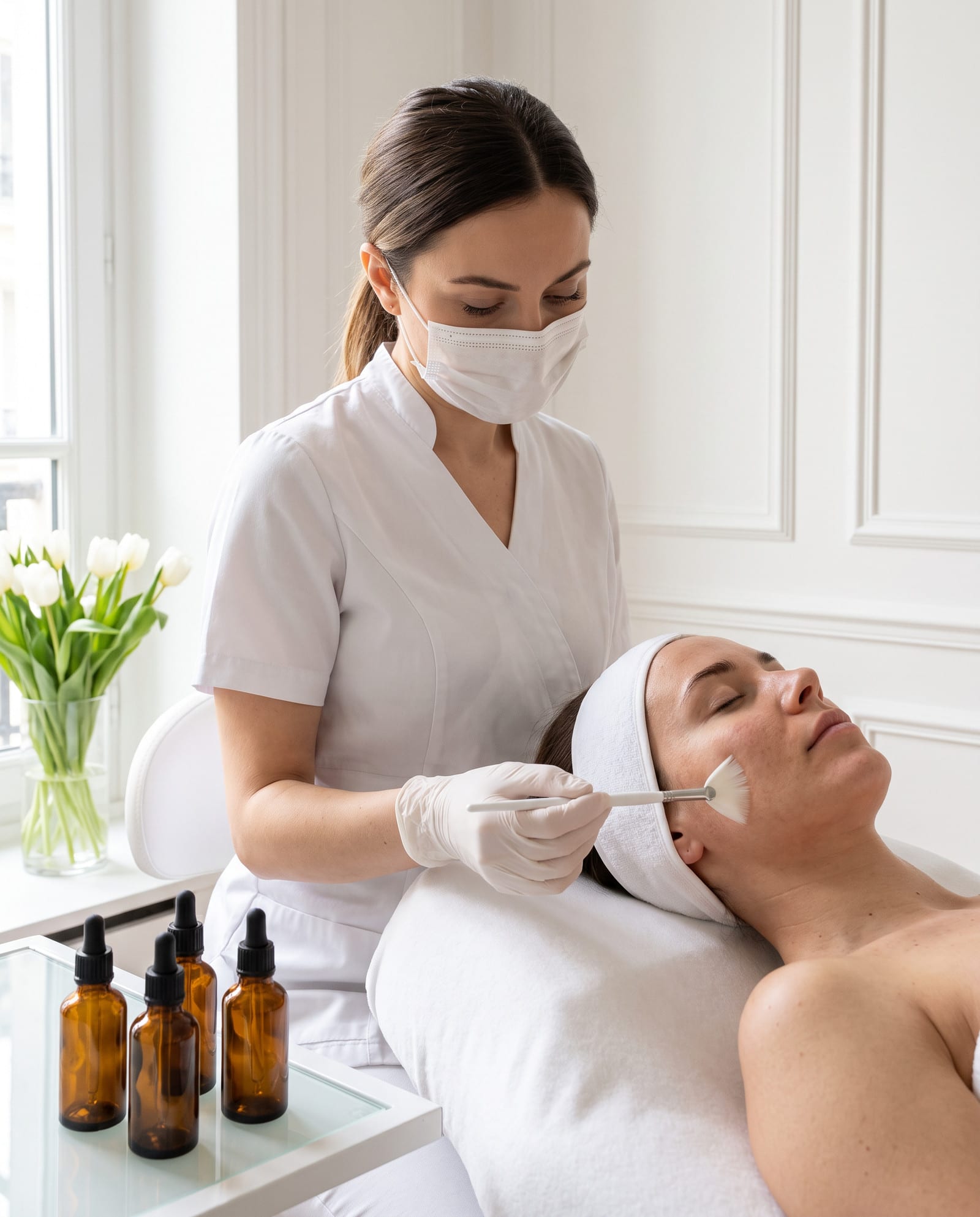
In the salon, we apply the mandelic acid peel to your skin at a controlled concentration, for a set time. The acid dissolves the bonds between dead epidermal cells and speeds up their shedding. The result: skin looks fresher, pores appear less visible, and skin absorbs subsequent active ingredients better than before the treatment.
Mandelic acid peel
for sensitive and oily skin
- large AHA molecule — absorbs slowly, works gently
- antibacterial properties — limits the growth of acne-causing bacteria
- gentle on skin prone to post-shave irritation
- can be used on active acne
Glycolic acid peel
for skin with hyperpigmentation and wrinkles
- smallest AHA molecule — penetrates deeper, works faster
- stronger exfoliating effect, visible after fewer sessions
- effective for hyperpigmentation and shallow wrinkles
For men with active acne or regular post-shave irritation, a mandelic acid peel can be the better first choice — precisely because it doesn't add extra stress to skin that already goes through a lot.
Adult male acne — where it comes from and what to do about it
Adult male acne often doesn't look like the textbook teenage version. It's less often classic large spots across the whole face, and more often bumps along the chin and jawline, blackheads around the nose, irregular breakouts on the neck — wherever the skin is regularly shaved. The mechanism is the same: sebum + dead cells + Cutibacterium acnes bacteria = a blocked follicle.
Mandelic acid works on acne on several levels at once:
- Exfoliates — removes dead epidermal cells before they block the pore
- Unclogs — opens follicle openings, reduces blackheads
- Acts as an antibacterial — limits the growth of acne-causing bacteria in the pores
- Normalises — regulates sebum production with regular use
Pores — why men's are bigger, and what helps
Enlarged pores are one of the most common reasons men book a salon visit — even without acne, it's "those big pores" that bother them in photos and every day in the mirror. The truth is simple: men's pores are genetically bigger — more sebum, larger glands, thicker epidermis. Eliminating them completely isn't possible, because it's part of your anatomy.
What you can do: make them less visible and less congested. Regular mandelic acid peels can reduce the visibility of pores for many people — because they clear out built-up sebum and dead cells. The "smaller pores" effect is largely the effect of "clean" pores, not ones filled with keratin and oxidised debris.
Shaving + peels — why they're a good match
In practice, shaving is a mechanical peel of the epidermis — a razor or trimmer scrapes off a thin layer of skin with every pass. It sounds drastic, but that's how every razor works. The problem starts when dead cells build up on the surface and block the hair as it exits the follicle. The result: an ingrown hair, red bumps, "irritation" that's actually mild inflammation.
A regular mandelic acid peel removes this built-up layer of epidermis and clears the way for the hair — before it has a chance to grow inwards. Men who use acid peels regularly often report that shaving becomes closer and less irritating, skin stays calmer afterwards, and ingrown hairs happen less often. That's not a coincidence.
- 01
Consultation
Your cosmetologist assesses your skin type, acne activity and any post-shave irritation, then selects the right acid concentration for your skin.
- 02
Skin preparation
Thorough cleansing and degreasing of the skin — the acid needs to reach a clean surface, not a layer of sebum.
- 03
Peel application
Mandelic acid is applied to the whole face or targeted problem areas. Mild tingling is normal — it signals that the acid is working.
- 04
Neutralisation
After a set time, the acid is neutralised — its action ends at a controlled moment.
- 05
Finishing care
A soothing cream, plus SPF if you're heading out during the day. Your skin may be slightly red for a few hours.
What to expect — results and process
A mandelic acid peel is one of the gentler acid treatments — which means you shouldn't expect dramatic peeling (like with stronger chemical peels). Your skin may flake slightly for 2–3 days after the treatment, or not at all. The effect is usually subtle: your face looks fresher, skin feels smooth to the touch, and pores appear less visible.
Downtime after the treatment? Practically none. You can go straight back to work, meetings, your normal routine. The only restriction is avoiding unprotected sun exposure for a few days — an acid peel makes the skin more sensitive to UV. If you're heading out, use an SPF cream. Otherwise, it's business as usual.
Who benefits most — skin profile
A mandelic acid peel isn't for everyone (though it works well on many skin types). For men, it works best for:
- Oily and combination skin — excess sebum, shine, clogged pores, a tendency towards blackheads
- Adult acne — bumps around the chin and jawline, after shaving, occasional spots
- Post-shave irritation — ingrown hairs, red bumps, a persistent reaction to the razor
- Sensitive skin, prone to redness — where stronger acids would be too aggressive
- Uneven skin tone — minor hyperpigmentation and marks left by past acne
If you have active inflammatory lesions (extensive, deep inflammation), sunburn, open wounds, or skin irritated right after shaving — the treatment will be postponed to another date. This is a decision made by your cosmetologist during consultation, not by you — that's what the consultation is for.
Manual facial cleansing
Combining a peel with manual cleansing allows for mechanical extraction of blackheads right after the acid has loosened them — the best combination for pores and acne.
Needle-free mesotherapy
After a peel, the epidermis is more permeable — active ingredients (such as hyaluronic acid and niacinamide) absorb deeper and more effectively.
Soothing mask / LED therapy
Something soothing works well after an acid treatment: a centella-based mask or red-light LED therapy reduces any redness and speeds up regeneration.