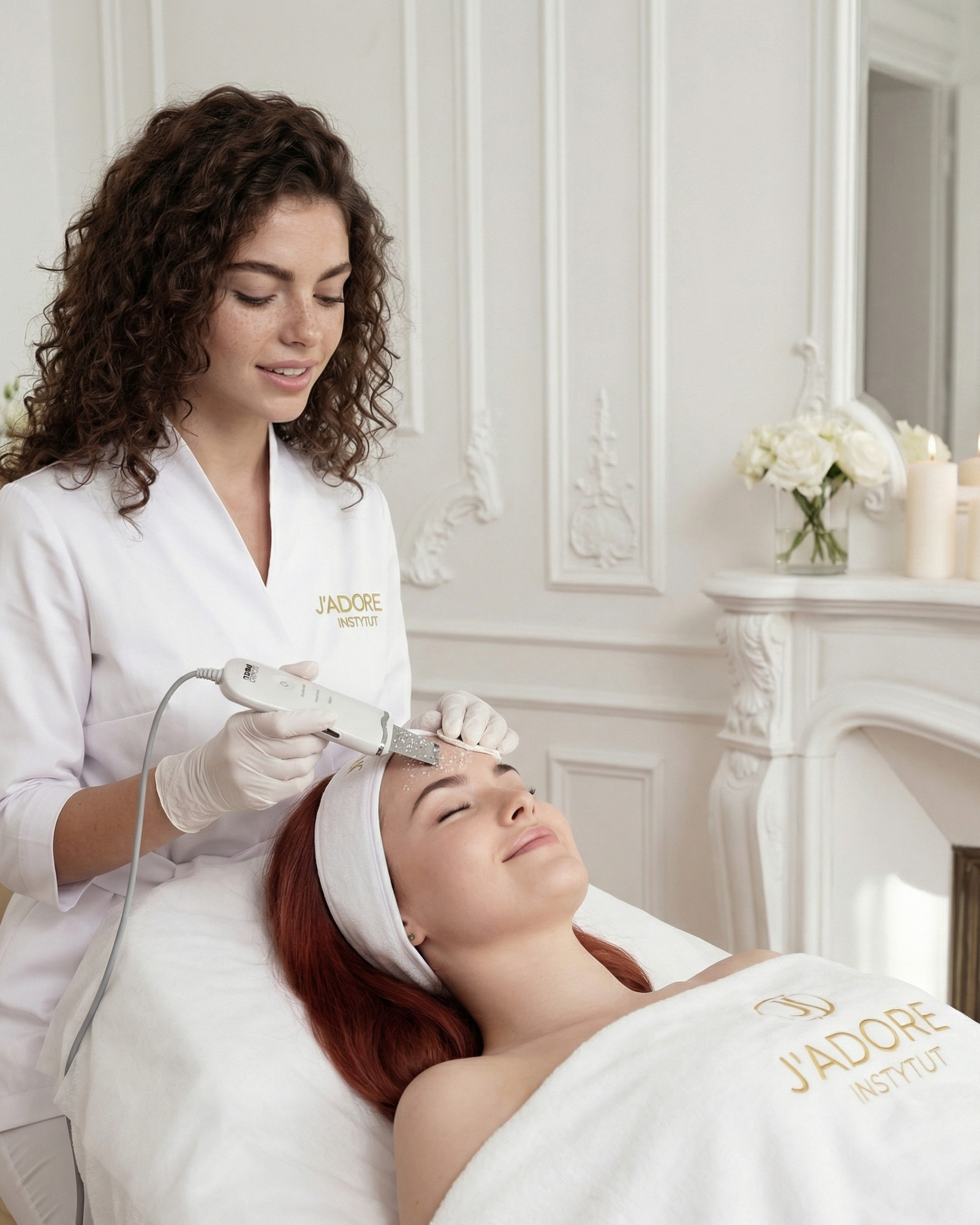
Before leaving, confirm what the visit actually consisted of
The phrase "I had a cavitation" may mean a short exfoliation with a spatula finished with a cream, or an extensive procedure with manual cleansing, an ampoule, sonophoresis and a mask. Your skin has a different starting point after each variant. Ask for the names of the stages performed, the preparation applied at the end, and whether it should remain on your face for a specific time. Also, note when you are allowed to return to your usual actives and what to do in case of a reaction.
After cavitation alone, a cosmetologist may see even, calm skin. After extraction, they will notice pinpoint redness, and after an additional acid, they will consider the effect of the entire composition. Recommendations are issued for the procedure that actually took place, not for the name of the first stage on the price list. If you do not know whether an acid or retinoid was used, ask while still in the salon instead of deciding this in the evening by your cosmetic shelf.
Cavitation alone is not a promise of empty pores
Deep, hard lesions, painful nodules and active breakouts require a separate assessment. Cavitation does not replace a dermatologist or properly planned manual cleansing. An honest result may consist of superficial smoothing and refreshing, without completely removing the visibility of pores. The first week is not for hunting for what the spatula was not intended to remove.
The first evening starts with instructions, not double cleansing
- Leaving the protective layer. Upon returning, your face may be damp from a preparation or covered with a mask, which should not be washed off immediately with an oil and gel.
- Gentle cleansing. When it is time to wash, use only your hands and lukewarm water, avoiding brushes, washcloths and long massages.
- Safe drying. Instead of vigorous wiping, which causes friction, gently press a soft towel to your skin.
If extraction was performed during the visit, do not touch the spots afterwards and do not check their firmness several times an hour. If serum was applied during sonophoresis, do not immediately add another ampoule with a similar name. In both cases, excess activity blurs the picture: when stinging appears, it is difficult to determine whether it comes from the salon or from your home follow-up.
In the morning, check four things instead of looking for glass in your skin
Your reflection after a short sleep, a hot shower and pillow pressure is not a reliable measurement of the result. Wait until the temperature and colour return to their usual level. Smoothness under your finger also does not tell the whole story: frequent rubbing of the nose to check pores can itself cause redness that was not there before.
The third day tempts with a blackhead strip
Squeezing with fingernails, a metal loop used without preparation, and a home spatula guided repeatedly over a dry area work similarly. Do not repeat the treatment with a device from the internet in the same week. If a remaining lesion really bothers you, show it to your cosmetologist and ask if it requires a different method. Not every content visible in an opening is suitable for removal at a given moment.
A minimal routine is meant to protect, not to prolong cleansing
- Gentle cleansing. The basis is a mild cleansing preparation that does not disrupt the protective barrier.
- Tailored skincare. Use a cream matched to the needs of the barrier and protection against radiation, choosing cosmetics your skin is familiar with, unless otherwise recommended.
- Avoiding aggressive methods. A new detoxifying mask, drying clay or a strongly degreasing gel give a deceptive feeling of cleanliness, leading to tightness and the need to use further rescue products.
Spread the cream without long kneading. In case of pinpoint dryness, do not scrub the area with a cotton pad to first remove "excess epidermis". If the cosmetic starts to sting, wash it off according to the instructions and note the name. Do not cover the reaction with five other layers, because later no one will be able to reconstruct the sequence of events.
Acids and retinoids return according to the course of the entire procedure
If you use a retinoid, acid toner, enzymatic peel or anti-acne product at home, do not start the entire set automatically the next evening. The timing depends on what was performed besides cavitation and how your skin behaves. The instructions may be shorter after a superficial stage alone, and longer after extraction or additional exfoliation. What counts is the specific case, not the opinion that cavitation is always gentle.
When the set moment arrives, introduce actives one by one. If stinging or redness returns after the first product, you know what caused it. Three substances applied simultaneously take away this information. Do not modify a treatment recommended by a dermatologist on your own; discuss any break and return with the person managing your treatment.
Makeup should also be easy to remove
If your face does not sting and the protocol allows for makeup, choose an amount that can be washed off without polishing. A thick, long-lasting foundation pressed into the skin with several tools may require heavy makeup removal. Use a clean brush or a freshly washed sponge. For spots after extraction, limit touching and do not rub concealer directly into the disturbed area.
In the evening, do not try to achieve a "squeaky" face effect. Pigment residue is removed gently, sometimes in two short stages recommended for your skin, rather than one long rub. If makeup stings even upon application, washing it off and returning to a simple cream provides more information than covering the stinging with another layer.
Shaving can be a stronger exfoliation than the spatula itself
The blade moves over a surface that was recently treated, so it is worth setting the shaving date before the treatment. The neck and jaw area are particularly important if ingrown hairs or red papules usually appear there. Do not test a new foam, a new razor and an aftershave cosmetic at the same time. In case of a reaction, it will not be known which element caused it.
A person using cavitation again may know their tolerance, but should not copy the timing from a previous visit if this time the treatment included extraction. The current condition decides the method of return: no stinging, closed spots after manual work and the practitioner's instructions.
Training, sauna and a hot shower add stimuli all at once
After sports activities, sweat collects at the nose and temples, and a towel moves over the face with every repetition. Later comes the steam in the shower. Even if the cavitation itself was well tolerated, salt, temperature and friction can intensify temporary redness. Follow the restrictions provided after the visit, especially when the procedure included more than just ultrasonic work.
When you return to activity, take your own clean towel and do not rest your face on shared mats or handles. Do not cool your cheeks with ice applied directly. If the colour does not fade after exercise, and itching or pain is added, skip the next training session and inform the salon when the symptom began.
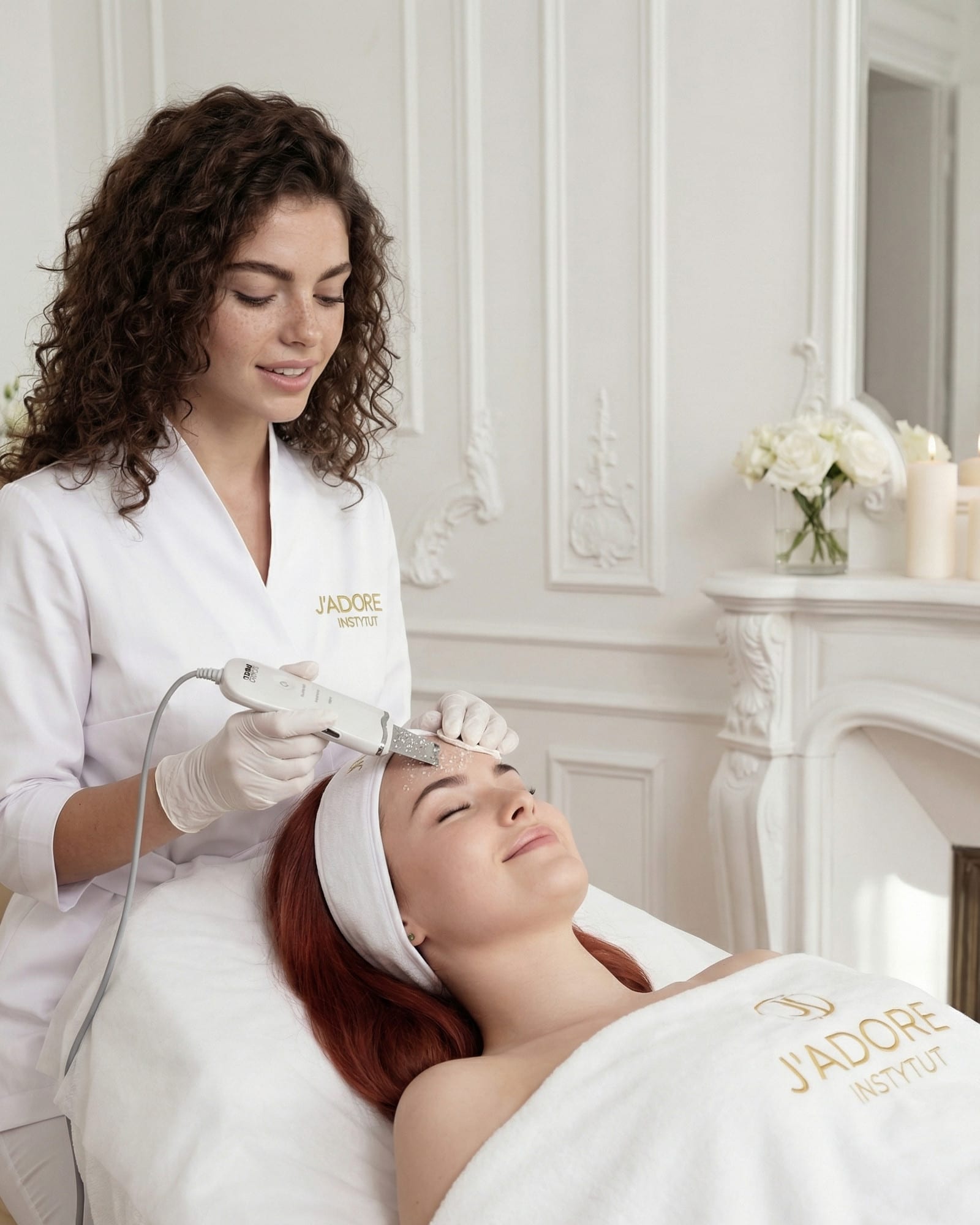
Daytime protection also applies to the commute to the office
After superficial exfoliation, do not plan intentional tanning. Use a filter recommended for your skin, spread it also on the edges of the treatment area and reapply according to exposure. Shade, glasses and headwear are helpful during longer stays outside. The mere fact that cavitation is not an acid peel does not turn sun protection into an option.
A client often says after a week that she was not in the sun, after which she describes car commutes, lunch by a window and afternoon walks. Daily exposure does not look like a holiday, but it still consists of specific segments. Instead of adding a brightening product to a new spot later, it is better to consider your usual daily plan from the beginning.
A new breakout does not have to mean "skin cleansing"
In the third or fourth day, a single lesion may appear. Not every one should be considered proof that impurities are coming to the surface. The cause may be touching, a heavy cosmetic, coincidence or an earlier process. Do not squeeze it and do not cover it with several drying preparations. Observe whether it grows, hurts and whether further breakouts appear around it.
During a check-up, the cosmetologist then asks where exactly the spatula worked, what was applied later and how the routine changed. Information that the lesion arose after a new mask or under a spot constantly touched by a phone has more value than a general "I think I broke out". Extensive or painful worsening should be consulted, not waited out under the label of temporary cleansing.
A reaction to an ampoule may look like a reaction to the device
Cavitation is sometimes combined with sonophoresis and active products. If itchy redness appears after the visit, the entire set applied to the skin is taken into account, not just the spatula. Ask for the names of the preparations. Do not try to immediately reapply the same ampoule at home to check if the reaction repeats. Such a test may intensify the problem.
In your report, describe the timing: whether the stinging started during the treatment, after returning, after washing or only after your own cosmetic. Mark the borders of the redness and take a photo without beautification. It is then easier for the person in charge to consider further steps and note the ingredient that should not be thoughtlessly repeated at the next visit.
The same red spot means something different after three variants of a visit
After a procedure extended by manual extraction, individual spots remain on the chin. The client presses one of them because she feels a thickening under her finger. The next day, this spot is larger and more tender than the others. The difference does not automatically indicate an infection, but requires stopping manipulation and informing the practitioner of exactly what was done. Comparison with untouched areas helps to assess how much of the reaction comes from the treatment and how much from subsequent pressure.
After cavitation finished with an ampoule, the redness does not follow the track of the spatula, but also covers the temples and neck, and itching is added to the colour. In that case, a list of products has more value than an assurance that ultrasound has always been well tolerated. Do not apply the remainder of a similar serum at home and do not perform a test on the other cheek. Contact the salon, provide the moment the symptoms began and check if their range is changing.
The first visit and the next session teach different mistakes
After the first cavitation, a client often expects every dark spot to vanish and checks their nose from a few centimetres away for a week. A person after the fifth session has the opposite tendency: they assume they know everything, so they omit information about a new home acid or a change in moisturiser. The first needs a realistic measure of the effect, the second needs an updated consultation. Routine cannot rely solely on the memory of the previous procedure.
At the next consultation, it matters how long the comfort lasted, whether dryness appeared, whether actives returned without stinging, and which areas remained unchanged. Such a description allows us to consider changing the scope. The statement "it was fine" does not show whether the cavitation was sufficient or if the expectation was simply for a gentle refresh.
When contact is needed sooner than after a week
You should be concerned by an intensifying trend: redness covering new areas, increasing swelling, more distinct pain, or the appearance of blisters, oozing, or signs of infection. Severe itching after a product also requires stopping experiments and speaking with the clinic. Sudden swelling of the lips or face, difficulty breathing, or any other severe symptom requires urgent medical assistance.
Prepare the time of the treatment, a list of the steps performed, the cosmetics used after returning, and photos showing the change over time. Do not apply a thick layer of concealer before the photograph. An accurate record is not for dramatising; it helps distinguish a spot after extraction from a reaction covering a larger area.
Krakow: a local address does not change individual recommendations
You can find the scope of the service and booking options on the cavitation peel in Krakow page. J’ADORE INSTYTUT is located at ul. Karmelicka 45/2B and is open from Monday to Saturday between 8:00 and 20:00. Before leaving, ask for recommendations regarding all the steps performed that day, not just the main name of the visit.
In the city centre, it is easy to combine a treatment with a workout, a long walk, and another meeting. If your face remains warm or was manually cleansed, a quieter return allows you to limit accidental friction and better observe the reaction. You do not need to isolate yourself at home; you need a plan where the recommendations can be followed.
On the seventh day, also assess what the treatment was not supposed to do
Compare photos in similar light and from the same distance. Check smoothness, comfort when washing, the number of dry patches, and tolerance to your usual skincare. Do not judge success solely by the number of visible pores, as they are part of the skin structure, and cavitation does not remove them. A single remaining blackhead does not negate the effect of superficial exfoliation.
Record whether the procedure included extraction or sonophoresis and what happened after each of these elements. This allows the next visit to be better tailored. The best first week after cavitation does not consist of constantly correcting the skin. It consists of not adding a method after the treatment that no one planned.
If the result seems too subtle, do not automatically book a stronger version. Bring photos to the consultation and point out specifically which area did not change. Sometimes the right answer is a different method for deep blackheads, rather than a higher number of passes with the spatula over the same surface.