Biomimetic peptides do not work like classic acids
Most people associate chemical peels with intense burning and subsequent, often unsightly, skin flaking. The mechanism of a biomimetic peel is completely different. Instead of aggressively removing epidermal layers with strong acids, we use biomimetic peptides. These molecules are designed to mimic natural signals sent by the body. Your skin does not recognise them as a threat to defend against, but as instructions to initiate repair processes.
Classic acid peels
- Strong burning during application
- Aggressive, patchy flaking
- Defensive skin reaction
- Longer recovery time
Biomimetic peel
- Gentle tingling or warmth
- Subtle surface smoothing
- Signal for natural rebuilding
- Minimal recovery
The key difference lies in the way of communicating with the skin. Classic acids often work by inducing a controlled inflammatory state, which forces the tissue to regenerate quickly. A peptide peel, however, "talks" to the skin in its own language. As a result, the treatment is much better tolerated, even by those with sensitive or reactive skin who have previously avoided exfoliation for fear of irritation.
- The skin accepts peptides as a natural stimulus for collagen production.
- The lack of aggressive flaking allows you to maintain comfort in your daily life.
- The smoothing process occurs without disrupting the protective skin barrier.
- The treatment focuses on building firmness, not just superficial cleansing.
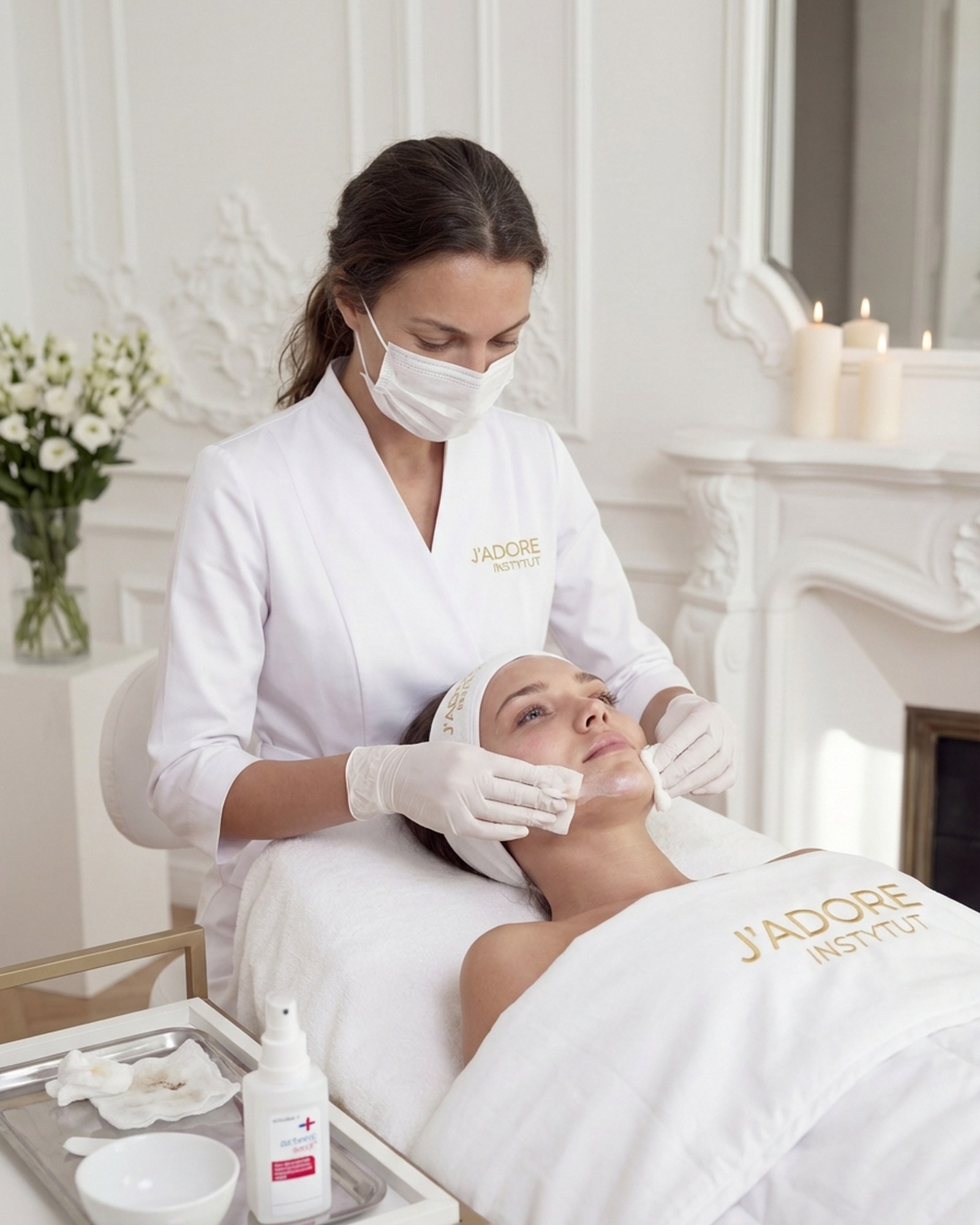
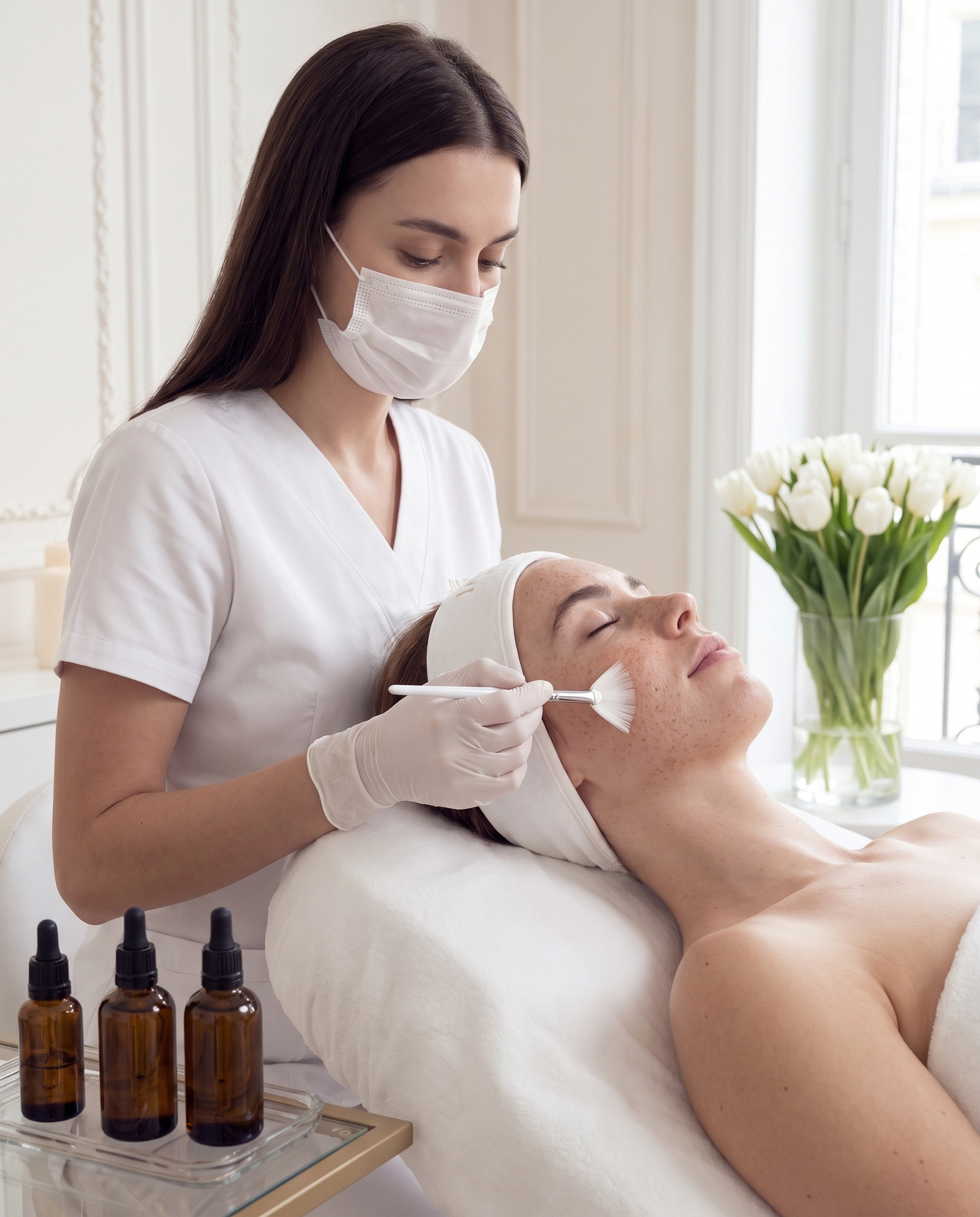
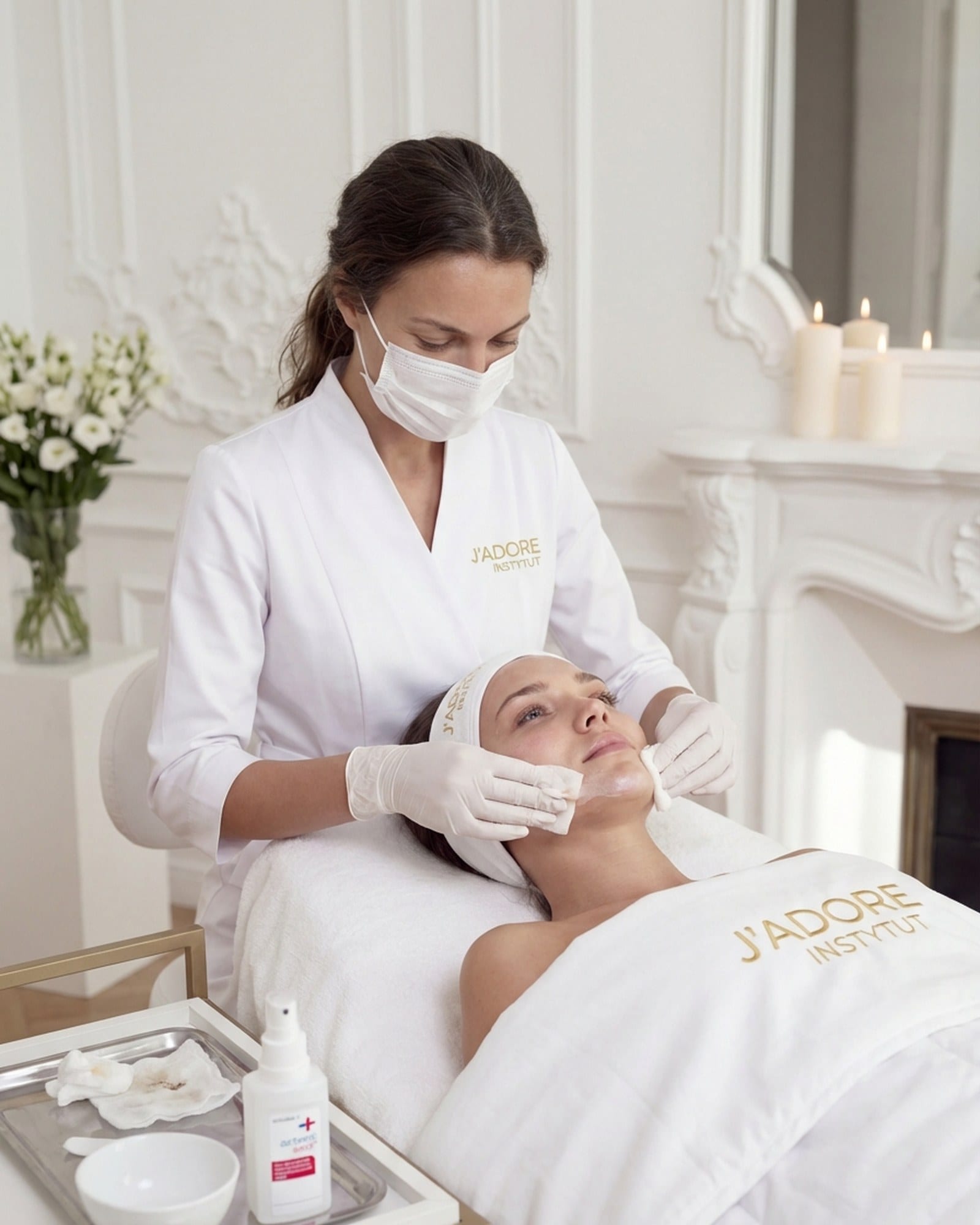
By choosing this type of therapy, you opt for rebuilding and stimulation from within. Instead of waiting for your skin to "fall off", you support it in the process of regaining elasticity and radiance. This approach ensures that your complexion looks rested and smooth after the treatment, not irritated. The illustrative photo shows a sample treatment process during which a cosmetologist precisely applies the preparation, ensuring that the sensations are fully comfortable for you.
The first session is just the beginning of building form
In the clinic, we are often asked why the facial contour did not change spectacularly after the first visit. This is a natural expectation resulting from a habit of aggressive treatments that provide an immediate, though often superficial, effect. With a peptide peel, the mechanism is different: it is not about "stripping" the epidermis, but about subtle communication with skin cells.
For lasting results, a series of 4–6 treatments performed at 1–2 week intervals is key. Only such frequency allows for maintaining the continuity of signals sent to the skin. Treating this process as "building form" helps you understand that each subsequent step reinforces the previous one, leading to an improvement in skin quality, not just a temporary visual effect.
- 01
First visit
The skin regains radiance, becomes smoothed and is better prepared for further care.
- 02
Subsequent meetings
Peptides gradually improve elasticity, working on the skin structure from within.
- 03
Final stage of the series
The anti-ageing effect becomes visible through better tension and smoothing of fine lines.
Your skin needs protection, not just a treatment
A peptide peel treatment is only half the success. The second, equally important part happens in your bathroom when you return to your daily routine. After the preparation is applied, your skin becomes more sensitive to external factors, which is why sun protection is no longer an option but an absolute duty.
There is often a temptation to skip sunscreen on the third day after a clinic visit, especially when it is grey outside and the sun seems absent. This is a mistake that can ruin the results of the series. UV radiation reaches the skin even on cloudy days, penetrating through clouds and windows. If you neglect protection during this time, you risk not only losing the achieved radiance but, above all, the appearance of unwanted hyperpigmentation.
Remember that your skin is in an active phase of remodelling after the treatment. Instead of aggressive exfoliation, we focus on rebuilding and regeneration, which requires discipline in your home care. In addition to sun protection, it is worth including preparations that support the hydrolipid barrier.
- Use a high SPF 50+ cream daily, regardless of the weather.
- Introduce a peptide serum into your care routine to sustain the treatment's effect.
- Use hydrating and rebuilding creams so your skin regains comfort faster.
- Include an antioxidant with vitamin C, which additionally protects the skin against oxidative stress.
Treat sun protection as an extension of the cosmetologist's work. Without it, instead of building elasticity, your skin must focus on defending itself against damage caused by light. Only consistent care after leaving the clinic allows you to fully enjoy the results of a 4–6 treatment series.
The choice between a peel and a stimulator depends on the goal
The choice between a peptide peel and a tissue stimulator is often a dilemma for those seeking to improve their skin condition. Understanding the difference between these methods allows for precise matching of the procedure to the current needs of your complexion. A biomimetic peel focuses on the outer layer, smoothing the epidermis and restoring its radiance, while stimulators work in deeper structures, affecting tissue density and tension.
Biomimetic peel
Focuses on the surface: removes dullness, smooths fine lines and prepares the skin for further actions.
Tissue stimulators
Work in the depths: improve skin quality, its elasticity and long-term density.
Case analysis allows us to determine if a peptide peel is enough to achieve the intended effect. If the main problem is roughness, loss of radiance and fine lines resulting from dehydration, a series of peels often proves sufficient. However, when the skin shows clear signs of laxity and the facial contour loses its tension, it is worth considering including mesotherapy or stimulators in your treatment plan. The logic of the procedure is usually constant:
- First, surface improvement: a peptide peel removes dead cells and smooths the epidermis, which increases the penetration of active ingredients.
- Then, deep nourishment: after achieving smoothness, introducing stimulators allows for more effective work on tissue firmness.
- Combining methods: the cosmetologist sets intervals between treatments so that the skin has time to regenerate after each one.
A two-track approach allows for achieving better skin quality without the need for aggressive procedures. A peptide peel acts as a preparation, opening the way to deeper stimulation. Because this treatment does not overly burden the epidermal barrier, it provides a safe foundation for more advanced anti-ageing methods. The final decision on the order of actions depends on the assessment of your skin condition during the consultation, where the specialist determines whether the priority is immediate refreshment or long-term structural skin remodelling.
Preparing the skin for a series requires discipline
Preparing for a series of peptide peel treatments is a process that begins in your bathroom long before your visit to the clinic. Skin that is to be stimulated must be in the right condition to respond to the signals from the preparation. Discipline in daily care allows you not only to minimise the risk of irritation but, above all, to strengthen the final effect of smoothing and improved firmness.
A key element of preparation is also temporarily stopping home products with strong exfoliating effects. Many people use cosmetics with acids daily, which, although effective, can excessively sensitise the epidermis before a visit to the cosmetologist. To ensure the treatment is fully safe and comfortable, an appropriate interval must be maintained.
- Stop using home acid peels and retinoid preparations at least 5–7 days before your planned visit.
- Give up mechanical skin exfoliation so as not to disrupt its natural protective barrier.
- Focus on intensive hydration, which will prepare the skin to accept active ingredients during the biomimetic peel.
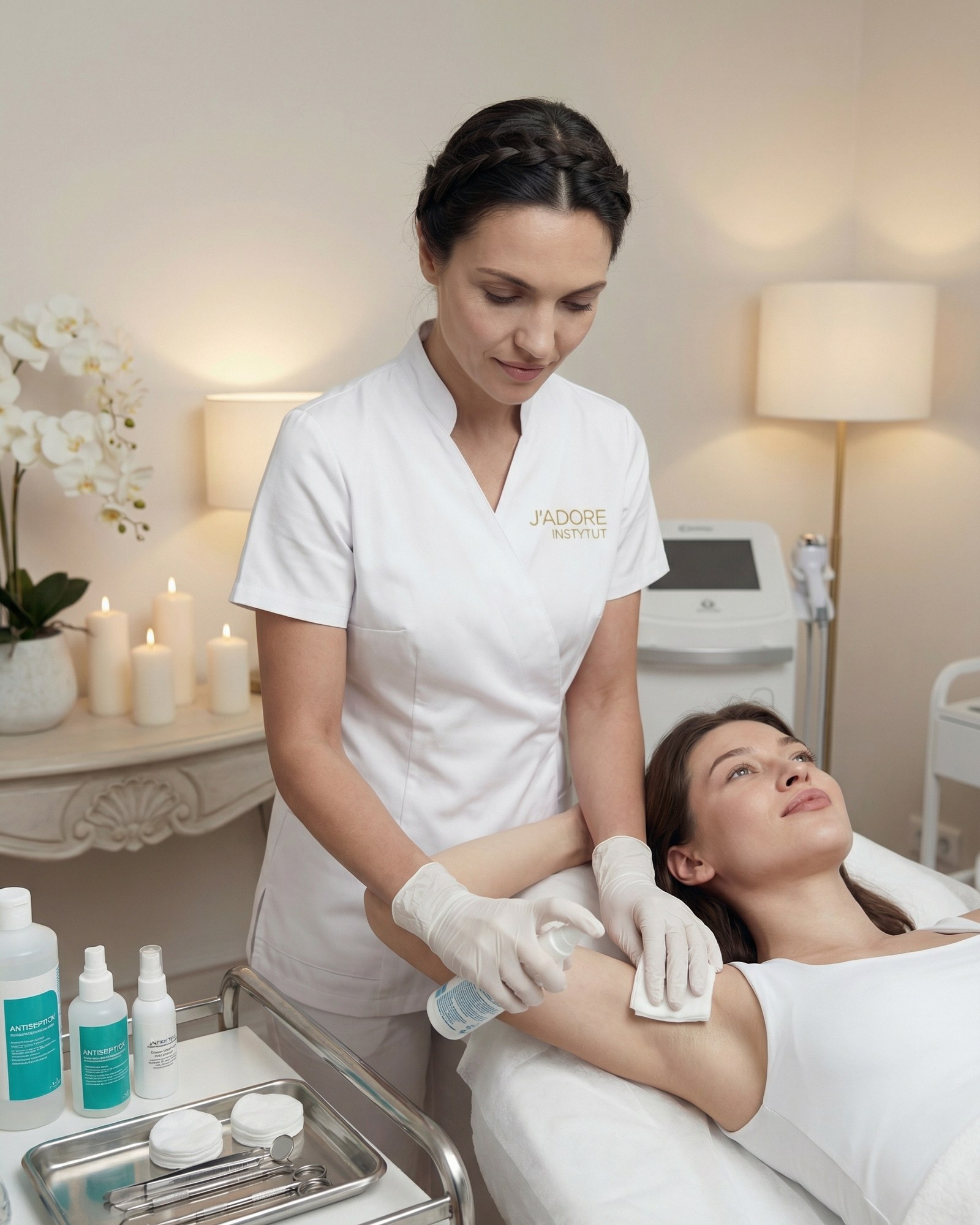
Remember that skin that is excessively "overloaded" with home treatments may react to a professional peel in an unpredictable way. Stopping aggressive substances is not only a matter of safety but, above all, a strategy that allows the cosmetologist to work on skin ready for rebuilding, rather than on skin that is fighting irritation. The illustrative photo shows a sample treatment process during which the specialist assesses the skin condition before applying the preparation.
Pinkness is not irritation, but a reaction to activity
Leaving the clinic after a peptide peel, we often expect visible redness that will force us to cancel plans for the rest of the day. With Biomimetic Peptide, the reality is different. Immediately after the treatment, the skin usually appears slightly pink, which is a natural response to the preparation's activity. This is not irritation resulting from the aggressive action of acids, but a signal that the active ingredients have begun the stimulation process in the deeper layers of the epidermis.
In the first hours after your visit, you may feel a delicate tightening. This is a completely normal stage that indicates the skin is preparing for renewal. During this time, it is key to ensure its proper comfort through appropriate home care.
- Use creams with strong hydrating properties that rebuild the hydrolipid barrier.
- Avoid products with abrasive particles or alcohol, which could unnecessarily inflame the skin.
- Choose preparations with a simple composition, dedicated to sensitive skin or skin after aesthetic medicine treatments.
- Can I apply makeup immediately after a peel?
It is recommended to wait a few hours after the treatment before applying makeup to allow the skin to regenerate freely and fully absorb the care preparations.
- How long does the feeling of tightening last?
It usually passes within the first 24 hours. If the discomfort persists, it means the skin needs more intensive hydration.
Remember that the healthy glow you see in the mirror just after leaving the institute is the effect of cleansing and smoothing the epidermal surface. It is precisely this subtle reaction to the activity of peptides that is proof that the treatment works in accordance with the physiology of your complexion, not against it.
The treatment calendar excludes haste and sun
Planning a series of peptide treatments requires taking into account your life rhythm and sun exposure. Although a biomimetic peel is gentler than classic acids, it remains an active procedure that requires time for the skin to regenerate. The schedule of visits should therefore be thought out to avoid overlapping periods of increased skin sensitivity.
- 01
Planning events
If you are planning an important outing, book the last treatment of the series 3–4 days before it. This will allow the skin to calm any slight pinkness and fully regain a rested appearance.
- 02
Sun protection
Full sun is a contraindication to starting the series. Intense exposure to UV radiation after a peel significantly increases the risk of hyperpigmentation.
Choosing the right moment to start therapy is key to safety. In the summer, when the sun is strongest, it is worth considering postponing treatments until a time when control over UV radiation exposure is easier. Even with the utmost care, skin after a peel becomes more reactive, which is why a holiday trip in full sun excludes starting a peptide series.
Remember that each treatment is a signal for the skin to remodel. Too frequent visits or combining a peel with other aggressive procedures without an appropriate interval can bring the opposite effect to the intended one. A well-planned calendar is a guarantee that the skin will receive exactly as much stimulation as it needs to regain elasticity and radiance without the risk of excessive irritation.
Consultation helps limit the risk of a wrong choice
A visit to the clinic begins with a conversation that can be surprising for many people. Instead of immediately proceeding to apply the preparation, the cosmetologist conducts a detailed interview. This is a key moment when the decision about the safety and effectiveness of the entire series is made. The specialist must assess not only the current state of your complexion but also its history, which allows for avoiding unforeseen reactions.
- Assessment of skin phototype – allows us to predict how the complexion will react to contact with acids and peptides.
- Analysis of previous treatments – especially important in the case of recent laser sessions, which can change epidermal sensitivity.
- Verification of contraindications – exclusion of inflammation or active infections that disqualify you from the treatment on a given day.
During the consultation, the cosmetologist checks whether the skin is ready to accept a peel or whether it requires calming first. If the complexion is overly reactive, dehydrated or shows signs of a compromised hydrolipid barrier, applying even a gentle preparation can do more harm than good. In such a situation, the priority becomes regeneration, not exfoliation. Only when the skin regains balance can a peptide protocol be safely implemented.
- If my skin is very sensitive, can I skip the consultation?
No. The consultation is an integral part of the visit. It is precisely in people with sensitive skin that the specialist's assessment is most important to select treatment parameters so as to stimulate rebuilding without inducing inflammation.
- Why does the cosmetologist ask about laser treatments from several months ago?
Laser therapy changes the structure of the epidermis and its ability to regenerate. Knowing these facts allows the cosmetologist to assess whether the skin's protective barrier is fully regenerated and ready for a peptide peel.
Regularity sustains the smoothing effect
Finishing the series of treatments does not mean that the work on skin quality has come to an end. Biomimetic peptides, which have been stimulating repair processes for the last few weeks, have given the skin an impulse for renewal, but maintaining the achieved firmness requires consistency. After a series of 4–6 visits, the skin is smoothed and fine lines are less visible, but this state is not given once and for all. To avoid losing the effect of radiance and elasticity, it is worth implementing a maintenance plan.
The frequency of follow-up visits is an individual matter, depending on the regeneration rate of your skin and its lifestyle. Usually, it is recommended to return to the clinic for a single treatment once every month or month and a half. Such frequency allows you to maintain the achieved level of hydration and tension, preventing the reappearance of dullness or roughness of the epidermis.
- Follow-up visits act as a "refresh" of the skin's cellular memory.
- Longer breaks between maintenance treatments can lead to a gradual return to the state from before the series.
- Observing your own complexion is the best indicator — when the skin loses its characteristic radiance, it is a signal that it is time for a visit.
Remember that the skin is a living organ that constantly reacts to external factors. Regularity in the clinic, combined with consistent home care, allows you to enjoy smoothing and firmness much longer than in the case of single, random visits. It is precisely the continuity of providing the skin with appropriate stimuli that decides whether the anti-ageing effect will be a lasting element of your appearance.