Why men's skin turns grey
Men's skin is thicker and produces more sebum than women's — that's an anatomical fact, not something to fix. But these same traits mean dead skin cells linger longer, pores clog more easily, and skin takes on a dull, grey look. Shaving adds to this: regular micro-injuries from a razor or foil shaver damage the hydrolipidic barrier and encourage irritation, which over time can turn into post-inflammatory hyperpigmentation (PIH).
The sun does the rest. After a holiday — or even after regular walks without SPF — darker patches can appear on the temples, forehead and bridge of the nose. This is sun-induced hyperpigmentation: an excess of melanin at points where the skin absorbed more UV than it could process. On lighter skin, these patches are clearly visible. On darker skin, they disrupt evenness. Either way, a vitamin C peel is one of the first tools worth reaching for.
Peel vs cream — is it the same vitamin C?
Plenty of cosmetics contain vitamin C. The difference between a shop-shelf serum and a professional in-salon peel lies in concentration, pH and the stabilising formula. Ascorbic acid is unstable — it oxidises quickly on contact with air and loses activity. Salon formulas are designed to deliver the ingredient to the skin in its active form, at the right depth.
Home cream/serum
daily maintenance care
- lower active concentrations
- works gradually, on the surface
- results after weeks of regular use
In-salon peel
intensive exfoliation and correction
- higher concentration, controlled pH
- removes the dead epidermal layer during the session
- result often visible after the first visit
These two approaches don't compete — they complement each other. An in-salon peel "resets" the skin and prepares it to absorb active ingredients more effectively. A good home serum maintains the effect between visits. Combined, they can deliver a better result than either on its own.
What a vitamin C peel actually does
The mechanism works on several levels, which is why the result often surprises men who expected "just exfoliation":
- 01
Epidermal exfoliation
The organic acid loosens the bonds between dead cells responsible for that dull, grey tone. Once this layer is removed, skin immediately looks fresher.
- 02
Melanin inhibition
Vitamin C blocks tyrosinase, the key enzyme in pigment production. Regular sessions can gradually lighten existing hyperpigmentation and limit the formation of new patches.
- 03
Collagen synthesis stimulation
L-ascorbic acid is a cofactor in collagen production. After a series of sessions, skin can look firmer and denser in texture — a slower effect, but a real one.
- 04
Antioxidant action
Vitamin C neutralises free radicals, which accelerate collagen breakdown and contribute to uneven skin tone. Combined with exfoliation, this covers the full picture.
What happens in practice
Before anything is applied to your skin, your cosmetologist assesses its condition: skin tone, thickness, active irritation and any changes — especially important for men with skin sensitised by shaving or prone to enlarged pores. This assessment determines the acid concentration and exposure time. It isn't a one-size-fits-all routine.
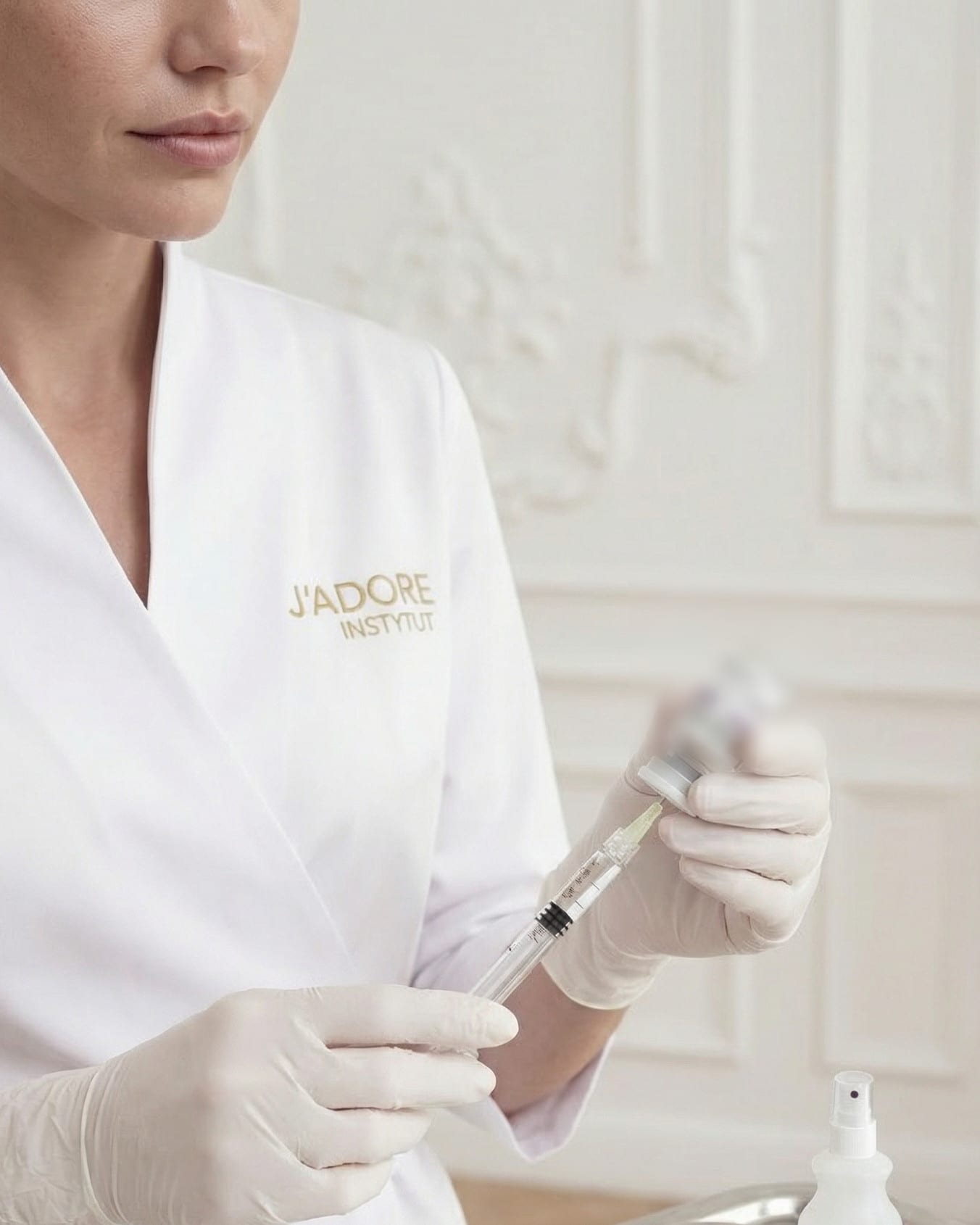
The session itself is calm: your skin is cleansed, the peel is applied, left on for the correct time and then neutralised. You may feel slight tingling or warmth — a normal reaction to the organic acid. Any redness fades within an hour or a few hours. There's no peeling in visible flakes, as with some home peels found online — that's a myth from the comments section, not a standard in-salon result.
When one session isn't enough
A single peel does the job — skin looks fresher, tone is more even. But lasting correction of hyperpigmentation and improved texture need a series. Typically, this means 3–5 sessions spaced a few weeks apart. Melanin production runs in cycles, and one interruption doesn't stop it — it takes several sessions for the result to last.
After completing the series, a maintenance session every few weeks protects against recurrence. For men who spend a lot of time outdoors without SPF — sport, outdoor work — the cycle may need to be shorter, since their skin gets more triggers for hyperpigmentation.
Combine with
A vitamin C peel works well alongside other treatments that address different aspects of skin condition. Your cosmetologist may suggest a combined series if one treatment doesn't cover the whole picture:
Needle mesotherapy
The peel prepares the skin by removing the dead layer, so active substances from mesotherapy penetrate deeper and more effectively. A good combination for volume and collagen loss.
Manual extraction / cavitation
For oily skin with enlarged pores — the peel evens out tone, mechanical cleansing unblocks pores. Together they address the problem more thoroughly than either alone.
Laser closure of broken capillaries
For vascular skin or cheeks prone to redness — the peel evens out texture, the laser addresses the redness. Your specialist determines the order.