The treatment area changes product consumption and working time
The face, neck, décolletage and hands differ in surface area, skin thickness and sensitivity. Extending the treatment should stem from your goal, not from an automatic upsell of a larger package. If hyperpigmentation ends at the face, an additional area does not always provide a proportional benefit.
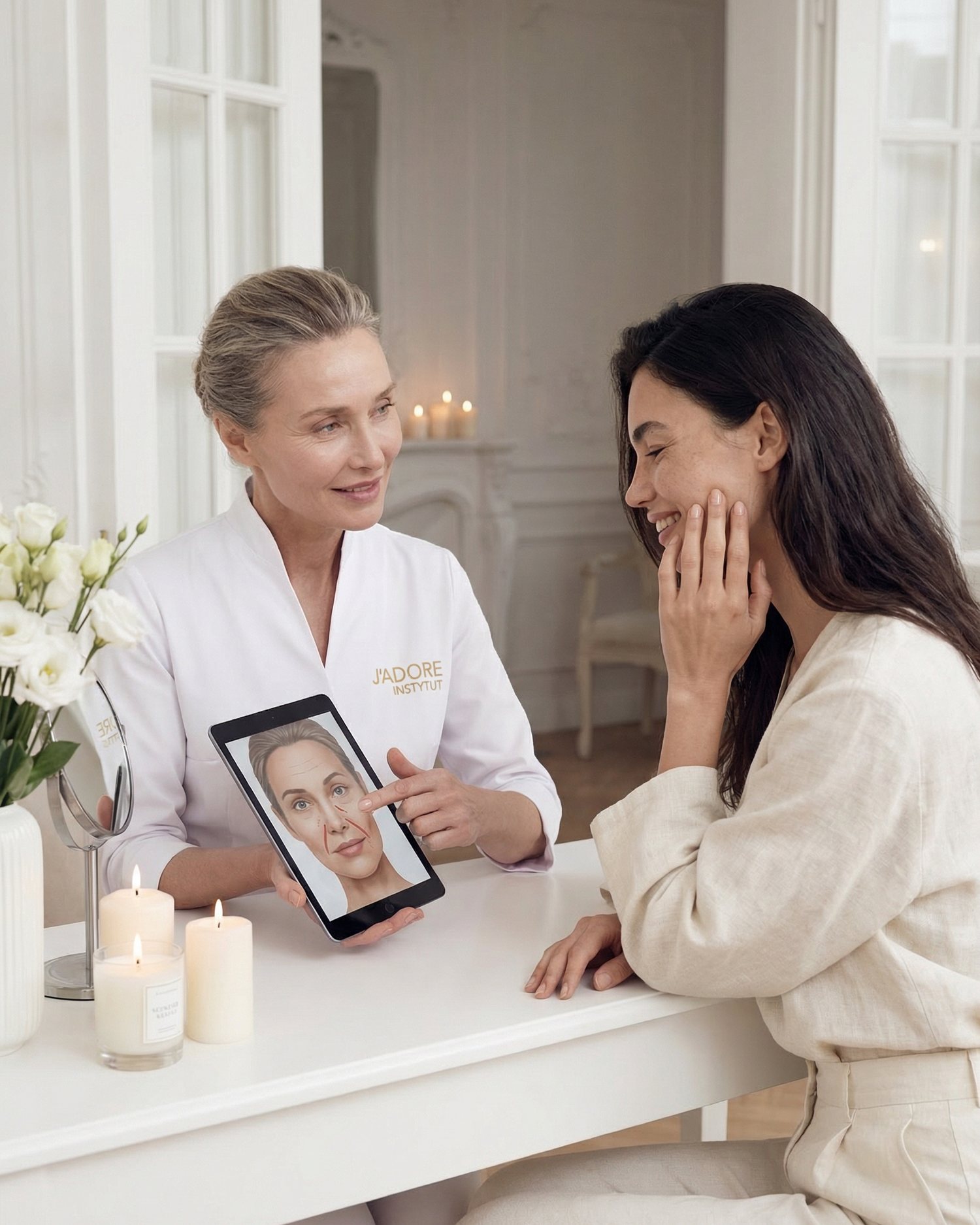
Qualification is part of the service, even if it is not visible in a photo
- Assessment of your skin phototype and the current state of your skin barrier.
- Interview regarding retinoids, photosensitising medications, allergies and cold sores.
- Determining recent peels, hair removal, UV exposure and other procedures.
- A post-treatment care plan, especially regarding gentle cleansing and SPF protection.
The cost may include preparation, a soothing mask and a follow-up. When comparing offers, check the full procedure, not just the product name.
A series should only cost money if it has a goal
J’adore Instytut describes PQ Age as a peel used for uneven skin tone, hyperpigmentation and signs of photoageing, with a plan tailored to the indication. Not everyone needs the same number of sessions. An honest plan states what we evaluate after the first visit and when we change direction if the skin reacts differently than expected.
The product name does not describe the entire visit
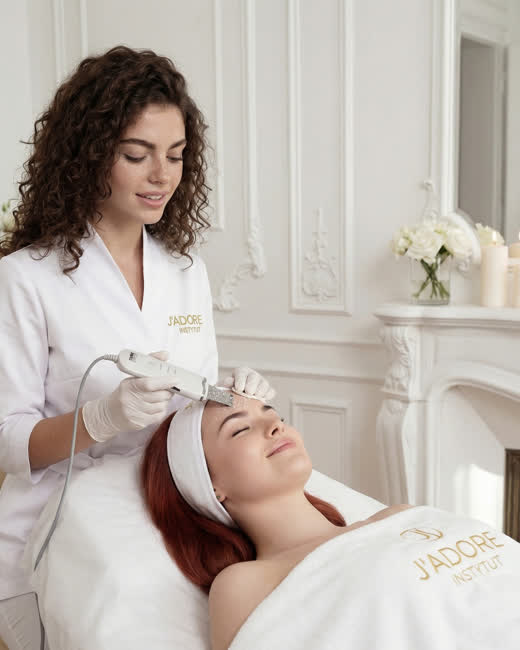
In the price list, you see the name PQ Age, but the quality of the service also consists of the conversation, cleansing, skin assessment, application method, protection of sensitive zones, finishing the procedure and recommendations. Two offers may use the same name while covering different times and scopes of responsibility. This is why the question "how much does the product for the face cost" is too narrow.
The product does not decide whether the skin is ready. The person performing the qualification does this based on an interview and visual inspection. If the barrier is irritated on the day of the visit, a cold sore has appeared or another intensive procedure was recently performed, the correct service may be to refuse the application. The price does not buy the right to a treatment despite contraindications.
When comparing salons, ask for a description of the entire path from entry to recommendations. Do not expect the disclosure of a protected protocol's details, but you should understand who assesses the skin, what information is needed and what happens if the reaction is stronger than anticipated.
The goal of the treatment determines whether a single visit makes sense
Someone preparing their complexion for an event may seek improved freshness and texture. Someone with recurring melasma needs a broader plan including light protection, skincare and sometimes a medical consultation. The same peel plays a different role in both situations, so an identical package is not automatically rational.
Before purchasing a series, establish a criterion for assessment: more uniform tone, less roughness, improved radiance or preparing the skin for a further procedure. The goal should be observable in similar light and without a filter. The term "rejuvenation" is too broad to determine whether the funds spent brought the expected change.
If the problem requires a method with a different mechanism, further applications of the same product do not become a better investment. An honest plan includes a moment for re-evaluation and the possibility of stopping the series. A package should not take away your right to change your decision after the skin's reaction.
A larger area does not always mean better value
The face may be the main problem, while the neck and décolletage require only calm care. Adding each area increases product consumption and time, but does not guarantee a proportional benefit. On the other hand, working only on the face may leave a visible difference if photoageing also affects the décolletage. The decision requires looking at the whole.
Hands have different exposure to the sun, washing and detergents than the face. Including them in the protocol should go hand in hand with a home protection plan. If you still do not use sun protection after the treatment and work with irritating chemicals without gloves, a larger scope alone will not solve the cause of the deterioration.
Ask about the cost of an area only after establishing the indication. Reasonable saving involves giving up a part that does not support the goal. Apparent saving involves a scope that is too small, which does not allow for a consistent result and leads to buying random procedures later.
The time of year affects the real cost of post-treatment care
A peel does not end the moment the product is washed off. The skin needs gentle cleansing, barrier restoration and consistent sun protection. If you do not have the right products, purchasing them is part of the real budget. This does not mean you must buy an entire line at the salon; you need a simple set consistent with the recommendations.
An appointment just before a holiday in the sun can be costly in another sense: it makes following the rules difficult and increases the risk of an undesirable reaction. Money spent on a treatment at a time when you cannot protect your skin is used less effectively than funds allocated for a later, calm date.
The heating season also matters if the barrier is dehydrated. Sometimes, before a peel, you need to simplify your skincare and calm the skin. This break is not a hidden cost or a delay; it protects against performing the procedure on poor ground.
A very low price requires questions, not automatic rejection
A promotion may result from the season, a first visit or a specific scope. The discount itself does not prove poor quality. However, it should prompt you to check whether the offer includes the same area, a full-value product, qualification and recommendations. Comparing different scopes under one name leads to a false conclusion.
Do not accept the splitting of a product in a way that violates hygiene rules, nor application without information on what is being used. You have the right to know the name of the procedure and receive documentation consistent with the place's standard. Pressure to immediately buy a long series before the skin is examined is also a warning sign.
A high price is also not proof of quality. A luxurious interior and a long list of add-ons will not replace an interview. The best protection for your budget is comparing specific elements of the service and the salon's readiness to say that PQ Age is not the right method for a given problem.
The cost of failure increases when skincare and medications are concealed
Retinoids, home acids, recent hair removal, tanning or a photosensitising medication can change the skin's reaction. Concealing them to ensure the treatment takes place deprives the specialist of the possibility of making a safe decision. Potential regeneration after excessive irritation means time, additional care and giving up other plans.
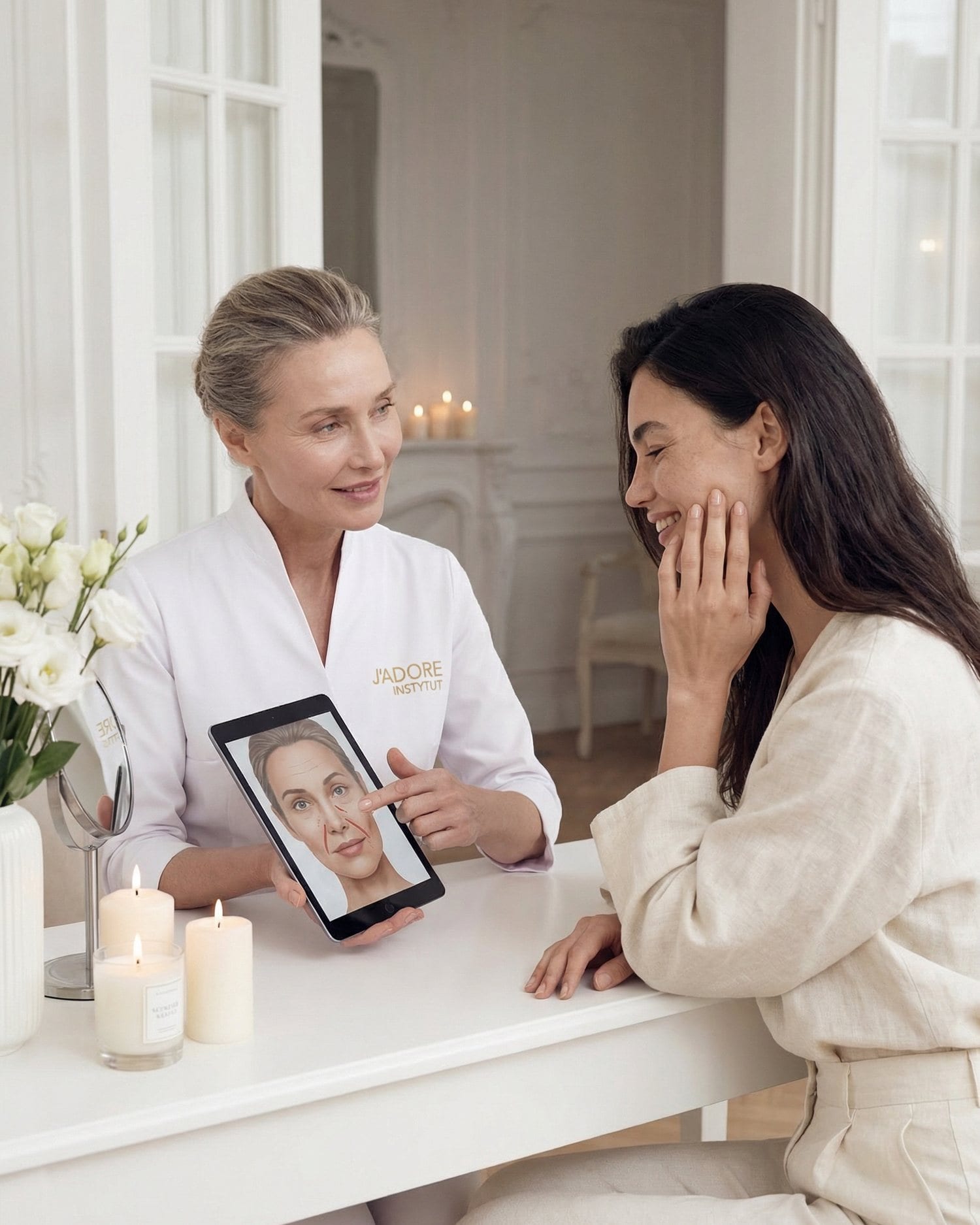
A full interview is not a formality before a sale. It is a risk-mitigation tool. If the salon does not ask, the client should list current active products, therapies, recent procedures and a tendency for cold sores. The lack of a question does not change skin biology.
Five questions allow you to compare offers without looking solely at the amount
- What exact area does the given price cover?
- Is there a qualification and barrier assessment before the first application?
- What does the end of the treatment include and what recommendations do I receive?
- When do we evaluate the effect and what does the series proposal depend on?
- What happens if there is a contraindication on the day of the visit?
Write down the answers in the same order for each place. Thanks to this, you do not compare a number alone with an extensive service or a small area with the face, neck and décolletage. If the answer is evasive, ask for clarification before booking, not at the checkout.
A good comparison may end with choosing a more expensive, cheaper or no offer at all. The most important thing is that the scope corresponds to the problem and does not require believing in a promise to remove all changes. Price is one of the criteria, but it should not remove safety and the method's limitations from the decision.
Control photos protect against paying for an impression
Radiance immediately after the treatment may result from applied products, massage and light. If the goal is to improve tone or texture, take photographs before the first visit and at a set date later. Use the same place, similar time, distance and face setting. A filter and makeup take value away from the comparison.
The assessment should not be based solely on a photo. Write down whether the skin flakes less under makeup, whether the hyperpigmentation changes contrast and how long hypersensitivity lasts. This data helps decide whether continuing the series makes sense. Without a point of reference, it is easy to buy another treatment because the memory of the initial state is inaccurate.
Documentation also reveals a lack of progress. If the result after the planned time does not support the goal, the right decision may be changing the method or a diagnostic consultation. Continuing only because previous visits have already cost money is a sunk cost fallacy, not a skincare strategy.
Home care can support the investment or ruin it
Sun protection, gentle cleansing and barrier restoration are not a decorative addition. Without them, the skin may react worse and the pigmentary problem may return faster. You do not need many layers, but consistency. Ask which elements are essential and which are optional so that the budget does not turn into a random shopping list.
If you already have well-tolerated products that meet the recommendations, show their ingredients. Automatically replacing the entire routine increases the cost and the risk of a reaction to several new items at once. Sometimes the best plan is to keep a known cleansing product and cream and change only the protection, whose parameters or application method are insufficient.
Do not accelerate results with an additional home peel. Combining a professional procedure with self-applied acids may overload your skin barrier. True efficiency lies in following a justified plan correctly, not in increasing intensity without supervision.
Krakow: compare the scope for the same location and the same area.
Before speaking with reception, note three details: the area, your main goal, and the date of your last intensive procedure. Simply asking about "PQ Age for hyperpigmentation" does not clarify whether you mean a single spot, diffuse uneven skin tone, or melasma requiring a broader approach. The more precise your description, the easier it is to determine the right type of consultation without making promises over the phone.
Our clinic at Karmelicka 45 is open Mon–Sat 8:00–20:00. You can check the current scope and prices on our website PQ Age in Krakow. Before booking, please provide the area, the main issue, and your recent treatments; only then does comparing offers make sense.
A good price does not mean the shortest receipt. It means a treatment with a scope that addresses your problem, performed after qualification, with aftercare you are prepared to follow after leaving. If you cannot consistently protect your skin from UV rays, it is better to reschedule than to purchase a peel at the wrong time.
Your final decision should answer what you are paying for: the name of the product or a safely managed process with a measurable goal. Only the second option allows you to assess the value. If the scope remains unclear, do not book a series based solely on a discount; ask for a qualification and a plan first.
A reasonable budget ends where the indication ends. Do not add another zone or visit just because a package looks more favourable. Every element should have a role, an assessment date, and aftercare conditions that you are able to meet.