What melasma is — and what it isn't
Melasma (formerly chloasma) is a chronic, recurring form of hyperpigmentation marked by symmetrically distributed brown or greyish-brown patches — most often on the cheeks, forehead, above the upper lip and on the chin. In many people it forms a characteristic "butterfly" pattern across the face. It sounds like a minor cosmetic issue, but the mechanism behind it is far more complex than the name suggests.
One distinction matters most: melasma is not ordinary sun-induced hyperpigmentation — the kind of dark spot left after a holiday or a breakout. That type of mark is a trace of a single event: a concentrated, relatively shallow build-up of pigment. Melasma is something else: a state of melanocyte overactivity (the cells that produce pigment) triggered by several stimuli at once. The melanocytes haven't received a one-off signal. They've learned to produce pigment more intensely, faster and deeper. That's exactly why they can't be "exfoliated" into submission.
Ordinary sun-induced hyperpigmentation
a trace of a single event
- Appears after strong sun exposure or an inflammatory episode
- Usually shallow, confined to the epidermis or upper dermis
- Stable — doesn't return after exfoliation if the cause is removed
- Responds to peels, acids and laser treatments
Melasma
a state of melanocyte overactivity
- Triggered by hormones, sun and genetic predisposition together
- Reaches deep — often affecting the dermis, not just the epidermis
- Recurring — returns after apparent improvement with exposure or hormonal changes
- Requires a multi-pronged approach, not a single product
Three floors of melasma — why a peel only reaches one
To understand why a brightening peel falls short, think of skin as a layered structure. The epidermis — the layer a peel exfoliates — is just the outer covering. It renews naturally every few weeks. Beneath it lies the dermis, where the melanocytes sit — the cells that are the actual source of melasma. Melasma plays out on several levels at once:
- 01
Epidermis — what you can see
The brown pigment (melanin) is visible here to the naked eye. Exfoliating removes some melanin from this layer — hence the temporary improvement. The problem: this layer renews every few weeks, and the melanocytes below simply produce fresh melanin.
- 02
Dermis — where the melanocytes live
This is home to the melanocytes — the cells that manufacture pigment. In melasma, they're "overprogrammed": they produce melanin more intensely, in response to weaker stimuli, and deeper than normal. A peel never reaches this layer, so it doesn't change how these cells behave.
- 03
Blood vessels and inflammation — the hidden engine
Recent studies point to noticeably more blood vessels and inflammatory markers in melasma-affected skin than in the surrounding tissue. This suggests melasma isn't purely a pigmentation issue — it's also a state of dermal inflammation that keeps "feeding" the melanocytes.
In other words: a brightening peel only works on the top floor — and it does that job well. It removes the pigment that's there, giving temporary visual relief. But the source of the melanin sits deeper, and keeps producing more. That's why the effect is short-lived, and why it often ends in a rebound effect — skin that's been over-exfoliated reacts with inflammation, which, paradoxically, stimulates the melanocytes even further.
Four things that trigger melasma
Melasma doesn't appear for a single reason — it's a convergence of several factors at once, and that's exactly why it's so hard to eliminate. You can address one of them and the rest will keep driving the mechanism.
- Hormones — the most common driver. Melasma is widely known as the "pregnancy mask" because it so often appears during pregnancy or with hormonal contraception. Oestrogen and progesterone directly stimulate melanocytes to produce melanin — and this isn't coincidence. Melanocytes actually carry hormone receptors. That's why melasma often intensifies or first appears with any hormonal shift: a new pill, pregnancy, menopause.
- UV radiation — the amplifier that never rests. Sunlight doesn't cause melasma on its own, but it's its strongest amplifier. Even a few minutes of daylight — through a window, under an overcast sky — can be enough to make melanocytes in melasma-affected skin "fire" more intensely. That's why melasma is markedly worse in summer, and after any unprotected exposure.
- Genetic predisposition — whether you're prone to it. Melasma is clearly more common in people with darker skin phototypes (III–V on the Fitzpatrick scale), and in those whose parents or siblings have also had it. Genes don't guarantee melasma, but they raise the likelihood when the other triggers are present.
- Heat and infrared — an underrated factor. A relatively recent finding is that heat itself (without UV) can worsen melasma. People cooking over a hot stove, using saunas, or working in high temperatures often notice it getting worse. This is why some laser treatments — even when technically well-targeted — can paradoxically worsen hyperpigmentation if they generate too much heat.
What a brightening peel does — and doesn't do
A drugstore brightening peel isn't useless — but it's worth being precise about what it actually does. Typically it contains exfoliating agents (glycolic, salicylic, mandelic, lactic acid, fruit enzymes) combined with ingredients meant to inhibit melanogenesis — the production of melanin. The most common are niacinamide, vitamin C, liquorice extract, arbutin, kojic acid and alpha-arbutin.
What can such a product actually do? Improve epidermal quality, remove the layer of dead, pigmented cells, even out surface tone, and leave skin looking brighter right after use. That's a genuine benefit — but only if expectations are set correctly. A peel works like regularly wiping dust off a table: the table looks cleaner, but the dust returns, because its source is the whole house, not the tabletop.
What a drugstore peel can do
working on the surface of the epidermis
- Remove the layer of dead, pigmented cells
- Improve skin texture and radiance short-term
- Gently inhibit melanogenesis (with active ingredients)
- Support the effectiveness of serums applied afterwards
What a peel can't do
beyond the reach of an over-the-counter product
- Reach the melanocytes in the dermis
- Change melanocyte overactivity caused by hormones
- Permanently suppress pigmentation without concurrent UV protection
- Treat dermal melasma — the deeper form of hyperpigmentation
SPF — the one thing without which nothing else will work
There is one aspect of melasma treatment that is absolutely non-negotiable — without it, no peel, no serum and no in-clinic treatment will deliver a lasting result. That's daily use of a broad-spectrum SPF, all year round, regardless of the weather.
Why does this matter so much? Melanocytes in melasma-affected skin are hypersensitive — they respond to UV more intensely, and at a lower threshold, than healthy skin. This means even brief exposure to radiation — through a car window, on a walk under overcast sky — can restart the pigmentation mechanism. SPF doesn't "cure" melasma, but it's the brake pedal. Without the brake, every acceleration (a treatment, a peel, a new serum) is quickly undone.
What actually helps — and why an in-clinic approach makes sense
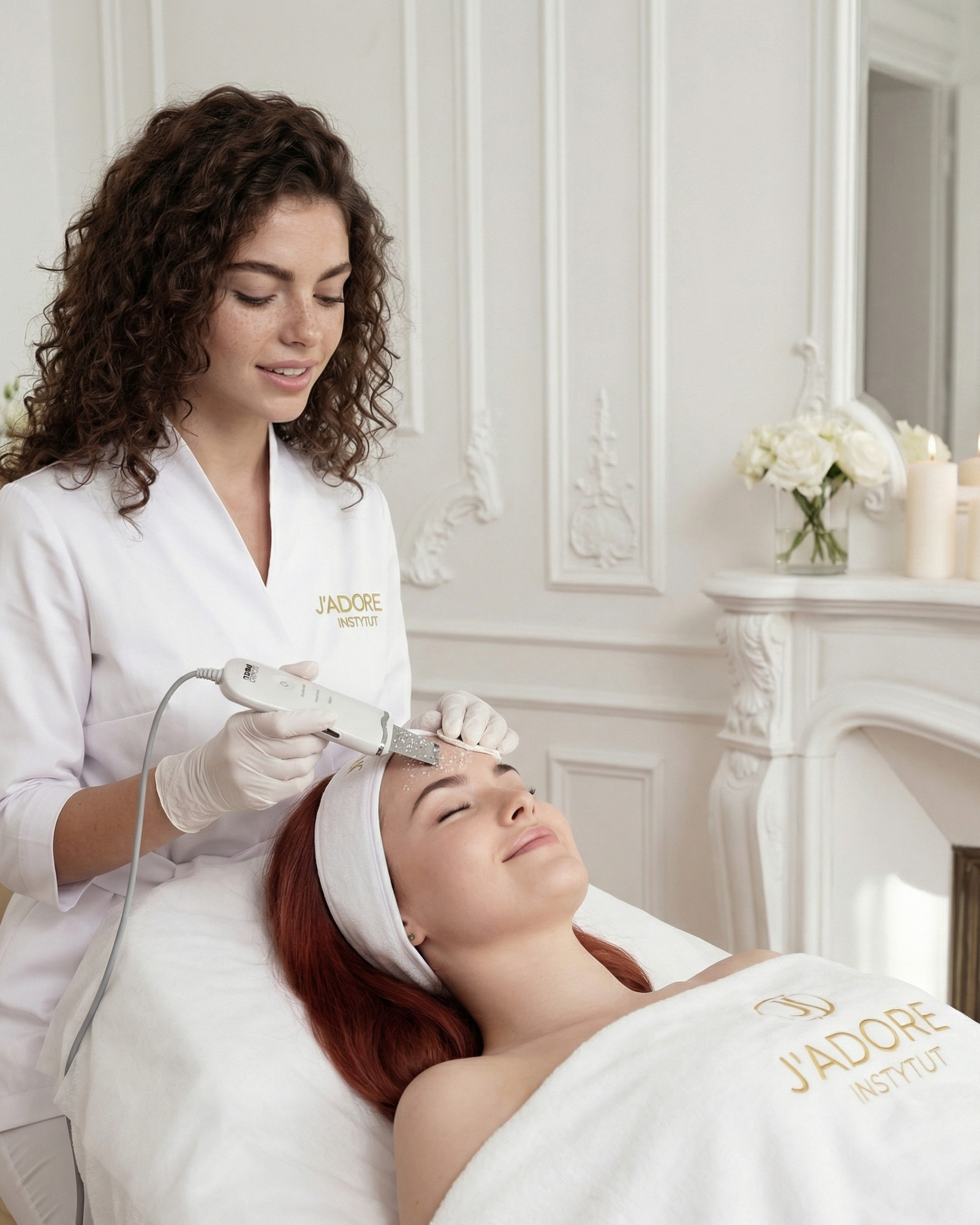
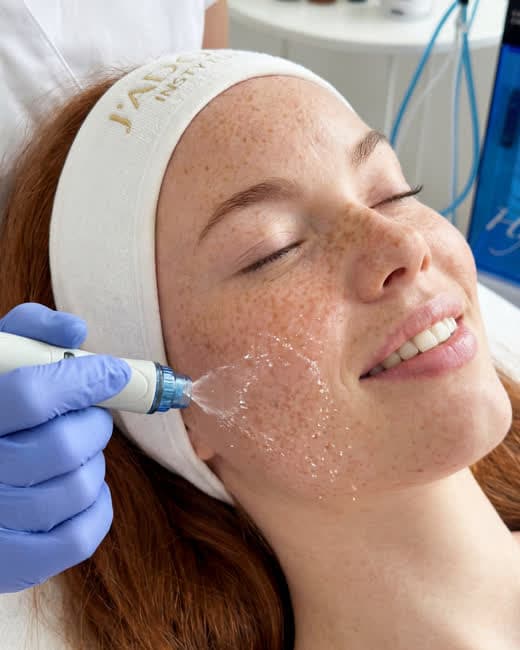
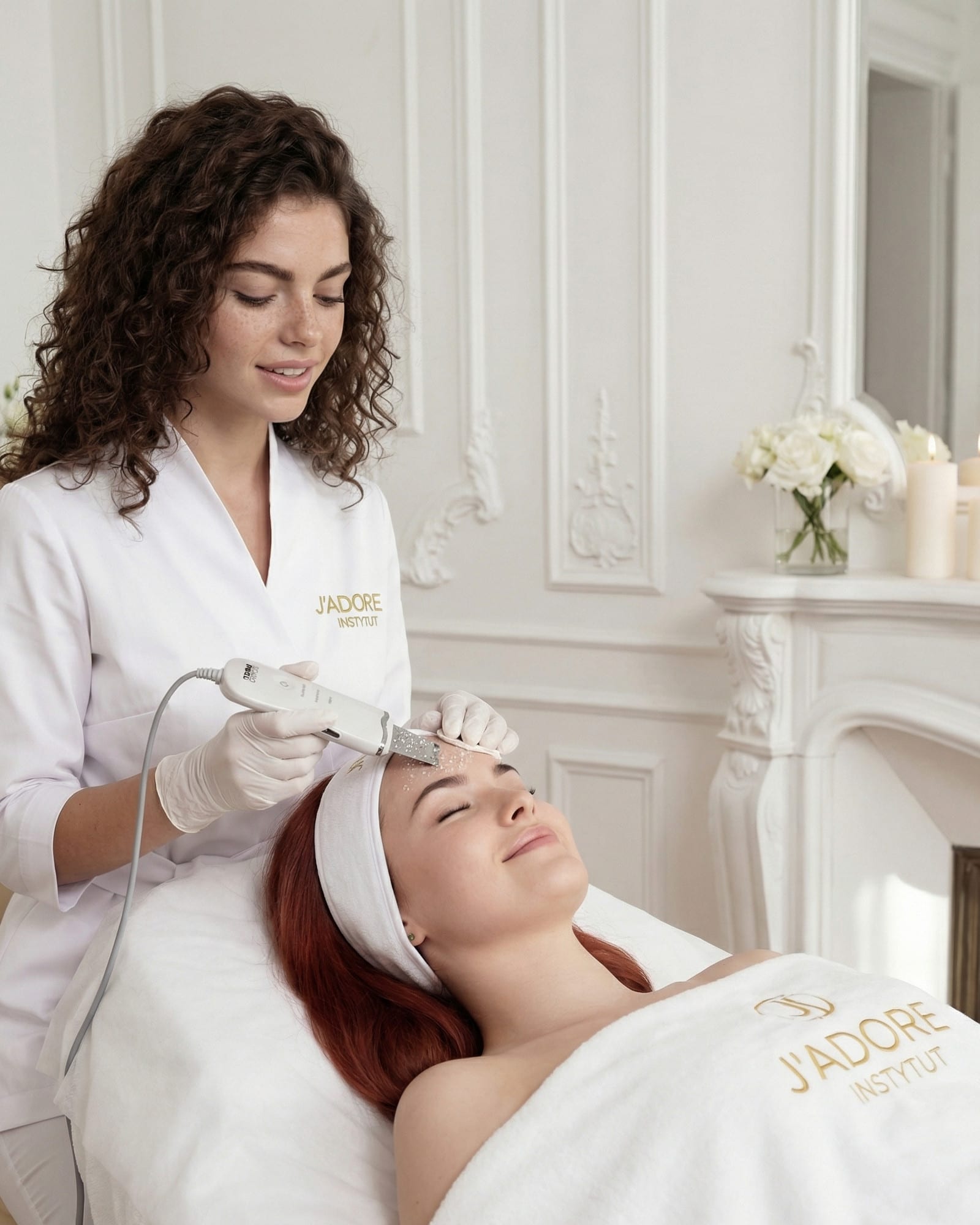
An in-clinic approach to melasma differs from one for ordinary hyperpigmentation, because it has to address several layers of the problem at once: the pigment already present in the skin, melanocyte overactivity, and dermal inflammation. That's why melasma calls for a customised protocol — not "a treatment for hyperpigmentation", but a considered plan.
The key areas of in-clinic work with melasma follow several logics, which can be combined or used sequentially:
- In-clinic peels — work deeper and more precisely than drugstore products, often with carefully selected acid concentrations or combinations. They act on the epidermis and the upper dermis, preparing the skin for the next stages.
- Active ingredients that inhibit melanogenesis — used in the clinic at higher concentrations or under occlusion; they can reach deeper than a home serum.
- Laser and device-based treatments — only with the right selection of device and settings, because melasma is exceptionally sensitive to heat. The choice here is critical, and not every laser is suitable for treating melasma.
- Combined protocols — increasingly used because they address the problem from several angles at once: pigment reduction + inhibiting melanocytes + working on the vascular component.
In-clinic peel + home routine
Exfoliation and stimulation in the clinic work best when supported by a daily home routine with active pigment-inhibiting ingredients — the effects add up.
Laser protocol + UV protection
Device-based work always goes hand in hand with consistent SPF use — without it, any treatment result is short-lived.
Working on melasma + barrier stabilisation
Before introducing more aggressive treatments, it's worth strengthening the skin barrier first — irritated skin reacts to every stimulus with more intense pigmentation.