Two protocols — one goal, different routes
Both cosmelan and dermamelan share the same aim: to reduce the visibility of hyperpigmentation and even out skin tone. Both work on several levels — they inhibit the enzyme (tyrosinase) responsible for melanin production, while speeding up epidermal renewal. That's where the similarities end.
Cosmelan is a protocol designed for every skin type — fair, dark and everything in between. Dermamelan, in turn, is designed mainly for darker skin (Fitzpatrick phototypes III–VI) and for cases where the risk of post-inflammatory hyperpigmentation after a traditional peel is high. This doesn't mean one is "stronger" than the other. It means each has its own ideal candidate.
Cosmelan
universal protocol — all skin phototypes
- melasma, hormonal patches, sun-induced hyperpigmentation
- effective on both fair and dark skin tones
- in-salon mask + maintenance cream for home use
- for many, visible results within the first few weeks
- suitable for a broad range of clients
Dermamelan
protocol for dark phototypes and difficult cases
- treatment-resistant melasma, hormonal hyperpigmentation
- phototypes III–VI — Mediterranean, Asian and dark skin
- reduced risk of post-inflammatory hyperpigmentation (PIH)
- dedicated formula that minimises post-treatment irritation
- home-care plan closely matched to how your skin reacts
How the mechanism works — what happens to the skin
Both protocols combine two actions: inhibiting melanin production and speeding up epidermal exfoliation. This means they work on existing hyperpigmentation (removing it from the surface) and on future pigmentation (slowing melanogenesis).
- 01
In-salon visit — mask application
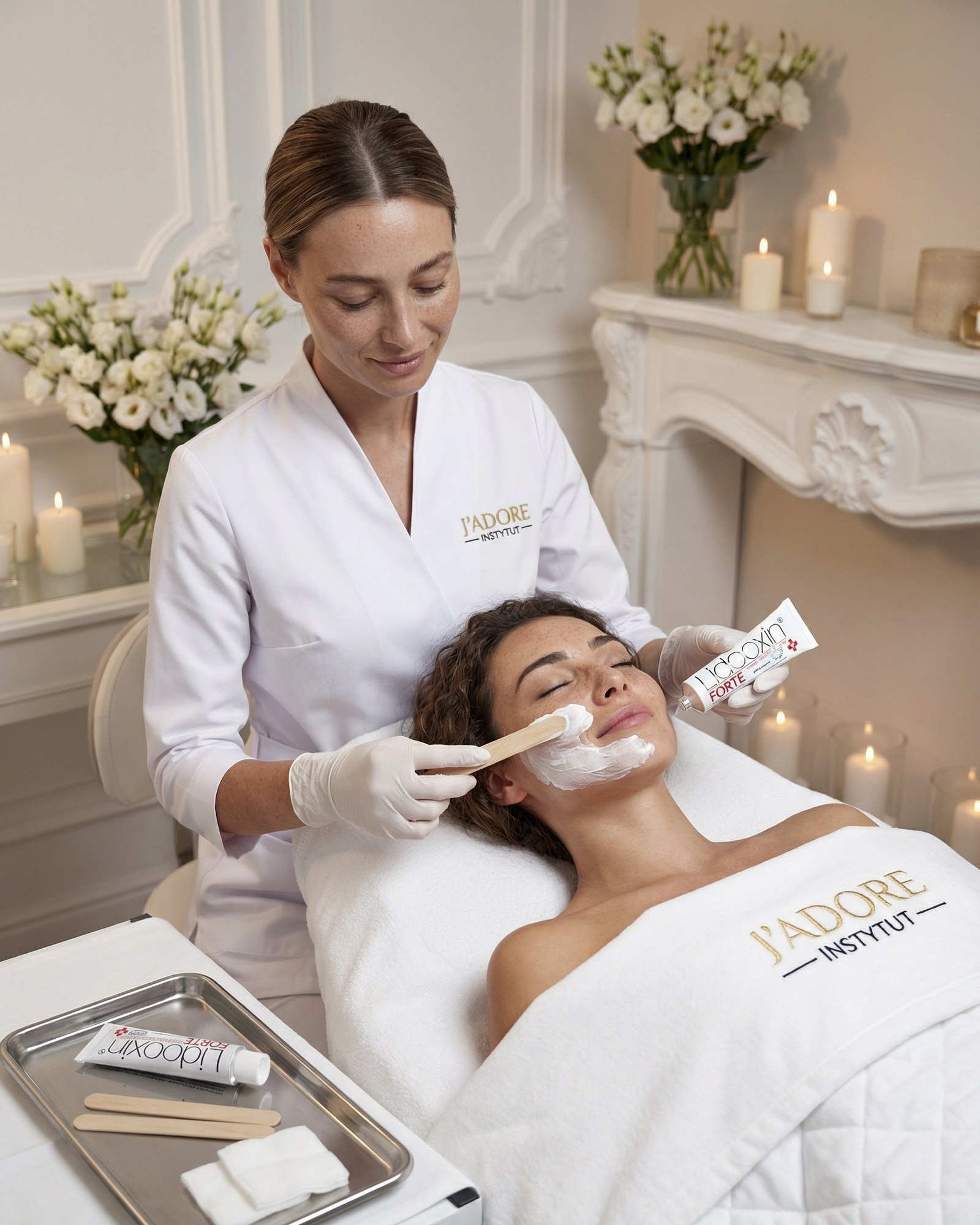
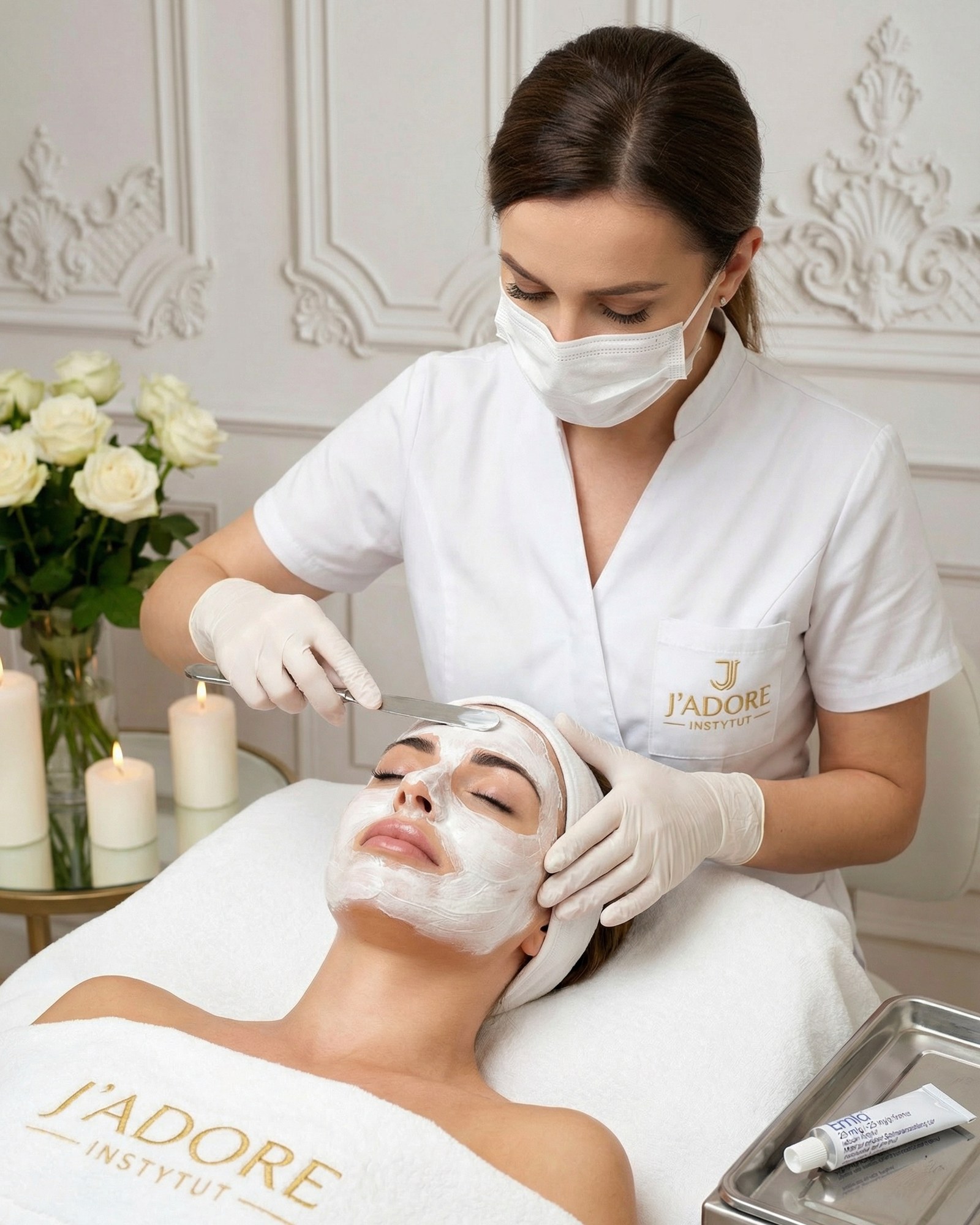
Your specialist cleanses the skin and applies the mask (cosmelan or dermamelan). The mask stays on for a set time, chosen individually based on your phototype and sensitivity.
- 02
Acute exfoliation phase (days 1–5)
The epidermis exfoliates intensely — this is a normal, expected reaction. Skin can feel red, tight and dry. It's essential to use only the recommended products and avoid sun exposure.
- 03
Calming phase (week 2–3)
Exfoliation eases and the skin starts to regenerate. For many, an improvement in skin tone becomes visible as unevenness fades.
- 04
Maintenance phase (months 1–6)
This is the key stage — the maintenance cream used at home prevents melanin from returning. Home care matters as much as the mask itself. Without it, results may not last.
- 05
Assessing results and deciding on next steps
Once the protocol ends, your specialist assesses the skin. For some, one series is enough. Others — especially with hormonal melasma — continue with maintenance care or plan a further cycle.
How to tell which protocol is right for you
Choosing between cosmelan and dermamelan is a decision your specialist makes based on a skin assessment — it can't be made from an online description. But a few questions are worth thinking about before your consultation:
- What's your skin phototype? — fair skin that tans easily but also reddens easily is a different case from Mediterranean or Asian skin, which rarely burns but pigments easily.
- Do you have a history of post-inflammatory hyperpigmentation (PIH)? — if every spot leaves a dark mark, the risk with an intensive protocol rises, and a more careful choice is needed.
- Where does your hyperpigmentation come from? — hormonal melasma, sun spots, post-acne scars, uneven tone after pregnancy: each case can have different treatment priorities.
- Can you stick to home care consistently? — both protocols require discipline during the maintenance phase. Without it, results won't last.
- When are you planning sun exposure? — summer and intense sunlight are worth considering before deciding on the treatment.
When it's worth combining the protocol with another treatment
Cosmelan and dermamelan rarely work in isolation. Many clients get the best, most lasting results when the depigmentation protocol is part of a wider skincare plan. Combinations are chosen individually — there's no one recipe for everyone.
Chemical peel (before or after the protocol)
It can prepare the skin for the protocol by adjusting epidermal thickness, or help maintain results once it's finished. Your specialist always chooses the type and strength of peel — not every peel suits every phototype.
Hydrating mesotherapy
Depigmentation protocols work the skin barrier hard. Mesotherapy helps rebuild it and maintain hydration during and after the course.
Laser and IPL (at a later stage)
For selected clients — once the protocol is finished and the skin has stabilised — laser or IPL can deepen results or target remaining pigment spots. This requires separate qualification.
Sun protection (always)
This isn't a "treatment" — but without daily SPF 50+, any depigmentation protocol loses half its value. Sun exposure is the main cause of hyperpigmentation returning.
What to expect — and what not to
Both protocols have documented efficacy backed by clinical studies, and a long history of use in salons worldwide. But neither is a permanent, guaranteed fix — and it's worth knowing that before you decide.
- For many people, cosmelan and dermamelan deliver a very significant improvement — a more even tone, shallower marks and a refreshed complexion.
- Hormonal melasma can recur — especially with strong sun exposure or a change in hormonal status. The maintenance protocol and SPF aren't optional — they're essential.
- The exfoliation phase can be uncomfortable — for a few days, skin may feel red, tight and dry. This is a planned reaction that passes.
- The time to visible results varies — some people see a clear improvement after 4–6 weeks; others after several months of regular use of maintenance products.
- Phototype matters for choosing the protocol — but it doesn't determine how good the results will be. It determines how to carry out the treatment safely.