
Where the spots come from — and why there are more with age
Melanin is the skin's natural defence mechanism — excess pigment builds up where the sun hits hardest and longest. In younger men, the skin redistributes melanin fairly efficiently. Past thirty or forty, this mechanism starts to falter: melanocytes — the cells that produce pigment — become overactive, deposit pigment unevenly and stop dispersing it effectively. The result is visible: dark patches that persist even in winter.
There's also a rule few people mention directly: sun-induced hyperpigmentation is cumulative. Every summer without SPF, every day on the mountain slopes without a hat, every day on a building site or at a match — it all adds up over the years. Skin doesn't forget. The spots that "suddenly appear" after fifty have really been building for decades.
- Sun spots (solar lentigines): flat, brown, clearly defined — most often on the forehead, temples, nose and hands.
- Melasma: extensive, irregular pigmentation caused by a combination of UV exposure and hormones — rarer in men, but possible.
- Post-inflammatory hyperpigmentation (PIH): marks left by acne, wounds or abrasions — melanin accumulates where inflammation once was.
- Diffuse photoageing: an overall uneven tone across the whole face — no clear patches, but with that "grey, fatigued skin" look.
Why a brightening cream won't shift it
Most over-the-counter "anti-pigmentation" products from drugstores or pharmacies work only on the surface — they brighten dead epidermal cells or slightly slow melanocyte activity. This can give a subtle effect on fresh, shallow pigmentation. On deeply embedded, long-standing sun spots, the effect is marginal.
Brightening cream (OTC)
what it does
- works only on the surface of the epidermis
- slows melanin production to a small degree
- requires months of use for a minimal effect
Dermamelan (protocol)
what it does
- works on several layers of the skin at once
- inhibits tyrosinase — the key enzyme in melanin production
- accelerates cell renewal and pigment exfoliation
The key difference lies in the mechanism: dermamelan doesn't brighten what's visible on the surface — it blocks tyrosinase, the enzyme responsible for melanin synthesis, and simultaneously speeds up the shedding of pigment-laden cells. It works at the source, not on the surface.
How dermamelan works — no sugar-coating
Dermamelan is a two-stage depigmentation protocol: an in-salon treatment plus several months of home care. Neither part can be skipped — together they deliver results; separately, neither does.
- 01
Consultation & skin assessment
A specialist assesses the type and depth of the hyperpigmentation, your history of sun exposure and your current skincare routine. Based on this, we decide whether dermamelan is the right choice — and whether your skin needs preparation first.
- 02
In-salon treatment
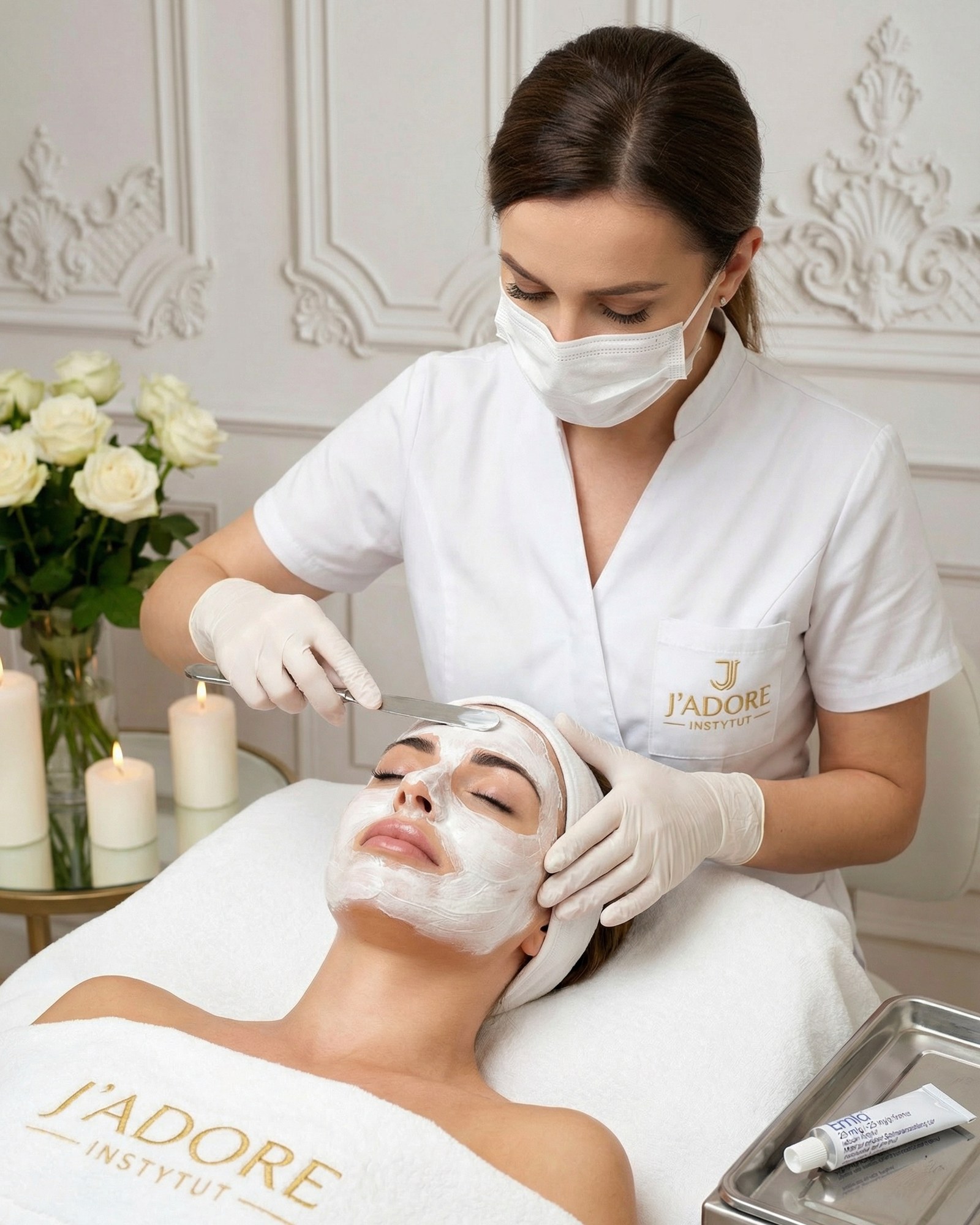
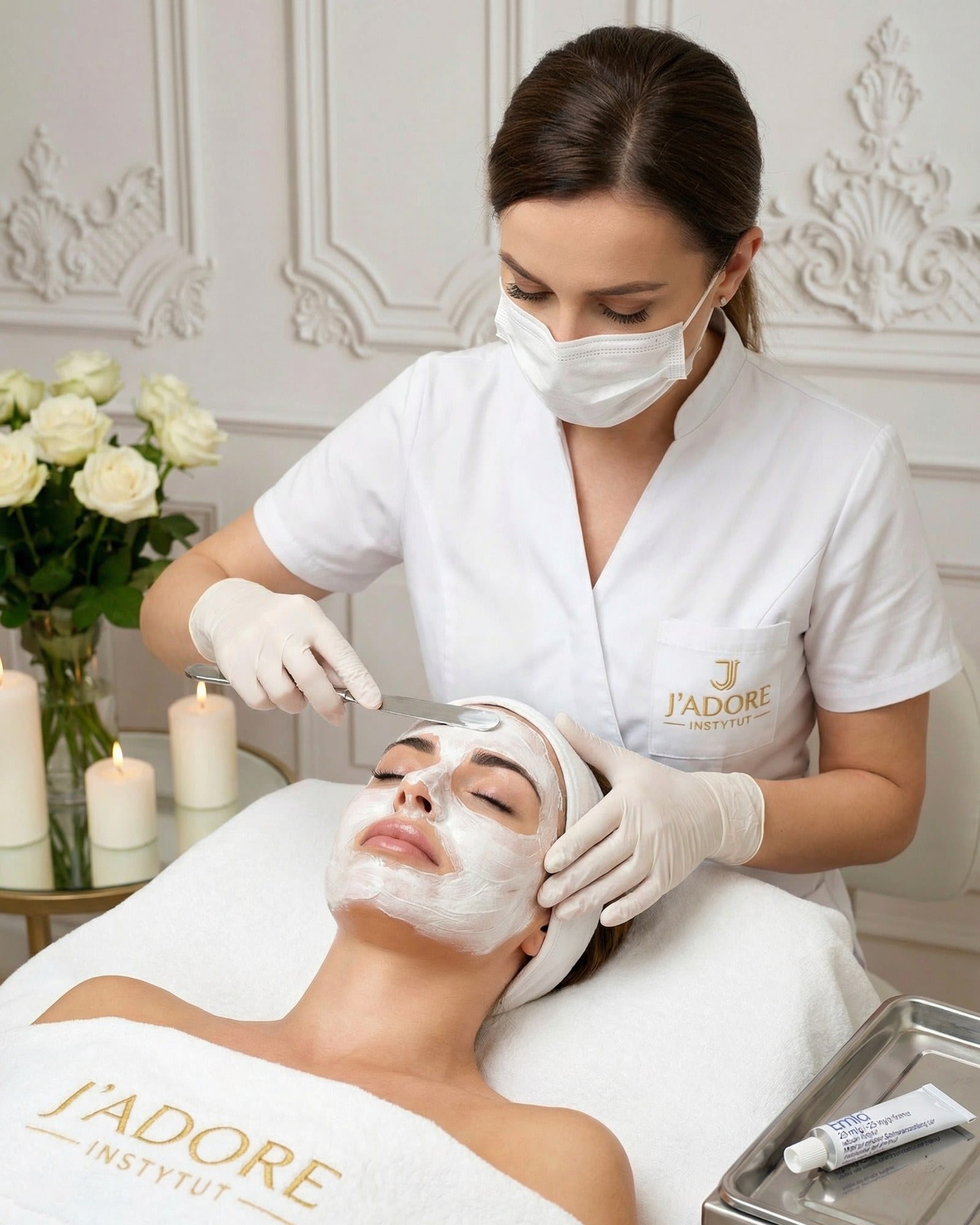
A depigmenting mask is applied to cleansed skin. It stays on for several hours, then is removed at home following the instructions given. This is a single, intensive application of active ingredients.
- 03
Skin response — the first few weeks
The skin exfoliates — this is a normal, expected effect. Your face may look red and feel tight in places. This isn't a setback — it's the mechanism shedding pigment-laden cells. A control cream applied morning and evening limits irritation.
- 04
Home care (several months)
The control cream (containing tyrosinase-inhibiting ingredients) is applied daily — this is the crucial part of the protocol. Without it, the results of the in-salon treatment are weaker and short-lived. SPF 50+ every morning isn't optional — it's a requirement.
- 05
Assessing results and deciding on the next stage
After a few months, a specialist assesses the results. For many people, one cycle is enough. For deep or extensive pigmentation, a further cycle may be worthwhile — this is decided individually, not as a rule.
What about the downtime — the question men ask first
One of the most common mistakes: getting the treatment, seeing the flaking, panicking and stopping the control cream. This undoes the results. The control cream inhibits tyrosinase only while you're using it — stop, and the melanocytes go back to work, so the pigmentation can return. A specialist explains the regimen during your consultation — it's worth taking seriously.
SPF after dermamelan — and in general
Here's the honest part: dermamelan won't achieve anything lasting if you don't start using sunscreen afterwards. The melanocytes that were suppressed are still in your skin, and they'll respond to UV with renewed hyperpigmentation — often faster and more intensely than before the treatment. This isn't a scare tactic. It's a mechanism worth understanding before you decide.
SPF 50+ throughout the protocol — and for at least a season afterwards. Then SPF 30+ as a permanent part of your daily routine. For men who've only used sunscreen on holiday and only at the beach, this is usually the biggest change in habits — and also the key condition for results to last.
Ideal for — and who should think twice
Dermamelan can be a good choice if you have clear, long-standing sun spots or melasma and your current skincare hasn't helped. It works on both lighter and darker phototypes — one of its advantages over more aggressive acid peels, which can paradoxically worsen pigmentation on darker skin tones.
- Good indications: sun spots (lentigines), melasma, uneven pigmentation after UV exposure, photoageing.
- Requires caution: active skin inflammation, flaring acne, reactive skin — a specialist assesses this individually.
- Absolute contraindication: ongoing sun exposure that can't be limited throughout the entire protocol.
- Not for everyone: if you can't or won't use SPF daily for several months, the results will be weaker or short-lived.
What's worth combining — supporting treatments
Dermamelan is a complete protocol in itself. It's sometimes combined with other treatments — not at the same time, but as part of a longer-term skincare plan. A specialist decides what makes sense in your case.
Chemical peel (mandelic / azelaic acid)
Gentle acids can help maintain an even skin tone after completing the dermamelan protocol — used during the maintenance phase.
Hydrating mesotherapy
Skin can feel dry and tight during the protocol. Deep hydration through mesotherapy can shorten the period of discomfort and support skin renewal.
Laser therapy (vascular concerns, skin tone evenness)
Some sun spots with a vascular component, or deeply embedded melanin, are easier to treat after the dermamelan stage — the laser works more precisely on already-evened skin.