Red vs white — what colour actually means
A stretch mark forms when skin stretches faster than it can produce enough collagen and elastin fibres. The result is a tear in the connective tissue network — and this is where the difference begins between what looks red (pink, purple) and what becomes white (silvery, pearly).
Red stretch marks
tissue in the active — vascular — phase
- Fresh — from a few months to around two years old
- The red-pink or purple colour comes from dilated blood vessels
- The tissue is biologically active — cells are still remodelling
- For many people, tender to the touch or slightly itchy
- The best time to intervene — the greatest chance of results
White stretch marks
tissue in the scarring — fibrous — phase
- Older — the tissue has finished remodelling and settled into a stable state
- The white or silvery colour signals the loss of pigmentation and blood vessels
- Collagen fibres are arranged irregularly, and elastin is practically absent
- Skin in this area is often thinner and less richly supplied with nerves
- These require methods that can "wake up" dormant tissue
Shockwave therapy — when and why
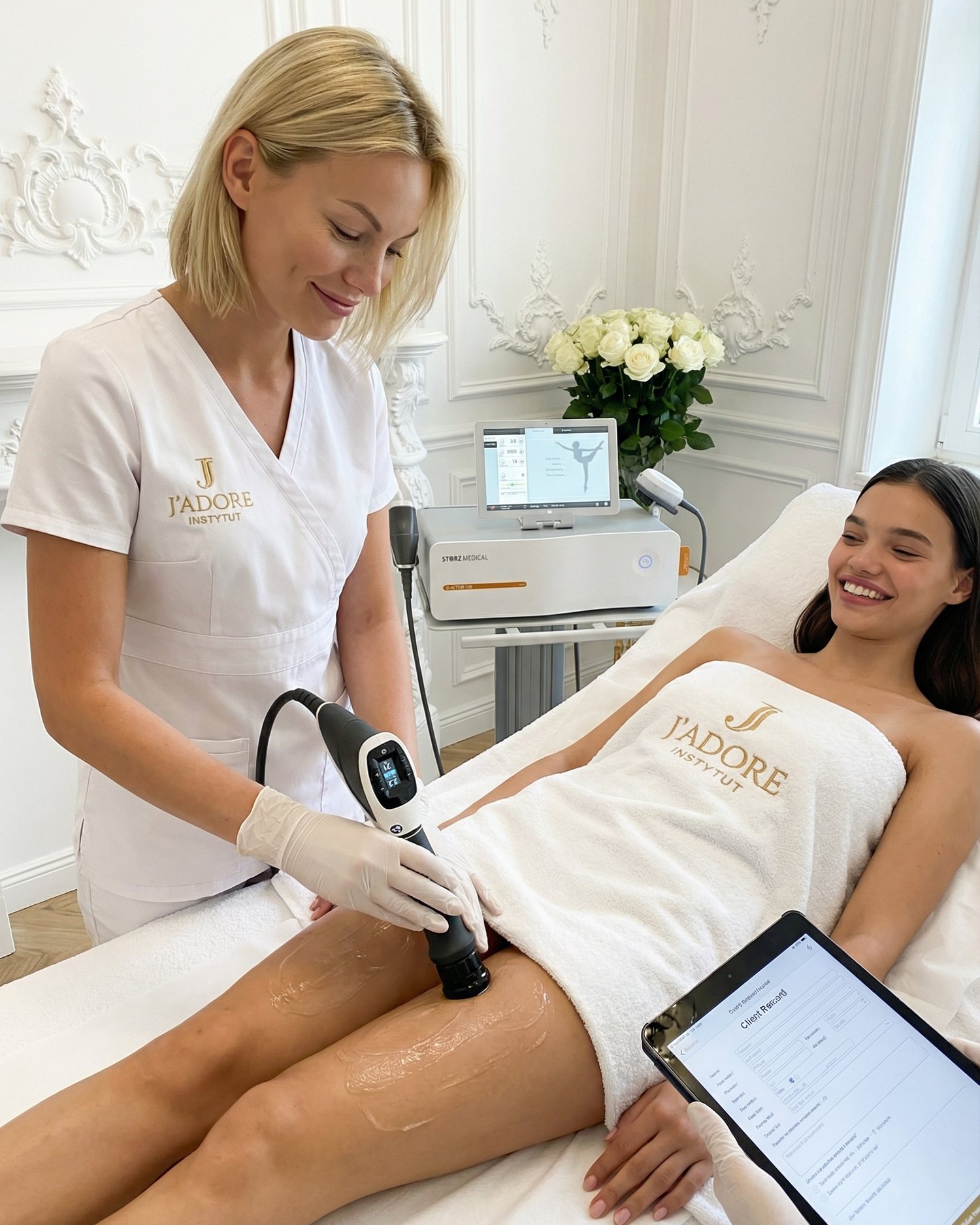
Shockwave therapy is a mechanical method. It sends pressure impulses into the tissue that literally "break it up" and force it to remodel. The result is stimulated fibroblasts (the cells that produce collagen), improved blood flow and loosened fibrosis.
- White, established stretch marks — particularly on the abdomen, thighs and buttocks
- Extensive areas — shockwave therapy works well over larger surfaces, such as after pregnancy
- Skin with accompanying cellulite — a dual effect on tissue structure
- People who cannot use light-based energy — for example, those prone to hyperpigmentation
Laser — when and why
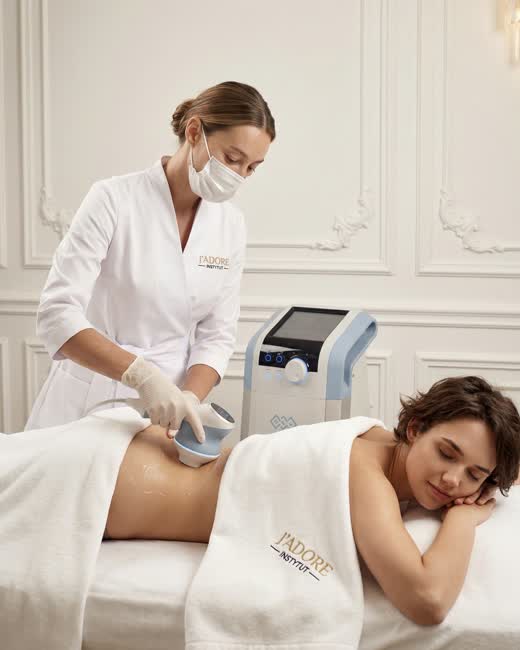
Lasers used for stretch marks work on several levels at once: they can target blood vessels (reducing redness), stimulate collagen through controlled micro-injury, or restructure the skin's surface. The choice of laser type depends on the colour of the stretch mark and skin phototype.
- Red and pink stretch marks — the active phase, when blood vessels are still present
- Fresh stretch marks after pregnancy or rapid weight change — intervening before the scar matures
- Smaller areas with distinct colour — laser precision works well in limited spots
- Evening out discolouration around scars — selected laser methods can stimulate melanocytes
Comparison: which method, and when
Shockwave therapy
mechanical tissue stimulation
- Particularly effective on white, established stretch marks
- Safe for all skin phototypes
- Improves texture and stimulates your own collagen
- Can treat more extensive areas at once
- Often combined with deep tissue massage
Laser
selective light energy
- Particularly effective on red and pink stretch marks
- Allows precise work on colour and texture
- Reduces redness faster and improves contrast with surrounding skin
- Stimulates collagen remodelling through controlled micro-injury
- High satisfaction during the active phase of stretch marks
When it's worth combining both methods
Many people have stretch marks in different phases on the same body — and in these cases, a combined plan gives the best results. Combining shockwave therapy and laser isn't about multiplying treatments for the sake of it. It's about choosing the right tool for each area individually.
Shockwave therapy + vascular laser
White stretch marks on the thighs get shockwave therapy; pink ones on the abdomen get laser. One plan, two methods, each used where it makes sense.
Fractional laser + shockwave therapy
Laser restructures the surface; shockwave therapy stimulates the tissue more deeply. This combination can give better results for texture improvement in extensive, mixed stretch marks.
Treatment + peptide mesotherapy
After mechanical or laser stimulation, skin is more receptive to active ingredients. Mesotherapy supports rebuilding from within.
- 01
Consultation & assessment
The specialist assesses the colour, depth, age and extent of the stretch marks, as well as skin phototype. This is when the method is decided.
- 02
Series of treatments
Usually several to a dozen or so sessions, spaced a few weeks apart. Results build up gradually — tissue needs time to remodel.
- 03
Interim assessment
Halfway through the series, it's worth checking how the skin is responding. For some people, the plan is adjusted — for example, changing the balance between methods.
- 04
Maintenance
Once the series is complete, some people choose maintenance sessions. Results can last a long time — particularly the improvement in texture and reduction in depth.