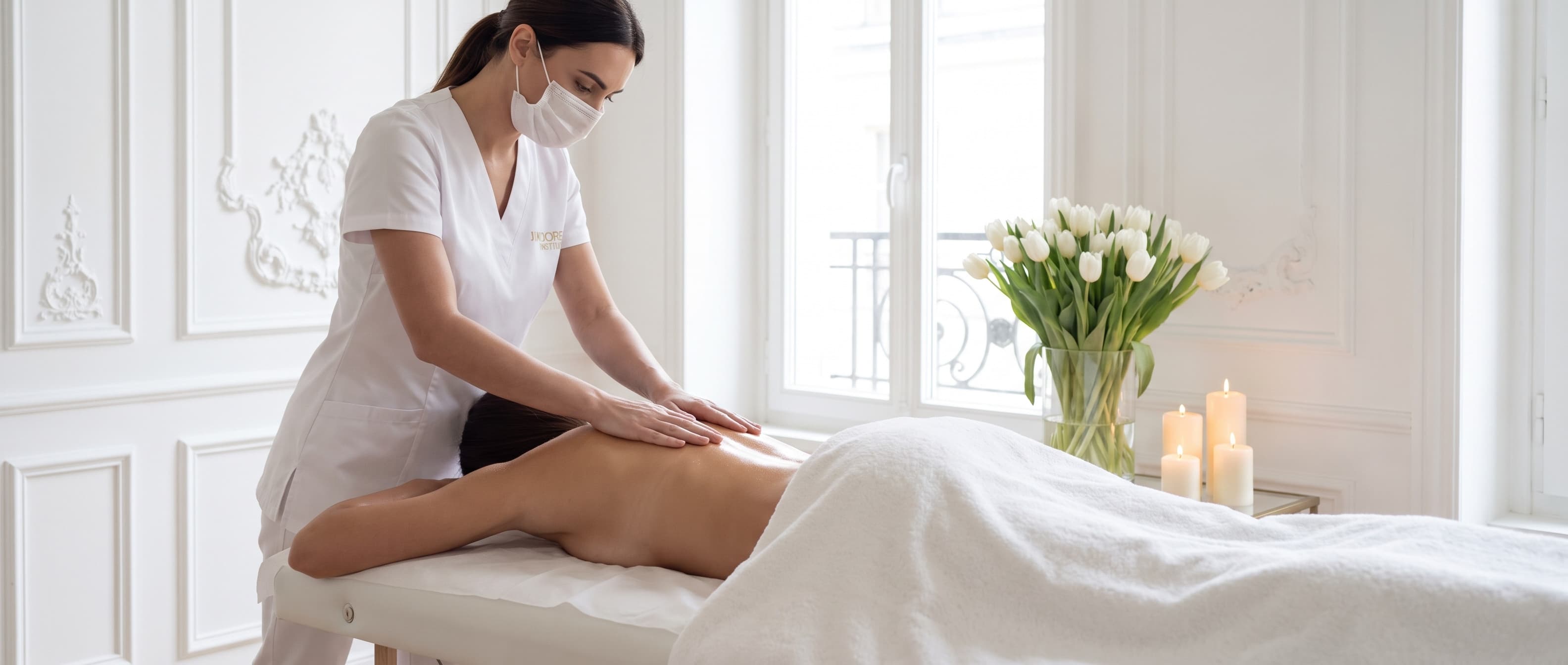
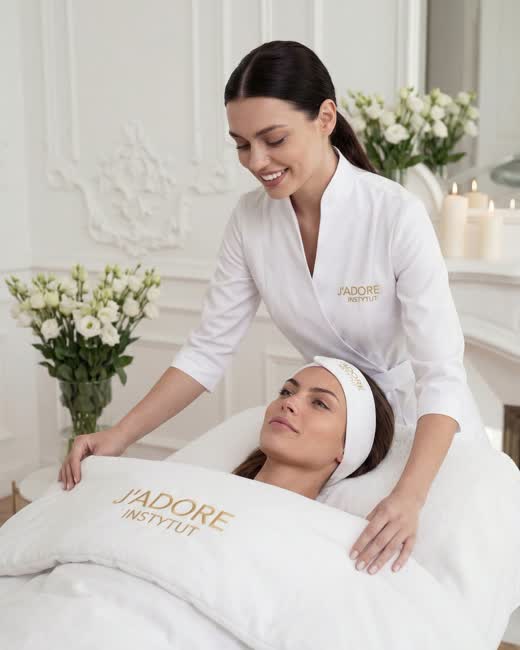
A treatment room at J'adore
MASSAGE & SPA (~30)
Shiatsu (Japanese shi — finger, atsu — pressure) is a Japanese pressure massage. The therapist rhythmically presses points along the "energy lines" using thumbs, palms and forearms — often combined with gentle stretching and light joint mobilisation.
What sets it apart: it's performed fully clothed, without oil. Instead of gliding across the skin, the work is point-based, in a calm, repetitive rhythm. It's a ritual rooted in the Japanese tradition of caring for balance and the flow of energy (ki) — in our version, purely wellness-focused: it relaxes muscles, warms the body, quietens the mind and restores a sense of "being back in yourself". After a session, some people feel deep calm, others a pleasant lift of energy. At J'adore Instytut, the treatment is performed by a massage therapist. It also makes a lovely gift — a shiatsu voucher says "take a moment for yourself". Below you'll find everything worth knowing before your first visit.
a single visit or a regular series of "me time"
How it works
Shiatsu is a Japanese pressure massage. The therapist presses selected points on the body with thumbs, palms, sometimes elbows and forearms, moving along the "energy lines" (meridians) in a calm, repetitive rhythm. Rather than smooth gliding over the skin, the work is point-based and static: press — hold — release, often timed to your breathing. Hence the technique's other name: acupressure ("needle-free" acupuncture).
What stands out most is that shiatsu is performed fully clothed, without oil — there's no need to undress. Pressure is often combined with gentle stretching and light joint mobilisation, giving the whole body a sense of "opening up". Clients typically describe the effect as relaxed muscles, better circulation, less tension in the neck and shoulders, and a pleasant sense of returning to balance — sometimes calming, sometimes energising.
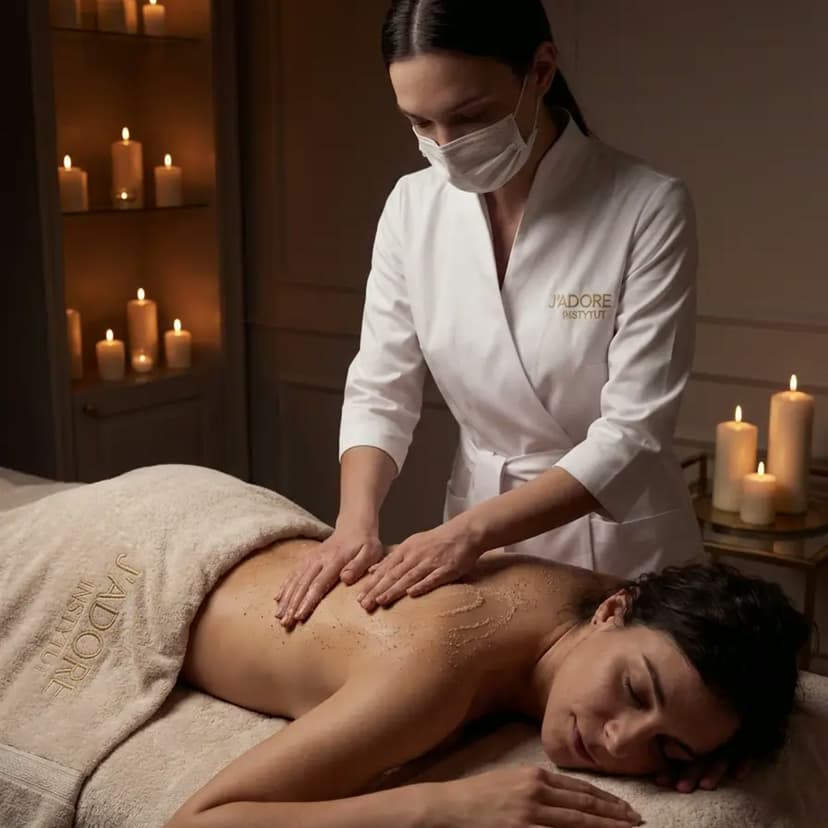
Did you know? Shiatsu literally means "finger pressure" in Japanese (shi — finger, atsu — pressure). The technique emerged in Japan in the early 20th century, combining the older anma massage with knowledge of "energy lines". That's why shiatsu is often called acupuncture without needles — all the work is done by the therapist's thumbs and hands, with no tools involved.
Ideal for
Shiatsu works with point-based pressure, fully clothed and without oil, combined with stretching — it's closer to a Thai massage than a classic one. A relaxation or classic massage uses long, smooth strokes with oil, focused on calming or working a specific muscle. If you're not sure where to start, tell us what you're looking for and we'll advise. You'll find more detail on related techniques on our Thai massage, classic massage and relaxation massage pages.
Women's zone and men's zone
Shiatsu massage for women is most often a way to achieve deep calm and "switch off" without the sensory backdrop of oils — the rhythm of pressure and breath alone is enough to slow the body down. Clients appreciate that it's performed fully clothed, so any self-consciousness disappears and attention can shift fully to relaxation.
What we work with
Shiatsu massage for men suits those who prefer a firm, direct massage over gentle oil-based stroking. Point-based pressure, stretching and mobilisation deliver a clear sense of release exactly where tension tends to settle — the neck, shoulders and back extensors, worn down by desk work, driving and strength training.
What we work with
For two: shiatsu also comes in a version for couples — two tables side by side, one shared moment of Japanese-style calm. It makes an original anniversary gift, or simply "something different from a classic massage". You'll find more on shared rituals on our SPA Rituals page.
MASSAGE & SPA (~30)
Shiatsu is safe for most people, but because it uses firm, point-based pressure and stretching, in a few situations we simply postpone the visit until things have settled — or ask you to check with your doctor first.
This isn't a complete list — if you have any doubts about your health, tell us when booking or at the start of your visit. We'd rather postpone by a few days than massage against common sense.
What to expect
Your first shiatsu session can come as a surprise — it's not gentle oil-based stroking, but firm, rhythmic pressure on specific points. Some feel deeply calm afterwards, others feel a pleasant "charge" of energy. Both reactions are normal. If at any point the pressure feels too strong or too light, just say so — we'll adjust it straight away.
Portfolio
A record of the work in our salons — the place where we publish treatment frames and, after photo sessions, results.
A record of results — in preparation. We publish photographs of our clients only with their consent.
After your massage
Shiatsu needs no recovery time — you go straight back to your day. But a few small habits help the feeling of relaxation and balance last much longer:
After an intense, point-based massage, reach for water and sip it steadily for the rest of the day. Good hydration helps the body "settle" the relaxation and reduces any feeling of heaviness.
If you can, avoid diving straight back into a busy schedule. A quiet evening, a warm tea, no screens — this is when the feeling of balance works best.
The evening after shiatsu is a good time to go to sleep early — your body is relaxed, and tension has eased from the neck and shoulders. Many clients sleep especially deeply afterwards.
Intense exertion right after a massage "revs back up" what we've just relaxed. A light walk — fine; heavy training — better left until the next day.
Strong coffee and alcohol work against the nervous system in a way that opposes shiatsu. For the full effect, it's worth skipping or cutting back on them that day.
The fastest way to undo the immediate effect is diving straight back into emails, calls and to-do lists. Give yourself at least a few dozen minutes of buffer before ramping back up to full speed.
Shiatsu massage
These three massages do slightly different things — and often complement each other beautifully. Here's a quick guide to help you match the right one to your needs. Full details of each are on their own page:
point-based pressure along the "energy lines"
not long, smooth oil-based strokes or a sensory SPA setting
stretching + acupressure
tends to be more physically active — less "static" calm than shiatsu
muscle work with oil
doesn't work point by point along "energy lines" or include stretching like shiatsu
Combine with
Shiatsu fits beautifully into a wider "day for yourself". Here are the most common, natural combinations — you'll find full details of each on its own page:
It's best to agree the order and timing with your therapist on the day — we'll sequence treatments so each one enhances the next, rather than overloading you.
A simple rule of thumb: if you like pressure and stretching, fully clothed and without oil — choose shiatsu. If you dream of deep stretching, like "yoga for two" — choose Thai massage. If you want smooth work on one specific muscle with oil — choose classic massage. You can also combine them in a series — tell us what you're looking for and we'll advise.
Shiatsu variants
Shiatsu comes in several forms, mainly differing in where the emphasis falls: pure pressure along the meridians, more focused work on specific points, or a combination with stretching. We help you choose the right variant for your needs, and your therapist will offer guidance at the start of your visit too.
The classic version: calm, rhythmic pressure with thumbs and palms along the "energy lines", fully clothed and without oil.
Dla kogoFor when you want to experience shiatsu in its "purest form" and achieve deep calm.
A stronger focus on the specific points where tension gathers most — held and gradually released.
Dla kogoFor persistent tension in the neck and shoulders, when "something" won't let go.
Pressure combined with gentle stretching and light mobilisation — gives the whole body a feeling of "opening up" and lightness.
Dla kogoFor stiffness and a sedentary lifestyle; a favourite among those who enjoy stretching out.
The same experience, shared — with someone close, in one room, at the same time.
Dla kogoA gift for an anniversary, Valentine's Day, or simply a shared moment of rest.
Fact: You don't need to know anything about meridians. Just tell us what you need — deep calm, more focused work on tension, or "opening up" a stiff body — and we'll take care of the rest.
Price list
Checking free hours…
From the magazine
Editorial pieces on how this treatment works in practice — what happens during the session, how to prepare, where the limits are and what the first days after look like.
See also
The result lastsrelaxation and lightness from the first visit; deeper balance builds up over a seriesJ’adore Instytut
Note. Shiatsu massage is a wellness/relaxation service; it does not replace diagnosis or medical treatment. The concepts of "energy", "meridians" and "points" describe the tradition this technique comes from — they are not a medical diagnosis. If you have a chronic condition, are pregnant, have a recent injury, or have any doubts, consult your doctor first. The therapist agrees the details and variant (pressure intensity, stretching, focus on specific points) with you during your visit.
Home care
Cosmetics matched to what your skin needs after a treatment — so the clinic effect lasts longer.
 body careSkeyndorCannabis Massage Cream – Spa SensesView in the shop(opens in a new tab)
 soothing body skinDiego Dalla PalmaSENSITIVE Lipid-Balancing Body Cream 350 mlView in the shop(opens in a new tab)
 body careMesoesteticBodyshock Essential CreamView in the shop(opens in a new tab)
 soothing body skinestGenLive Balancing BalmView in the shop(opens in a new tab)
 body careDermalogicaBody Hydrating Cream 295 mlView in the shop(opens in a new tab)
 body careDermoMedicaActive Antioxidant Body Lotion 200 mlView in the shop(opens in a new tab)
 body careDiego Dalla PalmaSENSITIVE Delicate Cleansing Oil for Body 350 mlView in the shop(opens in a new tab)
 body careSkeyndorOrchid and Wild Roses body lotion – Spa SensesView in the shop(opens in a new tab)