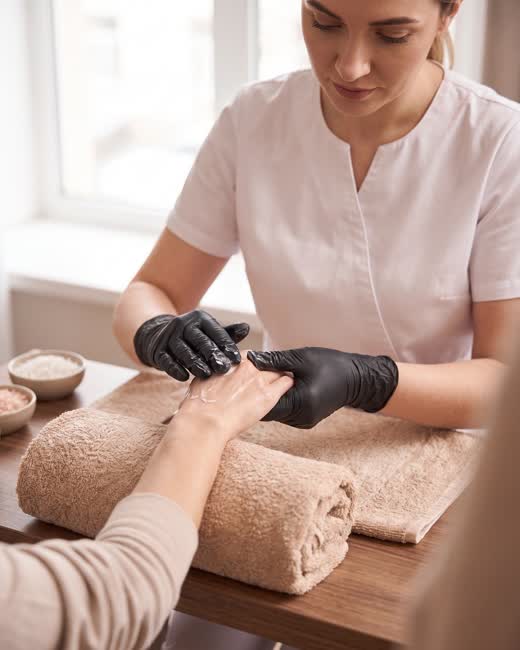
What is shiatsu — no sugar-coating
Shiatsu (Japanese for "finger pressure") comes from traditional Chinese medicine and Japanese massage techniques. The therapist works along the meridians — body lines that, in Eastern philosophy, carry the life energy ki. Whatever you think of that philosophy, the physical mechanism is simple. Firm, precise pressure on specific points relaxes muscles, improves microcirculation and switches the nervous system out of "fight or flight" — the state many men live in for most of the day.
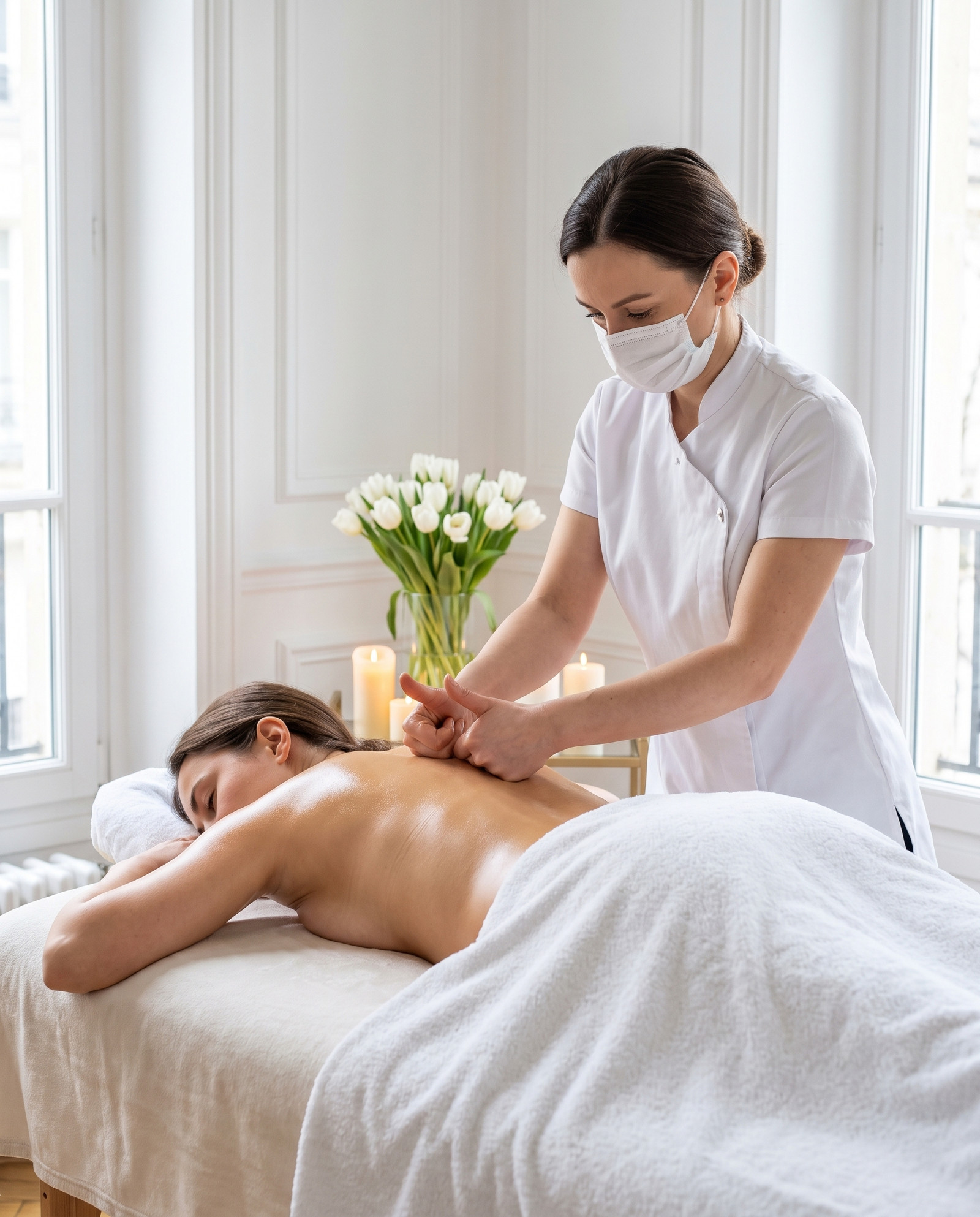
The difference between shiatsu and classic massage is fundamental. Classic massage works directly on the skin with oil — long, flowing strokes on the surface layer. In shiatsu, the therapist stays dressed, and so do you. Pressure comes from their own body weight. It goes deeper, and it's more targeted, more precise. The work happens on the floor, on a mat — or on a special low table. The only things missing are the familiar oil scent and the feeling that you're about to fall asleep.
Why men over thirty should know this
Men in their thirties tend to share the same set of physical issues: desk-related neck and shoulder tension, lower back strain from hours of sitting, a smaller range of motion than five years ago, and chronically elevated cortisol that keeps muscles from ever fully releasing. Classic massage helps — but it mainly works on the surface layer. Shiatsu takes a different approach.
- Neck and shoulders. Pressure-point work along the trapezius and neck often brings immediate relief that several sessions of classic massage couldn't.
- Lower back. Working along the bladder meridian, which runs down the spine, can ease tension in the muscles alongside it — without any spinal "adjustment" or manipulation.
- Shoulders and range of motion. Passive stretching in shiatsu helps free up the shoulder joints — especially for men who sit a lot and stretch too little.
- Mental fatigue. Sustained pressure on specific points activates the parasympathetic nervous system — the one responsible for "rest and digest" mode. For someone living in a constant task-driven state, that can be a meaningful break.
Massage through clothing — what to expect
Before you get on the mat, a few things are worth knowing. Clothing should be loose and stretchy — tracksuit bottoms, leggings, a cotton T-shirt. Jeans and an office shirt can wait for another evening. The therapist works along your entire body: back, legs, arms, neck, and sometimes the face and head. We usually start lying face down, then on your back, and finish with some work in a seated position.
- 01
Brief consultation
The therapist asks about your complaints, lifestyle and areas of tension. You don't need to know the terminology — "it hurts here" is enough.
- 02
Work on the mat
You lie down in loose clothing. Pressure begins along the spine and hips — firm, targeted, rhythmic. Not a stroking motion, but steady pressure from thumbs or the heel of the hand.
- 03
Passive stretching
The therapist lifts your legs, rotates your arms, stretches your hip joints. This isn't yoga — you stay passive throughout. You may feel joints crack, a natural result of releasing tension.
- 04
Work on the neck and head
The cervical spine and jaw muscles — often the most tense areas for men who work at a desk or spend a lot of time driving. Pressure here is gentler than on the back, but more precisely targeted.
- 05
Closing and stillness
Stay on the mat for a moment after the session — standing up straight after firm pressure work can leave you lightheaded. Your body needs a literal minute to "come back."
Shiatsu vs other massages — what to choose
The question comes up regularly: your back is tense — do you book classic, sports or shiatsu massage? There's no single answer, but a few pointers can help you decide.
Shiatsu
when it's worth choosing
- tension along the entire spine, not just one section
- you'd rather avoid oil (allergies, work straight after)
- you need work on range of motion, not just relaxation
- chronic stress and mental fatigue are the main issue
Classic / sports massage
when it's worth choosing
- muscle soreness after training, a specific muscle group
- you want deep soft-tissue work with oil
- pre- or post-workout preparation and recovery
- you have an issue with one specific muscle, not the whole body
In practice, shiatsu and sports massage complement each other well for many men — massage after training one time, shiatsu when stress builds up the next. These aren't competing techniques. They're different tools for different states of the body.
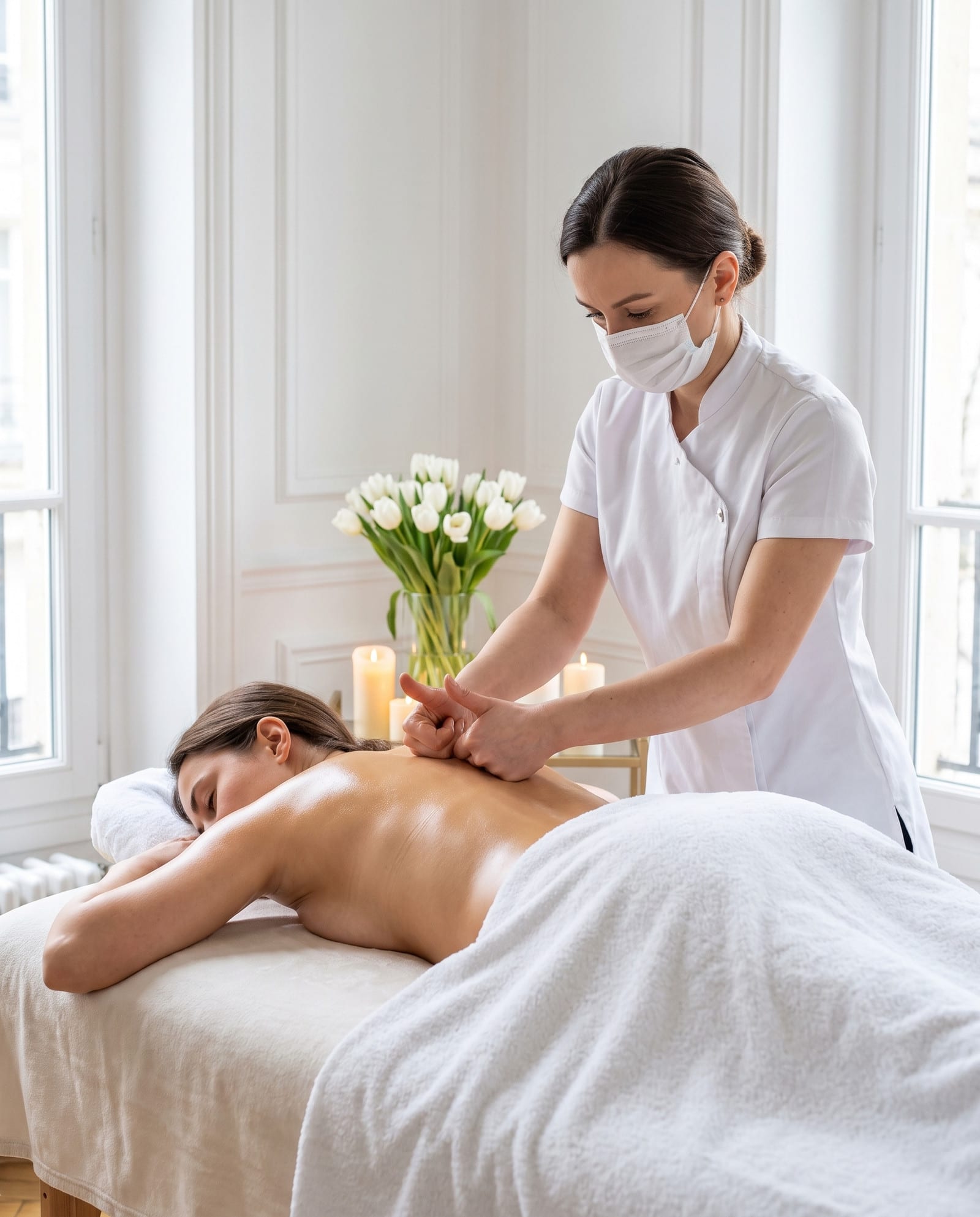
What to expect — no sugar-coating
Shiatsu can be intense, especially in your first session. A few things worth knowing before you get on the mat:
- Pressure can hurt — especially along the spine and shoulders. That's no reason to worry: the therapist adjusts the pressure to your threshold. If it's too much, say so.
- The next day, you may feel mild muscle soreness — similar to after a workout. For most people it clears within 48 hours and doesn't mean anything went wrong.
- The relaxing effect can arrive later — during the session, you may mainly feel pressure and stretching. True relaxation often sets in that evening or the next day.
- Several sessions achieve more than one — especially for chronic tension. A single session can bring relief, but regularity makes the real difference.
When it's worth combining with something more
Shiatsu works well on its own — but if neck tension comes with headaches, and stress collects in your shoulders and jaw, it's worth thinking about a broader approach. A man's body in his thirties rarely has just one isolated problem.
Classic or sports massage
Shiatsu works systemically, on an energetic level — classic or sports massage targets specific, overworked muscle groups after training. Combined in a weekly plan, they cover different needs of the body.
Face and head massage
If tension mainly settles in the neck, jaw and temples, face and head massage can complement shiatsu's work on the neck and shoulders. Tension headaches often start right here.
Neck and back treatment (trigger point therapy)
For very localised tension knots (so-called trigger points), targeted work in deep soft-tissue massage can complement shiatsu — different tools, the same area.