Before you choose a method — understand your hyperpigmentation
This is a key point most people overlook. Not all hyperpigmentation is the same. A method that works brilliantly for one type can make another worse. That's why diagnosis is step zero — without it, you're shooting in the dark.
Three main types of hyperpigmentation
1. Lentigo solaris (sun spots / age spots) Flat, brown patches with well-defined edges. They appear on the face, hands and décolletage — anywhere skin has had years of UV exposure. The melanin sits in the epidermis, which makes these spots a relatively responsive treatment target.
2. Melasma Large, irregular brown or greyish-brown patches, most often on the cheeks, forehead and above the upper lip. Cause: hormones (pregnancy, contraception) combined with UV exposure and genetics. The melanin can sit in the epidermis, the dermis, or both — and this determines how difficult treatment will be. Melasma is a chronic condition. It isn't "cured" once and for all — it's managed.
3. PIH — post-inflammatory hyperpigmentation Dark marks left by acne, scratches or a poorly performed treatment. Skin produces excess melanin at the site of inflammation. In people with darker skin (phototype III–VI), PIH is particularly stubborn.
Why does this matter?
If you have melasma and go for an aggressive laser, the condition can get worse. If you have lentigo and only use a brightening cream, you'll wait years for results. Matching the method to the type of hyperpigmentation isn't a preference — it's a medical necessity.
Method 1: Brightening creams — a foundation, not a solution
Creams are the most common first step. They work on the surface, they need time and consistency, but for mild hyperpigmentation they can deliver a visible result.
Active ingredients and their strength:
- Hydroquinone (2–4%) — considered the gold standard for decades. It inhibits tyrosinase, the enzyme that produces melanin. Effective, but controversial: used for too long (over 4–6 months) it can trigger ochronosis, a paradoxical darkening. In the EU it's available on prescription. It requires medical supervision.
- Arbutin — a natural derivative of hydroquinone, sourced from bearberry. Gentler, slower, but safer for long-term use.
- Tranexamic acid (topical and oral) — a genuine breakthrough of recent years. It inhibits the melanocyte-keratinocyte interaction. A study in the Journal of the American Academy of Dermatology (2020) found that oral tranexamic acid (250 mg twice daily) reduced melasma severity by 49% in 12 weeks.
- Kojic acid — produced by Aspergillus fungi. Moderate efficacy, good tolerance.
- Azelaic acid (15–20%) — excellent for PIH and acne at the same time. Safe during pregnancy.
- Retinol / tretinoin — speeds up cell turnover, "pushing out" the pigmented epidermis. An essential part of the protocol, but not enough on its own.
Realistic timeframe: 8–16 weeks with regular use. A combination of 2–3 ingredients is often needed.
Method 2: Chemical peels — a deeper approach
Peels remove the pigmented layer of the epidermis and stimulate regeneration. They range from gentle superficial peels to serious medical-grade medium-depth protocols.
Cosmelan / Dermamelan — king of melasma
This isn't a standard peel. It's a multi-stage depigmentation protocol regarded as the most effective method for melasma in the world.
- Phase 1 (in-salon): Application of a mask with a blend of actives — kojic acid, azelaic acid, arbutin, retinol, phytic acid — left on for 8–12 hours
- Phase 2 (at home): Daily application of Cosmelan 2 / Dermamelan Treatment cream for 6–12 months
- Efficacy: MASI score (melasma severity scale) reduced by 60–75% in clinical studies
- Downtime: 5–7 days of intense peeling, redness and a tight feeling
- Note: The protocol requires strict adherence — stopping it on your own means the condition can return
Glycolic acid peels (in series)
Series of 4–6 sessions every 2–4 weeks, at 30–70% concentration. Good as a supporting treatment for lentigo and PIH. On their own, they won't shift deep melasma.
Method 3: IPL — broad-spectrum light pulses
IPL (Intense Pulsed Light) isn't a laser. It's a broad spectrum of light (500–1200 nm) absorbed by melanin. The pigment heats up, breaks into microfragments and is cleared away by macrophages.
When it works brilliantly:
- Lentigo solaris — flat sun spots are practically an ideal target for IPL
- Uneven skin tone (brown patches combined with redness)
- Photorejuvenation — a "refreshed" complexion as a bonus
When NOT to use it:
- Melasma — IPL can make it worse (too much thermal energy stimulates melanocytes)
- A tan — risk of burns and hypopigmentation
- Phototype V–VI — too much melanin in the epidermis
Typically: 2–4 sessions every 3–4 weeks. The spot darkens after the treatment — that's a good sign — and flakes off within 7–10 days.
Method 4: Laser — surgical precision
Lasers are the most technologically advanced approach. Different wavelengths target melanin with a precision IPL can't match.
DYE-VL (Harmony XL Pro)
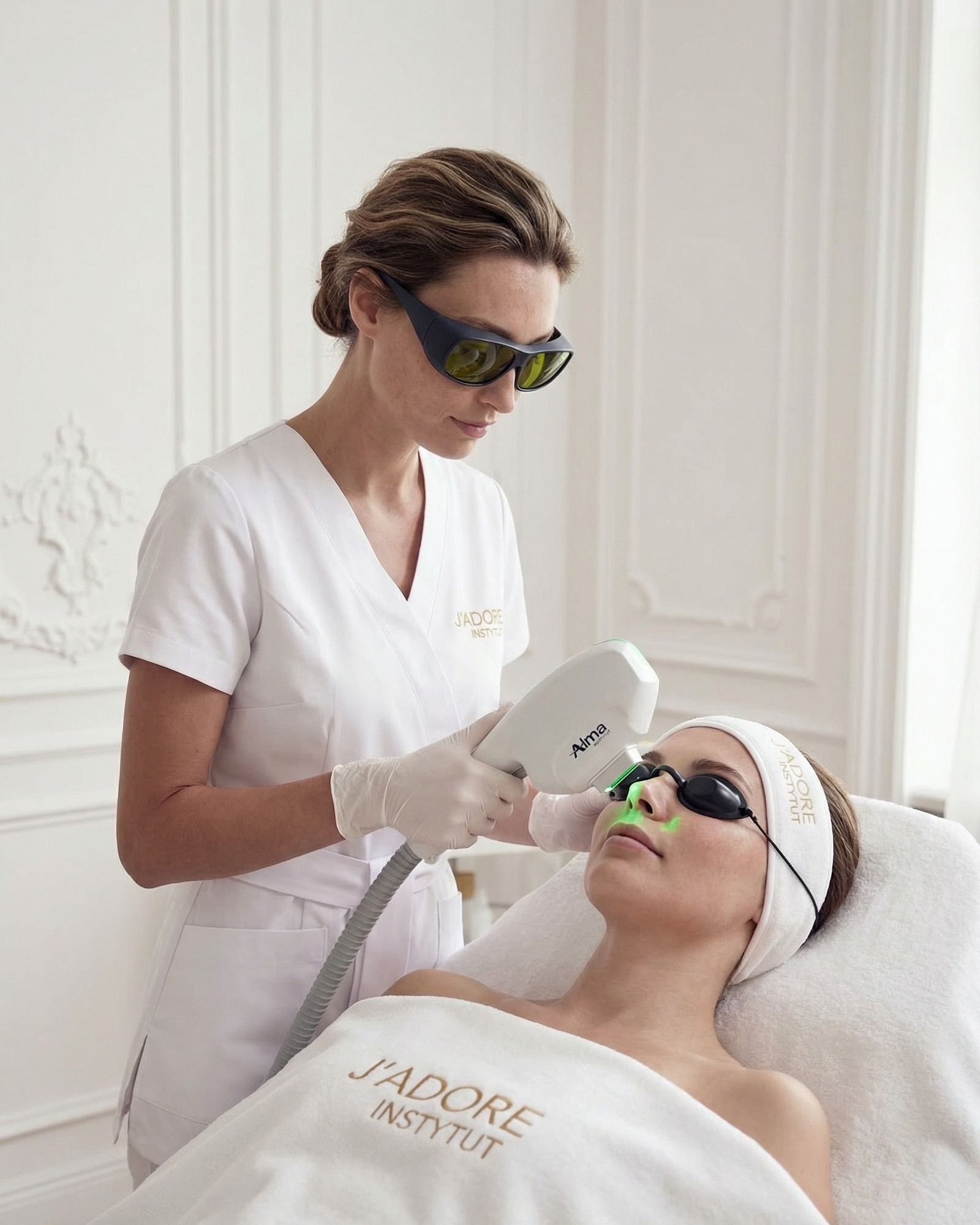
A technology combining pulsed light with laser-level precision. The DYE-VL filter selectively targets epidermal melanin, minimising the risk of post-treatment hyperpigmentation. It's one of the few technologies also safe for mild melasma — provided the parameters are set correctly.
Q-Switch Nd:YAG
Nanosecond pulses break down melanosomes — packets of melanin — into microfragments. The gold standard for tattoo removal, but also effective for lentigo. Not recommended as monotherapy for melasma.
Picosecond laser (PicoSure, PicoWay)
The latest generation — picosecond pulses, trillionths of a second. Even more effective at breaking down pigment, with lower rebound risk. Promising results for melasma, though clinical data is still being gathered.
Comparison table — an honest overview
- Method — Best for — Pain (1–10) — Downtime — Number of sessions — Results last — Cost (approximate)
Costs are approximate — they depend on the area and the salon.
Golden rule: skip daily SPF50 and you're throwing money away
This isn't an exaggeration. It's photobiology.
UV radiation activates melanocytes. Every exposure after a depigmentation treatment sends the skin a signal: "produce melanin!" That's why:
- SPF50+ every 2 hours — all year round, not just in summer
- Mineral filter (zinc oxide, titanium dioxide) — preferred for melasma, as it doesn't generate heat
- Hat and sunglasses — UV reflected off pavements counts too
- IR barrier — infrared light from screens isn't neutral for melasma (new studies, 2024–2025)
Sunscreen isn't a cosmetic — it's a maintenance treatment for your therapy's results. Anyone who doesn't grasp that will keep coming back for the same treatment, over and over.
Prevention beats treatment — how to stop hyperpigmentation coming back
- SPF50 every day — we're repeating this because it really is the key
- Antioxidants in the morning — a vitamin C serum (10–20% L-ascorbic acid) under sunscreen
- Retinol in the evening — speeds up cell turnover and regulates melanogenesis
- Tranexamic acid — discuss the oral form with your doctor if melasma keeps recurring
- Avoid picking — don't scratch, don't squeeze — every inflammation is potential PIH
- Regular check-ups — skin changes, and the protocol should evolve with it
J'ADORE INSTYTUT — precision, not chance
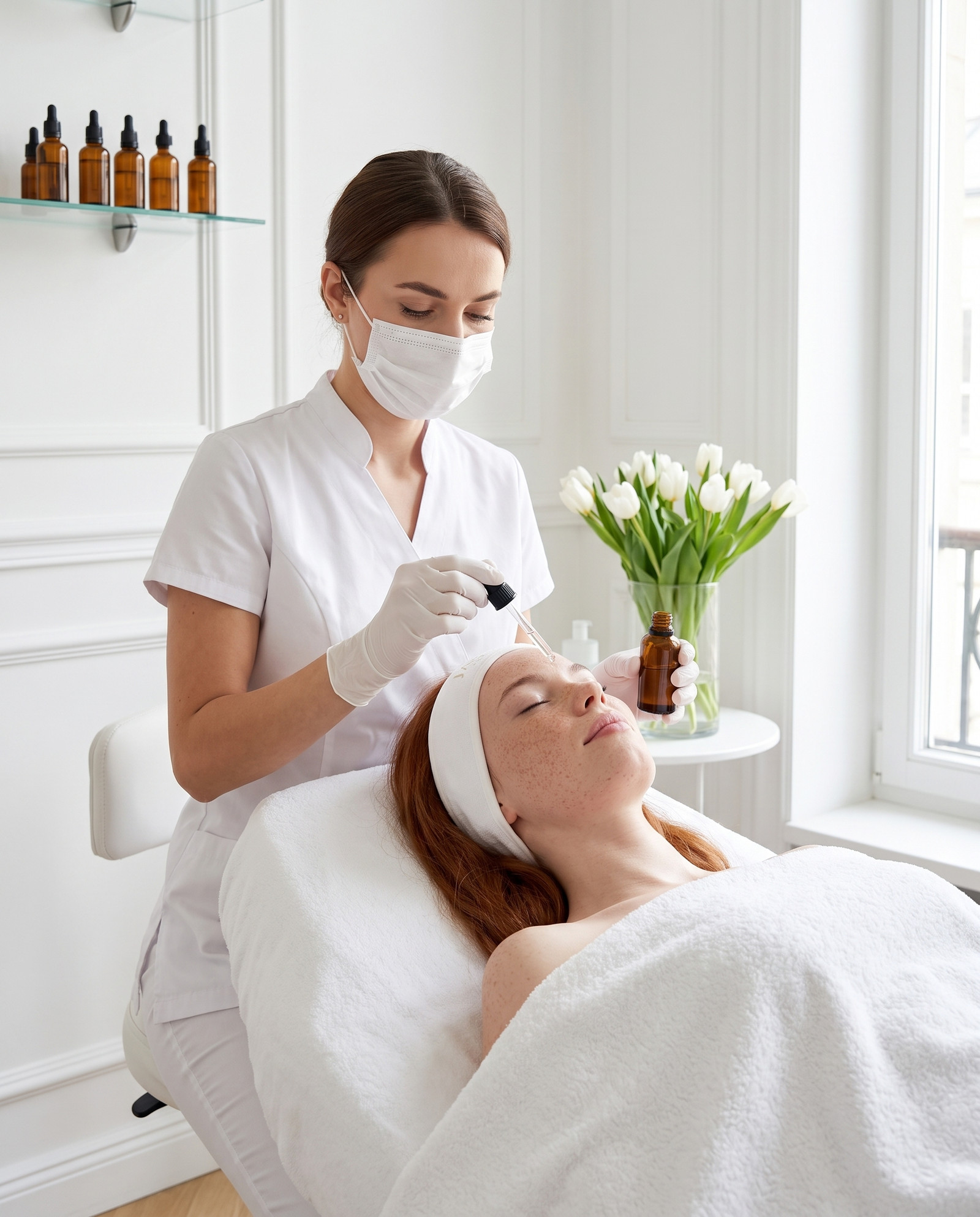
At J'ADORE we approach hyperpigmentation like detectives, not like treatment salespeople. Every consultation starts with diagnosis under a Wood's lamp, which lets us assess how deep the melanin sits — epidermal or dermal — and choose the protocol on that basis.
We work with the Harmony XL Pro platform and its DYE-VL module — one of the most advanced pigment technologies available in Poland. We run Cosmelan and Dermamelan protocols with full supervision and guidance on your home care routine. We don't promise miracles in a single session — we promise a plan that works.
In treating hyperpigmentation, the winner isn't whoever has the most expensive laser. It's whoever has the best diagnosis.