

 A treatment room at J'adore
MICROPIGMENTATION (PMU)
After chemotherapy, or with alopecia areata, brows sometimes don't grow back at all. They may grow back differently, or become so sparse that your face stops feeling "familiar." It's one of those things people rarely talk about, yet it can hurt every single day — brows frame your gaze, and they shape whether you recognise yourself in the mirror. Brow reconstruction is medical micropigmentation — a gentle, precise introduction of pigment into the skin to recreate brow shape and density where they're missing.
This isn't "makeup for beauty." It's a return to your own face after a difficult time — and that's exactly how we approach it: calmly, respectfully, without rushing. At J'adore Instytut, the treatment is performed by a qualified line therapist experienced in medical micropigmentation. One thing matters here more than anywhere else: we only perform this once your treatment has finished, on skin that is healed and stable, with the approval of your treating doctor (oncologist or dermatologist). Below you'll find everything worth knowing — including the honest truth about what the treatment does, and what it doesn't.
1 session + mandatory touch-up after around 4–6 weeks
What it actually is
Brow reconstruction is medical micropigmentation — a line therapist uses fine needles to introduce pigment into the skin, recreating individual hair strokes or building soft shading where brows are missing or only partly there. Technically it resembles classic permanent eyebrow makeup, but the goal is different: it's not about enhancing a full brow. It's about recreating what illness or treatment has taken away — so you can look like yourself again.
The difference also lies in responsibility. We don't work "on demand" here: treatment must have finished first, skin must be healed and stable, and your treating doctor — oncologist or dermatologist — must see no contraindications. The consultation is longer, the pace is slower, and the first session is deliberately more subtle. This is a conscious choice, not caution for show.
Did you know: brows are one of the most "recognisable" parts of the face — the brain uses them to identify people, sometimes even more than the eyes. That's why losing them after treatment changes your reflection so profoundly, and why recreating them can restore that sense of "this is me again" faster than you'd expect. This isn't vanity — it's facial neurology.
How it works
A line therapist introduces pigment into the skin, not the hair follicle — using a fine needle, working shallowly and in layers to recreate the pattern of individual hairs or build soft shading. This distinction matters in practice: the pigment sits alongside the follicles and has no effect on whether or how your own hairs grow back. So we're recreating the appearance of brows — shape, density and direction — not the hair itself. Qualification is carried out in cooperation with your treating doctor (oncologist or dermatologist), once treatment has finished and on healed skin.
Skin after treatment can behave differently than before: thinner, more sensitive, sometimes taking pigment less evenly. This is one reason we approach the first session more carefully and deliberately more subtly. During healing, some pigment comes away with light scabbing, and fresh epidermis covers the colour for a few weeks — so brows first appear lighter than their final result. Only once this clears can we see how much pigment the skin has actually retained — and that's when, at the touch-up around 4–6 weeks later, we complete the colour and shape. Over time pigment fades, as the skin gradually disperses it and sunlight lightens it — which is why we refresh the result periodically.
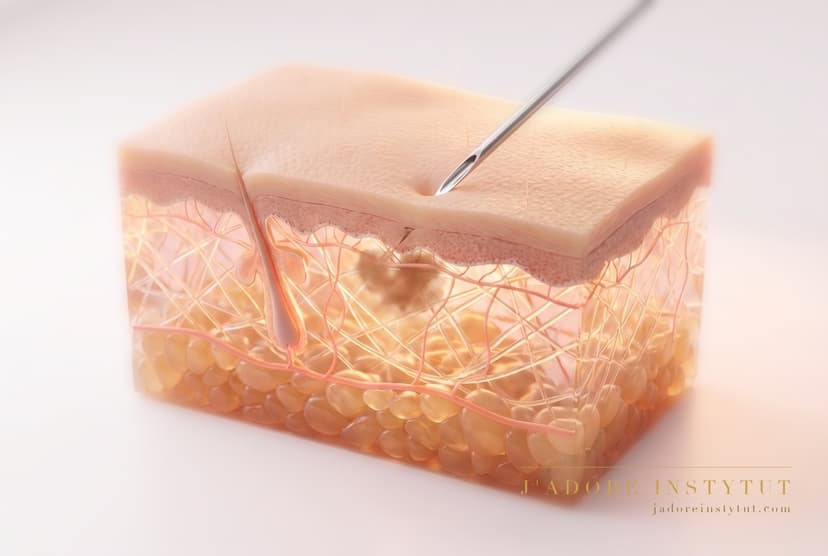
Did you know: the pigment used in micropigmentation doesn't reach the hair follicles and doesn't change how they work — it sits in the skin, alongside them. So if your own hairs start growing back over time, this happens independently of the treatment, and your line therapist will simply factor them in at the next shape refresh.
Ideal for
What this treatment does *not* do: it doesn't stimulate the growth of your own brow hairs (this is pigment in the skin, not a medicine or supplement), it doesn't stop hair loss or affect the underlying condition, and it doesn't replace your doctor's approval. It gives a visual result — reconstructed brow shape and density — and that's exactly what it's for.
Treatment first, procedure second
This is the single most important rule on this whole path — and we never deviate from it. Medical micropigmentation breaks the skin, and skin after chemotherapy or during an autoimmune condition deserves particular respect. That's why we hold to a few conditions:
For women and for men
Brow reconstruction for women most often restores a soft, fuller arch and symmetry — so the face regains its "own" expression from before treatment. We usually work from a photo taken before the illness (if you have one), to recreate a shape as close as possible to your natural one. We choose colour warmly and subtly, with an eye to how it will fade.
What we work with
Brow reconstruction for men is handled discreetly — a simpler, less pronounced arch and natural density, so the result is simply unnoticeable as "done." This most often relates to alopecia (alopecia areata or totalis), less often to the effects of treatment. The goal is the same: to get back a familiar face, without a made-up look.
What we work with
Losing your brows after treatment or through alopecia affects both women and men — which is why we perform this treatment for both. The main difference lies in the design: we shape the arch and density differently so the result suits the face.
What to expect
Contraindications
Medical micropigmentation breaks the skin, so some contraindications are permanent, and others temporary — in which case we simply postpone the treatment until the situation passes. With a history of cancer treatment or an autoimmune condition, we discuss each case individually, involving your doctor where needed.
From the line therapist's chair
What I say most often: this one treatment really can wait. After everything you've been through, your skin and body deserve to settle down first. A few weeks' difference won't change the result, but it does give us confidence that we're doing this safely — and that matters more than any date on a calendar.
This isn't a complete list — we'll go through your diagnosis, medication, treatment course and skin condition individually at consultation, in agreement with your treating doctor where needed.

What to expect
Most important: don't judge what you see in the mirror right after the treatment. Reconstructed brows go through several stages before they show their true colour — and the middle of this journey can feel stressful if nobody warns you about it. For skin after treatment, the reaction may be a little different from the "textbook" case, which is why we stay in touch with you.
I always tell clients who've been through treatment the same thing beforehand: in the second week, it'll seem like "almost nothing is left." That's the most normal stage — the skin simply covers the pigment during healing, and colour returns after around 3–4 weeks. After everything you've been through, I don't want you to have to face that unnecessary stress too. That's why we don't judge the result before the touch-up — and I stay in touch with you along the way.
For the first few days, don't get your brows wet — avoid saunas, swimming pools, long hot baths and heavy sweating. Water and steam soften scabs and wash out fresh pigment.
This is key: don't pick or scratch off the scabs. Pigment comes away with the scab, leaving a "gap" in the colour where it was. Let it fall off on its own.
Apply the regenerating ointment exactly as your line therapist recommends — a thin layer, with clean hands. Until fully healed, avoid using any cosmetics containing acids or retinol on this area.
Avoid intense sun and sunbeds during healing. Once healed, daily SPF 50+ on your brows protects the colour best against rapid fading.
If your skin heals differently than expected, or something concerns you, get in touch with us, and if needed, check with your treating doctor. After treatment, it's worth keeping a low threshold for "I'll just ask."
Until fully healed, don't fill in your brows with pencil or use makeup, and don't apply makeup directly to the area. After that — you usually won't need to anymore.
The result lasts long-term, but it fades naturally — over time the colour becomes lighter and softer, and that's when we refresh it. This isn't a flaw, just a feature of micropigmentation. The rate of fading depends partly on skin type and condition (which can differ after treatment), on sun exposure, and on aftercare — so we don't set a refresh schedule in advance. We observe how your brows behave instead.
Portfolio
A record of the work in our salons — the place where we publish treatment frames and, after photo sessions, results.
A record of results — in preparation. We publish photographs of our clients only with their consent.
Brow restoration after chemotherapy / alopecia
It matters most that you know exactly what to expect. Brow reconstruction gives a visual result — and a very good one — but it isn't a treatment for the underlying condition. Let's be clear about it:
visual brow reconstruction
it's not a therapy — it works on appearance, not on the underlying cause
the treatment's limits
doesn't replace medical care or your oncologist's/dermatologist's advice
safety conditions
we don't perform it "on demand," during treatment, or against your doctor's advice
Combine with
Brow reconstruction is often part of a bigger "return to yourself" after treatment. The order and spacing are decided by your line therapist at consultation (and, where needed, in agreement with your doctor), but the general logic stays the same: everything is done calmly and on healed skin.
I say this to everyone directly, because it's honest: I can't cure alopecia, and I can't make brows grow back. What I can do is give you back their appearance — so that in the mirror each morning, you see yourself again, not a trace of illness. For many people this turns out to matter more than they expected. And that's an entirely sufficient reason to have this treatment.
Technique and pigment
There's no single "method for everyone" — for skin after chemotherapy, or with alopecia, the choice of technique and pigment depends on how your skin looks and takes colour today. This is chosen by your line therapist after assessing your skin, not picked from a catalogue. We usually work in two directions, sometimes combining them gently:
Manual recreation of individual "hairs" — the most natural realism, when some brow hairs remain to build on.
Dla kogoCalm skin, on the drier or normal side; used when we want to imitate individual hairs.
Soft, "made-up" shading built with a machine — gentler for sensitive skin and more forgiving on skin that's changed condition.
Dla kogoA common choice after treatment and for sensitive/vascular skin; used for full reconstruction where brows are absent.
Rebuilding shape and density from scratch when brows are absent — ideally based on a photo from before the illness.
Dla kogoAbsence of brows after chemotherapy or with alopecia totalis.
Completing colour and shape after healing — especially important for skin after treatment, as it takes pigment less predictably.
Dla kogoEvery first reconstruction — this is a standard, planned step.
Fact: Why start more subtly? Skin after treatment can be thinner and more sensitive, and its response to pigment less predictable. That's why we start gently and build up the full colour at the touch-up — it's easier to add more than to take it back. This isn't caution for show, but the safest route to a natural, lasting result.
Price list
Checking free hours…
See also
The result lastslong-lasting; pigment fades naturally and needs refreshingJ’adore Instytut
Information. Brow reconstruction after chemotherapy or with alopecia is an aesthetic-reconstructive treatment (medical micropigmentation) that introduces pigment into the skin. It doesn't treat the underlying condition, doesn't stimulate the growth of your own hairs, and doesn't stop hair loss — it produces a visual reconstruction of brow shape and density. We perform it once treatment has finished, on tissue that is healed and stable, following a consultation and — where relevant — with the approval of your treating doctor (oncologist or dermatologist). The result is long-lasting and needs refreshing over time; pigment fades naturally and is not permanent "forever." This text is for information purposes. The treatment is performed by a qualified line therapist experienced in medical micropigmentation.


