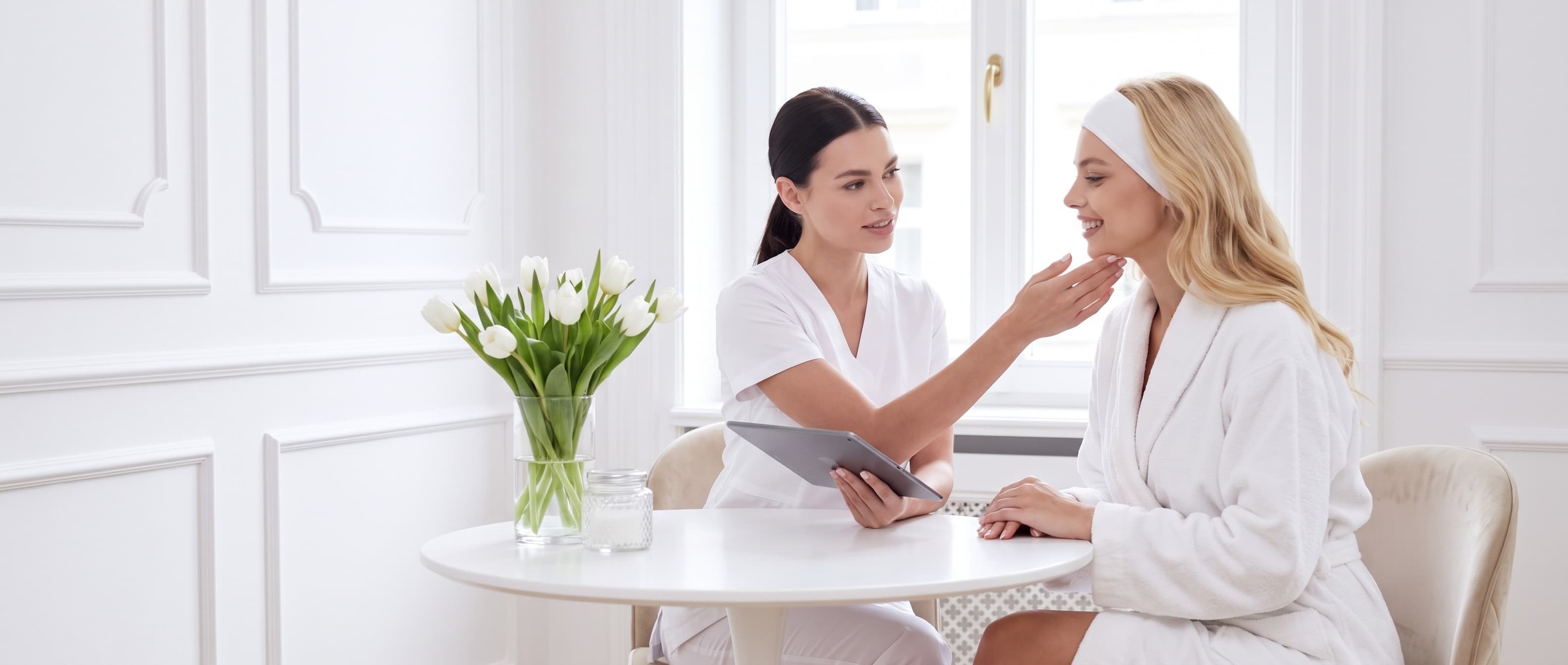
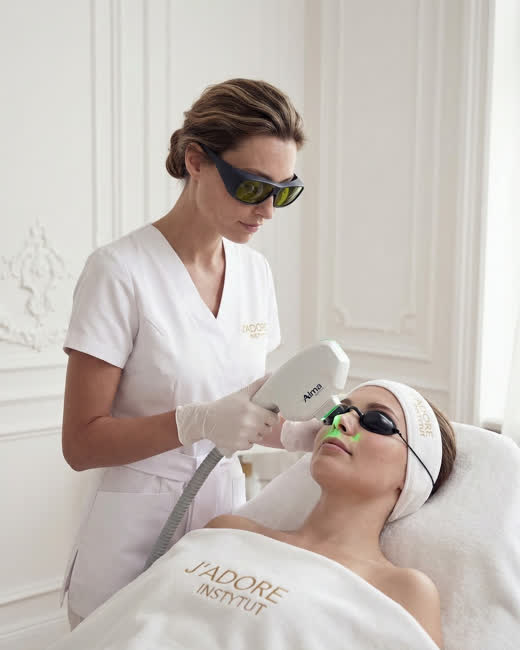
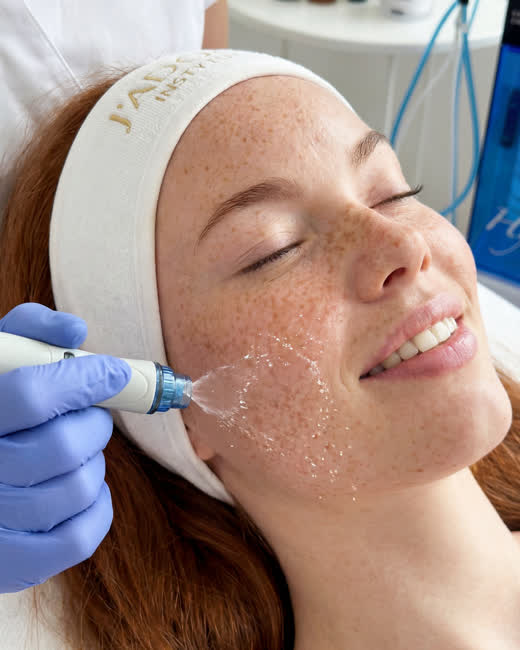
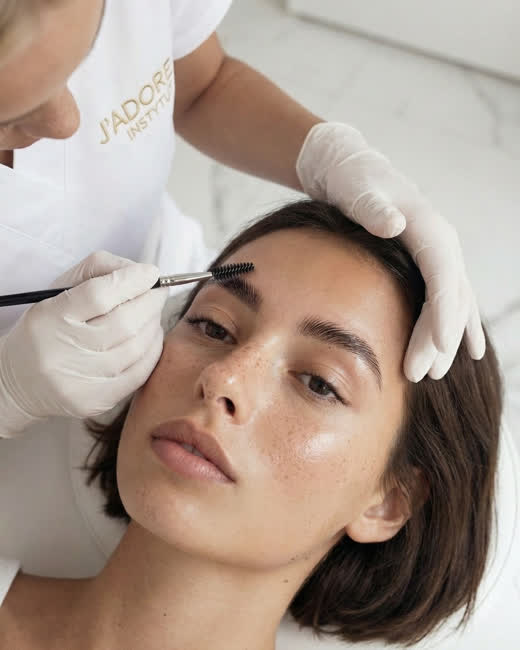
A treatment room at J'adore
MICROPIGMENTATION (PMU)
After mastectomy and reconstructive surgery, the reconstructed breast is often already in place — but frequently without what makes it feel like "yours": the areola and nipple. This final layer can matter more than you might expect. Areola and nipple reconstruction is medical micropigmentation: we introduce pigment into healed breast skin to recreate an areola matched in colour to the other side, and using the 3D technique — a play of shadow and light — we paint a convincing illusion of a raised nipple on flat skin.
This isn't about "beauty". It's about closing the treatment process, something that carries a symbolic meaning for many women — the moment they see themselves in the mirror again. The treatment is performed by a qualified linergist with experience in medical micropigmentation. We work calmly, respecting your pace and your decision — after treatment has concluded, on tissue that is healed and stable, with your consulting doctor's approval.
Treatment + mandatory touch-up (pigment refinement) after around 4–6 weeks
What it does
After breast reconstruction, what remains is skin — usually smooth, pale, and without a natural areola. Medical micropigmentation introduces pigment into it to recreate the look of an areola: its colour, shape and size matched to the other breast. The 3D technique goes a step further — instead of simply "painting a circle", the linergist builds shadow and light reflections so the eye reads a raised nipple where the skin is actually flat. It's an optical illusion created with pigment, similar to techniques used by top makeup artists — only permanent.
Let's be honest about expectations. This treatment recreates appearance, not tissue. It won't restore sensation in the area, won't remove surgical scarring, and won't change the shape of the breast itself. What it does give you is what's often missing at the end of the journey: visual closure — a breast that looks like yours again, in the mirror and under clothing.
"Amazons" is a name women after mastectomy gave to their own community — inspired by the mythical warriors. With this treatment, we want to speak their language: about strength, decision-making and reclaiming yourself, not about "fixing a flaw".
MICROPIGMENTATION (PMU)
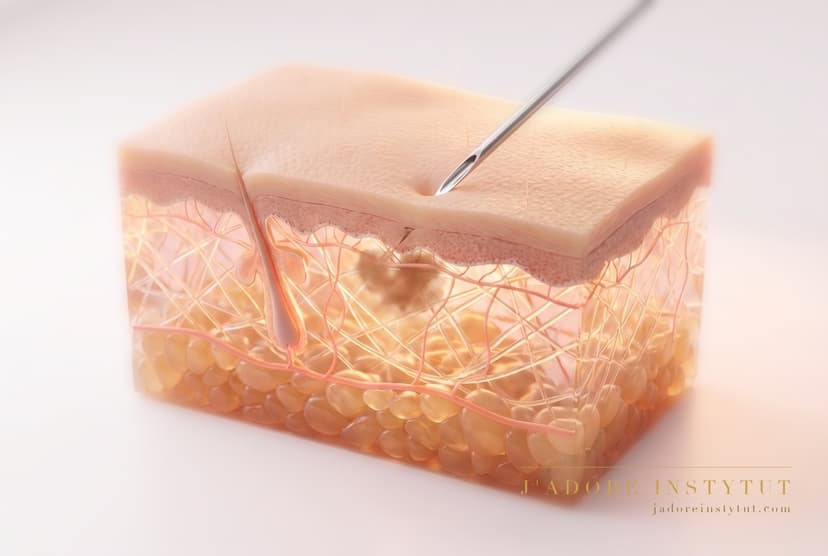
The treatment relies on two things at once: colour and the distribution of light. The linergist introduces pigment shallowly into healed breast skin, in layers — first building the areola's colour to match the other side, then adding darker and lighter areas where the nipple sits. The eye reads shape mainly from shadow and reflection, so correctly distributed pigment creates an impression of relief on a flat surface. It's painterly work carried out in the skin — precise, but affecting appearance only, not tissue.
Skin after reconstruction behaves differently from skin that was there before: it may be thinner or thicker, sometimes it's taken from another part of the body, a scar may run through it, and after radiotherapy it heals more slowly. All of this affects how much pigment the skin retains and how evenly. That's why we work in stages — the first treatment is more cautious, and we finalise the colour and shadow depth at the touch-up after around 4–6 weeks, once the healed result is visible. Over time the pigment fades as the skin gradually disperses it, so the areola needs periodic refreshing. We assess your suitability in collaboration with your consulting doctor — the surgeon who performed the reconstruction, or your oncologist.
Did you know? In reconstructive surgery, areola pigmentation is treated as the final stage of breast reconstruction, and it has long been performed by introducing pigment into the skin. The whole effect relies on how the eye interprets light: the same illusion that lets a flat image appear three-dimensional works here on a scale of a few centimetres.
Ideal for
The decision is always yours and yours alone. You can come for a conversation, decide nothing, and return whenever you feel it's the right time.
For women and for loved ones
This treatment is for women after mastectomy and breast reconstruction. We speak about it as the final step in reclaiming your body after illness — not as "beautifying". For many patients, this is the moment when the treatment process truly comes to a close.
What we work with
Nipple micropigmentation and nipple reconstruction can also be a topic for men — after chest surgeries (for example, following gynaecomastia treatment or other surgical indications), when restoring symmetry and a natural areola appearance is needed. The rules are the same: after treatment has concluded, on healed tissue, with doctor approval.
What we work with
Did you know? The effect of a "raised" nipple on flat skin is pure light-and-shadow illusion — the same principle painters call trompe-l'œil ("deceive the eye"). The linergist doesn't build volume; she paints shadow underneath and a light reflection above — and the brain fills in the rest.
This treatment is primarily for women after mastectomy — and our full attention goes to them. But this journey is rarely walked alone, so we've added a short note for loved ones too.
Safety and dignity
This is a treatment on skin that has been through surgery, and often radiotherapy too. That's why we hold to a few rules without exception — for your safety, not for formality:
We perform this treatment once oncological treatment is complete and the tissue is fully healed and stable — not during active therapy.
We ask for sign-off from the surgeon who performed the reconstruction, or your oncologist. They know the condition of your skin and scarring best.
Irradiated skin heals more slowly and takes pigment differently — a longer interval is needed, which we determine together with you and your doctor.
We work calmly, without rushing and without an audience. You have the right to pause, ask questions, or change your mind at any stage.
A red flag: when we do NOT perform the treatment · We don't pigment during active oncological treatment (chemotherapy, radiotherapy, targeted therapy), or on fresh, unhealed scars. We don't begin without approval from your consulting doctor. If the skin in the area is red, tight, weeping or painful, we postpone. This isn't about discouraging you — it's about making sure the treatment happens when it will truly help you, not harm you.
Contraindications
Some contraindications are permanent, others temporary — in that case, we simply postpone the treatment until the situation resolves. We always discuss this individually during the consultation.
From the linergist's chair
The most important rule is simple: safety first, then results. If I have doubts about the skin's condition, or approval from your doctor is missing, I postpone. It's better to wait a few weeks and get it right once than to rush and risk the healing process.
This isn't an exhaustive list — we'll go through your treatment history, medication, coexisting conditions and scar status together at the consultation.

What to expect
The comment I hear most after treatment is "it's too dark". That's completely normal — in the first few days, colour always looks stronger, because the pigment sits just beneath the epidermis. Once healed, it lightens by several shades. That's why we assess the true result only at the touch-up, never before.
Portfolio
A record of the work in our salons — the place where we publish treatment frames and, after photo sessions, results.
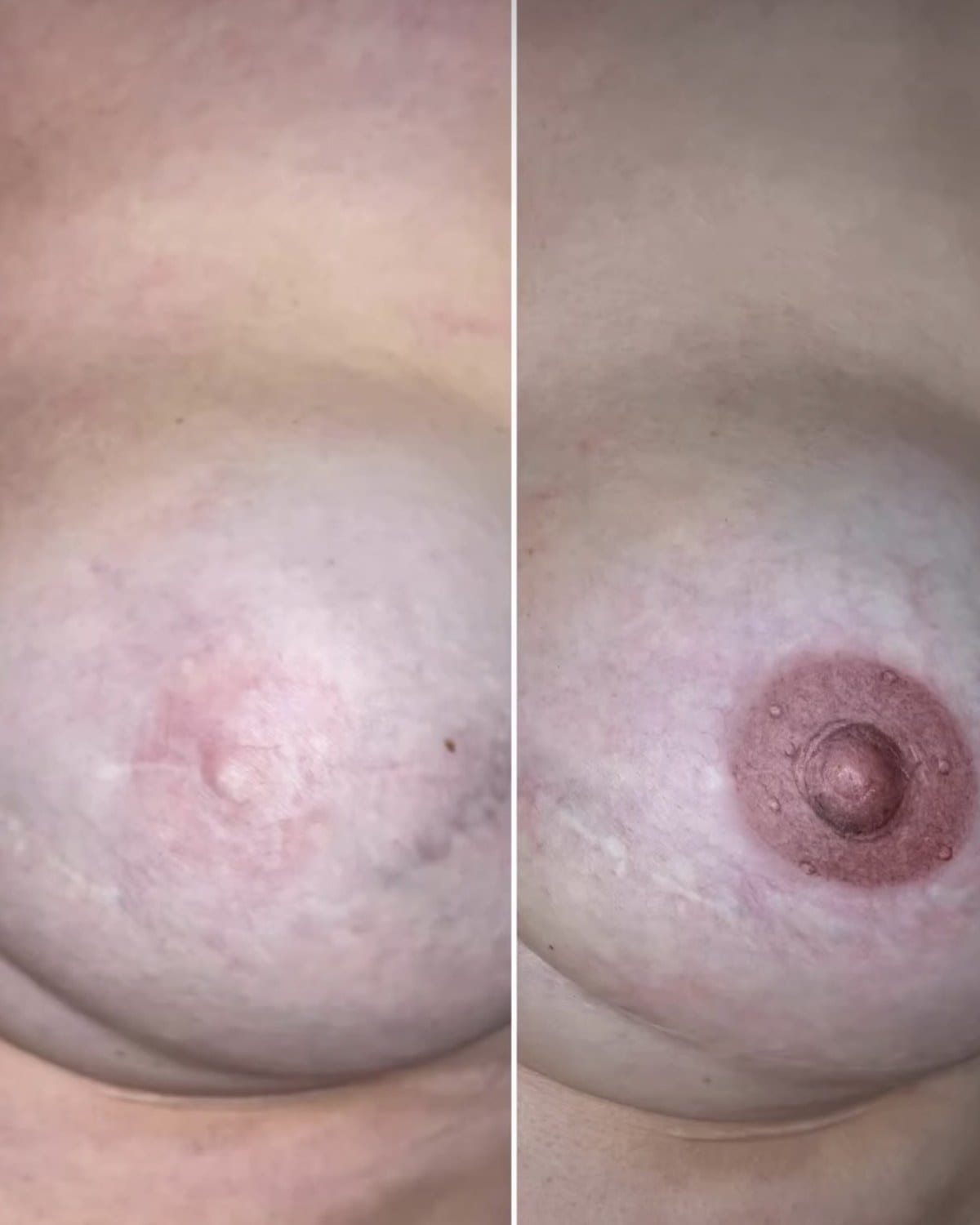
A record of results — in preparation. We publish photographs of our clients only with their consent.
Healing and aftercare
Pigment holds better when healing goes smoothly. In the first few days, the area is essentially a fresh wound — treat it gently, and don't rush back to the pool or sauna.
Don't scratch off forming scabs and don't submerge the area in water. Follow your linergist's aftercare instructions closely — this stage determines how much pigment remains.
Pools, saunas, hammams and jacuzzis are off-limits during healing — water, chlorine and high temperatures weaken pigment retention and increase infection risk.
Fresh pigment fades in sunlight. Protect the area from the sun during healing, and once healed — if the area is ever exposed — use SPF protection.
Hard training, sweating, and clothing rubbing against the fresh area don't support healing. Skip intense exercise for the first few days.
Apply gentle cleansing and the regenerating ointment exactly as shown by your linergist. Less is more — let the area heal undisturbed.
Choose soft, breathable underwear that doesn't press on the fresh area. Skin comfort now translates into lasting results later.
Areola/nipple reconstruction after mastectomy
Areola reconstruction is sometimes confused with surgery, or with "ordinary" permanent makeup. These are three different things that often complement each other:
Recreates the look of the areola and the illusion of a nipple
Doesn't recreate tissue or sensation, doesn't remove scarring
Recreates relief using your own tissue
Doesn't add colour to the areola — only pigment does that
Enhances the beauty of healthy skin
Different context — not related to breast cancer treatment
What we combine this with
Areola reconstruction is rarely the only topic after oncological treatment. As part of medical micropigmentation, we often help close other marks left by the illness and its treatment too. We decide the order and timing together, taking your doctor's approval into account:
Sometimes I'm asked: "Is this enough instead of nipple surgery?" I answer honestly: it depends what you're looking for. If you want real relief and sensation, that's a job for a surgeon. If you want the appearance of an areola and nipple under clothing and in the mirror, the 3D technique is often entirely enough. Many women choose pigmentation alone and are fully satisfied.
The 3D technique and its variants
You don't choose a technique "off the shelf" — the linergist selects it based on your skin condition, the colour of the other breast, and your expectations. Here's what's realistically on the table:
Building shadow and light with pigment so an illusion of a raised nipple forms on flat skin.
Dla kogoWhen the nipple hasn't been surgically reconstructed, or is flattened.
Recreating the areola of one breast, matching colour and shape to the healthy side.
Dla kogoAfter single-breast mastectomy.
Designing symmetry for both areolas from scratch, with no "template" to follow.
Dla kogoAfter bilateral mastectomy.
Shades mixed individually to match your skin tone and the other areola; colour lightens by several shades once healed.
Dla kogoA natural, discreet effect matched to your skin tone.
Fact: The result is long-lasting, but not "forever" — pigment naturally fades over time due to light exposure and skin renewal. This is normal; refreshing it after years restores colour and the depth of the illusion. To be honest: think of it as something that gets "topped up" periodically, not a single treatment that closes the subject for life.
Price list
Checking free hours…
From the magazine
Editorial pieces on how this treatment works in practice — what happens during the session, how to prepare, where the limits are and what the first days after look like.
See also
The result lastsLong-lasting — requires periodic touch-upsJ’adore Instytut
Information. Areola and nipple reconstruction is an aesthetic-reconstructive treatment (medical micropigmentation) that introduces pigment into the skin; it doesn't treat the underlying condition or restore lost tissue — it visually evens out and recreates the appearance of the areola and the illusion of a nipple. We perform it once treatment has concluded, on tissue that is healed and stable, following a consultation and — where relevant — with approval from your consulting doctor (surgeon, oncologist or dermatologist). The result is long-lasting and requires periodic refreshing. This text is for informational purposes. The treatment is performed by a qualified linergist with experience in medical micropigmentation.