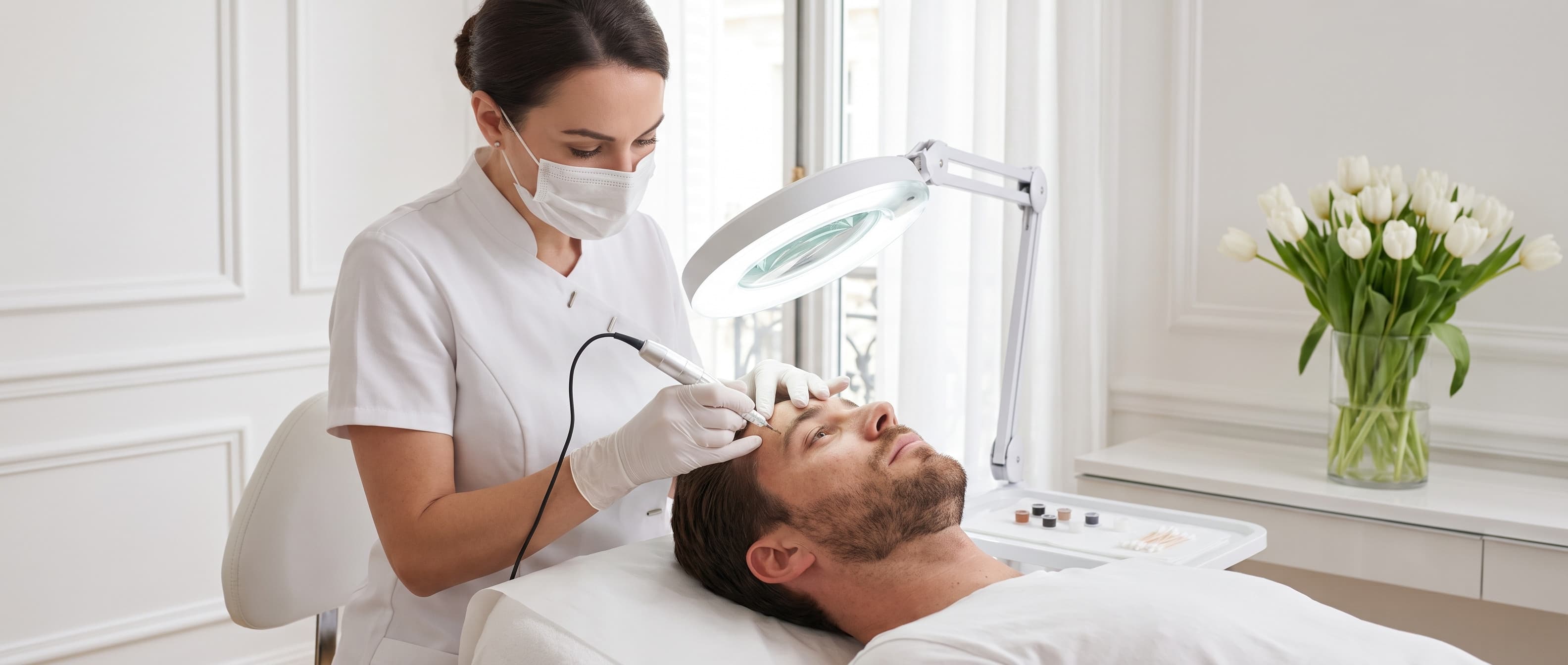
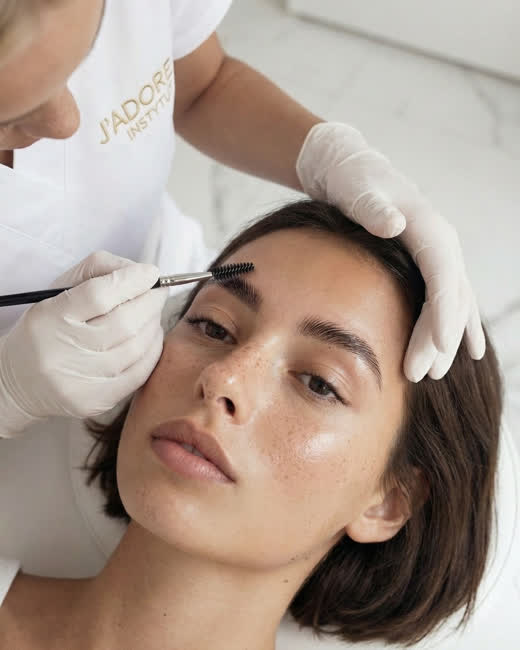
A treatment room at J'adore
MICROPIGMENTATION (PMU)
Genetic gaps in facial hair, scars from accidents or acne, alopecia barbae eating bare patches into the beard — these are areas where hair simply won't grow, and bare skin stands out the moment you try to grow a beard. Beard reconstruction (male micropigmentation of the beard) doesn't force hair to grow — it introduces fine strokes into the skin, aligned with your natural hair direction, filling in these gaps and visually closing the beard line. Up close, it's not a solid patch — it's individual "hairs".
From a distance, it reads as a dense, even beard. At J'adore Instytut, the treatment is performed by a qualified linergist. Below you'll find everything worth knowing before your first visit — straightforward, no dressing it up.
1–2 sessions + a mandatory touch-up after around 4–6 weeks
How it works
Beard reconstruction is micropigmentation of the beard using the hair-stroke technique — a linergist introduces fine, individual strokes into the skin, aligned with your natural hair growth direction. Each stroke imitates a single hair. Together, they create the illusion of dense facial hair in areas where your own hair doesn't grow, or grows sparsely.
This is not a transplant and it doesn't stimulate follicles to grow — pigment won't "seed" a new beard. It works visually: it closes the beard line, fills in gaps and camouflages smooth patches. Where your own hair is present, the pigment blends in discreetly and evens out the overall look.
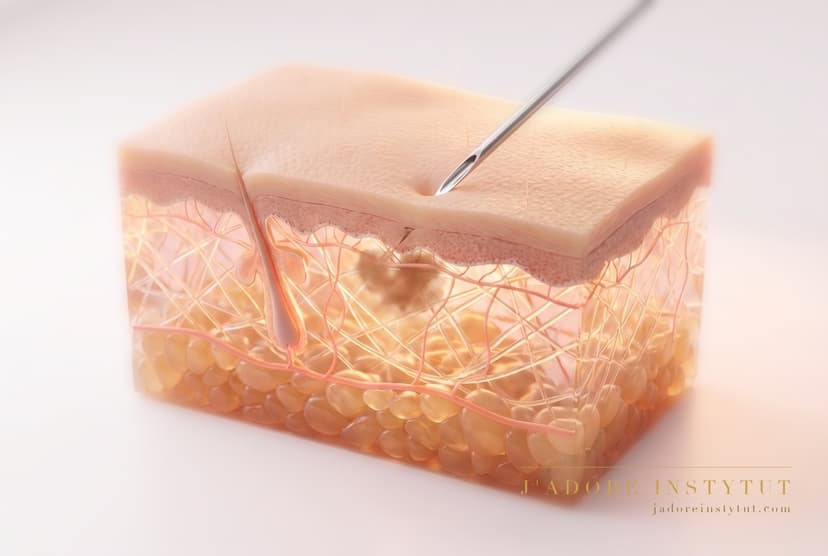
Good to know: beard skin is thicker and oilier than, say, the delicate skin of the eyelids — and that's exactly why beard reconstruction is one of the most durable techniques in PMU. The very factor that shortens the lifespan of lip PMU in women works to your advantage here.
Ideal for
What this treatment won't do: it won't grow real hair and it won't replace a transplant if you're dreaming of a long, full beard of dense hair. This is a supplement and a camouflage, not a way to grow facial hair from scratch.
Male and female zones
Beard reconstruction in women is practically unheard of — it's a treatment that's inherently male. Women do, however, turn to other treatments from the same micropigmentation family: eyebrow PMU, lip PMU or scalp micropigmentation (SMP) for thinning hair. If you're looking for something for yourself rather than for a partner, these are the right directions.
What we work with
This is an entirely male treatment — and that's exactly how we approach it. The goal: dense, natural, masculine facial hair without a "painted-on" look. Strokes follow precisely the direction of your own hair growth, colour is matched to your beard shade and skin tone, and density is matched to how much of your own hair is present in each area. Thicker beard skin holds pigment well, making this one of the most durable results in PMU.
What we work with
Good to know: beard reconstruction and scalp micropigmentation (SMP) belong to the same family — fine strokes or dots of pigment imitating hair. That's why men who have SMP done for scalp thinning often also finish off their beard line with us, so the whole look stays consistent.
Safety
Beard reconstruction breaks the skin — pigment is introduced using needles. That means what matters isn't just "a nice-looking drawing" — hygiene, colour matching and the skill of the practitioner all count. Worth asking about at any salon:
At J'adore, the treatment is carried out by a qualified linergist specialising in the hair-stroke technique. Male facial hair follows different rules to eyebrows or lips — direction, colour and density all need to be masculine.
Single-use, sterile needle modules, pigments from legal supply chains, single-use materials. Breaking the skin without proper hygiene carries a real risk of infection.
Pigment is matched to your facial hair shade and skin tone so it doesn't shift over time into a cold or grey tone. The wrong colour is the most common cause of an unnatural result.
Whether the result looks natural comes down to drawing individual hairs in the direction of growth — not filling an area with a solid colour.
Warning sign: an overly dark, solid "tattoo" instead of individual strokes · The most common poor result in beard reconstruction is a solid dark patch — a beard that looks drawn on with a marker, with no individual hairs, often too dark for the skin tone. This is a sign that someone applied flat shading instead of drawing strokes in the direction of hair growth. You have every right to see a portfolio of healed (not just fresh) results and ask about technique. A good salon will show you without hesitation. Too light can always be built up at the touch-up — too dark and flat is hard to undo.
MICROPIGMENTATION (PMU)
Contraindications
Beard reconstruction breaks the skin, so some contraindications are permanent and others temporary — in the latter case, we simply postpone the treatment until the situation resolves.
From the linergist's chair
The most commonly downplayed issue: cold sores. "I've only got one on my lip, and you're working on my beard — surely that's not a problem?" Unfortunately it is — breaking the skin can activate the virus, so it's best to postpone by a few days and do the treatment with peace of mind.
This isn't a complete list — we'll go through your medication, skin conditions, scars and previous treatments individually during consultation.

What to expect
Most important: straight after the treatment, the colour is darker and more intense than the final result. This is normal — over the first few days the pigment "settles", and once healed, the result typically lightens by somewhere around ten to several tens of percent. Don't judge the result on day one.
What I hear most often during the flaking stage: "I think it's gone, I can barely see anything." That's completely normal — during healing, the pigment retreats beneath the epidermis and returns after 2–4 weeks. That's why we assess the final result only after the touch-up, not during the healing week.
Over time — over many months — the pigment naturally fades. This isn't a flaw, it's a feature of PMU: it lets you gently adjust the shade over the years as your facial hair greys. When the result fades, a simple refresh is all it takes — no need to build everything from scratch again.
Portfolio
A record of the work in our salons — the place where we publish treatment frames and, after photo sessions, results.
A record of results — in preparation. We publish photographs of our clients only with their consent.
Beard reconstruction and your lifestyle
Most questions aren't about the treatment itself — they're about what comes after: shaving, the gym, sauna, sun. There's one rule during healing — avoid soaking, sweating and scratching — so the pigment can settle properly.
During the healing period, do not shave the freshly pigmented area — a razor strips off the scabs along with the pigment. Once fully healed, you can shave normally: the pigment sits in the skin, not on the hair.
Gym sessions, running, heavy sweating — take a break for the first few days. Sweat and friction during healing soften the scabs and can "wash out" fresh pigment.
Sauna, pool (chlorine!), long hot showers on the face — wait until fully healed. Soaking and high temperatures are the fastest way to shorten how long the result lasts.
Protect the area from the sun during healing. Afterwards, remember: UV fades pigment the most — daily SPF 50+ is the best way to make the result last longer.
Use the recommended healing balm, cleanse your face gently without alcohol, and avoid touching the area with dirty hands. No exfoliants or acids during healing.
Alcohol and blood-thinning medication increase bleeding and reduce how well the pigment takes. Best to avoid alcohol the day before your visit (and discuss medication with your doctor beforehand).
Beard reconstruction
Men often confuse these three approaches, but they do completely different things. Here's a quick guide:
visually fills gaps with pigment
won't grow real hair or give you a long, full beard
actually transplants hair follicles
this is a surgical procedure — longer recovery, higher cost, not offered here
nourishes and stimulates existing follicles
won't regrow hair in a scar or a dead follicle — that's where PMU steps in
Combine with
Beard reconstruction works well alongside other treatments for men — the linergist decides on order and spacing during consultation, but the logic stays consistent:
A simple rule: bare skin or a scar where hair doesn't grow → beard reconstruction. Dreaming of a long, dense beard of real hair → transplant. Facial hair weak but "something to work with" → strengthen the follicles first. We often combine approaches: strengthening your own hair while PMU finishes off what can't be recovered.
Techniques, pigments and variants
"Beard reconstruction" isn't a single approach — a linergist matches scope and technique to what you actually need. This isn't something you pick "off the shelf" — it's decided during consultation.
Drawing individual strokes aligned with hair growth direction — each imitating a single hair.
Dla kogoA natural, dense-beard look; the foundation of beard reconstruction.
Closing "windows" in the beard where hair has never grown, matched to the surrounding density.
Dla kogoAn uneven, patchy beard, an unfinished beard line.
Pigmenting smooth scar tissue (from an accident, surgery or acne) so it blends with the beard.
Dla kogoScars from injury or acne within the beard area.
Camouflaging round patches of hair loss in the beard — once the condition has stabilised.
Dla kogoLocalised patchy hair loss in the beard.
A shade matched to facial hair colour and skin tone so it doesn't shift over time into a cold or grey tone.
Dla kogoEvery treatment — the foundation of a natural, non-"tattoo-like" result.
Fact: Where do the differences in time and scope come from? From the size of the area, the number and depth of scars, the density of your own facial hair, and how your skin takes pigment. That's why a full reconstruction is often 1–2 sessions plus a touch-up, not one "colour injection". What matters is the matched colour, the direction of the strokes and the linergist's skill — not just the name of the technique.
Price list
Checking free hours…
From the magazine
Editorial pieces on how this treatment works in practice — what happens during the session, how to prepare, where the limits are and what the first days after look like.
See also
The result lastslong-lasting — one of the most durable PMU techniques, fading gradually and needing periodic refreshingJ’adore Instytut
Please note. Permanent makeup (PMU) — including beard reconstruction — is an aesthetic treatment that introduces pigment into the epidermis/dermis. The result is long-lasting (typically maintained for several months to a couple of years and requiring periodic refreshing), fades naturally, and is not permanent "forever". This is not a medical treatment. A touch-up/refresh after around 4–6 weeks is standard. The text above is provided for information purposes. Indications, technique and colour selection, and contraindications are determined by a qualified linergist during consultation.
Home care
Cosmetics matched to what your skin needs after a treatment — so the clinic effect lasts longer.
 post-treatment regenerationCell Fusion CDermagenis pH Biome SerumView in the shop(opens in a new tab)
 sun protectionDermaQuestSunArmor SPF50 30 mlView in the shop(opens in a new tab)
 post-treatment regenerationMedMelanoSkinbiotic Elixir Probiotic Repair Serum 50 mlView in the shop(opens in a new tab)
 sun protectionSesdermaREPASKIN Silk Touch Color SPF50View in the shop(opens in a new tab)
 post-treatment regenerationVagheggiEmozioni Plus — Anti-Stress Face Mask 75mlView in the shop(opens in a new tab)
 sun protectionCell Fusion CAquatica Sunscreen 100 SPF 50+/PA++++View in the shop(opens in a new tab)
 post-treatment regenerationMesoesteticMesohyal Post-Procedure Gel CreamView in the shop(opens in a new tab)
 sun protectionSesdermaRepaskin Silk Touch Color Facial SPF50View in the shop(opens in a new tab)