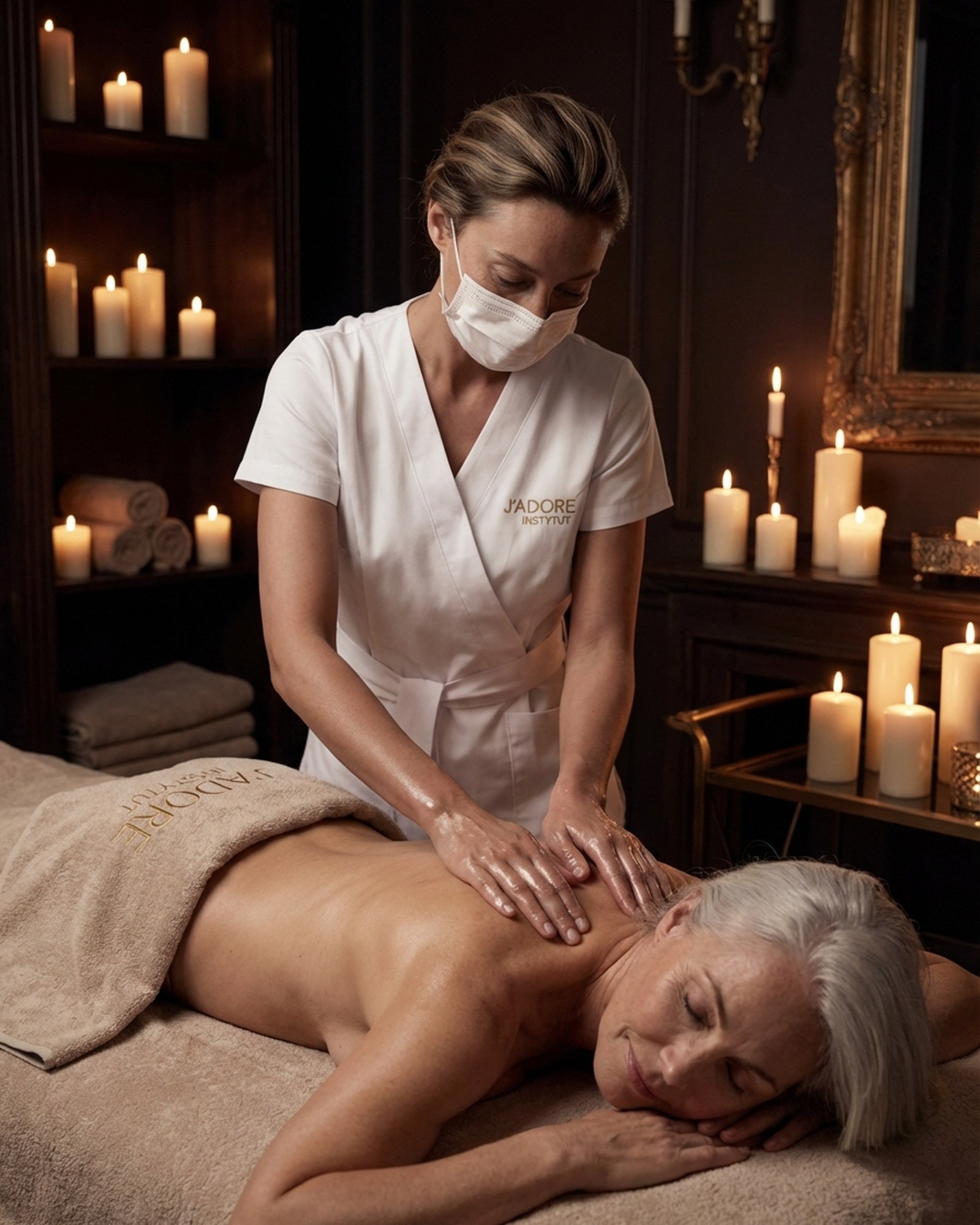
Warm oil is the first stimulus, and you set the temperature limit
The oil should feel warm, not hot. The therapist can check the temperature, but their hand is not a measure of your sensitivity. Speak up immediately if the first contact is too intense. The temperature is easily adjusted before spreading the product over a larger surface.
Sensitivity can change between body parts. The calf, abdomen and back do not have to perceive heat identically, especially when the skin is dry, irritated or recently exposed to the sun. Do not assume that because the oil felt pleasant on your legs, you must endure burning elsewhere.
Strong redness, burning or itching may mean more than just high temperature, for example, a skin reaction to the product. Disclose known allergies and previous reactions to oils or fragrances. If a symptom appears during the session, the massage should be stopped and the skin assessed — not covered with another layer of oil.
Rhythm can soothe or irritate, depending on the pace and your sensitivity
Abhyanga is associated with long, repetitive movements covering larger areas of the body. Their predictability helps some people stop tracking every touch. For others, it can initially be monotonous or ticklish. This is not a character flaw; the sensory system needs a moment to get used to the rhythm.
Tickling often intensifies with contact that is too light or hesitant. You can ask for a firmer application of the whole hand without moving to painful pressure. Conversely, faster movements can tire someone who arrived overloaded with stimuli. The therapist should be able to change the tempo while maintaining the character of the massage.
If the rhythm causes anxiety instead of relaxation, say so before you start tensing your muscles and holding your breath. Massage is not a test of relaxation susceptibility. Sometimes a slower tempo, less talking, different music or shorter work on an area that provides too many sensations helps.
Pressure should be broad and fluid, not "hammering" tense muscles point by point
Abhyanga is not about finding every trigger point and pressing it to the limit of tolerance. You may feel firm hand work, tissue shifting and temporary tenderness in a tense area, but sharp, stinging or radiating pain is a signal to reduce pressure and reassess.
A painful neck after working at a computer may tempt you to ask for "as hard as possible". Strength does not recognise the cause of tension. If the problem stems from an injury, an acute condition or requires physiotherapy, a stronger oil massage will not become a treatment. An honest therapist may skip the area or suggest a different consultation.
The most useful message is not "harder" or "lighter" for the whole body, but information about a specific part. You may want clearer pressure on your back and very gentle on your calves. Settings do not have to be symmetrical if the tissues and sensations are not identical.
Abdominal massage can be neutral, soothing or definitely not for today
The abdomen is a more private and often more sensitive area than the back or limbs. Gentle touch can cause tickling, muscle tension, a feeling of exposure or discomfort after a meal. You do not have to agree to work in this area just because it is part of a wider ritual. The scope is set before starting and can be changed.
A full stomach makes it difficult to lie down and receive pressure comfortably. Follow the salon's instructions regarding meals before your visit, and if you ate later or more heavily, tell the therapist. Hiding this will not improve the effect; it will increase the likelihood of nausea, heartburn or tension during the work.
Abdominal pain of unknown cause, an acute condition, recent surgery or worrying symptoms are not an invitation for a massage. In such a case, proper medical assessment is needed. Abhyanga does not diagnose ailments and should not be used to check if pain "can be massaged away".
Draping and a sense of privacy affect tension more than the scent of the oil
Oil massage requires access to the skin, but it does not mean exposing the entire body at once. Areas not being worked on should remain covered according to the agreed scope. Before changing position, the therapist should give clear instructions and time to get settled safely.
If you do not tolerate work on your chest, abdomen, buttocks, feet or scalp well, say so before the treatment. A boundary does not require justification. You can skip a specific part, change the way of draping or shorten the scope. Consent to a massage is not consent to every possible touch.
Tension resulting from a lack of privacy makes it difficult to relax regardless of the technique. If the room is too cold, the covering shifts or the door does not provide a sense of security, report it. Environmental comfort is part of the treatment, not a client's whim.
Head massage with oil can be pleasant, but not everyone wants to leave with greasy hair
The scope of Abhyanga may include the head, depending on the chosen service and arrangements. Touching the scalp gives a feeling of warmth, hair movement and rhythmic pressure. With tightly tied hair or sensitive skin, the first movements may pull. Let your hair down and remove hard clips before lying down.
Oil leaves a trace on the hair. If you have a meeting after the massage, a hairstyle requiring freshness or hair extensions with separate care rules, discuss this beforehand. You can ask to skip the head; do not assume that a full ritual must always include oiling the hair.
Painful skin lesions, active inflammation, fresh stitches, strong irritation or unclear tenderness require caution and possibly skipping the area. Massage will not fix a scalp condition. If the problem is new or aggravated, a diagnosis is more appropriate than intensive rubbing of oil.
Anaesthesia has no role here, because pain is information about pressure or tissue state
Abhyanga does not require injections or breaking the skin, so anaesthesia is not a standard element. If the touch hurts so much that you would need not to feel it, the cause must be explained and the plan changed. Masking the pain would allow the therapist to work beyond the safe limit of feedback.
Do not take painkillers on your own to endure a stronger massage. Do not stop regular treatment without a doctor's decision. Disclose medications, sensory disorders, clotting problems, chronic diseases and recent injuries during the interview. The therapist must know if the sensation of pain is a reliable signal.
The goal is not the absence of any sensations. Warmth, the weight of the hands, skin movement and the work of a tense muscle are perceptible. The limit is sharp, burning, electric, radiating pain or pain that intensifies despite reduced pressure. Such a signal requires stopping work in a given area.
After the massage, heaviness and drowsiness may appear, but deterioration of your condition is not a "detox"
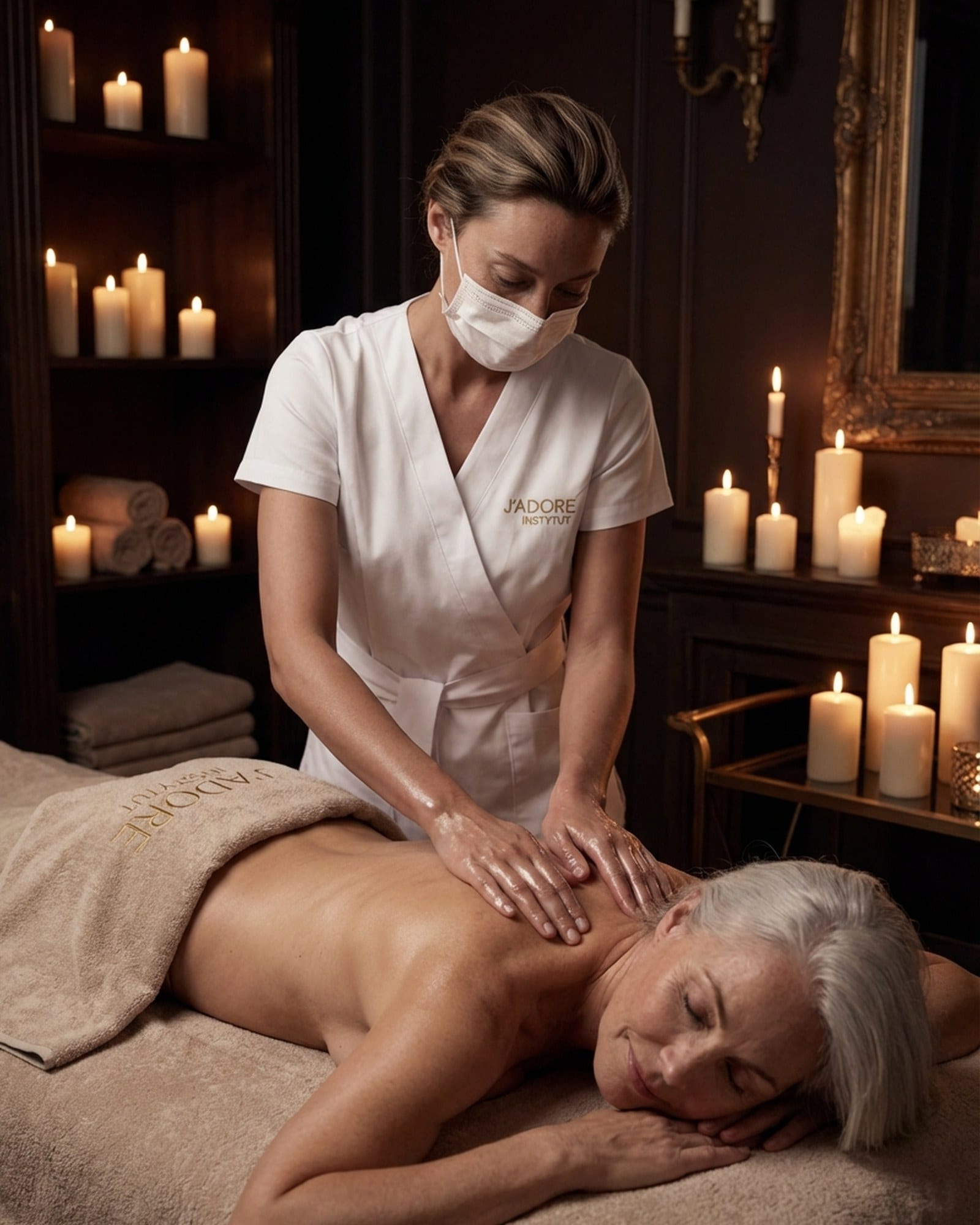
After a long rhythmic massage, some people feel drowsiness, muscle softness, skin warmth or a temporary reluctance to get up quickly. Sit quietly and give yourself time to change position. Plan a margin after the visit instead of immediate training, an important meeting or driving in a hurry.
Pain that intensifies after leaving, significant swelling, rash, shortness of breath, dizziness that does not subside after rest or new neurological symptoms are not proof of body cleansing. They require contact and appropriate assessment. The word "detox" should not be used to downplay an allergic reaction or health deterioration.
The skin remains oiled, and surfaces can be slippery. Get up carefully, especially if oil got onto your feet. Ask about the possibility of removing the excess and post-treatment care. Do not scrub your skin with an aggressive peel just to get rid of the oil film immediately.
In Krakow, set the intensity before the first portion of oil
J’ADORE INSTYTUT in Krakow is located at Karmelicka 45/2B. Details are on the Abhyanga massage page in Krakow. Before entering the treatment room, say which areas are tense, painful, recently injured or off-limits to touch.
Set the temperature, pressure, scope of abdominal and head massage and the method of draping. During the session, use specific messages: "the oil is too hot", "this pressure radiates to my leg", "please skip the abdomen", "I need a slower tempo". The therapist can react faster than to a general "it's a bit uncomfortable".
Abhyanga should not hurt to work. If you are looking for targeted work on an injury, restricted movement or a trigger point, you need a different type of consultation. If you want a rhythmic oil massage with clear but not aggressive pressure, the most important tool is not anaesthesia. It is the conversation conducted throughout the session.
The pain scale helps only if you add the location, character and direction
One person will call firm pressure a four, another a seven. The number alone does not tell the therapist if the stimulus is desired muscle pressure, skin pinching, joint pain or radiation along a limb. Add a description: where the sensation starts, whether it grows, whether it disappears after releasing the hand and whether it moves to another place.
The sentence "this is firm, but I can breathe freely and the muscle is releasing" describes a different situation than "this stings, I am tensing my leg and the pain goes to my foot". In the second case, the work should stop, even if the number on the scale does not sound dramatic. A body withdrawal reflex, held breath and clenching hands are additional signals that the pressure has exceeded a useful limit.
Do not try to be a "good client" who lies still. The therapist does not feel what is happening under their hand. Feedback allows the technique to be adjusted and may reveal an area that should not be massaged. Silence does not increase the quality of the massage; it deprives the person performing it of the most important data on tolerance.
Your first Abhyanga will be more comfortable if you plan its practical side
Ask before your visit which parts of the body the chosen variant covers, whether it is possible to remove excess oil in the room and how to prepare your hair. Wear clothes that you do not mind getting in accidental contact with the product. Remove jewellery and inform about contact lenses, hearing aids, plasters, fresh tattoos or other elements requiring avoidance.
Do not apply a new lotion, perfumed oil or active cosmetic to your body just before the massage. If a reaction occurs, it will be harder to identify the cause. Show the therapist existing irritations, bruises and scratches. The area can be covered or skipped, but the decision requires a visible starting point.
Reserve a moment after the treatment to get dressed without rushing, drink water according to your needs and assess your well-being. Do not promise yourself a specific state of bliss. You may feel calmed, sleepy, warm or simply less tense. The lack of a spectacular "reset" does not mean that painful pressure should have been applied. At your next visit, tell us which elements were pleasant, where tickling occurred and how long tenderness lasted. Such a history allows for better adjustment of temperature, tempo and scope than choosing a general "strong" or "delicate" label. If after the first massage you find that the oil, rhythm or work on a large surface does not suit you, you can choose another method. You do not need to repeat the treatment to learn to like it.