
What a compress actually is — and why it's not the same as a warm pack
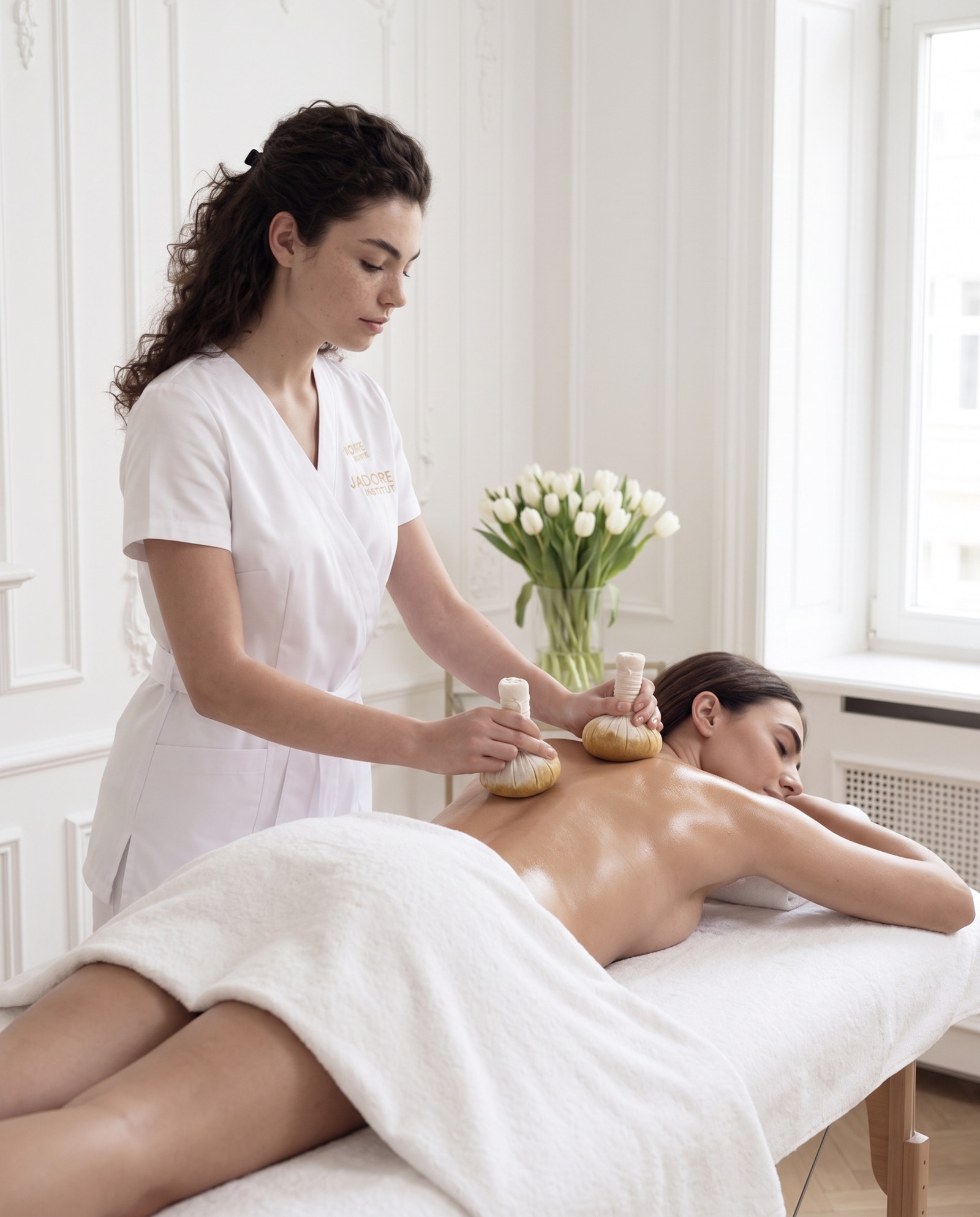
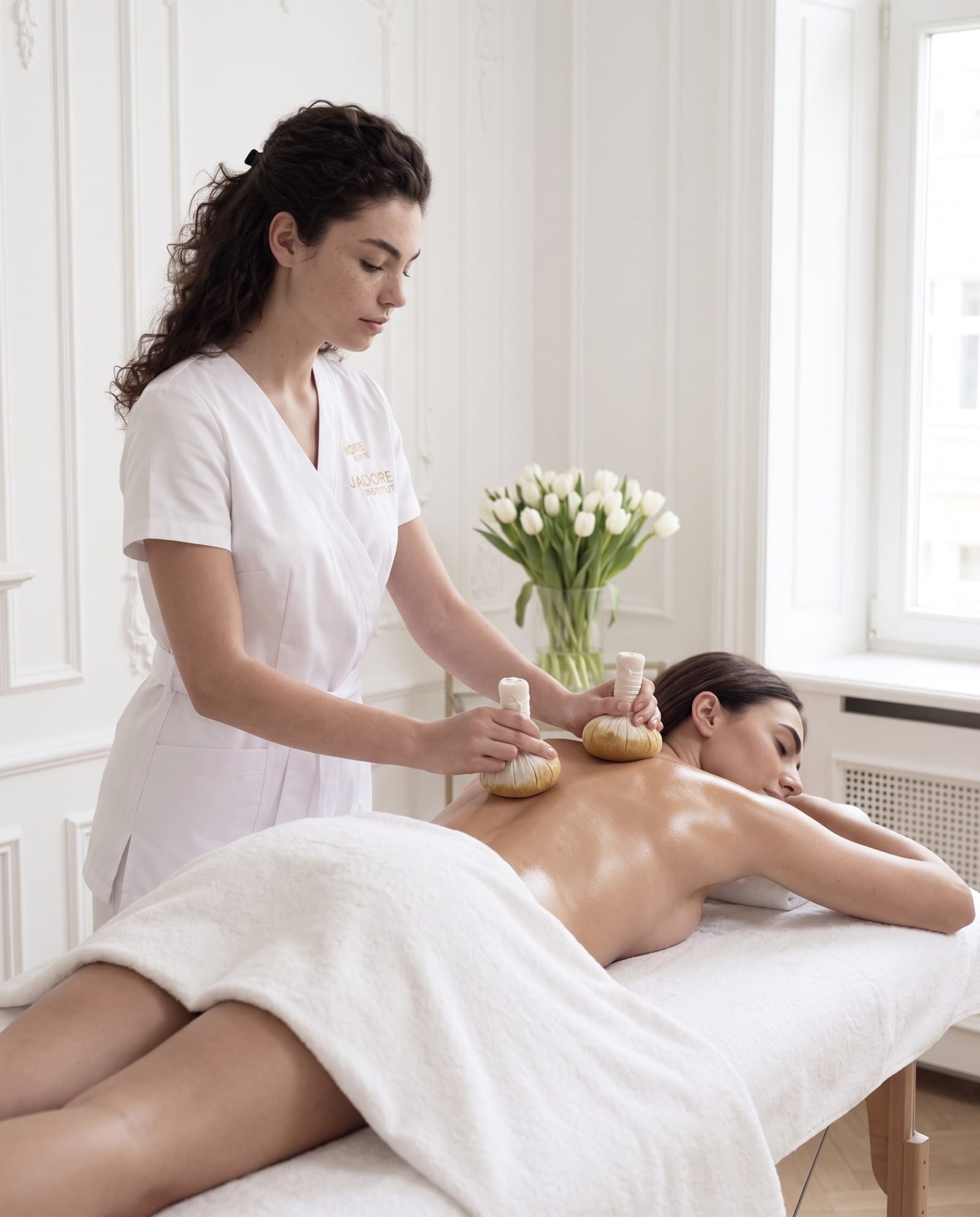
A compress is a tightly bound fabric pouch, filled with a mix of herbs, grasses, aromatic plants and usually rice or salt — materials that hold heat well and release it evenly. Before the treatment, the compresses are heated. The therapist checks the temperature against their own wrist, then works them rhythmically over the whole body — pressing, rolling, tapping, and applying pressure to specific points and muscle groups.
This isn't a hot pack left sitting on your back. The compress stays active — it moves, changes the angle of pressure, and works into the tissue with each rhythmic motion. The heat isn't just applied from outside. It's driven into the muscle through pressure. That's why the difference is noticeable within the first few minutes: the heat reaches deeper than a bath or a heating mat, because it works through mechanical contact with the tissue.
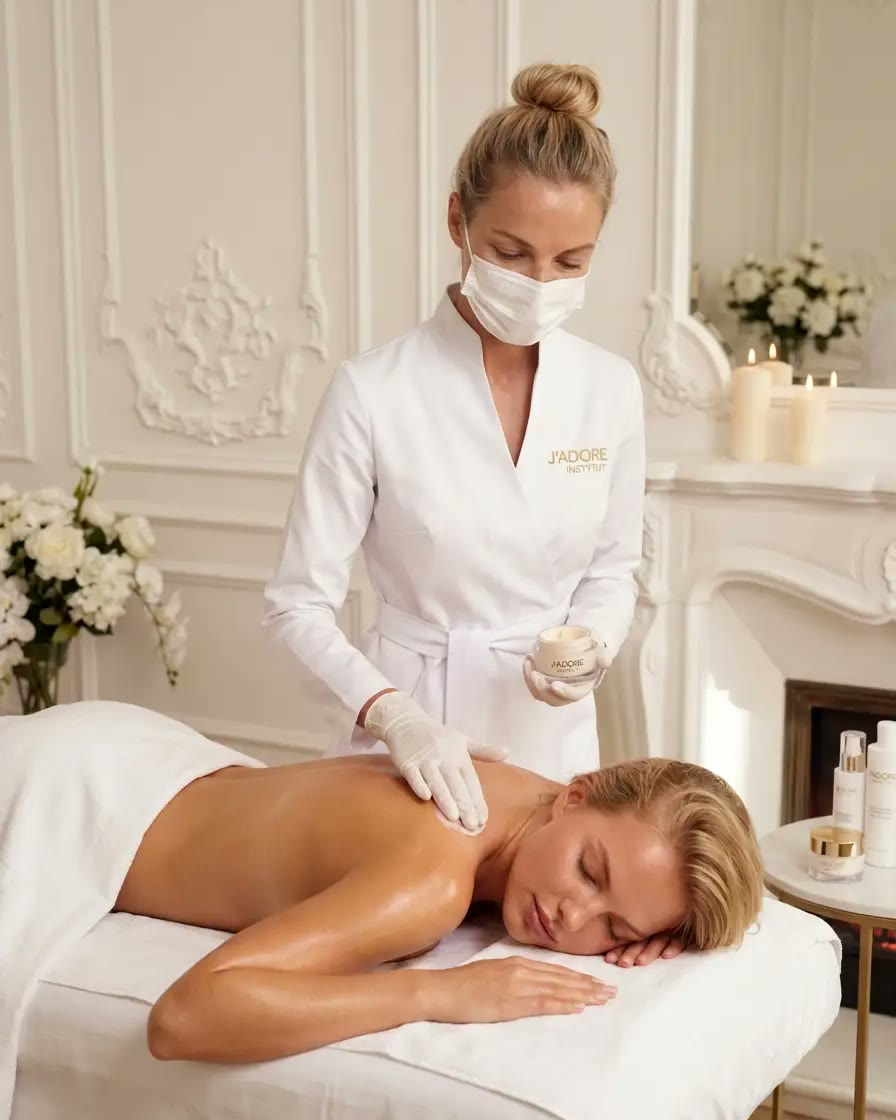
The plants inside a compress aren't decorative. Depending on the blend, they may include lemongrass, galangal, ginger, turmeric, kaffir lime leaf, dill or eucalyptus herbs. The extracts penetrate through warmed, opened skin — the therapist works on damp skin or with a light oil that aids absorption. The aromatherapy effect is usually a side note men shrug off — until they notice their breathing has slowed and their jaw has stopped clenching.
Where it actually helps — three key areas for men
Compress massage isn't a cure-all. It works on specific problems — and that's exactly what makes it useful, rather than just another item on a spa menu.
- Neck and shoulder — chronic tension from desk work. This is the most common reason men come in for a compress massage. Hours a day at a screen, a phone wedged between ear and shoulder, a shoulder blade locked from stress — classic massage often only "skims" this kind of tension. Compress heat penetrates the muscle more deeply, giving many people faster, longer-lasting release than manual work alone.
- Back and lower back — after physical effort or long sitting. Active men — runners, gym-goers, sports players — often carry muscles that don't fully recover between sessions. Compress massage can support that recovery: heat increases local blood flow, and rhythmic pressure helps release a shortened muscle. The same applies to standing or bending-heavy work — the lower back "remembers" every day.
- Legs and thighs — fatigue after training or a long active day. Here, compresses work as an alternative to foam rolling — no pain, no hard roller, just heat that moves into the thigh and calf and warms them from within. Many people report their legs feel "lighter" for several days afterwards.
Compress massage vs classic massage — the practical difference
This question always comes up, because men want to know whether the compress massage is worth paying extra for, given that a classic Swedish massage also brings relief. The difference is real, but it's not that one is "better" — they simply do different things.
Classic massage
mechanics and who it suits
- hands-on work — kneading, rubbing, drainage
- therapist's body temperature — no additional heat
- focused on specific areas, or full body at an even pace
- good for surface-level tension and mental switch-off
Compress massage
mechanics and who it suits
- heat + pressure + plant compounds at the same time
- deeper heat penetration through active compress contact
- rhythmic work across the whole body or chosen areas
- good for chronic tension, muscle pain, recovery after exertion
Compress massage isn't "stronger" than classic massage — it's mechanically different. Classic massage gives manual precision. Compresses deliver heat that reaches where hands alone can't. For many men with tense bodies, that difference is exactly why compress massage feels different afterwards.
What a visit looks like — from arrival to departure
There's no ceremony to understand beforehand. Just show up. At the start, the therapist asks what's bothering you or where you feel tension — neck, back, legs, or your whole body. The scope of work and compress blend are chosen based on that. You don't need to know what they're made of — just say where the problem is.
- 01
Consultation
A few questions about your symptoms, contraindications, and intensity preferences. No multi-page forms.
- 02
Heating the compresses
The therapist heats the compresses to working temperature and checks it against their wrist. You're covered with a towel on the table — only the area being worked on is uncovered.
- 03
Working with the compresses
The therapist works rhythmically — pressing, rolling, applying point pressure. You feel heat and pressure together. Intensity is adjusted as you go — just say if it's too strong or too hot.
- 04
Cooling down
The compresses gradually lose heat. By the end of the session, the warmth is gentler — a natural way to close things off. You stay on the table for a moment before getting up.
- 05
After the treatment
Your body is warmed through — drink water, and avoid a cold shower straight afterwards. Skip intense training right after the massage.
When it's worth combining compresses with something else
Compress massage works well on its own, but for men with tension in several areas at once, it's often worth combining it — either as one session split across two visits, or paired the same day if the body is heavily overloaded.
Classic deep-tissue massage
Manual work before compresses softens the largest areas of tension — the compresses then work on already-prepared tissue and penetrate more deeply.
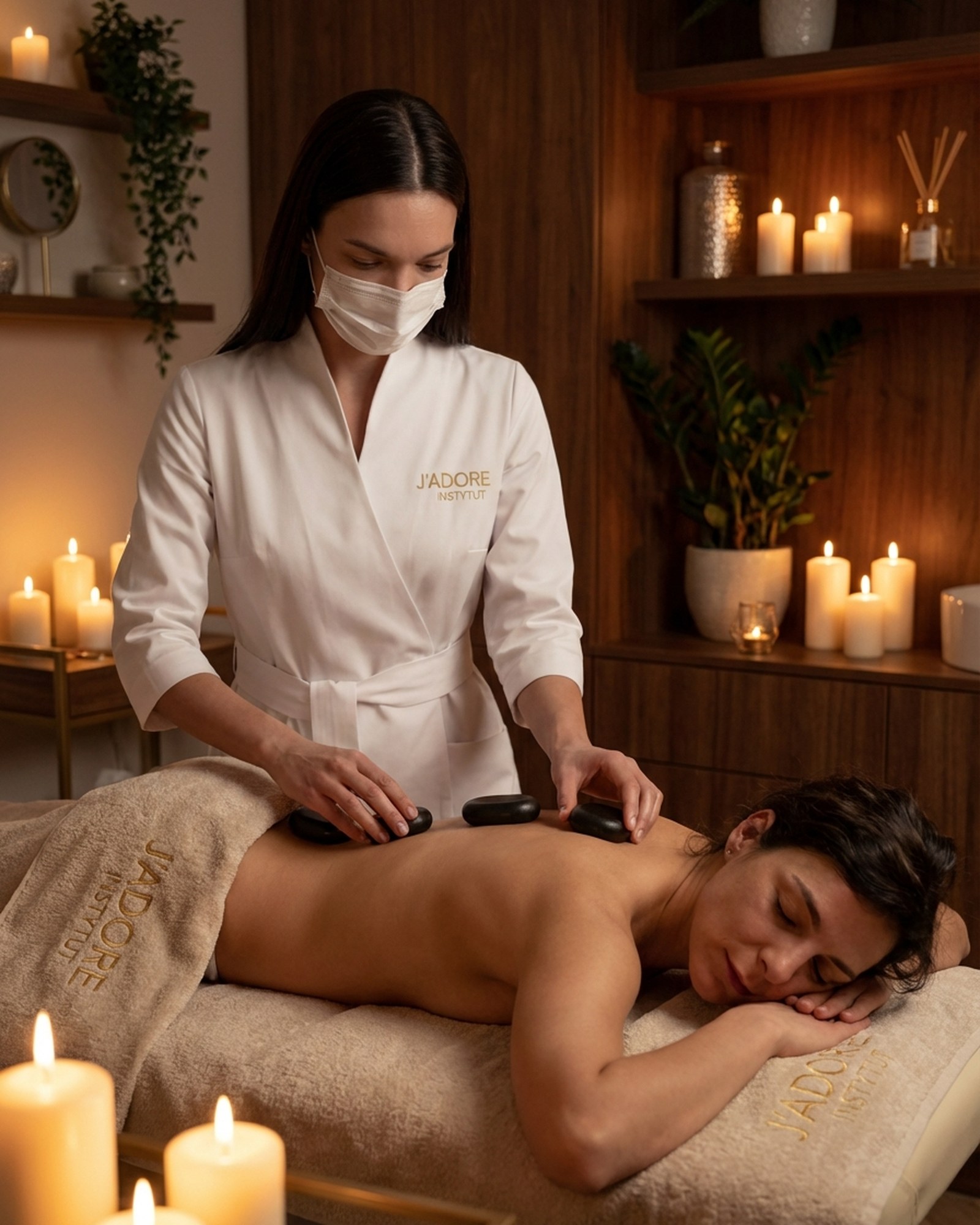
Hot stone massage
A similar heat philosophy, but the stones deliver more focused pressure — good when tension is concentrated rather than widespread.
Lymphatic drainage
After compress massage, the body is warm and local circulation is increased — drainage afterwards can help clear metabolites, especially after training.
Frequently asked questions — straight answers
Does it hurt? It shouldn't. The heat can feel intense, but never burning — say if it's too hot and the temperature is adjusted immediately. Pressure is also controlled. This isn't a sports massage working deep into tissue.
Do I need to "prepare"? No. Come in, say where it hurts, lie down on the table. That's it.
Will one session make a difference? For many people, yes — you can feel the release from the first visit. Lasting changes for chronic tension, though, need several sessions at regular intervals, much like physiotherapy.
Is this only for men who "go to spas"? No. Plenty of men come in who've never had a massage before because "it's not for them" — and leave wondering why they waited so long. Compress massage doesn't require any prior experience or readiness. Just a free hour and an address.