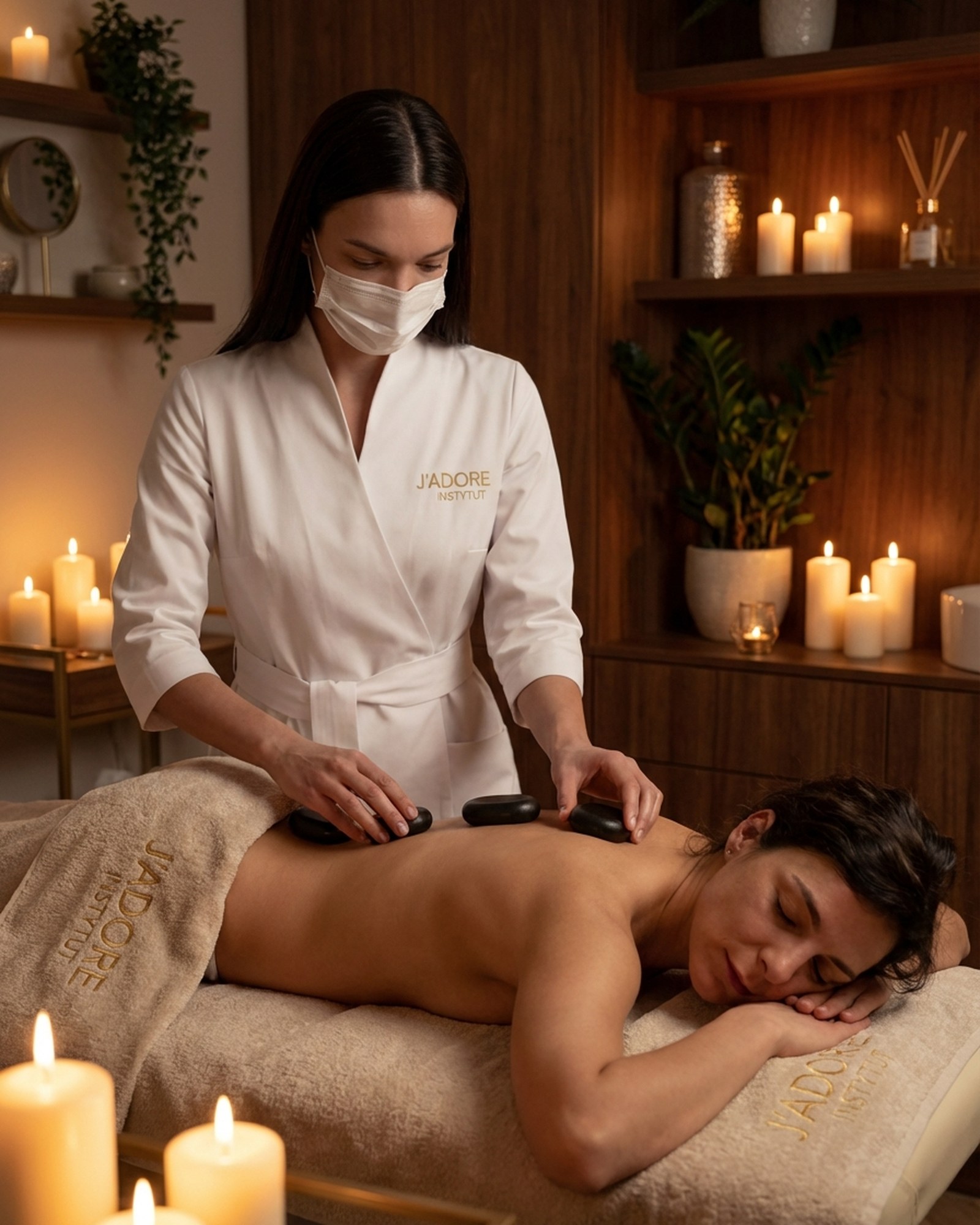
In the first few minutes, it is primarily your tolerance to touch that changes.
Cold hands on a tense neck can trigger a reflexive tightening. A warm stone introduced gradually provides a different start: the skin accepts the touch without surprise, your breathing often calms down, and the therapist does not have to increase pressure immediately. This is precisely why some people describe stones as "deeper," although the effect itself does not result from any magical property of the rock. What matters is the combination of temperature, time, glide, movement, and a sense of safety on the table.
Heat should build up gently. Burning is not a stage leading to better relaxation, and a very hot stone does not work more effectively. If your body tenses up, you hold your breath, or you move away from the tool, the stimulus has exceeded a useful level. A good result begins when you do not have to endure anything.
During the session, the effect is fluid, not set once and for all.
A stone taken from the heater cools down, the next one might be a different size, and your back and calves perceive temperature differently. The therapist checks the tool before contact, moves it instead of leaving it uncontrolled, and asks about comfort after changing the area. The rhythm of work matters: movements that are too fast leave little time to absorb the heat, while staying in one place for too long increases the risk of overheating.
Immediately after the massage, you most often feel warmth, heaviness, and softness of movement.
Not everyone feels a spectacular change. If you arrived without significant tension, your goal was rest, or you enjoy a very strong sports massage, the effect may be subtle. The lack of pain after the session does not mean the massage was too gentle. Pain is also not proof of effectiveness.
In the evening, the result depends more on your daily plan than on the type of basalt.
Returning straight to hours of work on a laptop quickly restores the position that built the tension. A heavy workout planned shortly after the massage has a similar effect. A calm walk, normal hydration according to your thirst, and breaks from sitting allow you to notice the difference for longer. You do not need to follow a "cleansing" ritual or drink a forced amount of water.
A warm bath or sauna on the same day does not automatically strengthen the effect. They add another thermal exposure, which can end in weakness for someone with lower blood pressure. If your skin is very pink after the session or you feel dizzy, choose a neutral temperature and rest.
The next day, check the function; do not look for signs of effectiveness.
If the discomfort concerns a specific injury and returns without change, the massage did not solve the cause — and it did not have that power. Instead of immediately booking a "stronger" variant, describe the symptom to your therapist, and in case of radiating pain, numbness, loss of strength, or sharp pain, consult it medically.
Muscle relaxation and pain relief are not the same goal.
Wellness goal
comfort and rest
- pleasant warming
- less stiffness after sitting
- easier calming down
- temporary freedom of movement
Problem for diagnosis
the symptom has an unknown cause
- pain after an injury
- numbness or loss of strength
- unilateral swelling
- night pain or fever
These two columns can meet in one person. Someone can be tense and simultaneously have a symptom that requires checking. Heat does not distinguish between overload and inflammation. An interview, observation, and — when necessary — an examination outside the massage salon do this.
The skin receives care from the oil, but not a permanent transformation.
The lubricant can leave your skin soft and less dry. This is a result of occlusion and reduced friction, not the stone's action on collagen. Someone with dry calves may notice pleasant smoothing even the next day, especially if the product is not immediately washed off with a strong detergent. However, the effect depends on the composition and tolerance.
A stone massage does not remove cellulite, stretch marks, or laxity. Temporary improved blood circulation and the shine of the oil may improve your appearance in the salon light, but they are not tissue remodelling. If your goal is to change the quality of your skin, you need a separate care plan, not turning up the temperature.
Sleep after a massage can be easier, but it is not a promised result.
Heat, silence, steady touch, and the absence of a phone during the session create conditions conducive to calming down. Some people fall asleep faster that evening. Others feel warmed up or stimulated and need a moment to return to their usual rhythm. The salon should not promise to cure insomnia based on a pleasant nap on the table.
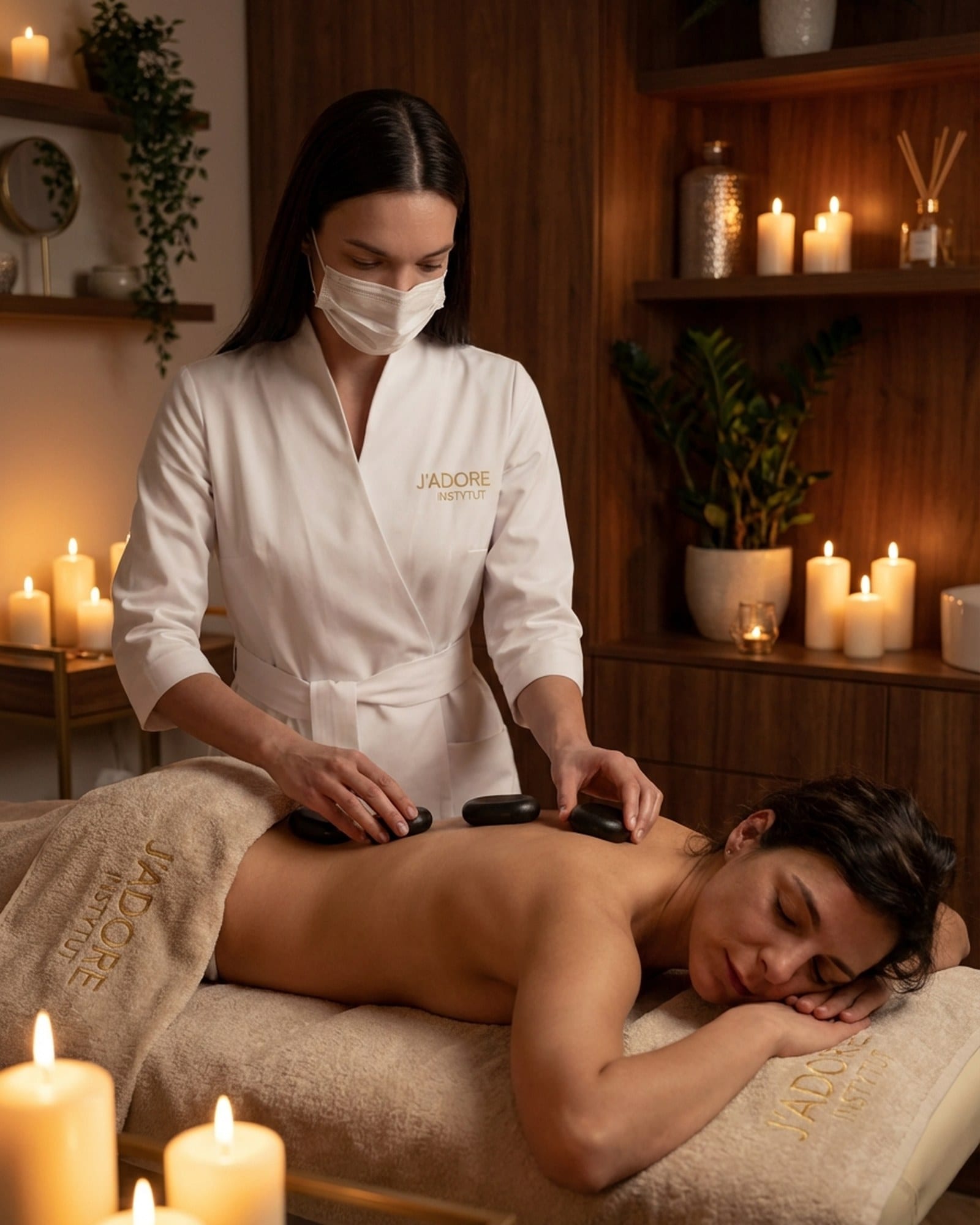
One visit answers the question about tolerance; a series answers the question about utility.
The first session shows whether you like the combination of heat and oil, which areas react best, and whether you feel a difference the next day. You do not need to buy a long plan upfront. If the effect meets your goal, you can establish a rhythm around work, travel, or training. However, regularity should not mask a constantly recurring problem.
On the first visit, a person who usually chooses strong pressure might ask for a higher temperature because they confuse intensity with the result. After a few minutes, however, the neck begins to defend itself: breathing becomes shallower, the shoulder blades rise, and the heat occupies all your attention. The therapist then puts the stone aside, returns to using their hands, and checks a gentler variant on a smaller area. At the next session, they do not repeat the same start. They introduce the tool later, choose a larger stone that releases heat more calmly, and check your sensation more often. This is a concrete benefit of a subsequent visit: not accumulating the dose, but using information about the body's reaction. The fifth session does not have to be hotter or longer than the first. It can simply be more precisely adjusted.
- Return if the massage provides repeatable comfort and does not cause an undesirable reaction.
- Change the pressure or temperature when relaxation mixes with burning or prolonged tenderness.
- Stop the series if the symptom increases despite rest or if a sensory disturbance appears.
- Do not assess the plan solely by how long your skin remains warm.
A classic massage may be better when heat is only an obstacle.
A person who overheats easily, has migraines triggered by temperature, or does not like a slippery film on their skin does not have to convince themselves to use stones. A classic massage allows you to work with your hands without constant thermal exposure. In turn, someone focused on strong, point-specific work after training might need a sports massage, not a relaxation ritual.
The choice is not a luxury ranking. Stones are an additional tool. If they help you enter a state of relaxation, they make sense; if they distract you from the pressure, cause fear of temperature, or are contraindicated, a simpler variant will be better.
The effect can disappear quickly when daily life recreates the same tension.
Imagine Monday after a Sunday massage. For the first hour at your desk, your shoulders remain free, then the monitor is off to the side again, the chair is too low, and the phone lands between your ear and shoulder. In the evening, the familiar pulling returns. This is not proof that the stones "did not work." The session changed your sensation for a while, but it did not change your workstation or the habit of raising your shoulder. The durability of comfort is a joint result of the massage and what happens between visits.
The situation is similar after a long trip, an intense workout, or a few nights with too little sleep. A regular massage can be a useful reset point, but it should not serve to repeat overload with impunity. If you need increasingly frequent sessions and the relief shortens from visit to visit, talk about changing your strategy. Sometimes the right next step is adjusting your desk, a regeneration plan, or a physiotherapy consultation, not a warmer stone.
The atmosphere enhances rest, but it should not masquerade as a tissue effect.
Dimmed lights, silence and scent can make a session feel exceptionally effective. This is not a deception; environmental conditions genuinely influence your ability to rest. The problem only begins when a good mood is presented as proof of permanent body correction. You can love the ritual while honestly admitting that the greatest result was an hour of peace. Such an outcome has value without attributing healing properties to it.
To separate the elements of the experience, answer three questions after your visit. Was the warmth pleasant throughout the entire session? Did the manual work address the area you specified? Did a specific movement or tension level change the next day? If the answer relates only to a beautiful scent and music, you may be looking primarily for a relaxation ritual — and you can choose it for that very reason. If function is what matters, the conversation before your next session should focus on movement, pressure and tissue response.
In Warsaw, match the location to your return journey and the temperature to your body.
You can check the service scope on the hot stone massage page in Warsaw. J'adore Instytut operates at Żelazna 59, 00-848 Warsaw — Mon–Sat 8–21, Sun 11–19 — and at Mińska 29A/46, 03-808 Warsaw — Mon–Sat 9–21. When booking, disclose any poor temperature tolerance, sensory disorders, vascular diseases or recent skin procedures.
The most honest result is the one you can name the next day.
Before your visit, choose one metric: easier neck rotation, falling asleep more peacefully, less stiffness after desk work or simply an hour without stimuli. After the session and the next morning, check exactly that. If the result is noticeable and the cost to your body does not include burning, dizziness or multi-day pain, the massage has met its goal.
Stones do not have to do everything. They should release heat in a controlled manner and support well-performed touch. The rest of the marketing story is unnecessary. After your visit, note what changed immediately, what was noticeable in the morning and when your body returned to its previous level of tension. Such a brief observation allows you to determine if another session makes sense or if you should change the duration, temperature or type of massage. An assessment based on your own function is more reliable than comparing yourself to the review of someone with a different daily routine, sensory threshold and goal.