What is Polynesian massage — and why does it work differently to a classic massage?
Lomi Lomi massage comes from Hawaii, but this isn't about exoticism — it's about technique. Instead of targeted pressure on one muscle, the therapist works with long, wave-like movements of the whole forearm and hand, covering several areas of the body at once. This means the muscle tissue warms evenly and releases tension that, with a classic massage, often just "escapes" to a neighbouring area.
The difference is one you feel directly. A classic massage often focuses on one area at a time — knee, then shoulder, then back. Lomi Lomi treats the body as a whole. Movements flow from the legs through the back to the shoulders and neck in one continuous gesture. That's a different quality of work on the tissue, and a different final result.
Classic (relaxation) massage
sequential work, area by area
- focus on a specific zone
- targeted pressure or friction
- good for addressing a single problem
Lomi Lomi Polynesian massage
whole-body work, with continuous movements
- long, wave-like movements with the whole forearm
- even warming of all the tissue
- the body releases as a system, not in pieces
Who this makes particular sense for — and why for men specifically
Polynesian massage works well wherever you're dealing with a broad, chronically tense area — not one spot, but a whole band running from the neck through the shoulder blades to the lower back. That's a typical pattern after a long week at a desk, after intense training, or simply after months without any bodywork at all.
- Shoulders and neck after hours of sitting. Tension in the upper trapezius is one of the most common issues for men who work at a screen. Lomi Lomi works this area with long movements along the whole shoulder girdle.
- Back after strength training. Heavy back sessions often leave behind a hardness that foam-rolling alone can't shift. Warm, deep movements reach layers a roller simply can't access.
- The whole body after a stressful week. This isn't about "resting" — it's about your muscles actually stopping work. The effect is clear after the very first session.
- Legs after long runs or cycling. The technique works well on the thighs, calves and hips — areas that build up chronic fatigue in active men.
What a session looks like — no embellishment
You come in, a short conversation about what's bothering you most — shoulder, back, legs, or all of it at once. The therapist adjusts the pressure and the areas of focus. You lie on the table, covered with a towel (only the area being worked on is uncovered). You don't need to do anything — no "just relax" and tense waiting. Warm oil, long strokes, a pace slower than a classic massage.
- 01
A short interview
A question about the areas that bother you most — no medical paperwork. Literally two minutes.
- 02
Starting with the back
We usually start with the back of the body — neck, shoulders, back, buttocks, legs. That's where the most tension builds up.
- 03
Turning over and working the front
Work on the décolletage, shoulders, arms, abdomen (if there are no contraindications), thighs and calves. The whole session comes together.
- 04
Finishing and the moment after
The massage ends calmly — you don't jump straight to your feet. A few minutes lying down, then you get up and feel the weight of your body differently than before you came in.
One of the things men notice most often after Lomi Lomi: tension they didn't even know they had disappears. These are the subtle, chronic areas that hold on for months — not painful enough to see a doctor, but persistent enough to always be there. Polynesian massage is particularly effective here, because it works the whole surface at once.
Pressure depth — myth and reality
Common belief: "a real massage has to hurt to work". That's an oversimplification. Lomi Lomi can be deep, but the goal isn't pain — it's lasting release of the tissue. Intense pressure on a tense muscle can trigger a defensive reflex: more tension, not relaxation. A long, warming movement works differently — the tissue opens gradually, and often more deeply than with aggressive pressure.
If you come in with a specific, very tense spot — say so. The therapist can focus more on that area, spend more time there, and work harder. The massage isn't a fixed protocol — it adapts to what you bring in.
How often, and what to combine it with
For chronically tense muscles, regularity gives the best results. You don't need weekly sessions — once every two or three weeks keeps the tissue at a level you actually feel in day-to-day life. A single session does the job, but your body will return to old tension patterns faster if the underlying cause — the desk, training, stress — stays constant.
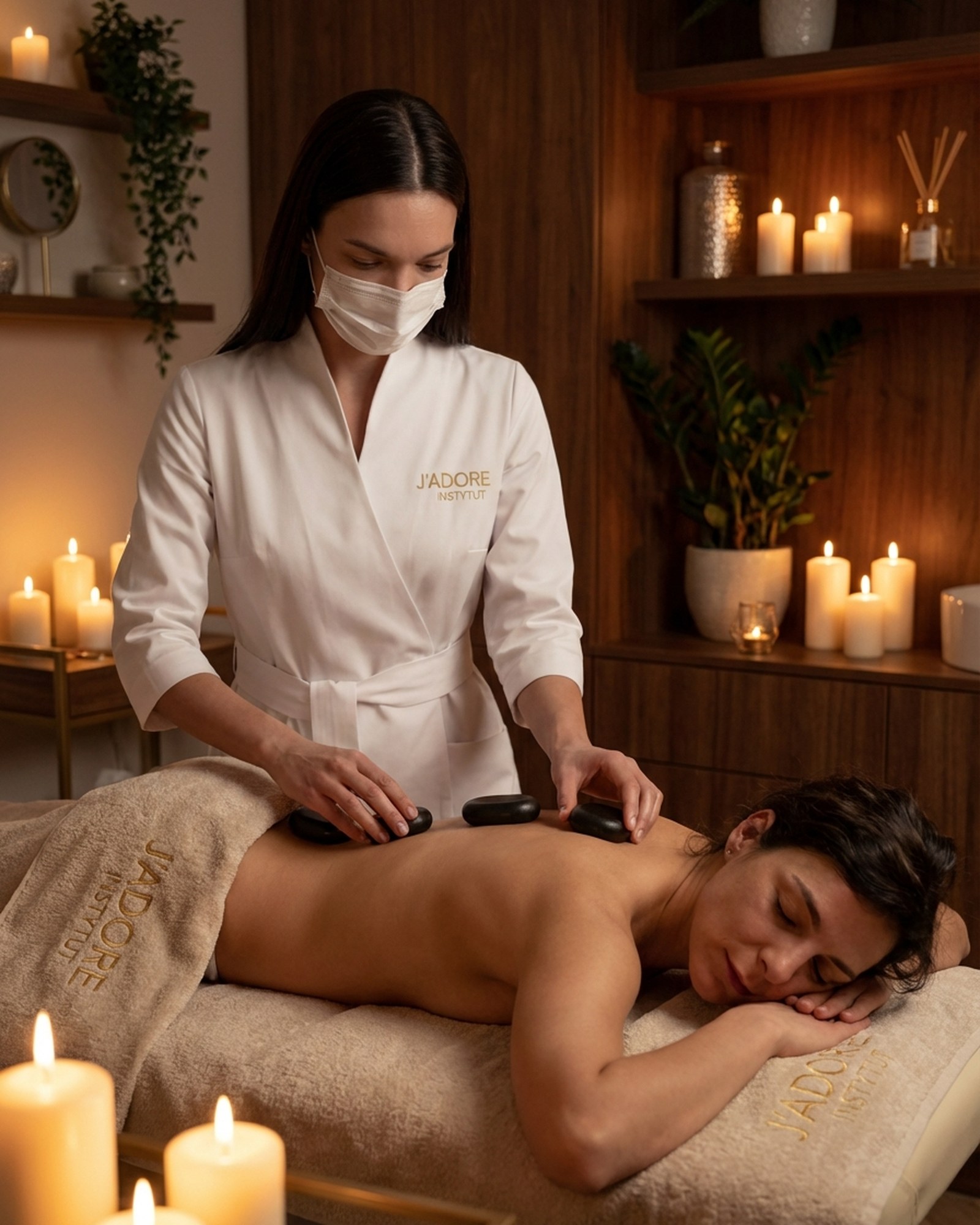
Hot stone massage
Volcanic basalt stones pre-warm the tissue, so Lomi Lomi that follows goes deeper, faster. This combination works especially well for very hard, chronically tense muscles.
Sports massage
For active men — use Lomi Lomi for general recovery, and sports massage for working specific muscle groups before or after training. The two complement each other's scope.
Thai massage
Thai massage adds an element of stretching and joint mobilisation. Lomi Lomi warms the tissue; Thai massage lengthens and mobilises it. Alternating between the two across sessions gives a comprehensive result.