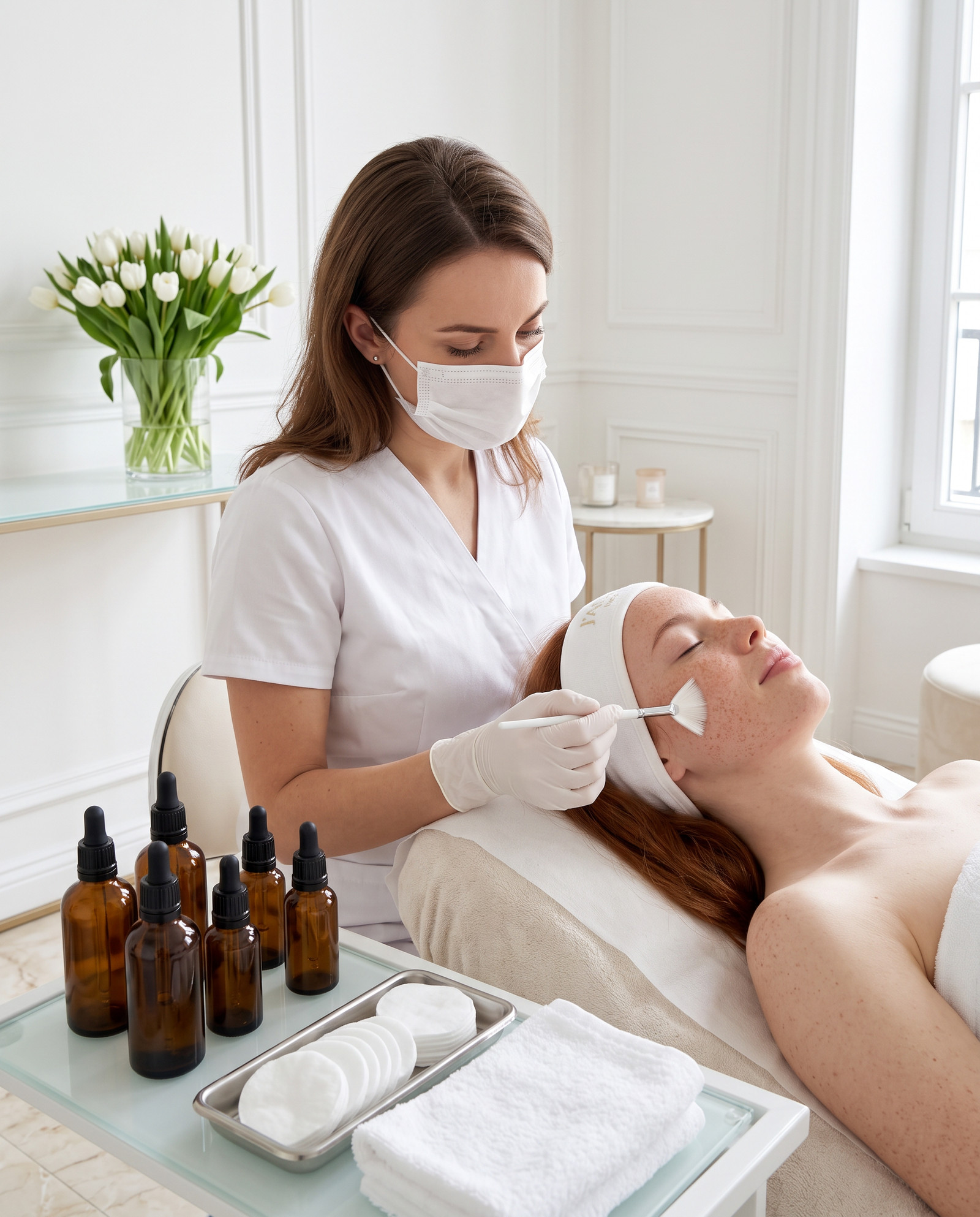
The name of the peel does not tell you how your skin will behave
Two people leave a treatment with the same name and look different the next day. One sees only slight redness by the wings of the nose. The other feels tightness on the cheeks and notices dry spots near the lips. What matters is the condition of your skin before the visit, its reactivity, previous skincare, the area treated, and your response to the preparation. A lack of visible flakes does not mean a lack of effect, and peeling is not a competition you have to win.
Ask while still at the salon what exactly was applied, whether the preparation was removed, whether anything should remain on the skin, and when you are allowed to wash it. Write down the name of the final cream and the date for returning to active cosmetics. After a few hours, your memory may offer shortcuts: "I think in the evening" or "I think tomorrow". In post-treatment care, one precise sentence is more useful than an elaborate routine based on guesswork.
The first evening: do not over-cleanse
When washing is finally permitted, your hands and lukewarm water are usually enough to gently spread a mild cleanser. Do not use a washcloth, a textured towel, or a brushing device. Dry your face by patting it with a clean, soft material, without dragging it across the skin. This is a small difference, but with redness, friction can be the stimulus that turns calm tightness into stinging.
In the morning, do not just ask "is there radiance", but "is it calmer"
Do not assess your skin tone right after a hot shower, a workout, or lying on one cheek for a long time. Heat, pressure, and exertion temporarily change the appearance of your face. Let your skin rest, and only then compare. If it is clearly calmer in the morning than in the evening, you do not need a new "regenerating" product. A stable, short routine is still doing its job.
The core of the routine can be contained in three steps
- Gentle cleansing, a simple protective cream, and a broad-spectrum sunscreen. These form the basis for the first few days, unless the person performing the treatment has advised otherwise.
- "Simple" does not mean random. It is safest to reach for products that your skin was already familiar with before the visit and that did not cause stinging.
- A new ampoule with a long list of extracts. It does not become gentle just because the word "soothing" appears on the packaging.
Apply the cream with clean hands in a thin layer, and if you feel tightness, add more as recommended instead of scrubbing off dry fragments first. Apply the filter without vigorous massage, including along the hairline, ears, and jawline, if these areas were included in the procedure. Protection does not end with morning application: reapplication depending on exposure, shade, headwear, and not intentionally exposing your face to the sun are what matter.
The third day exposes the most common mistake
A small dry patch appears near the nose. The client has an important meeting, so she rubs it with an enzyme peel in the morning and pulls at the protruding fragment with tweezers. The area becomes red, shiny, and starts to sting under the cream. By the afternoon, concealer gathers exactly on the disturbed spot. This is not a "failed C Peel", but the result of accelerating the process mechanically and chemically in an area that needed protection.
Vitamin C after vitamin C is not a logical shortcut
The name of the treatment tempts you to continue the theme with a home serum the next day. However, the cosmetic may have a different form of vitamin C, pH, fragrance base, and additional active substances. Even a product used previously without issue may sting skin freshly after exfoliation. The same applies to retinoids, home acids, fine-grained scrubs, benzoyl peroxide, and alcohol-based toners. Their return should be based on instructions and the condition of your skin, not on the similarity of the name.
A person accustomed to a multi-stage routine often says that without an essence, two serums, and an oil, "nothing is happening". In the first week, refraining from excess is an action in itself. It allows you to notice which symptom results from the natural process and which appeared after a specific product. When you apply six layers, any attempt to identify the culprit starts from zero.
Make-up and shaving test not only the calendar but also comfort
When shaving, the problem is not gender, but the blade moving over a reactive surface. If red spots usually appear after using a razor, do not test a new blade the day after a peel. Determine before your visit when to shave your face and when it is safe to return to this activity. A person who is having a C Peel again knows their tendency for irritation, but they should also react to their current state, not automatically copy the calendar from the previous visit.
Sweat, steam, and heat can change a calm evening
After work, the client goes for an intense workout. Sweat collects at the hairline, she instinctively wipes her face with a towel, and then takes a hot shower. The skin, which was only slightly tight in the morning, becomes clearly warm and red. It is difficult then to separate the reaction after the treatment from the effect of temperature, salt in the sweat, and friction. For this reason, restrictions regarding exertion, saunas, or hot baths must be treated as part of the protocol, not as a decorative footnote.
If movement is necessary for your daily functioning, ask about a gentler version and the date for returning to full exertion. Do not apply ice directly to your face to quickly lower the heat, and do not perform massage with a plate or roller. A cool room, no extra friction, and observation usually provide a clearer answer than sudden home interventions.
A city day is also exposure
Sun protection is not just for the beach. Driving a car, walking between meetings, sitting at a table by a window, and waiting for a tram all add up to an ordinary day. After a peel, do not plan intentional tanning or use a solarium. If you must be outside for a long time, prepare a filter, the possibility of reapplication, sunglasses, and headwear. Do not try to mask redness with self-tanner — a new cosmetic will make it harder to assess the reaction and may additionally irritate the skin.
Sometimes a client says during a check-up: "I used a filter, but a darker spot appeared". Further questioning reveals that the cosmetic was applied only in the morning, and later the face was exposed to the sun for a long time. The product itself does not create an invisible shield for the whole day. How you use it and your behaviour matter. If you see a new, persistent change in colour, do not cover it with another acid; show it to the person managing your care.
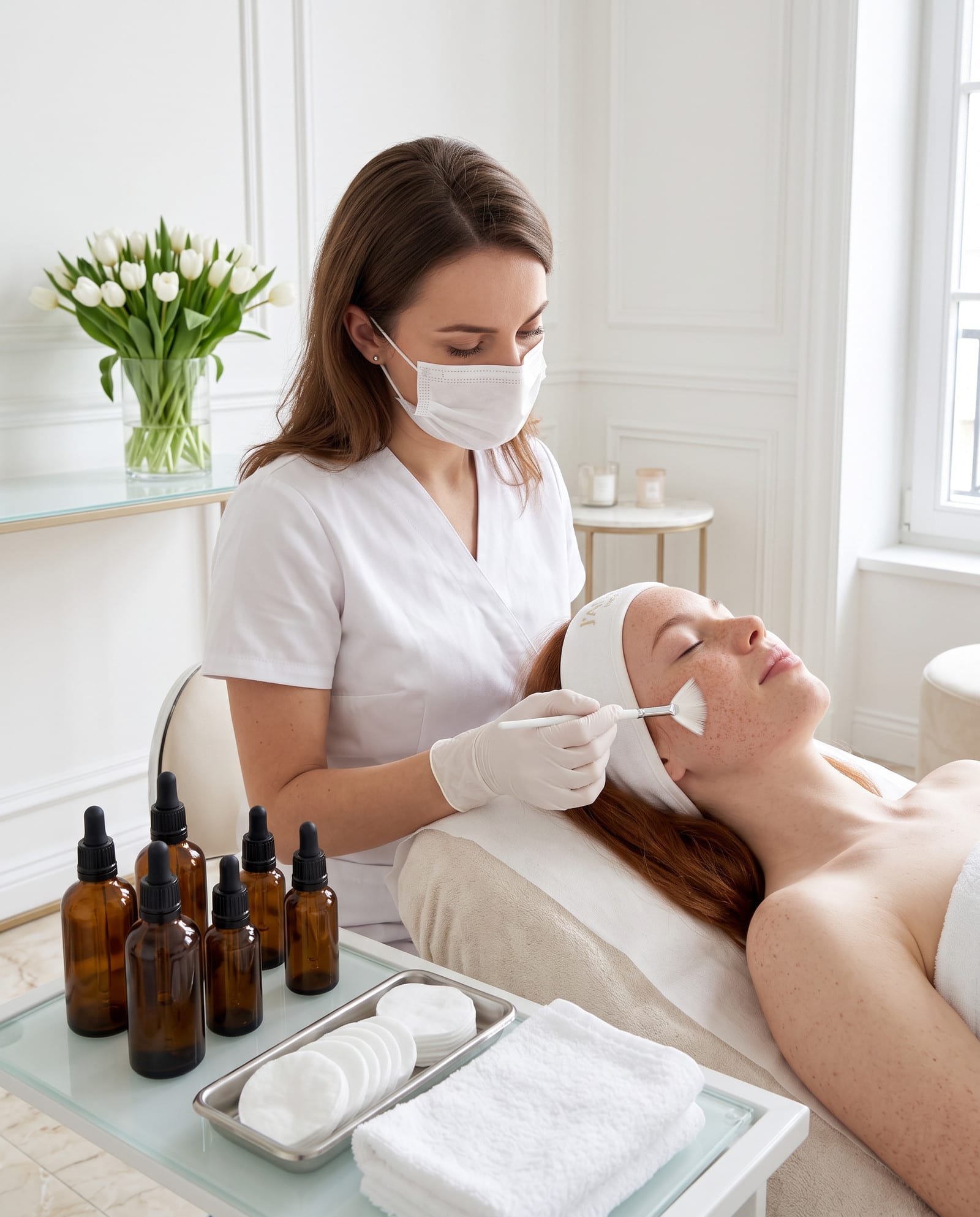
Dermatological treatment does not disappear for the duration of the peel
Medications and preparations recommended by a doctor require a separate plan. Do not discontinue them yourself before the treatment, and do not make up for missed applications with a larger amount. If the instructions after a C Peel seem to conflict with your dermatologist's advice, contact the appropriate people. The name of the cosmetic may be the same, but the dose, base, and goal of the treatment can be different. Such a conflict cannot be resolved without knowledge of your skin and documentation.
This rule also applies to over-the-counter products used for breakouts. Spot-applying a strongly drying product to a fresh blemish on the third day can leave a red, peeling ring around it. During a check-up, the cosmetologist then sees not only the original problem but also the reaction to home interference. Be honest about what was used and when. This information helps determine further action; hiding an experiment does not speed up the calming of the skin.
When a call to the salon should not wait
Mild tightness, transient redness, or minor exfoliation can appear after a peel, but their progression is important. The reaction should gradually calm down. Contact us sooner if pain increases, blisters form, swelling grows rapidly, the skin weeps, extensive scabs appear, or symptoms of infection occur. Difficulty breathing, sudden facial swelling, or any other severe symptom requires urgent medical help, not waiting for a response via messenger.
When reporting, provide the day and time of the treatment, the moment the symptom appeared, the products used, and whether the reaction is increasing. Attach a clear photo without make-up. The sentence "it stings terribly" is important, but it is difficult to assess the dynamics based on it. The information "after applying the new serum, the stinging did not stop after washing and is spreading to the neck" gives the person in charge much more data to decide on further contact.
Returning to active ingredients happens one by one
On the sixth or seventh day, the skin may look normal, but the day number itself is not an automatic permission for a full routine. First, check if there is any stinging when washing, persistent redness, active peeling, or new irritation. Then return to products in the order established after the treatment. One cosmetic at a time allows you to see the reaction. A retinoid, acid, and strong serum introduced on the same evening take away that possibility.
A person after their first C Peel usually asks: "when can I go back to everything?". A person after a subsequent visit more often says: "previously, I felt nothing by the fourth day". In both cases, the answer should refer to your current skin. In winter, it may be more dehydrated; after travelling, more reactive; and after changing cosmetics, it may tolerate the same plan less well. Experience helps you observe, but it does not exempt you from observation.
Small things touching your face can ruin a simple plan
The evening routine is gentle, but the client sleeps on a pillowcase covered in hair product, presses a phone to her cheek during a conversation, and moves bangs set with hairspray over her forehead. In the morning, the irritation is on one side of the face, and it is difficult to connect it to the cream used evenly. In the first week, also pay attention to things that are not on your cosmetic shelf: a clean pillowcase, your phone screen, eyeglass frames, a towel, and hair falling onto the treatment area.
You do not need to sterilise your home or fear every touch. It is about limiting repetitive friction and accidental transfer of products. If hair styling cream leaves a film, tie your hair back before skincare. If you often rest your cheek on your hand while working, put a short note on your desk before your reflex takes over. Such small things do not replace recommendations, but they make the observed redness say more about your skin after the C Peel and less about your entire environment.
A check-up after a calm week provides material for the next decision
A cosmetologist looks at the skin differently than someone looking only for a brighter reflection in the mirror. They pay attention to whether the colour is even, where dryness persists, whether there is chafing near the nose, how areas with previous hyperpigmentation are behaving, and whether the barrier tolerates washing. They also ask about the order of products and the moment symptoms occurred. From this data, it is determined whether to maintain the protocol for the next visit, change its intensity, extend the break, or first tidy up your home skincare.
A client after their first peel might say: "nothing peeled, so it was probably too light". A person after their fifth visit is sometimes convinced that they know their progression and does not mention a new retinoid introduced a month earlier. Both pieces of information change the conversation. The first needs to be explained that visible peeling is not the only measure of the procedure's sense. The second needs to be reminded that skin and routines are not constant. The next treatment should result from the current picture, not from the need to repeat an identical impression.
Krakow: the check-up starts with following instructions
Information about the treatment variant and booking is on the website C Peel in Krakow. J’ADORE INSTYTUT at ul. Karmelicka 45/2B is open from Monday to Saturday between 8:00 and 20:00. The local page helps you return to the right service, but it does not replace the recommendations written down after examining your skin on the day of the visit. Keep them and the contact number before leaving the salon.
If you are commuting through the city centre, plan your return so as not to add a long walk in the sun, a workout, or a sauna the same evening. It is not about locking yourself at home, but about limiting unnecessary variables. When a reaction appears the next day, it is easier to assess it after a calm progression than after several additional stimuli.
Summarise the seventh day without a beauty filter
Take a photo in the same conditions as the first morning. Assess not only the "radiance" but also the comfort when washing, the evenness of the colour, the presence of dry spots, and the tolerance of your simple skincare. If the skin is calm, it does not have to look spectacular in every light for the week to have gone correctly. A C Peel does not promise to remove persistent hyperpigmentation in a few days, and adding home actives will not change this limitation.
At your next visit, tell us when tightness occurred, whether peeling happened, what intensified the redness, and how the filter or cream behaved. This is practical material for a conversation about the next protocol. The best record of the first week does not sound like "I did nothing". It sounds like: I followed the established plan, observed the direction of the reaction, and did not try to outpace my skin.