
Two different mechanisms — two different problems
The simplest way to put it: a chemical peel removes what's already on the surface; Cosmelan targets the source that's still producing it. Both can improve hyperpigmentation, but for different types and at different stages. Thinking of them as alternatives can be misleading — often they're two consecutive steps in the same plan.
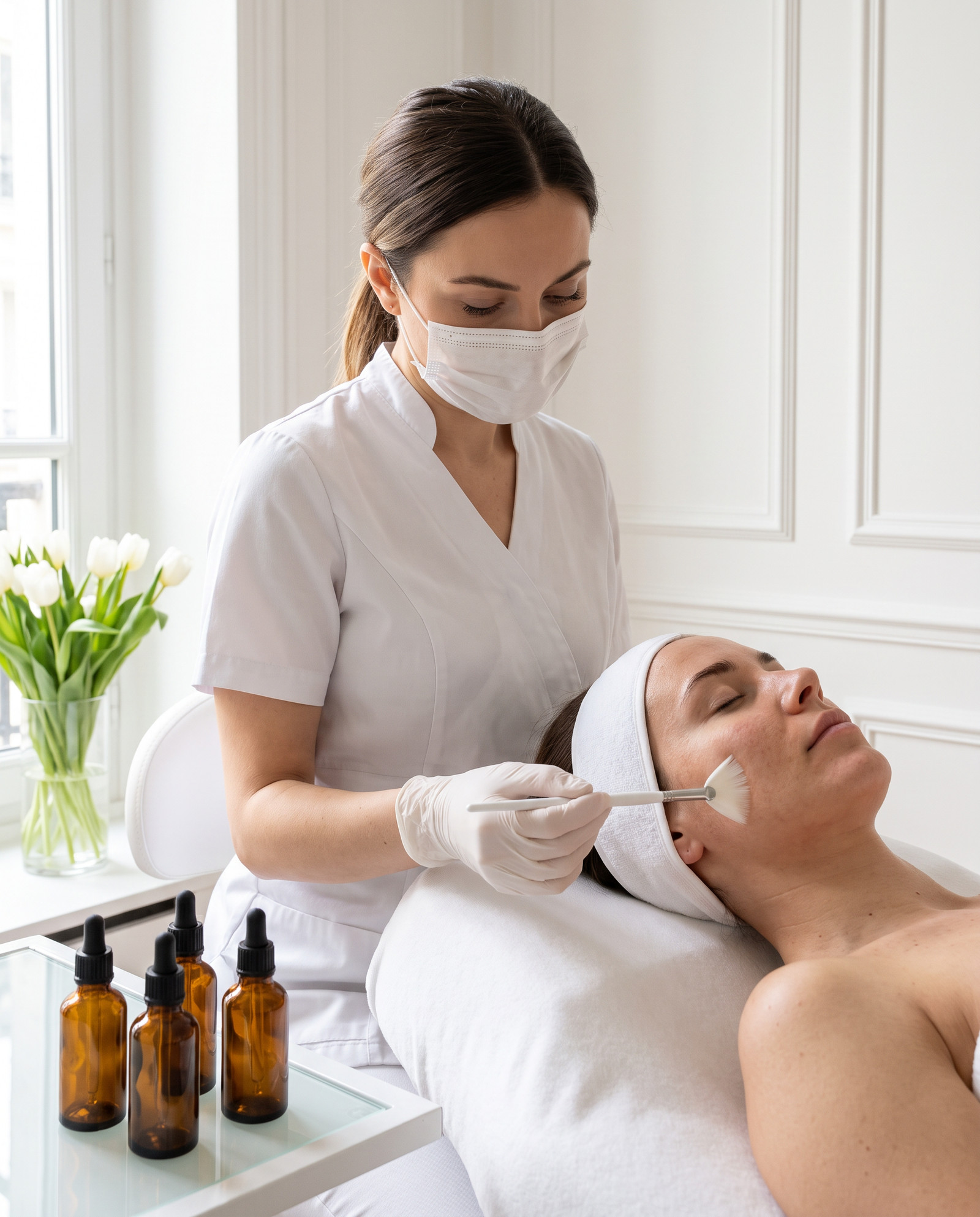
Chemical peel
exfoliates the epidermis, speeds up skin renewal
- sun-induced and post-acne hyperpigmentation (shallow, post-inflammatory)
- uneven skin tone, greyness, lack of radiance
- early signs of photoageing
- a series of sessions gives a cumulative evening effect
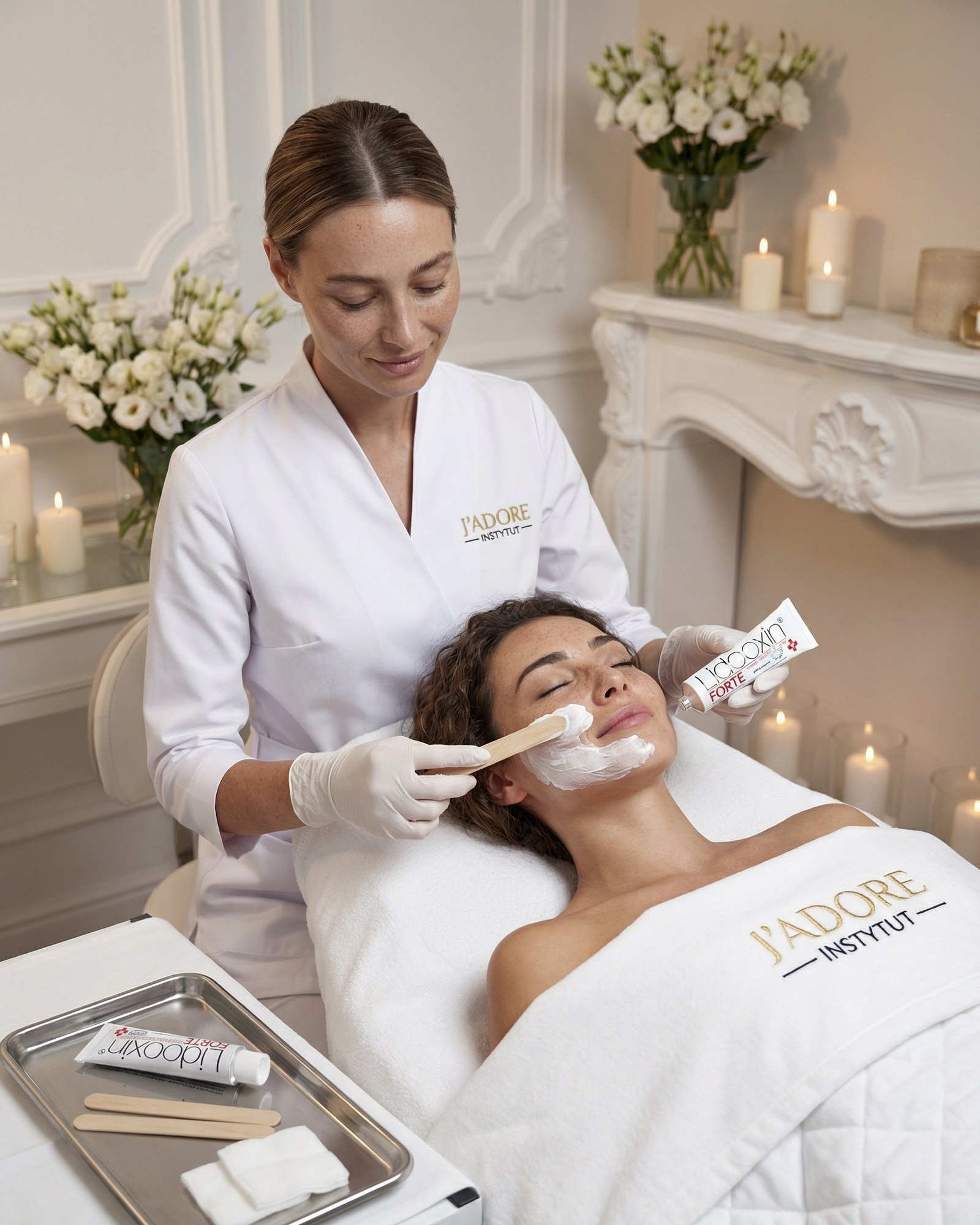
Cosmelan depigmentation
blocks the tyrosinase enzyme — stops melanin production at the source
- melasma (hormonal hyperpigmentation)
- hyperpigmentation that recurs despite previous treatments
- deeper hyperpigmentation, dermal and resistant to exfoliation
- home protocol + in-salon sessions = continuous effect over months
How to identify your type of hyperpigmentation
Before you decide, it's worth looking closely at what you're actually dealing with. Hyperpigmentation can look similar across cases, but the causes differ — and it's the cause, not the appearance, that should guide the choice of method.
- Appears mainly on the décolletage, arms and the backs of your hands after years of sun exposure → this is sun-induced hyperpigmentation, usually shallow → direction: chemical peel or laser.
- Dark marks left by spots that take weeks to heal → post-inflammatory hyperpigmentation → direction: a series of peels, or Cosmelan for resistant cases.
- Symmetrical patches on the forehead, cheeks or upper lip, worsening in summer and during pregnancy → melasma → direction: Cosmelan depigmentation — this is its specialty.
- Hyperpigmentation that returns despite previous treatments or depigmenting skincare → active, resistant melanogenesis → direction: Cosmelan as a blocking protocol.
The line between types can blur — especially when skin has a history of years of sun exposure alongside hormonal episodes (pregnancy, contraception). In such cases, no self-diagnosis replaces an assessment by a specialist using a Wood's lamp or dermatoscope — these tools reveal the depth of melanin deposits and help tailor the protocol.
Depth matters
Hyperpigmentation can sit in different layers of the skin — and this is one of the key factors in choosing a method. The simplified rule: the deeper the melanin, the less effective exfoliation alone becomes.
- 01
Epidermal
These sit close to the surface — exfoliation brings clear improvement. A chemical peel works well here, and results after a series are often visible to the naked eye.
- 02
Dermal
Melanin settles in the dermis — exfoliating the epidermis won't reach it. Methods that target melanocytes in situ are needed: enzymatic inhibitors (Cosmelan), laser, or combinations.
- 03
Mixed
The most common scenario in melasma — an epidermal and a dermal component at the same time. This requires a two-stage plan: block production, then gradually remove pigment. That's why Cosmelan is often combined with gentle exfoliation in later phases of the protocol.
When a peel works best
A chemical peel has its strengths and is the first choice in specific situations. A series of sessions can bring clear improvement in skin tone with epidermal hyperpigmentation, once the mechanism behind it is no longer active.
- Sun-induced hyperpigmentation on skin that's already protected — daily sun protection is a habit, and there's no new exposure.
- Post-acne marks (PIH) in people who have their acne under control — a peel speeds up fading for many.
- Evening out skin tone after the summer season, refreshing grey, fatigued skin.
- As a complement to the Cosmelan protocol — once melanogenesis is already blocked, a gentle peel can help remove accumulated pigment.
When Cosmelan is the right choice
Cosmelan has its niche — and within that niche, it works like no other method. This protocol was designed for hyperpigmentation that recurs, is hormonal, or resists standard treatments.
- Melasma — symmetrical hormonal hyperpigmentation, often worsened by pregnancy, contraception, or menopause.
- Hyperpigmentation that has returned after other methods — a sign that removing pigment alone isn't enough, and production needs to be stopped.
- Skin prone to reactive hyperpigmentation — where any stimulation (peel, laser) can trigger a fresh wave of darkening.
- Planned preparation for the season with deep, resistant hyperpigmentation — Cosmelan as a base, with any complementary peels added afterwards.
When it's best to combine them
A peel and Cosmelan don't have to be an either-or choice — for many people, the best results come from a sequential plan: first stabilising melanogenesis, then supporting the removal of accumulated pigment with gentle exfoliation. A specialist always decides on the order and timing.
Cosmelan → complementary peel
Once the Cosmelan protocol is in its maintenance phase, a gentle peel (such as mandelic) can speed up the fading of residual epidermal hyperpigmentation. A peel doesn't disrupt the melanogenesis block — it actually complements it.
Preparatory peel → Cosmelan
For people with thickened, uneven epidermis — preparing the skin beforehand with an exfoliating treatment can improve penetration and the effectiveness of the Cosmelan application.
Cosmelan + depigmenting home care
The Cosmelan maintenance cream works over many weeks. Adding a serum with vitamin C or niacinamide (agreed with your specialist) can enhance the brightening and evening effect.
Acid peel (series) + laser
For sun-induced hyperpigmentation with no hormonal basis — a series of peels combined with a picosecond or fractional laser can give clear, lasting results, provided sun protection is strict.
No plan replaces a consultation, where a specialist assesses the type and depth of your hyperpigmentation, your skin's history and its triggers. That's why at J'ADORE INSTYTUT, a hyperpigmentation treatment starts with a conversation, not an application — so the method matches the cause, not just the name.