Cellulite is a structural problem — modern technologies can reduce it effectively.
7 min readwritten for women
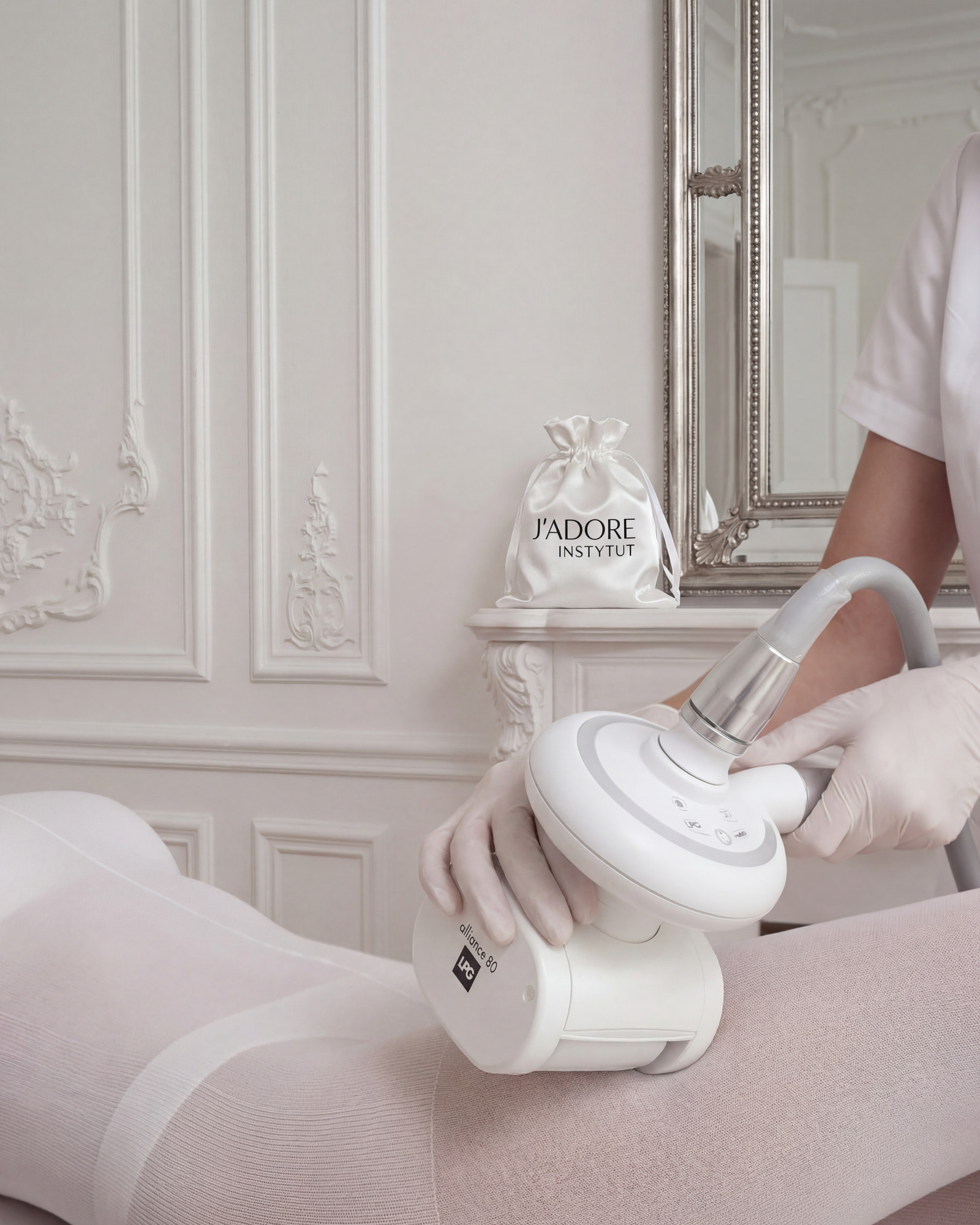
Illustrative photo. It shows an example of how the treatment is performed.
7 min read9 July 2026
Cellulite (lipodystrophy) affects most women after puberty — regardless of weight, activity level or lifestyle. It isn't a matter of "not exercising enough". It's a complex structural problem in the subcutaneous tissue, shaped by genetics and hormones. The good news: modern technologies can reduce it effectively — once we understand what it actually is.
01
What is cellulite? — the real answer
Cellulite isn't fat pushing "from outside". It's a deformation of connective tissue in the subcutaneous layer. In women, connective tissue septa run vertically. Fat bulges upward through them, creating the characteristic dimpling known as "orange-peel skin". In men, the septa run diagonally, so fat doesn't push through to the surface — which is why men rarely develop cellulite.
02
Cellulite grades — how to assess severity
Grade I — visible only when pinching or pressing the skin. Recommended: prevention and gentle treatments.
Grade II — visible when standing, disappears when lying down. Recommended: regular treatments and physical activity.
Grade III — visible at all times, both standing and lying down. Recommended: an intensive series of treatments and dietary changes.
Grade IV — nodular, tender to the touch. Recommended: a long-term, intensive series of treatments.
The best results against cellulite come from programmes that combine several methods, each targeting a different mechanism behind the problem. At J'ADORE, we offer ready-made combinations tailored to severity and goal.
05
Results last & maintenance
Cellulite can return without maintenance — connective tissue "remembers" its shape. After completing the series, it's worth having regular maintenance sessions every few weeks, alongside lifestyle changes.
LPG or Emtone maintenance session every 4–6 weeks
Regular physical activity — cardio and strength training