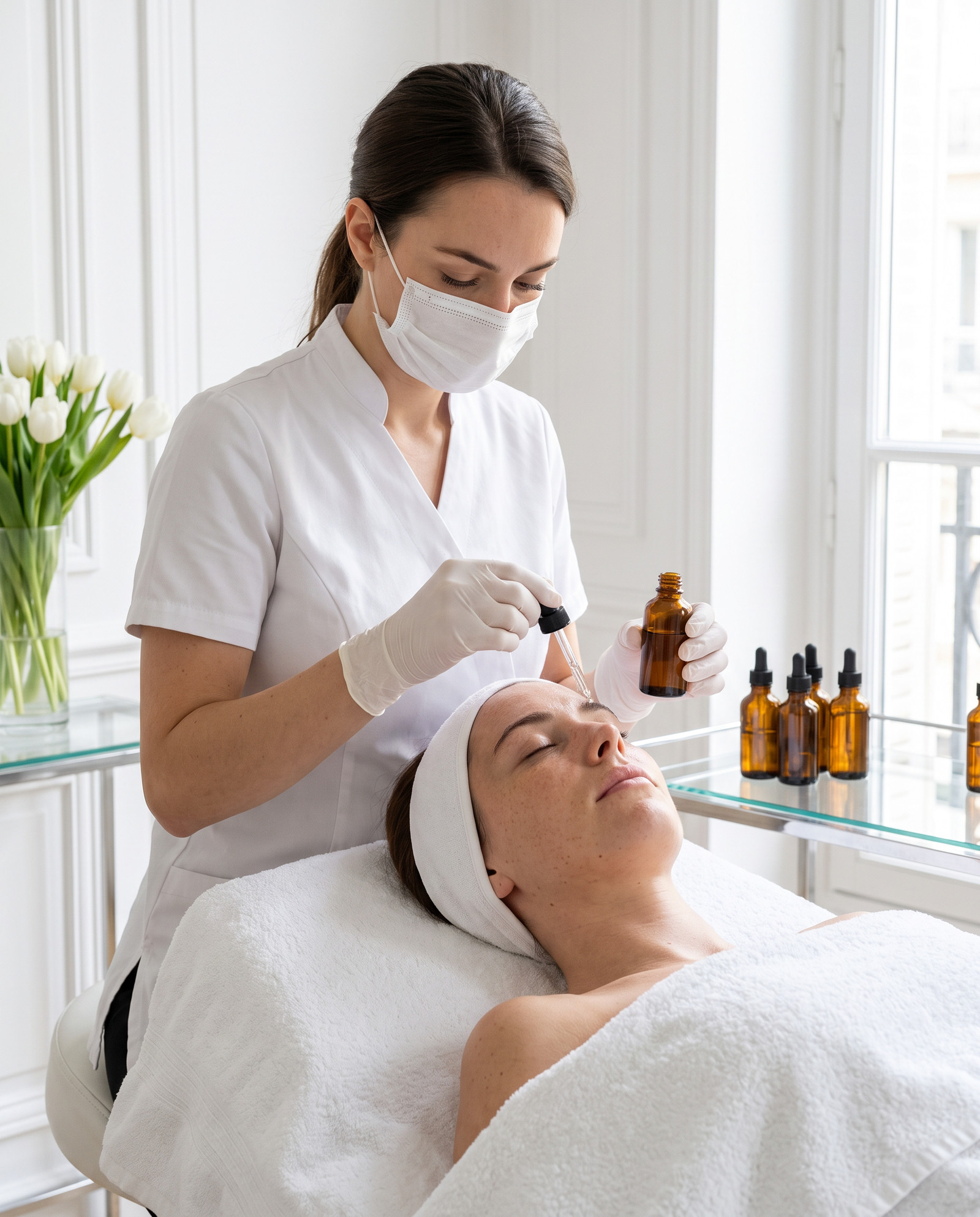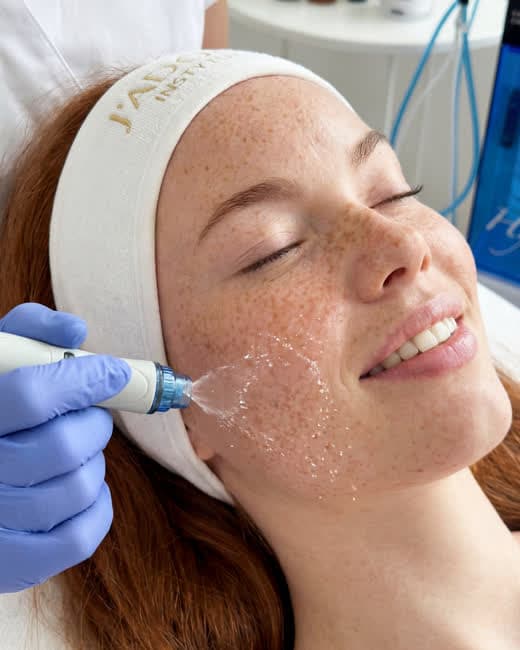
First, ask for the full name of the protocol and its goal
DermaQuest is a brand of professional preparations, not a single procedure with a fixed composition and time. The salon offer may include peptide, vitamin and regenerating therapies, as well as peels of varying intensity. A "DermaQuest face" price without specifying the variant is as imprecise as the price of a "cosmetic treatment".
Ask which protocol the cosmetologist proposes, what the dominant problem is, what the main stages are and what to expect after the visit. You do not need the manufacturer's recipe or professional secrets. You need information on whether you are paying for radiance, work on blackheads, hyperpigmentation, texture or barrier regeneration.
Do not choose the strongest peel just because it seems the most cost-effective. Intensity is not a measure of benefits. Skin with active irritation, a compromised barrier or recent sun exposure may need a gentler plan or a rescheduled visit.
Skin diagnosis can lower the cost by eliminating the wrong treatment
The cosmetologist should ask about your home care, retinoids, acids, medications, allergies, cold sores, recent tanning, treatments and current inflammation. They examine your skin without make-up and assess its reaction. The goal is not to label it "dry" or "oily", but to choose a procedure your skin can safely undergo.
Diagnosis is often the cheapest stage of the entire treatment, as it can prevent the purchase of a series for the wrong problem. Hyperpigmentation of unknown origin, active skin disease or deep scarring may require a dermatologist or a different method. DermaQuest should not be proposed as an answer to every facial irregularity.
- Inform us about isotretinoin and topical retinoids.
- Report any active or recurring cold sores.
- Provide the date of your last tanning session and other peels.
- Show the products you use at home instead of reciting their names from memory.
If the consultation ends with a recommendation to rebuild the barrier and return in a few weeks, this is not a sales failure. It means the cosmetologist is not trying to profit from a procedure performed at the wrong time. A valuation makes sense only when the skin qualifies for a specific protocol.
Active ingredients and the number of stages change the price, but they must serve the goal
Different protocols use other combinations of acids, peptides, vitamin C, retinoids, hydrating and soothing ingredients. The cost of materials, exposure time, number of stages and the cosmetologist's work vary. However, not every additional serum adds value to your skin. The logic of the sequence is what counts.
Ask for an explanation of why a specific ingredient was chosen. For skin with blackheads, the answer will be different than for reactive, dehydrated skin. If every client receives the same "richest" ritual, the salon is selling a package of products, not a decision based on the condition of your skin.
Surcharge with a function
results from the protocol
- larger area: neck or décolletage
- additional stage needed for the barrier
- more expensive preparation targeting the problem
- longer time of controlled work
Surcharge without explanation
the label alone
- undefined "VIP"
- mandatory retail product
- mask chosen only for a promotion
- more acid as a symbol of quality
Originality and a legal source of preparations are the foundation. You have the right to ask which line the salon uses. You do not have to demand that every package be opened, but the answer should not be a secret. A suspiciously low price combined with the lack of a protocol name justifies caution.
The face zone is not the same as the face, neck and décolletage
Extending the treatment increases the surface area, the consumption of preparations and the application time. The neck and décolletage may have different sensitivity than the face, so they should not be treated as a quick "swipe with the leftovers". The valuation must clearly state where the area ends.
If your main problem is the décolletage, do not assume that the face plus neck package automatically includes it. Show the exact zone during the consultation. The same applies to the back for acne or other areas outside the standard face — they require a separate protocol and qualification.
A larger package is not automatically economical. If the neck does not require an intensive peel, extending it may increase the cost and risk of irritation without a proportional benefit. The cosmetologist should be able to propose different protocols for adjacent zones or limit the treatment to the area with a real indication.
A single treatment buys a quick result, a series buys a plan — not a guarantee
One treatment can provide radiance, smoothing and better hydration. Goals such as hyperpigmentation, texture, blackhead changes or fine lines usually require repetition and home care. The price of a single visit therefore does not tell you how much the full goal will cost.
Before purchasing a series, establish the number of expected visits, intervals, rules for changing the protocol and the date of assessment. Do not expect a guarantee of results, but expect criteria. If the skin reacts poorly during part of the plan or the problem does not change, the cosmetologist should be able to stop or reformulate the treatment.
- 01
Starting point
Photos, dominant problem and stable skincare.
- 02
Initial reaction
Comfort, redness, exfoliation and tolerance of ingredients.
- 03
Middle of the plan
Assessment of the trend and possible protocol adjustment.
- 04
After the series
Comparison of the effect and a decision on whether maintenance makes sense.
A package with a short validity period may force a treatment on irritated skin or just before sun exposure. Ask about the rescheduling policy. The biology of the barrier takes precedence over a voucher date, and an unused session is a smaller cost than a complication after a poorly timed appointment.
Home care can be part of the plan, but not a hidden item on the bill
Your cosmetologist may recommend a gentle cleanser, a barrier cream, sun protection, or an active product to support your goal. This does not always mean you need to replace your entire skincare collection with one brand. Ask which items are essential for safety and which are optional.
If you have a working sunscreen and a simple moisturiser, bring their ingredient lists. A good plan uses what is suitable rather than building a basket from scratch. Conversely, trying to save money by skipping sun protection after a peel is a false economy: it increases the risk of irritation and discolouration.
Do not introduce several new products on the day of your first treatment. If your skin reacts, you will not know if the cause was the protocol, the serum, or the cream. A stable routine before and after provides clearer data and limits the cost of accidental emergency purchases.
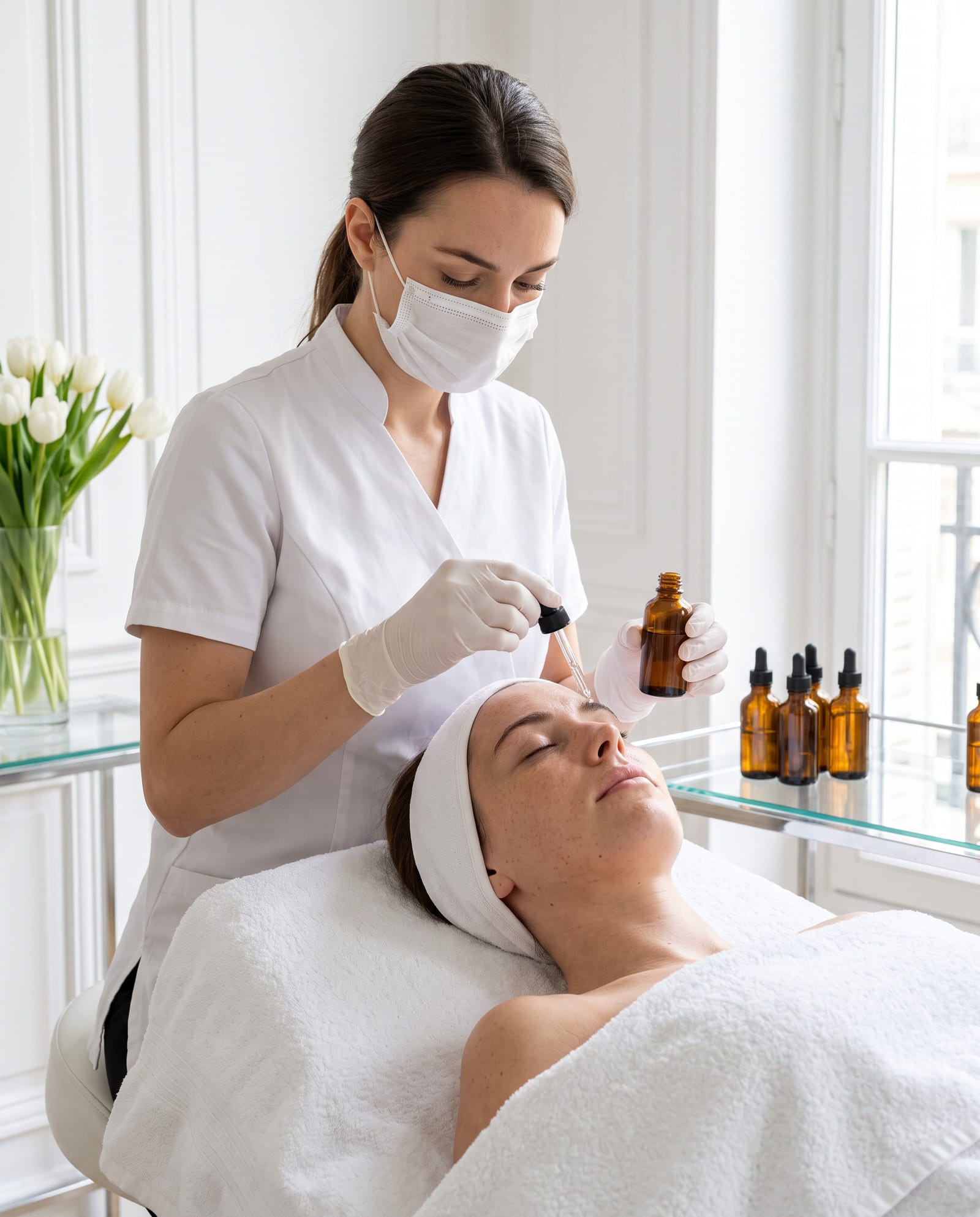
What not to economise on: your cosmetologist's time and their readiness to refuse.
The application of active preparations requires observation. A cosmetologist should not leave a client alone with an acid without specific supervision, nor should they manage several stations in a way that prevents them from seeing a developing reaction. A low price resulting from assembly-line organisation may mean less attention at the most critical moment.
Do not economise on the consultation and written aftercare. They should state what to avoid, when to return to active ingredients, how to protect your skin, and which symptoms to report. "Please just moisturise" is not enough after a stronger protocol if you do not know the timelines and warning signs.
The readiness to refuse is part of professional competence. Active cold sores, severe irritation, a fresh tan, unhealed wounds, or certain therapies may require rescheduling. A salon that always finds a way to perform a paid treatment shifts the risk cost onto your skin.
DermaQuest will not remove deep scars, replace treatment for severe acne, or erase melasma in a single course. It will also not tighten tissues like a surgical procedure. Strong boundaries save your budget by directing you to a different method before you commit to another package.
A seasonal promotion only makes sense if the season suits your skin.
A peel bought in advance during summer may lose its purpose if the package expiry date forces a treatment just before intense sun exposure. Conversely, an autumn campaign is not automatic proof that every skin is ready for a strong acid. What matters is your current barrier, tan, skincare, and travel plans. A marketing calendar does not replace a qualification.
If you are planning a wedding, a photoshoot, or an important meeting, mention the date before choosing a protocol. A gentle treatment can provide a predictable radiance with a low risk of a visible reaction; a stronger peel may require a margin for redness or exfoliation. Do not choose intensity based on a promise of a faster effect when your calendar cannot tolerate a surprise.
When planning a holiday, ask not only how many days before you should have a treatment, but also what your exposure will be like. City walking, mountain altitude, and all-day sunbathing are not the same dose of radiation. Your cosmetologist may suggest changing the date, a milder variant, or focusing on barrier repair. This is still a valid decision, even if a promoted peel is waiting on the price list.
A "banquet" offer should clearly separate a superficial effect from long-term remodelling. One visit can improve radiance and makeup application, but it will not finish a therapy for discolouration or acne. If the event is your only goal, do not buy a series with a larger promise. If the goal is lasting change, do not evaluate it solely based on a photo from the celebration in professional lighting.
Also ask what happens to a paid treatment if the cosmetologist decides on the day of your visit that your skin must not be peeled. The option to switch to a gentle protocol may be sensible, but it should not happen automatically without a new discussion of your goal. Sometimes the best service is rescheduling, not using preparations at any cost.
In Krakow, compare two protocols in writing, not two logos.
J’ADORE INSTYTUT in Krakow is located at ul. Karmelicka 45. You can find available information and the current price list on the Krakow DermaQuest page. Come to your consultation without hiding any active irritation and with a list of your home skincare ingredients and medications.
When comparing salons, ask for the protocol name, goal, zone, time, expected course, number of sessions, and aftercare rules. Only such a set can be compared with another offer. The price of the brand alone is a shortcut that most often leads to incorrect conclusions.
Do not ask which DermaQuest treatment is the "strongest". Ask which has the best ratio of stimulus to risk for your skin today. After winter, the answer may be different than after a holiday; with a healthy barrier, it is different than after an excess of retinol.
The best price describes a procedure that has one clear goal, full time, and a control plan. If the salon can also say what the chosen protocol will not do, the logo ceases to be the main argument. What remains is the cosmetologist's knowledge — and that is what should justify the bill.