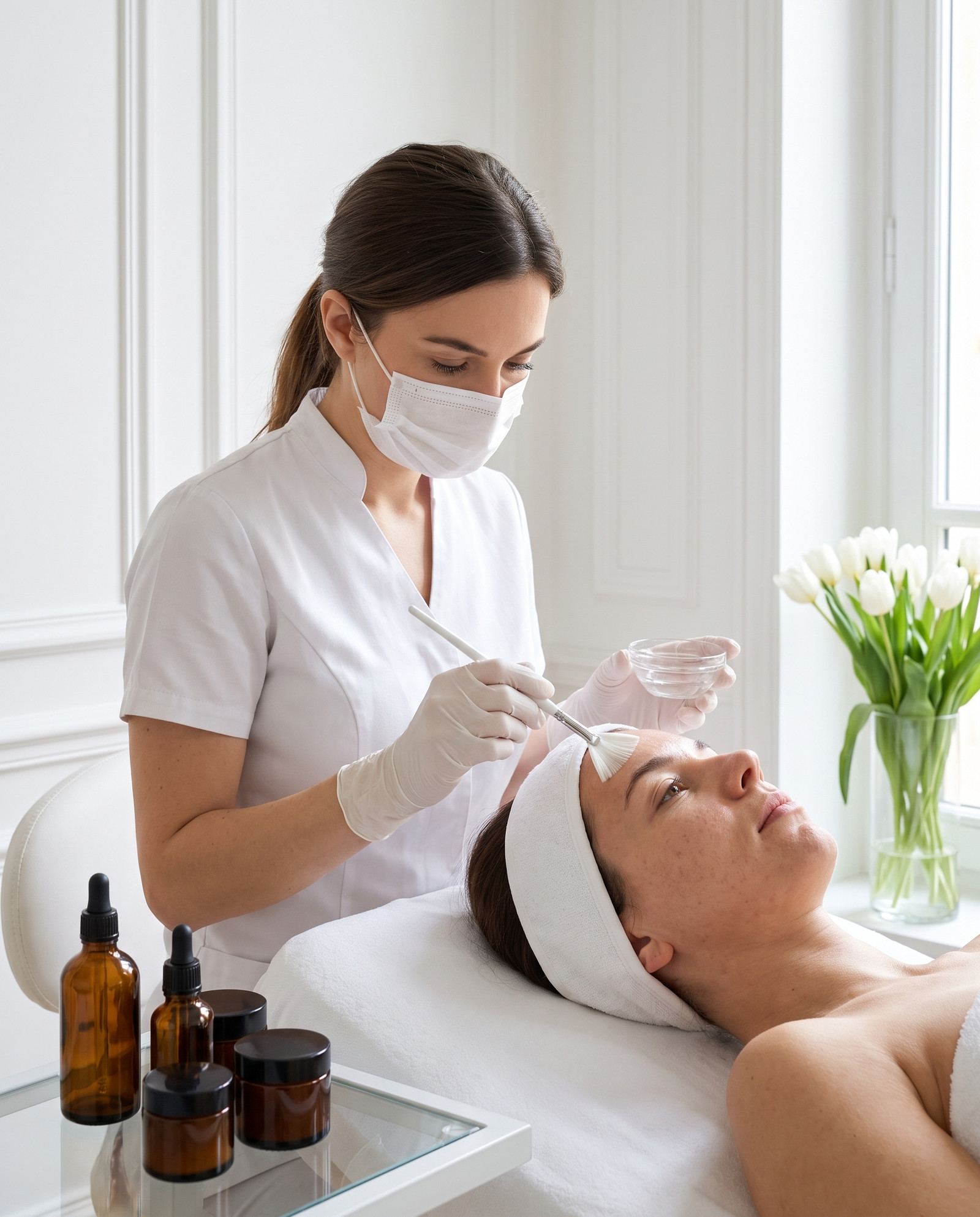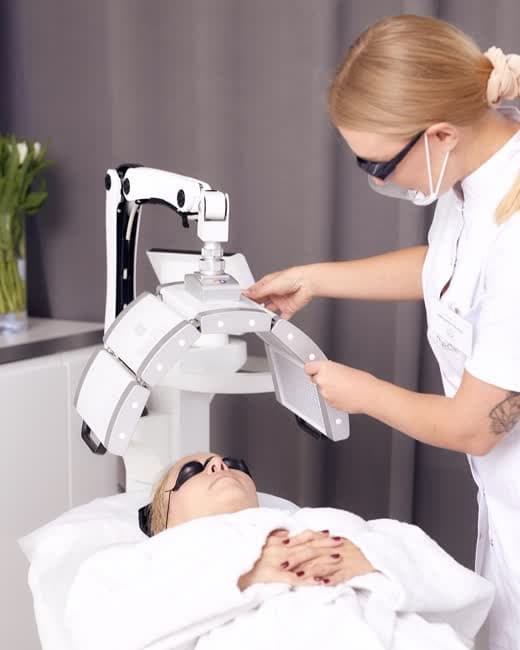
First, establish what the author of the review is actually evaluating
A review may concern contact with the reception, comfort of application, appearance in the first week or the result after a longer time. These are four different pieces of information. The most helpful entries provide the initial problem, preparation, course of regeneration, aftercare and the moment of evaluation. The phrase "my skin was like new" is an emotion, not a description of change.
Also look for reviews about the salon's behaviour when the plan had to be changed. Postponing a treatment due to irritated skin, refusing an overly strong protocol or contact after an unusual reaction say more about the standard than praise for the scent of a mask.
Comparison photos must have common conditions
- Similar lighting, distance and angle of the face.
- No smoothing filter and sharpening only on the "after" photo.
- Information on how much time has passed since the treatment.
- The same facial expression and no make-up in both shots.
- A description of whether the result comes from one visit or an entire programme.
- Indication of home care and other procedures performed in parallel.
Red erythema in a photo taken immediately after the treatment is not a rejuvenation effect. Similarly, smoothness obtained with frontal lighting does not prove a change in texture. If the gallery shows only frames without a date and conditions, treat it as brand aesthetics, not documentation of results.
Check the qualification and aftercare yourself
Ask who performs the treatment, what product they work with and how they select the protocol for the skin barrier, skin phototype and current care. Establish what needs to be discontinued, how long to plan for visible regeneration and when you can contact them in case of increasing irritation. A good answer does not promise identical peeling for everyone.
Reviews are helpful in assessing repeatability: whether clients mention the consultation, recommendations and contact. However, they will not replace a skin analysis. The final criterion is whether the specialist can explain why Retix.C fits your problem — or why it does not fit on that day.
Two peels, two completely different mechanisms
Let's start with the mechanism, as this is where the biggest difference lies. Retix C is a peel based on vitamin C and fruit acids — it works through controlled exfoliation of the stratum corneum. The old, damaged layer is removed, and the skin reacts with accelerated renewal. The result is brightening, even skin tone and improved texture — visible after just a few days, when the exfoliation comes to an end. PRX-T33 is a completely different approach: the formula penetrates into deeper layers of the skin without destroying its surface. The skin does not peel and does not require sun isolation to the same extent as classic peels — but it works intensively from within, stimulating fibroblasts to produce collagen and elastin.
Retix C
exfoliates and brightens the surface
- sun-induced hyperpigmentation, spots, uneven skin tone
- dull, grey skin requiring refreshment
- fine lines and uneven texture
- prevention of skin ageing for people 25+
PRX-T33
regenerates the skin without peeling
- laxity, loss of tension, wrinkles due to lack of collagen
- acne scars and stretch marks
- skin after laser treatments or strong peels — recovery
- people who cannot afford "peeling time"
How to recognise what your skin needs — a short guide
Before you decide, ask yourself one question: is the problem "on the surface" or "in the depths"? This simple distinction allows you to set the conversation with the cosmetologist on the right track.
- I see hyperpigmentation, uneven skin tone, greyness, dullness — this is a surface signal. The epidermis is tired and requires renewal. Direction: Retix C (exfoliation + brightening).
- The skin is lax, has lost tension, I have "deep" wrinkles — this is a signal that the problem lies below the epidermis. Direction: PRX-T33 (regeneration of collagen and elastin).
- I have acne scars or stretch marks — here, restructuring the skin from within counts. Direction: PRX-T33 (a series of treatments).
- I want to prepare for an important event, but I cannot have peeling skin — Direction: PRX-T33 (zero recovery time).
- I have both problems at once — direction: a series of Retix C peels + PRX-T33 spread over time. The cosmetologist decides on the order and intervals.
It is also worth remembering that the time of year matters. Retix C is performed more willingly in autumn and winter — after the treatment, the skin is more sensitive to the sun and requires SPF as an obligation, not an option. PRX-T33 is milder in this respect, which makes it more frequently chosen in summer — although sun protection is always mandatory.
What is hidden in the composition — without numbers, but with sense
We will not go into concentrations — that is a task for the specialist who selects them individually. But it is worth understanding the philosophy of the composition, because it explains the results.
What to expect — realistically
Three most common concerns
This treatment is not for everyone, and it does not fix everything. However, it is very effective in several situations typical of natural skin:
- Acne scars. Post-acne skin often shows atrophic changes, such as small depressions, unevenness, or areas where collagen is weaker or irregular. Retinoids can stimulate its reconstruction, while vitamin C helps even out the pigmentation of the scar. For many people, the texture becomes noticeably more uniform after just a few sessions.
- Photoageing — hyperpigmentation and fine lines. Years spent in the sun without SPF leave a mark: uneven tone, lentigines, and fine lines. The combination of the brightening effect of vitamin C and the cellular renewal of retinoids often reduces the visibility of these changes.
- Dull, tired complexion. If your skin looks less fresh than it did a few years ago — you are losing radiance, features are becoming shallower, or you describe your complexion as "earthy" — a retinoid peel often resets this effect by accelerating the epidermal renewal cycle.
Peel vs laser — when each makes sense
People who have read a little about resurfacing often ask the same question: "How does it differ from a laser? When should I choose one over the other?" This is a reasonable question, as the answer directly affects the result and the recovery time.
Retix C (retinoid peel)
when it makes sense
- uneven texture and hyperpigmentation — without deep defects
- photoageing and dull complexion — a "reset" of skin tone
- preventive maintenance of skin quality after 30
- a series of treatments spread over time, gradual effect
- no downtime — you can return to work the same day
Fractional laser / laser resurfacing
when to consider it
- deeper texture irregularities and distinct atrophic scars
- more pronounced effects after one or a few sessions
- possibility of combining with a peel as a preparation or follow-up
In practice, peel and laser treatments are not mutually exclusive. They are often used sequentially: a peel as skin preparation before a laser session or as a follow-up afterwards. The decision rests with the specialist after assessing your skin.
What a visit looks like — without myths and exaggeration
People are most afraid of two things: leaving the salon with a red face visible from afar, or that the effect will be so obvious that everyone will know they "had something done". Both concerns are understandable and worth comparing with reality.
- 01
Consultation & skin assessment
Before the first session, the specialist assesses the type of changes and skin thickness, then selects the protocol. This stage determines safety and the result — there is no point in doing anything without it.
- 02
Skin preparation
Make-up removal and cleansing. For skin with active acne or particularly reactive skin, a short preparation with a retinoid cream at home may be recommended — not always, it depends on the protocol.
- 03
Application of the product
The formula is applied to the face in layers. You may feel a gentle tingling or warmth — this is a normal reaction to acids. During the first session, the intensity is lower; the protocol is adjusted to your skin's reaction.
- 04
Action time and neutralisation
The product works for a specific time, after which it is neutralised or washed off. The entire treatment takes relatively little time — there is no long lying down or complicated procedures.
- 05
After the treatment
Your skin may be slightly red, which usually passes within a few hours. Peeling, if it occurs, appears after 2–4 days and lasts for a few days. It is not dramatic — it resembles light "shedding" rather than peeling in large patches.
How many sessions and what determines the result
Retix C is not a one-off treatment. Just as the gym does not give results after the first workout — the skin remodels in cellular renewal cycles, and visible changes in texture and hyperpigmentation usually require several sessions at regular intervals.
For many people, only a refreshment of tone is visible after the first session — the complexion is brighter and smoother to the touch. After a series of treatments, the effects on texture and scars become more noticeable. The number of sessions depends on the depth of the problem, skin thickness, and the protocol — this is a topic for a consultation, not a general table.
Resurfacing works cumulatively. After a series of treatments, the skin is in better condition not only aesthetically — it is denser, better hydrated, and more resistant to further environmental damage. This is an effect that is also visible in subsequent years if you maintain your skincare and sun protection.
How to prepare your own criteria before a consultation
Before booking, write down in one sentence what you want to change and how you will know that the result is sufficient for you. In the topic of "reviews", it is easy to adopt marketing language and start evaluating names instead of your own problem. Therefore, add three boundaries: what you do not want, how much time you can devote to regeneration, and what previous experience influences your current decision. Such a note organises the consultation and allows you to see if the specialist's answer addresses your goal.
When deciding on "Retix.C in Warsaw: reviews about peeling do not yet speak of the result", write down the answers literally: the name of the product or technique, the person performing it, the plan of stages, the expected reaction, limitations, and the moment of control. If the salon uses general terms, ask for them to be translated into observable facts. "Natural result" may mean something different for each person; "short recovery" also requires clarification. A good consultation reduces the number of unknowns, but it does not pretend that biology can be given orders.
When comparing places for the topic of "reviews", separate the safety standard from the extras that build comfort. A nice waiting room, a cosmetic sample, or an elaborate ritual may improve the experience, but they will not replace qualification, hygiene, documentation, and aftercare. On the other hand, the medical aesthetics of the interior alone is not proof of competence. Ask about the procedure and how the team behaves when the course is not textbook.