
Two tools, one logic — different paths
Both methods belong to the category of fractional treatments — they target only a fraction of the skin, leaving untouched "bridges" of tissue that speed up healing. This is their advantage over classic resurfacing, which affected the whole surface and required a long recovery.
The difference lies in what creates these micro-injuries and how deep they go. That's what determines which concerns each method suits best.
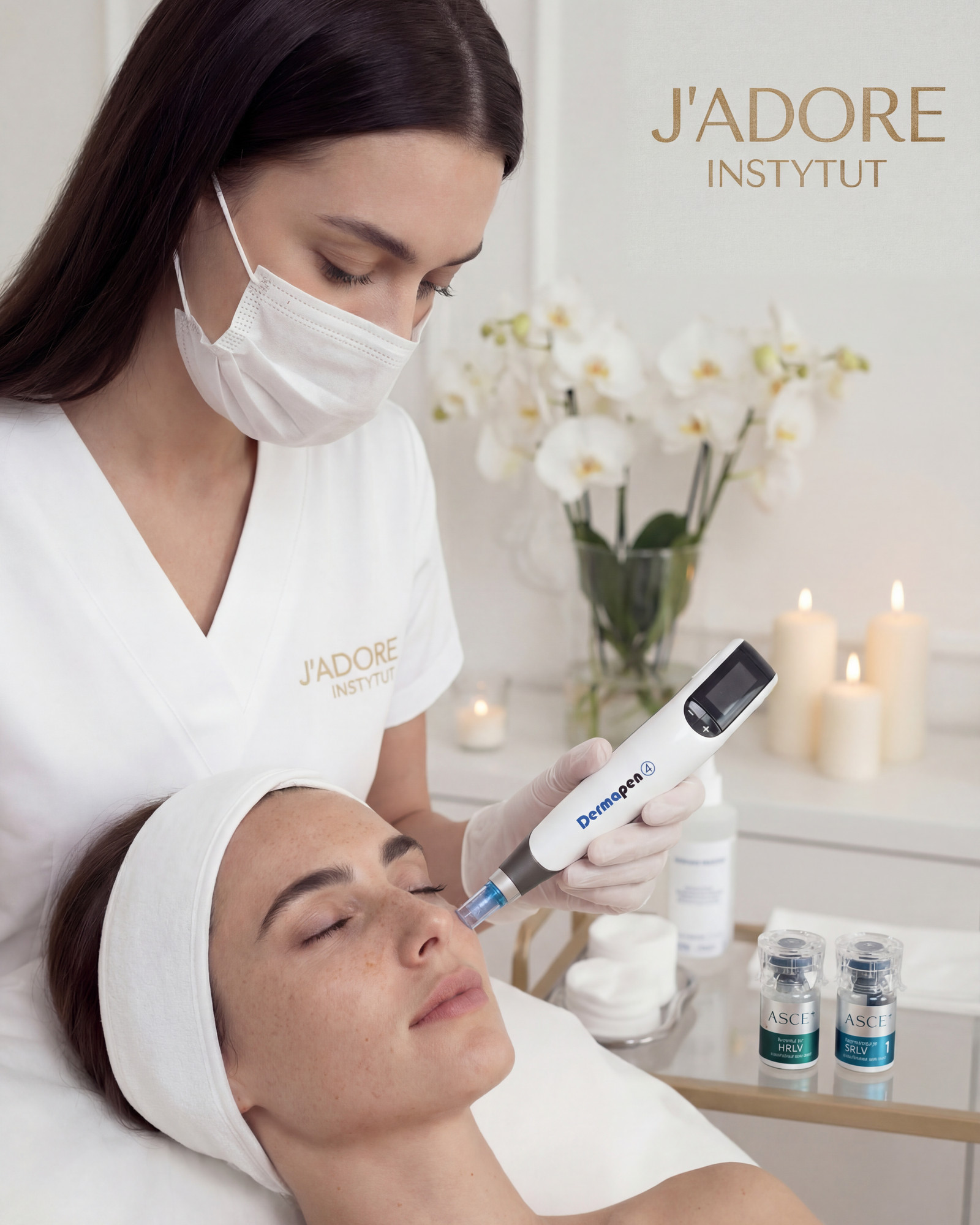
Dermapen (microneedling)
mechanical collagen stimulation
- fine needles create micro-channels in the skin
- stimulates your skin's own collagen and elastin production
- works well on shallow, atrophic scars (e.g. from acne)
- suits pigmentation and enlarged pores
- can be combined with platelet-rich plasma, vitamin C or hyaluronic acid
- safe on most skin phototypes — including darker skin tones
Fractional laser
thermal skin remodelling
- light energy creates thermal columns in the skin
- effective on deeper scars (post-surgical, burn scars, chickenpox scarring)
- strong collagen remodelling effect — restructures existing tissue
- visible improvement in skin texture and firmness
- often achieves results faster in more pronounced cases
How to tell which treatment suits you
There's no single answer to "which is better" — it always depends on three factors: the type of concern, your skin phototype, and how much recovery time you can allow. Here are a few pointers to help before your consultation:
- Do you have darker skin, or tan regularly? → Dermapen is safer — lower risk of post-treatment pigmentation.
- Want a gentler approach, combined with active ingredients? → Dermapen (allows needle mesotherapy, PRP or vitamin C delivered through the channels).
- Do you have deeper, thicker scars — post-surgical, chickenpox, or burn scars? → Fractional laser often gives better tissue remodelling.
- Need to be back to normal life within a few days? → Dermapen means shorter redness and a quicker return to daily life.
- Looking for a clear improvement in skin firmness and density after several sessions? → Both methods can work well here — your specialist will guide the choice.
Pigmentation — a close call, with a caveat
One of the most common questions is: "which is better for pigmentation from sun exposure or acne?" The answer is surprisingly nuanced — both work, but the laser carries more risk.
Fractional laser can effectively break down accumulated melanin and speed up epidermal turnover — but the wrong energy setting or sun exposure right after the treatment can backfire, creating new pigmentation instead of reducing the old. For those prone to hyperpigmentation, dermapen is often a safer starting point — particularly when the protocol combines microneedling with brightening ingredients (vitamin C, niacinamide) delivered directly through the channels.
Recovery — what to realistically expect
Both treatments involve a few days of redness and increased skin sensitivity. But the scale and course differ noticeably:
- 01
Day 1–2 after dermapen
Redness similar to mild sunburn, slight tenderness. Many people return to work the same day or the next.
- 02
Day 1–3 after fractional laser
More intense redness, swelling, and possible brownish pinpoint discolouration (thermal columns). The skin may feel warm to the touch.
- 03
Day 3–7
With both methods, the skin begins to peel gently — a natural part of epidermal renewal. It's important not to speed this up with a peel or mechanical exfoliation.
- 04
Week 2–4
First visible results appear — even skin tone, dullness replaced by radiance. Full collagen rebuilding takes several months — it's worth taking "before/after" photos after a series, not after a single session.
When both treatments work together
Dermapen and fractional laser don't have to compete — in a well-planned skincare routine, they can complement each other. A popular approach is a sequence: a series of dermapen sessions to prepare and strengthen the skin, followed by laser treatment for more pronounced scars or more significant concerns.
Dermapen + needle mesotherapy
The channels created by microneedling become a pathway for active ingredients — vitamin cocktails, hyaluronic acid or growth factors penetrate deeper and work more effectively.
Dermapen + PRP (platelet-rich plasma)
Combines mechanical stimulation with growth factors from your own blood. Often used for acne scars and loss of skin density.
Fractional laser + medical peels
Complementary action — the peel prepares the epidermis, the laser works deeper. The protocol requires careful planning of intervals between treatments.
Series of dermapen sessions → laser (full plan)
For pronounced scars: strengthen the skin with several dermapen sessions, then move to laser treatment as the next stage of remodelling. This helps prepare the skin better and reduces the risk of complications.
A good plan always comes from a skin assessment, not from a price list. If your specialist recommends a specific sequence, it's worth asking why that order, what happens if you start with the second step, and how you'll know the result is satisfactory. These questions help set realistic expectations, and avoid the impression that "nothing worked" when the skin simply needs more time or another stage.