

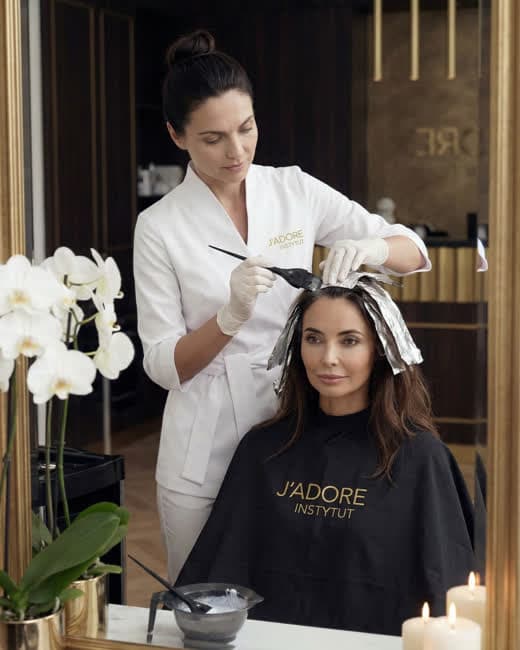
Length is visible, but density consumes product
Also, assess whether the salon reserves enough time for your stated density. Delays can happen, but a schedule set without a margin encourages rushing through the final sections. Asking about the estimated duration of the visit is not being pedantic: it allows you to plan your meal, transport, and your whole day without pressure to shorten the procedure. Time comfort supports precision, especially with very thick or long hair.
Paying for experience only makes sense if that experience translates into decisions. Ask how the specialist modifies the procedure for bleached ends, natural roots, and varying porosity along the length. The answer should describe assessment and caution, not a secret trick. Years of practice are valuable because they help the specialist to say no, slow down, and separate hair sections, not because they allow one to bypass biological limitations.
Also, do not compare the cost of Nanoplastia with the price of a home product without considering the risks. A professional procedure includes diagnosis, sectioning, temperature control, and a reaction to the condition of the strands. Using a product with an unknown composition on your own can result in an uneven effect or damage. This does not mean every salon service is good; it only means that a bottle and a full protocol are not equivalent products.
Before paying, summarise the arrangements in one sentence: what scope will be performed, what the final price depends on, and what the result does not cover. If both sides understand this the same way, it is easier to evaluate the service after the first few washes. The most sensible choice is not to avoid every extra charge, but to avoid the unknowns that only appear halfway through the procedure.
Pricing may also differ for hair extensions. Attachment points, different hair material, and manufacturer recommendations require a separate assessment; sometimes the procedure should not be performed on the entire set. Report extensions before booking, not after the consultation has started. The price of a standard length does not describe the additional work or risk at the attachment points, so a lack of this information leads to comparing services with different scopes.
Similarly, very short hair does not always mean the simplest and cheapest procedure. Work close to the scalp requires control of the product and temperature, and gripping short sections can be technically demanding. A price list based only on centimetres simplifies communication, but the consultation must still take into account density, curl, and the possibility of safely working on the strands.
Do not automatically pay extra for the term "premium" if there is no description behind it. Ask for the product name, the experience of the person performing the treatment, the estimated time, their qualifications, and aftercare. Luxury coffee and a comfortable chair may improve the comfort of a long visit, but they do not replace any of these elements. You have the right to choose the atmosphere, but you should know which part of the price concerns comfort and which concerns the work itself.
A deposit should have clear rules in a situation where, after an inspection, the hair does not qualify for the treatment. Ask about this in advance. A client should not feel pressured to undergo the procedure just because part of the amount has been paid. On the other hand, a thorough consultation takes time, so the salon may have separate rules for settling it. Transparency before booking removes conflict at the most important moment of decision.
If you are looking for a specific date, do not hide your limited budget and do not shorten the scope yourself. Ask for alternatives: a different treatment, a consultation with a care plan, or postponing the procedure. A cheaper application with less product than the hair density requires is not a rational compromise, as an uneven result may require a costly correction. A good compromise changes the method or the date, not the precision.
After the visit, keep the confirmation of the product used, the date, and the recommendations. This has value for the next colouring, bleaching, or if you change salons. Documentation does not increase the spectacular nature of the result, but it limits guessing in the future. It is part of the service just like the consultation: invisible in a photo, but important for the safety of future decisions. In this sense, a reasonable price buys continuity of information, not just smooth hair on the day of the treatment.
The first quote via message should be treated as an estimate if the salon has not seen your hair in person. A photo helps to assess length and approximate density, but it does not show elasticity, brittleness, or the full chemical history. Establish before the visit in what situations the amount may change and whether the decision will be made before the product is applied. It is unfair to announce an extra charge only when the procedure can no longer be stopped.
When comparing offers, provide the same length, density, curl type, and bleaching history. One place may price hair according to a length range, another according to product consumption, and a third may combine both criteria. The amount itself without qualification rules does not say which service is more expensive. Only after establishing the scope do you know whether you are comparing a full Nanoplastia, just root smoothing, or another treatment with a similar name.
The time of the visit is a cost that is easy to underestimate. Carefully dividing thick hair, even application, and working on thin strands require a station and the specialist's attention for many hours. An offer that is significantly shorter than others should prompt you to ask what the difference results from. It may be a different formula or scope, but the answer should be technical, not based on assurances of exceptional work speed.
The price of the product is not the only indicator of quality, but the salon should be able to provide its name and discuss the manufacturer's recommendations. The general term "organic" or "natural" does not describe the composition, contraindications, or method of use. If the person performing the treatment does not want to disclose the product before application, they are taking away your ability to make an informed decision and to pass this information on to the next hairdresser.
The cost of a consultation may be included in the service or charged separately. More important than the model is whether the consultation can actually end in a refusal. An assessment that always leads to a sale does not protect the hair. When strands are brittle, freshly bleached, or react unpredictably, opting out of Nanoplastia saves the cost of subsequent correction, intensive care, and cutting off damaged lengths.
Ask what the price includes in the case of very thick hair. Is the additional product calculated according to a clear rule? Does the service include washing, drying, and a final assessment? Does a potential correction of an uneven effect have a separate policy? These questions are not for negotiating every item. They are for avoiding a situation where the lowest entry price increases due to elements necessary to complete the treatment.
A promotion for an open slot can be reasonable, but a discount should not change the qualification or the working time. If a lower price is associated with rushing, work by a person without proper supervision, or the use of an undisclosed product, the saving is only apparent. Ask why the discount applies and whether the scope remains identical. A transparent answer allows you to distinguish between schedule management and cutting costs in the procedure.
A home care package may increase the bill, but not every product is necessary. Ask for a definition of their functions: gentle shampoo, thermal protection, mask, or a product for the ends. If you already have a suitable product, show the composition or a photo of the label. The goal is consistent care, not duplicating cosmetics. At the same time, buying the cheapest strong-cleansing shampoo after an expensive treatment can shorten the effect and negate the savings.
The price should include aftercare information: when to wash your hair, how to dry it, what to avoid, and what to do in case of a kink or uneven effect. A lack of recommendations is not a minor service failure. The first few days are important for the result, and different formulas may require different rules. A note, a message, or a clear summary limits the risk that the client will remember only half of the instructions after a multi-hour visit.
Do not judge cost-effectiveness solely by the number of months in an advertisement. Durability depends on the frequency of washing, root growth, humidity, swimming pools, the sea, and home styling temperatures. A reliable person provides an orientation along with conditions, instead of guaranteeing an identical time for every person. If the durability promise does not take your lifestyle into account, it should not be the basis for choosing a more expensive offer.
The cost of a touch-up is worth discussing before the treatment, although no one assumes a problem. Establish within what time frame you should report uneven smoothing, what photos to take, and whether the salon first assesses the hair after proper washing. Not every difference is a performance error; natural structure and damage can limit the result. A clear complaint procedure protects both parties and prevents the application of another product in a rush.
A high price does not justify performing the treatment at all costs. If the consultation indicates that the hair will not withstand the procedure, a refund of the deposit or a proposal for a safer plan is better than trying to recover the cost of the visit. A salon that gives up revenue so as not to overload the strands shows more quality than a place demonstrating a luxurious interior without a reliable qualification.
Travel and timing also affect the real cost, although they are not part of the price list. A multi-hour procedure requires planning your day, and the first recommendations may conflict with training, swimming, or travel. A cheaper visit scheduled just before a holiday may turn out to be less cost-effective if you cannot follow the instructions. Choose a moment when you can take care of the result, instead of paying again for a faster-faded effect.
Ultimately, a good quote is understandable before starting, linked to the actual work, and leaves the right to refuse after the diagnosis. It does not have to be the lowest or the highest. It should correspond to the amount of product, time, competence, and aftercare. If you cannot explain what you are paying for, the price is just a number. If you can, you can assess whether the scope corresponds to your goal and the condition of your hair.
Hair is divided into thin sections. The greater the density and volume, the more work is required for even saturation and subsequent processing of the strands. Porosity also changes the behaviour of the product. Therefore, a reliable quote may require a photo of the hair or an on-site consultation, especially after bleaching and previous chemical treatments.
The specialist's time is part of the service that you cannot see in the bottle
Shortening the time by using thick sections, hasty application of the product, or identical temperatures across the entire head can lower the operating cost. It can also result in uneven smoothing or overload delicate ends. This is precisely why the product brand alone is not enough to compare offers.
- Ask if the hair condition consultation takes place before the application starts.
- Establish whether the price given in the booking is final or depends on product consumption.
- Tell them about bleaching, perms, keratin, and home experiments.
- Check what recommendations and contact method you will receive after the treatment.
What can drive up the cost without artificially expanding the service
A larger amount of product, exceptionally thick hair, long sectioning time, and the need for careful adjustment of the procedure are real factors. Additional care only makes sense if it responds to a recognised need. A package of home cosmetics should not be a condition for performing the treatment, but the right shampoo and thermal protection influence the durability of the result.
Hair loses the most with these savings
It does not pay to choose a place that does not ask about the chemical history of the hair, promises an identical result for every structure, or cannot explain the recommendations after the treatment. Pressure to start the procedure despite recent bleaching or brittleness is also a red flag. Refusing to perform Nanoplastia on overly weakened lengths shows responsibility, not a lack of skill.
What a high price also does not guarantee
A more expensive service will not turn irreversibly damaged hair into healthy tissue and will not stop root growth. Nanoplastia does not give every person an identical sleek finish, it does not replace cutting off split ends, and it does not exempt you from care. The price should correspond to the work and the product, but it is not proof of quality in itself.
How to compare Warsaw offers with one set of questions
On the Nanoplastia Warsaw page, you can check the current price list and treatment variant. When comparing places, give everyone the same hair history and send photos in similar lighting. Ask about the possibility of adjusting the quote after an inspection, the product, the visit time, limitations, and the aftercare plan. Only then are you comparing the same service, not two similar names.


