How hair is structured — and why it matters
Before assessing what works, it is worth understanding the structure of hair. It determines what can affect it at all. Hair consists of three layers, each with a different role. From the outside, it looks roughly like this:
- Cuticle — the outer layer, made up of overlapping flat scales. When they lie smooth and close together, hair looks shiny and healthy. When the scales lift or break, hair becomes dull, rough and prone to tangling. This is the main target of most haircare products.
- Cortex — the middle and thickest layer. This is where keratin, pigment (melanin) and the hair’s mechanical strength are found. Damage to the cortex is genuine structural damage. This is where bleaching and perming take place, and where dyed hair “loses” its colour.
- Medulla — the central channel, which is not present in every hair. Its role is not fully understood. It is the least important layer for daily care.
As hair is a dead structure, any more significant damage is irreversible in the sense that the hair itself cannot repair it. Good care can slow further damage, improve appearance and manageability, and protect against additional damage. It repairs only in a limited sense — strictly speaking, it fills and seals, rather than rebuilds. This distinction matters greatly in practice.
What really damages hair — not what we think does
The popular list of “culprits” can be surprising. Many habits we consider neutral or even beneficial cause more damage than high-street chemicals. For hair, mechanical damage is often a greater threat than an unsuitable shampoo.
- 01
Heat without protection
Straighteners, curling irons and hairdryers at high temperatures are the main sources of cortex damage in daily care. Keratin denatures under high heat — hair loses elasticity and begins to break. Heat itself is not the problem. The issue is a lack of heat protection and using it too often.
- 02
Friction — brushing, towels, pillows
Wet hair is stretched and far more prone to mechanical damage. Vigorous brushing after washing, rubbing with a towel or a rough cotton pillowcase are habits that strip the cuticle and split the ends. Often faster than any chemical treatment.
- 03
Hair ties and tight hairstyles
Daily tight hairstyles — especially in the same area — cause repeated mechanical stress. Hair ties with metal parts cut through the cuticle every time. This type of damage is deceptive. It may only appear after months as worn sections and widespread breakage.
- 04
Bleaching and colour — but not as you think
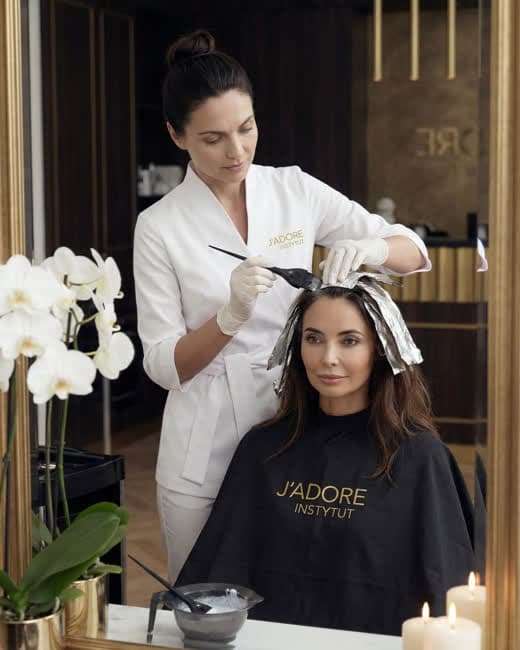
Colouring does not necessarily damage hair in itself — it depends entirely on how often and how radically it is done. A single colour treatment close to your natural shade causes minimal damage. Multi-stage bleaching to platinum, with touch-ups every three weeks, causes the cortex to lose its structure through cumulative exposure to hydrogen peroxide.
- 05
Nutritional deficiencies
Hair grows from the follicle, which is living tissue and needs building blocks. Deficiencies in iron, zinc, biotin or dietary protein can slow growth and weaken the structure of newly growing hair. This does not show immediately. The effects of a poor diet become visible in the hair after a delay of several months.
What works at home — an honest overview
Now that we know how hair is structured and what damages it, we can assess popular home rituals honestly. Some have a sound rationale. Others rely on the illusion of “absorption” and “regeneration”. The line between them is not always obvious.
Conditioner and protein mask
sealing and smoothing the cuticle
- Smooths lifted scales — the result is visible immediately
- Proteins temporarily fill gaps in the cortex
- Reduces tangling and static
- Makes wet hair easier to detangle
Oiling
protection and hydration — but it depends on the oil
- Small-molecule oils (coconut oil) can penetrate the cortex and limit protein loss
- Large-molecule oils (castor oil) work mainly on the surface — sealing the cuticle
- Heat protection before styling — a genuine benefit
- Reduces mechanical friction during detangling
There is one home practice with effects limited enough to discuss separately: supplements. Many products on the market are promoted to support hair growth and strengthen hair. Supplements may help, but only where a genuine deficiency exists — of iron, zinc, B vitamins or protein. If there is no deficiency, additional supplementation is unlikely to speed up growth or strengthen the structure. Before choosing costly products, it is worth checking your full blood count and ferritin level. This is a more common cause of weakened hair than it may seem.
What looks like a rescue, but is not
The internet and advertising love the word “regeneration”. Labels refer to “rebuilding from within”, “filling keratin fibres” and “restoring hair structure”. Most of these promises are technically imprecise. It is important to understand why before deciding how much money and time to devote to individual products.
- “Keratin reconstruction” in shop-bought masks — keratin in cosmetics is hydrolysed, meaning it is broken down into small peptides. It can temporarily fill gaps in the cuticle and smooth the surface. This is a genuine result, but it is not the same as rebuilding the cortex structure. The effect washes out and must be repeated.
- Growth-stimulating scalp rubs — most over-the-counter scalp rubs work mainly through mechanical scalp massage, which genuinely stimulates microcirculation. The active ingredients in popular products have more modest scientific evidence than marketing suggests.
- “Damage-repairing” shampoo — shampoo is primarily a cleansing product. Its contact time with the hair is too short for active ingredients to have any meaningful effect. A better shampoo may be gentler on the cuticle — but “repairing” is mainly a marketing claim.
- Apple cider vinegar rinse as a miracle treatment — acidic pH does help close the cuticle, much like acidic conditioners. The result is genuine but short-lived. You can achieve it with a good conditioner, without the smell or risk of scalp irritation.
A protocol for damaged hair — what makes sense and in what order
Once you know what works and what is an illusion, you can create a sensible plan. It is not about buying more products. It is about changing a few habits — because most damage comes from daily routines, not from lacking the right mask.
- 01
Remove the biggest source of damage
Before you buy anything new, identify the main culprit. Is it using straighteners every day without heat protection? A hair tie with metal? Rubbing wet hair with a towel? Removing or limiting one damaging habit often does more than an entirely new set of products.
- 02
Conditioner after every wash
Not optional. Not only “when I have time”. Conditioner is the minimum — it smooths the cuticle raised during washing, reduces friction when detangling and helps prevent static. Apply from mid-lengths to the ends. Avoid the scalp.
- 03
A mask once or twice a week — chosen for your needs
Dry, dull hair: a deeply moisturising mask (with shea butter or honey). Weak hair that stretches easily: a protein mask once every one to two weeks, always followed by hydration. Do not use both types at the same time — hair needs a balance between protein and moisture.
- 04
Heat protection — non-negotiable
If you use heated styling tools, heat protection is not optional. It creates a barrier that reduces heat transfer into the hair structure. Apply it before every styling session, without exceptions.
- 05
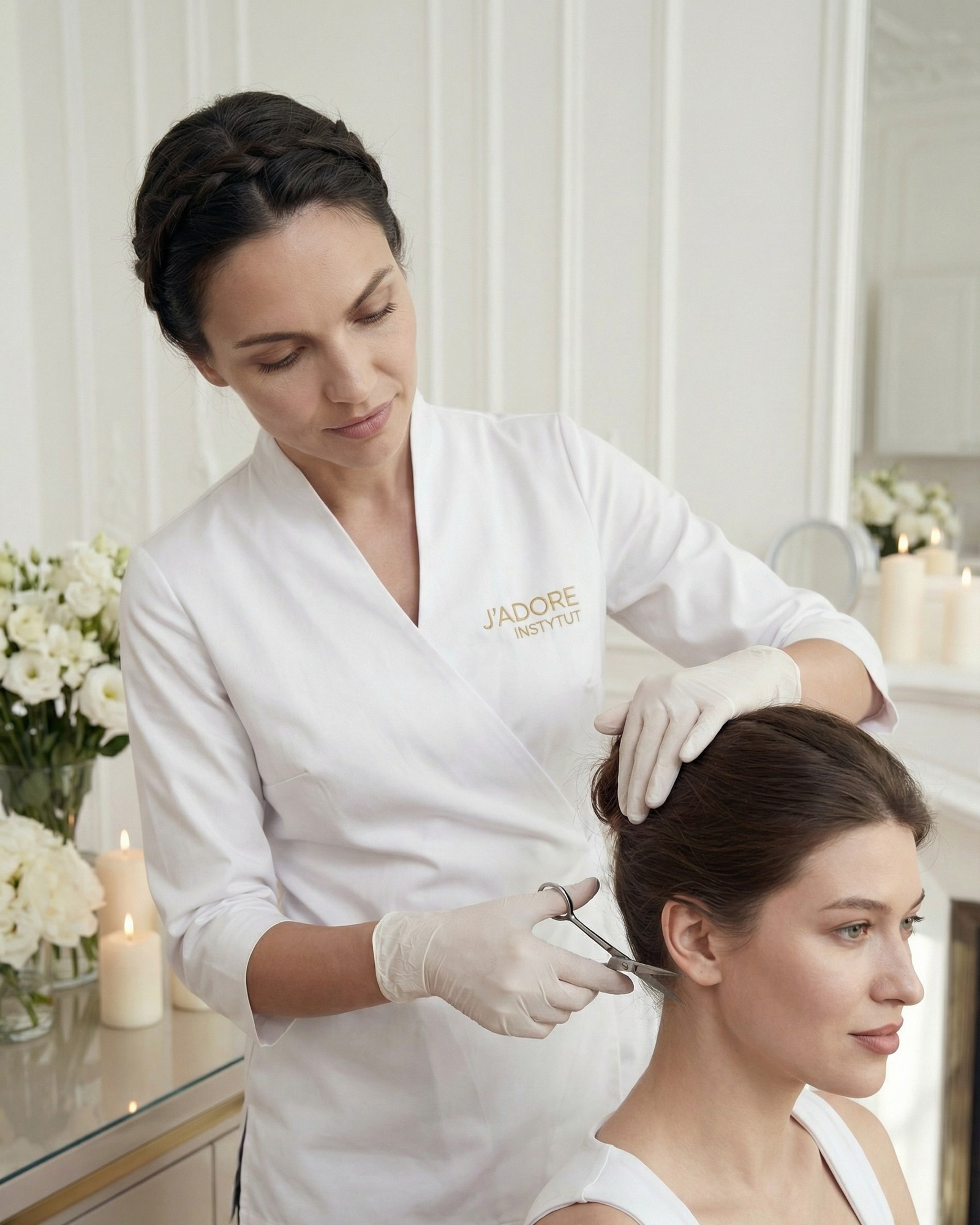
Regular trimming of the ends
Split ends do not fuse back together — they continue splitting up the hair shaft. Regular trims, every few weeks for severely damaged hair and less often for healthy hair, stop the split from progressing. They also keep hair looking neat until healthy regrowth replaces the damaged lengths.
- 06
Have blood tests if you are losing hair heavily
Hair weakness and significant hair loss are rarely resolved with cosmetics. Ferritin, TSH, a full blood count and zinc levels are worth checking before investing in strengthening treatments. If the problem is a deficiency, no treatment will resolve it permanently.
When home care is not enough
Home care has real limits. It is worth knowing them before spending months on rituals that cannot deliver the expected result. In some cases, cosmetics can improve appearance but cannot reach the source of the problem.
- Androgenetic or telogen hair loss — hair loss caused by hormones or following severe stress, illness or pregnancy is not a matter of care. It requires diagnosis and, depending on the cause, treatment or simply time.
- Heavily coloured and bleached hair — when the cortex is permanently damaged by multi-stage bleaching, home masks can improve appearance and manageability but will not restore elasticity. The solution is healthier regrowth and regular trims — or a professional keratin or care treatment in a salon, which may provide longer-lasting results than home products.
- Dandruff and inflammatory scalp conditions — caring for the hair shaft will not resolve problems affecting the hair follicles. Dandruff that does not respond to pharmacy shampoos, inflammation or itching require a consultation with a dermatologist or trichologist.
- No growth or heavy hair loss for months — this is a sign to check iron, ferritin and thyroid hormone levels. No treatment or supplement can repair hair if the body lacks the building blocks needed to grow it.
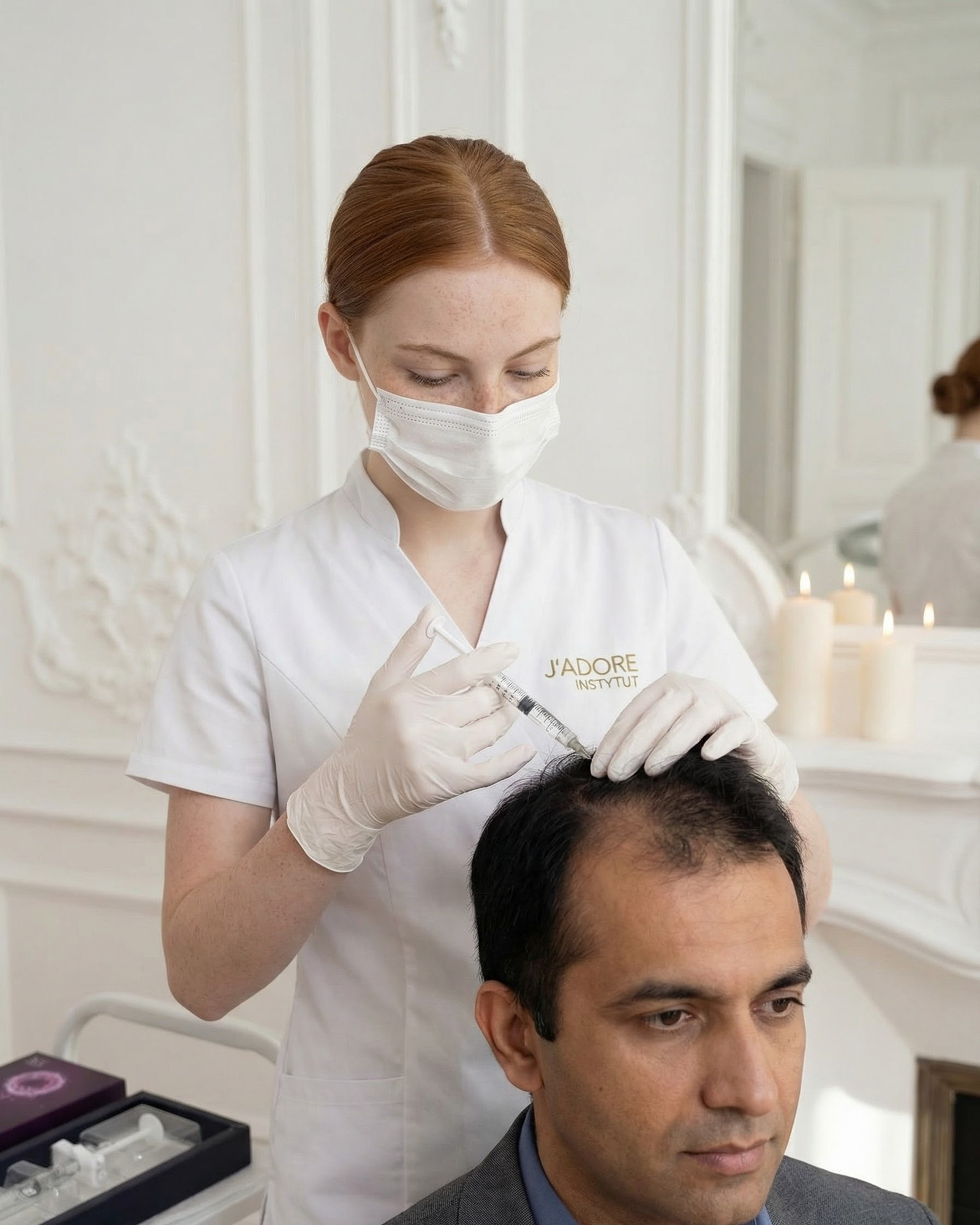
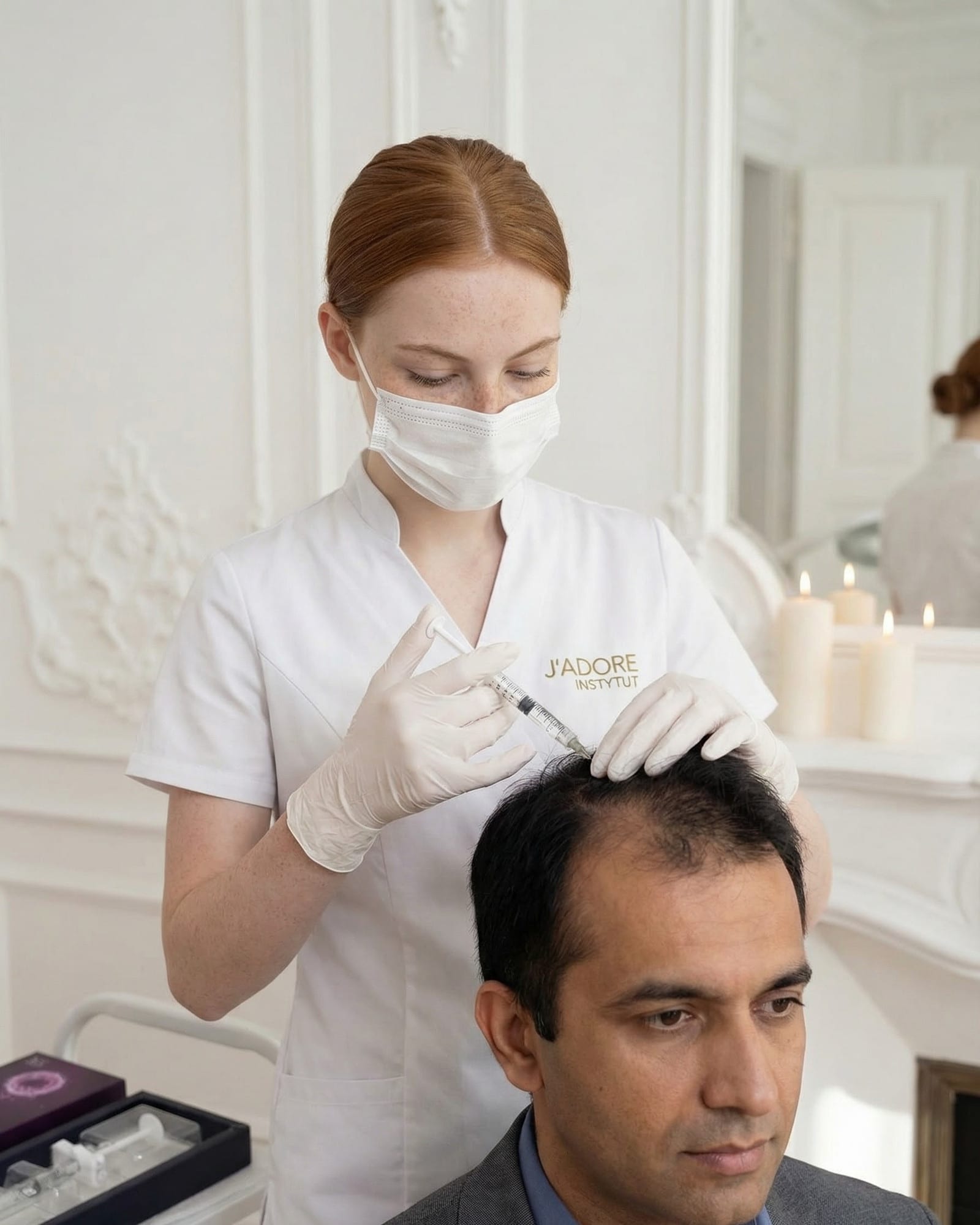
Scalp mesotherapy
Delivery of active ingredients directly into the scalp — where the living hair follicle is located. It may support follicle condition and the hair-growth environment.
Platelet-rich plasma (PRP)
A concentrate of growth factors from your own blood, administered around the hair follicles. Used for weakened growth and thinning — it addresses the living follicle, not the dead hair shaft.
Keratin smoothing treatments
Professional keratin treatments provide a longer-lasting smoothing effect and help seal the cuticle more effectively than home products. They may significantly improve the manageability of severely damaged hair for several months.
Understanding the boundary between what home care can do and what it cannot is, in essence, a saving of time, money and frustration. A shelf full of cosmetics will not meaningfully change hormonal hair loss. Well-chosen home care for mechanically damaged hair structure can, however, genuinely improve daily comfort and appearance. The key is the right diagnosis — identifying what the real problem is.