A consultation should determine whether keratin is a good choice at all
The pre-treatment conversation is not just for choosing a length from the price list. The stylist should examine your hair in several places, touch the ends, assess the differences between the roots and the coloured parts, and ask what has happened to them before. Strands near the face, the bottom layer and the ends may have a different condition, even if they look like a single whole in a phone photo.
- History of bleaching and dyeing. It is not just the last visit that counts, but also applying subsequent processes to the same length.
- Daily heat styling. Frequent use of straighteners or very hot air changes the starting point.
- Brittleness, breakage and elasticity. Hair that cannot withstand regular brushing should not be automatically directed to another thermal process.
- Scalp condition. Irritation, sores or active inflammation are reasons to stop and reschedule.
- Expected result. Reducing frizz, easier drying, loosening the curl and a perfectly straight sheet are not equivalent goals.
Define the effect before the salon names the product
A client often says "I want keratin" when they actually want to dry their hair faster, keep some of the wave, or stop fighting frizz in humidity. A good salon first translates this goal into a hairdressing result and only then selects the method. The reverse order — one favourite formula and fitting every person to it — increases the risk of disappointment.
Goal described precisely
the stylist knows what to protect
- less volume caused by frizz, but without losing the entire wave
- easier drying without daily straighteners
- smoothness mainly on the lengths, while maintaining lift at the roots
- soft movement of the hair instead of a stiff sheet effect
Goal described by a slogan
a large margin for misunderstanding
- "it should be smooth" without establishing the degree of straightening
- a photo of a person with a completely different hair structure
- expecting simultaneous restoration and a radical change in curl
- no conversation about how the hairstyle should look after the first wash
Keratin straightening will not permanently restore severely damaged hair and will not reverse chemical damage. It can smooth the surface, reduce frizz and make styling easier, but it will not glue together ends that are already breaking. It will also not give everyone the effect of hair as straight as if ironed. With a strong curl, a more reasonable goal is often to loosen it and gain better control, not to change the structure completely. A salon that talks about this limit before the service protects your expectations and your strands.
The product should have a name, composition and manufacturer's instructions
"Premium keratin" is not a product name. Ask about the brand and product line, and why the stylist is considering it for your hair type. You do not have to analyse the entire recipe yourself. However, you need the certainty that the salon knows the product, works according to its intended use and can provide specific recommendations resulting from that formula.
A strand test shows more than a catalogue photograph
For hair that has been bleached multiple times, is heterogeneous or has undergone previous processes, the stylist may decide that a test on a small, discreet fragment is needed. This is not a sign of uncertainty. It is a way of checking how a specific strand reacts to a specific procedure before work covers the entire head.
- 01
Choosing a representative strand
The test should concern a fragment that truly reflects the problematic condition, not just the strongest hair at the nape of the neck.
- 02
Observation during work
The stylist assesses the hair's behaviour, its elasticity, surface and reaction to subsequent stages instead of mindlessly finishing an established routine.
- 03
A decision, not a formality
The result of the test may lead to a change of formula, a milder goal, prior regeneration or declining the service. Otherwise, the test does not resolve anything.
Not every healthy, natural length requires a separate test. What matters is the decision-making process: the salon should be able to explain when a test makes sense and when an in-person assessment provides a sufficient basis. It is not the refusal to perform a test that is alarming, but the automatic answer that no hair ever needs one.
Warning signals appear before the straighteners are heated
It is easiest to leave the salon before work begins, so it is good to recognise red flags early. This is not about a minor scheduling slip or the decor. It is about behaviours that show that the product and technique are more important than the current condition of your hair.
Be particularly wary of promises of "permanent regeneration". Hair length is a structure whose condition can be cosmetically improved and protected, but not every form of damage can be reversed. A beautiful shine immediately after styling does not determine how your hair will behave after a few washes. Therefore, a photo taken right after the treatment is documentation of the styling, not full proof of the service quality.
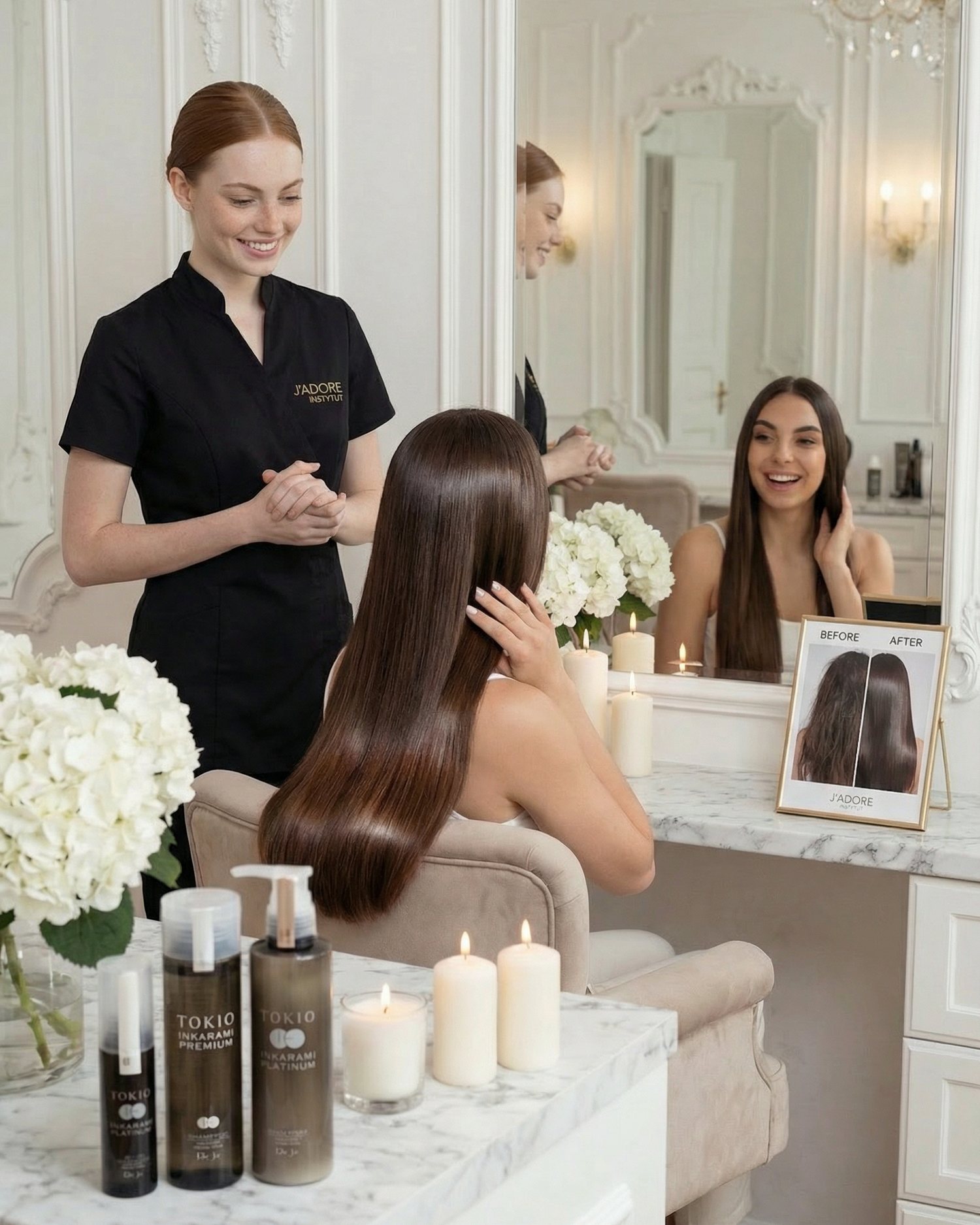
A portfolio should show hair after washing, not just after styling.
Photos taken immediately after a treatment answer one question: how the hair looked after the stylist's work. They do not yet show if you can achieve similar smoothness at home, how the curl behaved after the first wash, or if the ends remained flexible. Therefore, when browsing a portfolio, look for descriptions of the starting point and control photos taken later.
- Compare similar structures. A result on natural, thick hair does not predict the outcome on delicate strands after multiple balayage treatments.
- Check if the "before" and "after" photos show the same person, length and cut line. A change of hairstyle can mimic an improvement in condition.
- Pay attention to the lighting. A lamp placed directly in front enhances shine, while diffused side lighting shows the surface and stray hairs much more honestly.
- Ask if the "after" photo was taken before the first wash. Such a photograph is not worthless, but it documents a different moment than the everyday result.
- Ask for an example of hair similar to yours. It is normal to lack an identical case. The problem begins when a salon claims that one result proves the outcome on every structure.
Online reviews also require context. A comment saying "perfect hair" says little without information about the starting point and time since the treatment. More useful are accounts describing the consultation, the method of selecting the variant, how the hair behaved after several washes, and the salon's reaction to questions. One extreme review does not determine quality, but a recurring lack of diagnosis, an anonymous preparation, or dismissing complaints is a pattern that should not be ignored.
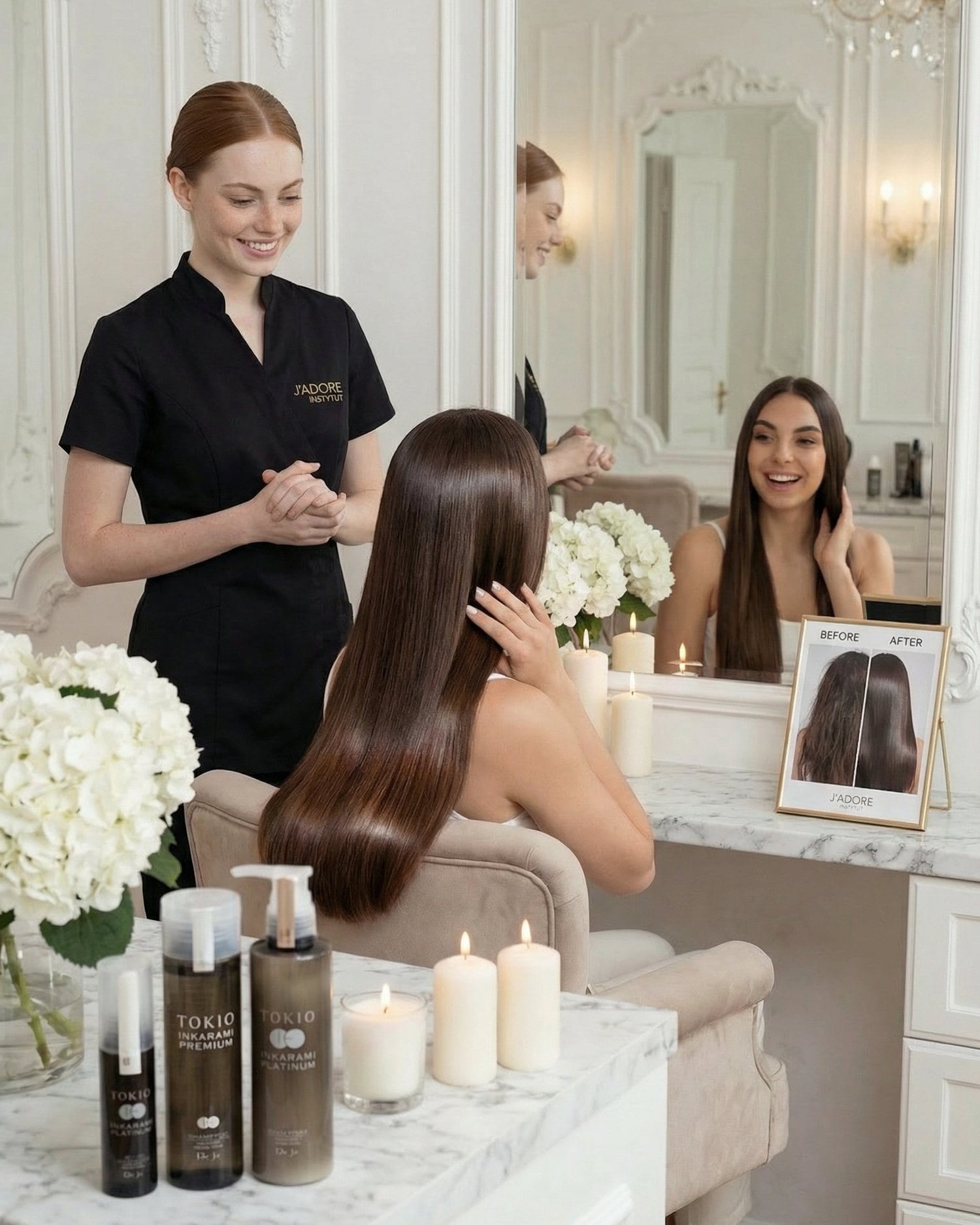
Aftercare reveals whether the salon knows its product.
Instructions after a keratin treatment should not be a universal recording played to everyone. The salon must know the recommendations for the formula used and tailor them to your routine: washing frequency, sports, swimming pool, planned colouring and the cosmetics you already use.
- Ask exactly when you can wash your hair and whether the instructions come from the manufacturer of the specific preparation.
- Establish what to do if your hair gets wet or kinks before the first wash; the answer should be practical, not punitive.
- Ask for the characteristics of the shampoo and conditioner, not just one product available at the till.
- Discuss swimming, the sea and frequent training if they are part of your week — they may be significant for the durability of the result.
- If you are planning colouring, determine the sequence and interval with someone who knows your hair history.
Keratin straightening in Krakow — location and current price list.
In Kraków J'ADORE INSTYTUT is located at ul. Karmelicka 45/2B, 31-128 Kraków and is open Monday to Saturday, 8:00–20:00. Before planning a longer visit, check the available appointment for your chosen service.
You can find the service description, current information and the latest price list on the Keratin straightening in Krakow page. The final scope of work depends on the length, density and condition of your hair, which is why a conversation at the chair remains more important than choosing a variant based solely on its name.
For the consultation, you can bring photos of your hair after it has dried naturally, as well as a list of recent colouring and treatments. These will not replace an examination, but they help show how your strands behave outside of salon lighting and airflow. If you use cosmetics prescribed for your scalp or have recently changed your care routine, please mention this before work begins.
The final checklist before booking a long visit.
- 01
The hair has been assessed, not just measured.
The stylist knows your chemical history, differences in condition along the length and your styling method.
- 02
The goal has specific boundaries.
You know whether the plan concerns frizz reduction, loosening the curl or stronger smoothing — and what you will not achieve.
- 03
The preparation is not anonymous.
You know the brand and product line, and the salon can justify the choice and discuss the working conditions.
- 04
The plan may change.
Poor condition of the strands, the result of a test or a reaction during the process may lead to a milder option or a postponement.
- 05
You have instructions for the first week.
You know when to wash and tie up your hair, how to choose care products and where to report a worrying reaction.
If any of these points remain blank, return with a question before making a payment and starting work. A good service does not require blind trust from the client. It requires a conversation where the result has a name, the preparation has a label, and the stylist is also able to say: "we are not doing this today".