The moment of publication determines what was actually assessed
A review written on the day of the visit and a review written after a few weeks do not compete with each other. They assess different stages. The first can reliably describe punctuality, the consultation, the atmosphere, communication during the work, and the look of the hairstyle after styling. The second has the chance to say something about whether the hair is easier to dry at home, how it reacts to humidity, and whether the result matches the earlier arrangements.
- 01
Opinion immediately after the visit
It best describes the service, the conversation before the service, comfort, the scent of the product, and the effect of professional styling. It does not determine durability.
- 02
Opinion after the first wash
It shows whether the client can recreate the daily effect and whether the hair behaves according to the promise after the salon styling is removed.
- 03
Opinion after a few weeks
It can describe the rate at which the smoothing fades, the ease of care, and whether differences have appeared between the regrowth, the lengths, and the ends.
- 04
Update after contact with the salon
It shows not only the original effect but also how the venue reacts to a question, a doubt, or a discrepancy between the agreement and the result.
The starting point is more important than just a photo of the result
Two people can receive the same product and describe the result completely differently because they came with different hair and a different goal. Natural, thick waves, thin strands after bleaching, and ends treated with heat many times are not the same case. An opinion without this background allows you to see the result, but does not allow you to predict your own.
The most useful review does not have to be long. It is enough to say: "thick, wavy, dyed hair; the goal was to reduce frizz, not to lose the wave; after a few washes I dry it faster, but the curl has partially remained." Such a sentence provides more data than a series of exclamation marks under a perfectly lit photo.
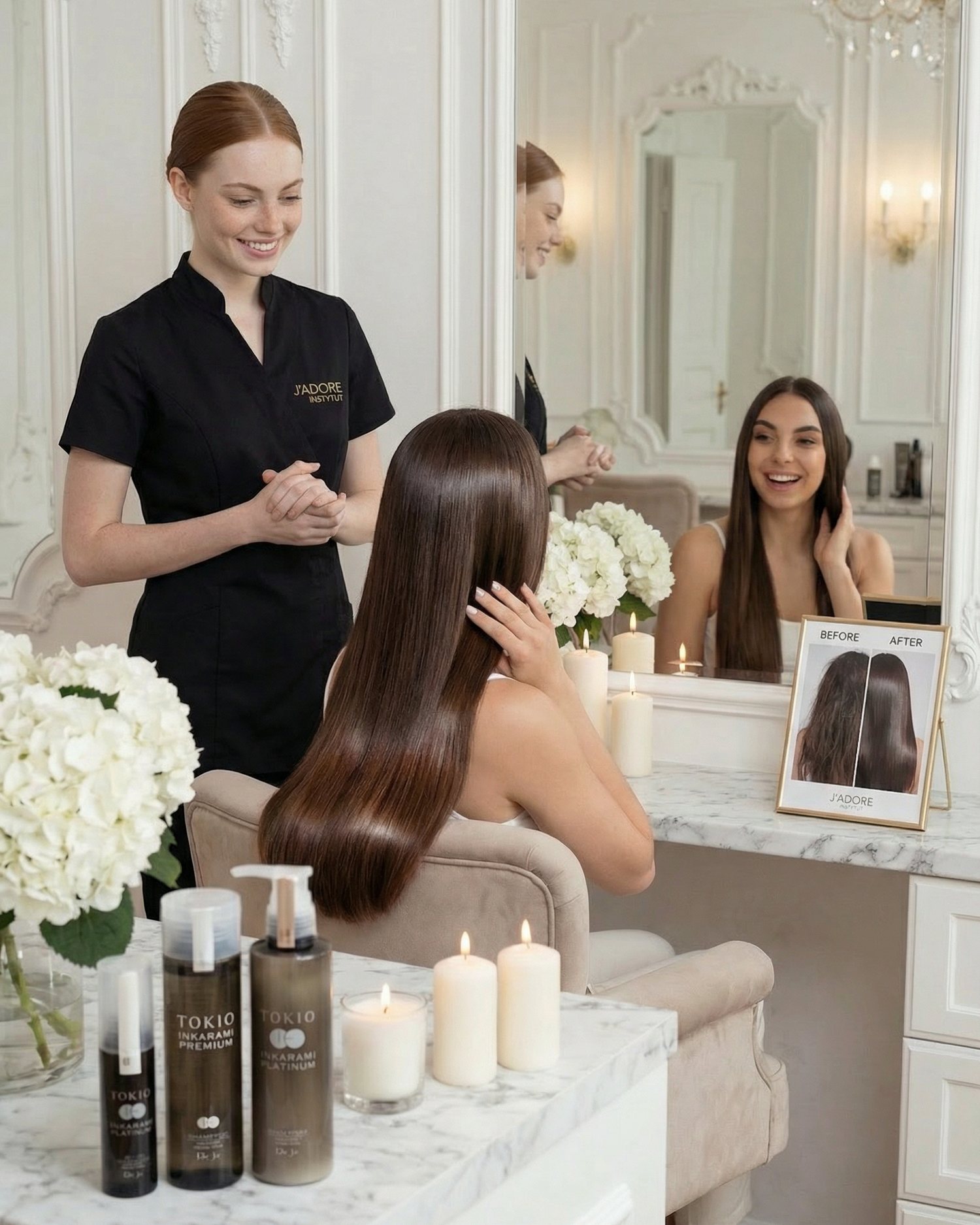
Before and after photos easily change the result without changing the hair
A photograph is helpful when it documents similar conditions. In practice, the "before" is sometimes taken after natural drying, without brushing and in side lighting, and the "after" — after a brush, straightener, shine spray, and under a lamp set directly in front. The difference then looks spectacular, although part of the effect comes from the presentation.
- Check if both frames show the same person, a similar angle, and the same length.
- See if a trim of the ends was performed before the second photo; a change in the line can fake an improvement in condition.
- Look for information on whether the "after" photograph was taken before or after the first wash.
- Assess whether the lighting and exposure are similar; a darker background and light from the front enhance the shine.
- Do not draw conclusions about touch, elasticity, or brittleness from a photo — it does not show these features.
Extreme reviews require checking the facts, not a reflex
One very good or very bad opinion may describe a real experience and still not be representative. Instead of counting emotional adjectives, look for repeating elements in many accounts. It is the pattern that speaks about the salon's process.
Useful signals
describe a repeatable process
- the stylist asked about bleaching and examined the ends
- the result was defined before work began
- the client knew the product and the aftercare recommendations
- the salon responded factually to a question after the first wash
- the consistency of the consultation is repeated in several opinions
Weak signals
do not allow for assessing quality
- "best salon in town" without a description of the service
- "I do not recommend" without a date, reason, and contact with the place
- a rating given in exchange for a discount without disclosing this fact
- identical wording in many accounts
- only praise for the decor and the drink during a long visit
A negative account becomes particularly valuable when it describes the sequence: what was agreed, what was done, when the problem appeared, and how the salon reacted. A positive one gains value for the same reason. The number of stars is a shortcut; the decision is built by chronology.
The salon's response shows the standard better than a perfect average
Not every unsatisfactory result means a performance error. Sometimes the expectation was different from the hair's capabilities, the care did not match the product, or the review omits an important stage. This is precisely why the salon's response is important: it shows whether the place can separate explanation from defence at all costs.
- A good response does not reveal the client's private details and does not try to shame her.
- It refers to the facts, proposes contact, and a re-evaluation of the hair if needed.
- It does not promise a solution publicly before anyone sees the current state of the strands.
- It does not copy one message under every opinion when the cases are different.
- We take responsibility for communication, even when the result itself requires further explanation.
The gap between expectation and result must be read sentence by sentence.
Reviews often contain the sentence: "I expected straight hair, but it is still wavy." This alone does not say whether the execution, the choice of service or the communication failed. What was agreed before the treatment is key. If the goal recorded in the consultation was to reduce frizz while maintaining movement, the remaining wave may be consistent with the plan. If the salon promised a perfectly straight sheet of hair without examining a strong curl, the problem began before the straighteners were even used.
- "The effect wore off quickly" — check after how long, with what washing frequency, and whether the client knew the aftercare for the formula used.
- "My hair is flat" — look for information on whether this degree of smoothing was agreed upon and whether the opinion was written before the first wash.
- "It is still frizzy" — the conditions are important: air-drying, rain, a swimming pool or a standard day after blow-drying can lead to different observations.
- "The ends look worse" — their condition before the treatment is significant, as is whether the salon recommended a trim, regeneration or declining the procedure.
- "I did not get what was in the photo" — an inspiration photo is not a contract. The stylist should define the differences between the model and your real hair before starting work.
A good review can be critical while honestly describing one's own contribution. It can also be positive, even if the result was not perfectly straight, because it met the agreed goal. Look for consistency between the promise and the result, not just the intensity of delight or disappointment. This consistency is the most useful information for a future client.
A five-minute filter separates experience from noise.
You do not need to analyse hundreds of entries. Choose a few recent ones, a few critical ones and a few describing a visit after a longer period. Then apply the same filter to each of them. This way, you do not favour either delight or complaints just because they attract more attention.
- 01
Separate the service from the salon as a whole.
Ensure the review concerns keratin straightening, not a haircut, nails, the reception or another location of the same brand.
- 02
Find the starting point.
Note information about hair structure, previous processes and the goal. Without these, the result remains someone else's image without a scale.
- 03
Establish the moment of assessment.
Check whether the author has just left the chair, performed their first wash or observed the hair for several weeks.
- 04
Assess the specifics of the process.
Look for descriptions of the consultation, variant selection, aftercare and reactions to questions instead of just descriptions of appearance.
- 05
Note the unknowns.
Turn every missing element into a question for the stylist. Then the review works for you, even if it does not provide a ready-made answer.
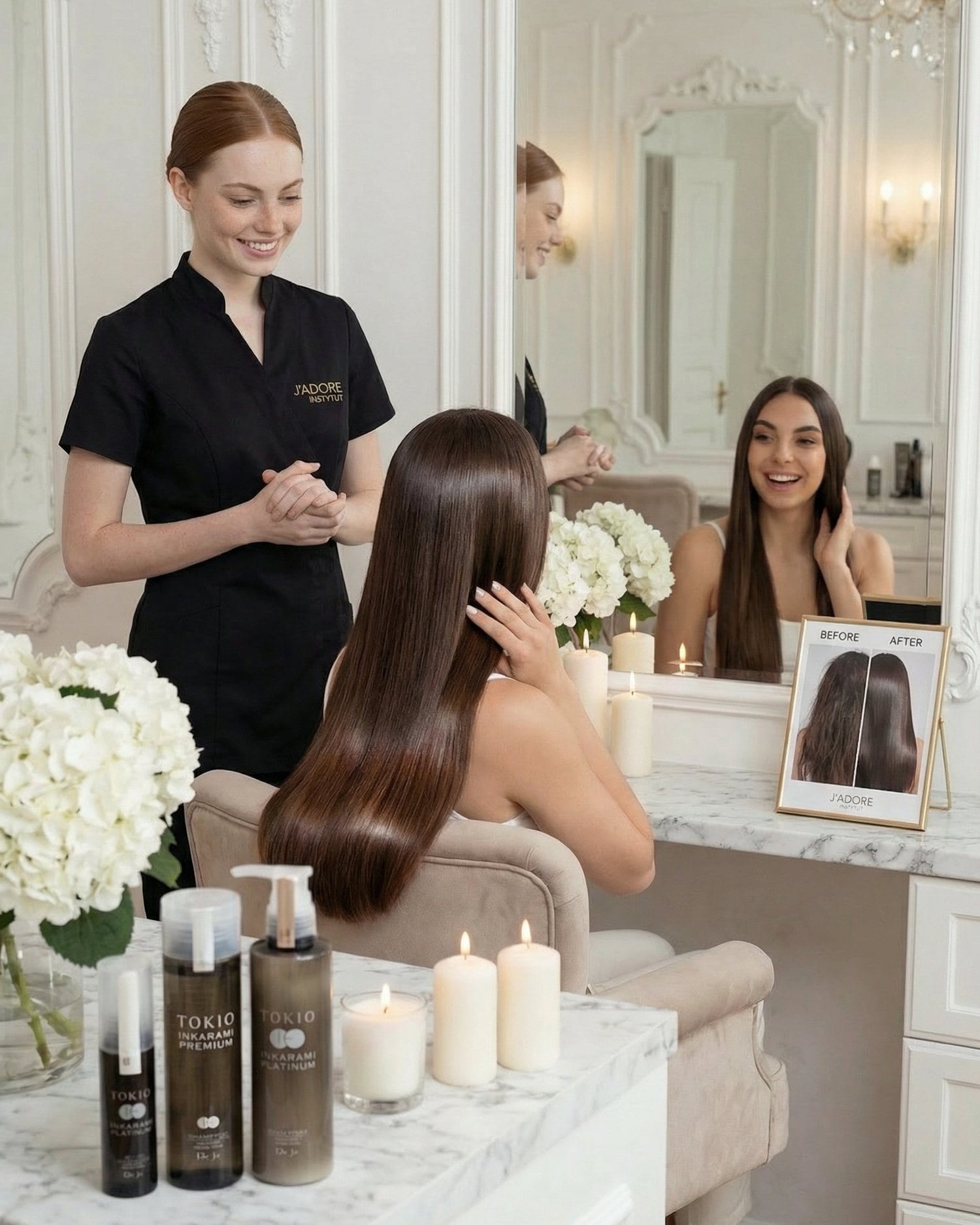
What you will not read in a review, even if it is detailed.
Reviews help assess communication and the likely experience, but they do not qualify your hair for the treatment. They will not tell you how strands after specific colouring will react to the chosen formula, whether current scalp irritation requires rescheduling, or what degree of smoothing will be realistic.
If your hair breaks when brushed, has varying conditions on different sections or has recently undergone intensive bleaching, you need an in-person assessment. Someone else's good review is not an argument for performing the service against what your strands show.
The Warsaw list of reviews should lead to three questions.
After reading reviews, do not try to choose a salon solely by eliminating the lowest ratings. Write down three questions that the reviews did not resolve. This ensures the consultation will check exactly those areas that matter for your hair.
- 01
What result is realistic given my hair history?
Ask for a distinction between frizz reduction, curl loosening and stronger straightening.
- 02
What preparation does the salon plan to use and why?
The product name and the justification for its selection are more useful than a general slogan about premium keratin.
- 03
How will I assess the effect after the first wash?
Establish the drying method, recommended aftercare and the moment when it is worth contacting the salon.
If the answers are consistent with the limitations described in reliable reviews, the opinions have served their purpose: they have prepared you for the conversation. If the consultation contradicts everything the salon publishes, reconsider your decision instead of assuming that the average rating will resolve this discrepancy.
Keratin straightening in Warsaw — two addresses and current information.
In Warsaw, J'ADORE INSTYTUT operates at two locations. Żelazna: ul. Żelazna 59, 00-848 Warsaw; hours Mon–Sat 8–21 · Sun 11–19. Mińska: ul. Mińska 29A/46, 03-808 Warsaw; hours Mon–Sat 9–21.
A description of the service, current information and the current price list can be found on the page Keratynowe prostowanie w Warszawie. Before booking a longer visit, provide your colouring history, goal and information about the condition of your ends; the final variant should result from an assessment of your hair.
One rule organises all the stars.
Read a review like a case study, not a popularity contest. Establish the starting point, goal, moment of assessment, aftercare and the salon's reaction. If four out of five elements are missing, the review may describe a pleasant meeting or an impressive styling, but it should not determine your choice of treatment for your hair.
The most sensible decision is therefore not "this salon has the most stars". It is: "the reviews helped me find questions, and the consultation provided concrete answers". This is a sufficient reason to put the phone down and look at your own strands instead of someone else's sheet of hair in perfect lighting. If the salon cannot translate these questions into a plan for your hair, a high average will not fill that gap.