Rosacea vs acne rosacea — why the difference matters
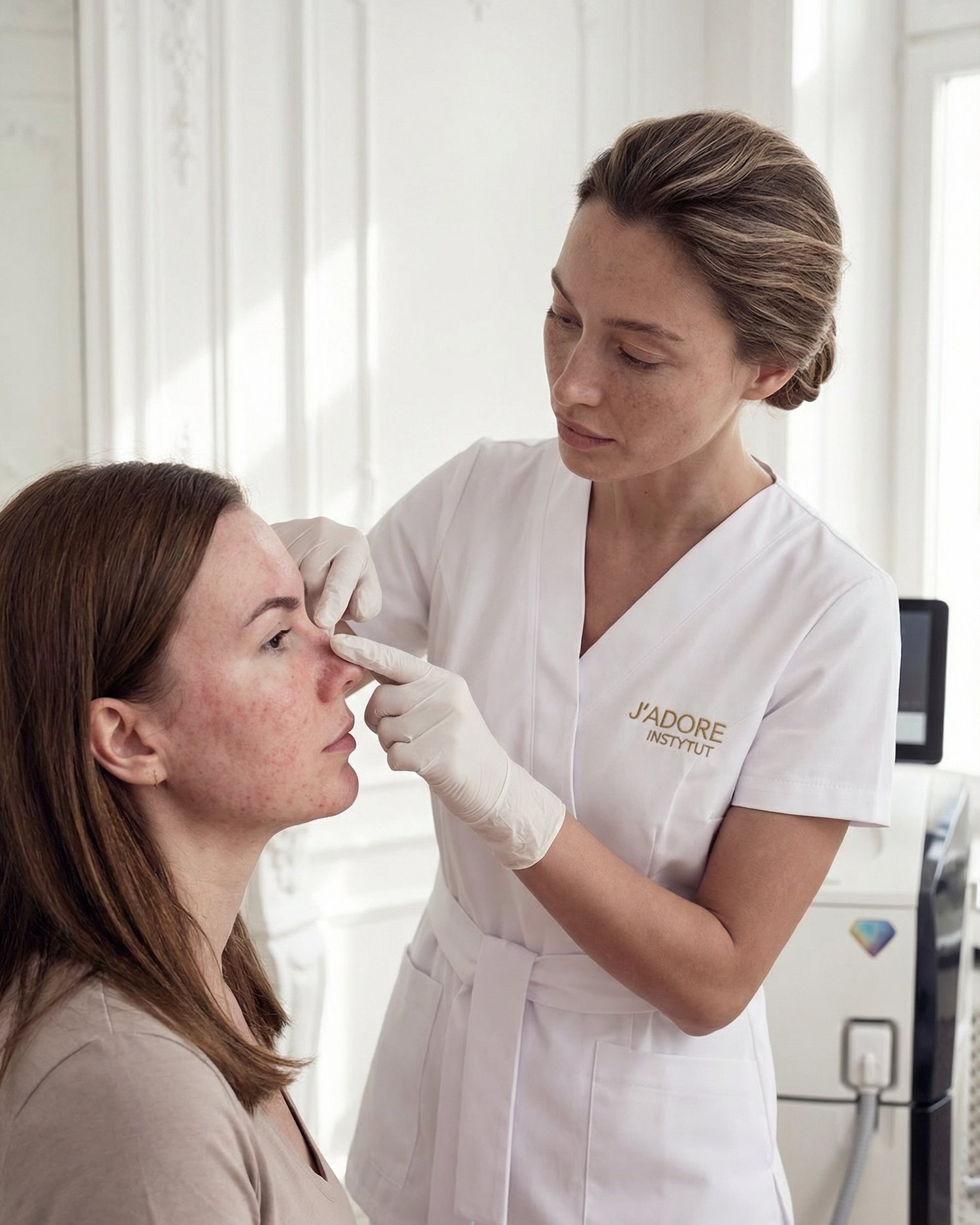
Many people use these names interchangeably, which is partly understandable — acne rosacea is a subtype of rosacea. The problem arises when confusion leads to the wrong treatment choice. Vascular rosacea, mainly redness and visible vessels, responds to laser treatment completely differently from the type with active papules and pustules. In this case, inflammation is deeper within the skin, not only on the surface of the vessels.
Rosacea (vascular type)
chronic inflammation of blood vessels
- diffuse redness, episodes of flushing
- visible blood vessels (telangiectasia)
- reactive skin that is easily irritated
- chronic — there is no cure, but it can be controlled
Acne rosacea (papulopustular type)
a subtype of rosacea with an inflammatory component
- papules and pustules resembling common acne
- redness and visible vessels in the background
- requires a diagnosis — because treatment differs
- may require medication (e.g. metronidazole, azelaic acid)
Common acne (acne vulgaris)
a completely different condition with different mechanisms
- blackheads, papules, pustules and cysts
- underlying factors: excess sebum, bacteria and a keratinised epidermis
- mainly affects the T-zone, but also the back and shoulders
- fractional laser and peels may help — but differently than in rosacea
How laser treatment works for rosacea — what it can and cannot do
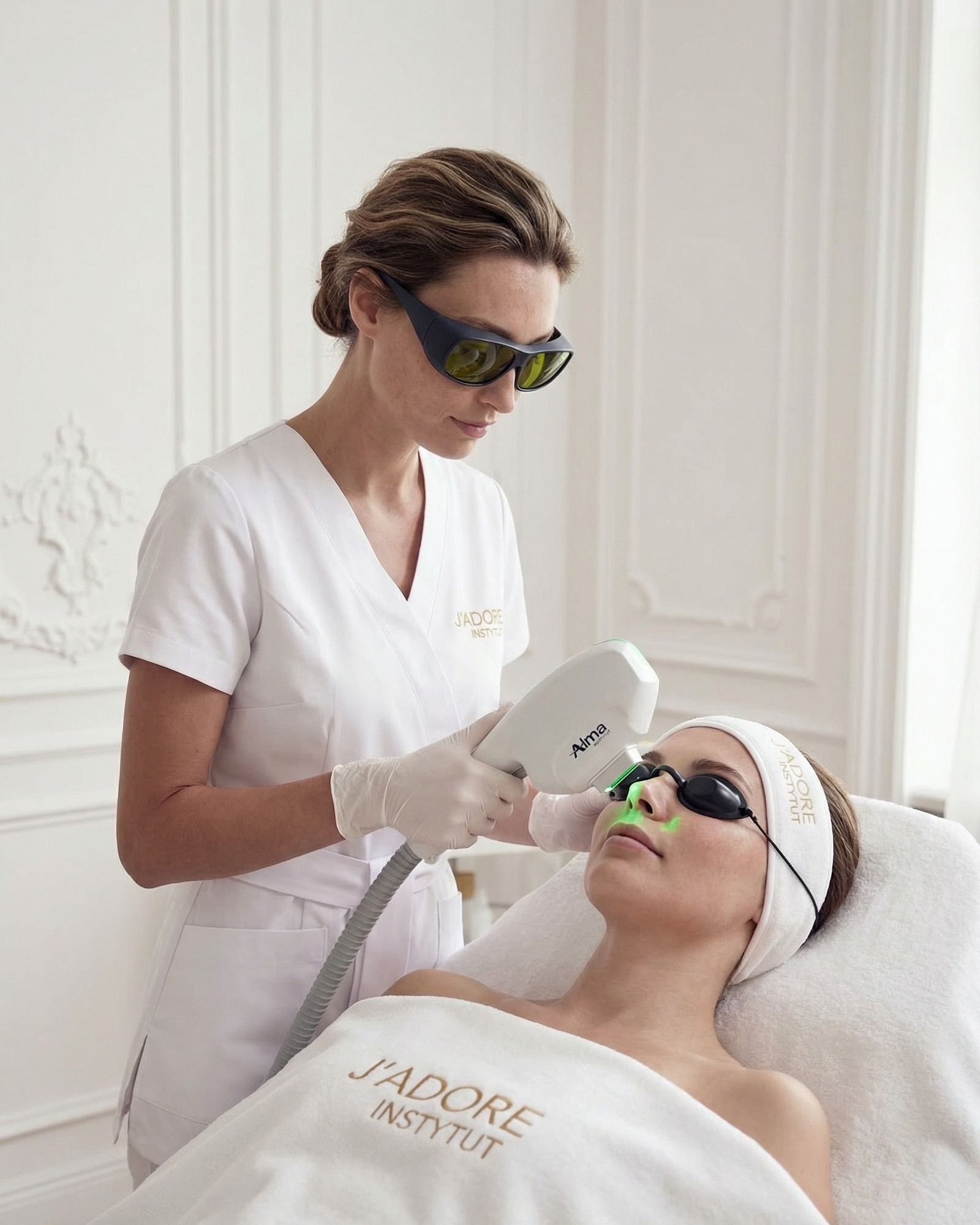
Laser devices and pulsed systems used for rosacea, including DYE-VL and Nd:YAG, work through selective photothermolysis. They target haemoglobin and close enlarged vessels without damaging surrounding tissue. In practice, this means that redness can decrease noticeably, visible vessels can be reduced, and your skin may become less reactive between flare-ups.
However, it is worth knowing the limit: a laser treats the symptom, not the cause. Rosacea is a chronic condition. The vessels we close may widen again over time under the same triggers, such as sun exposure, temperature, alcohol or stress. Laser results are therefore assessed over months. They usually require a course of treatments or maintenance with other methods.
Three treatment pathways — what to choose and when to combine them
Rosacea and acne rosacea do not have one treatment protocol — they have a range of tools selected to suit your skin’s current condition. Put simply, there are three main pathways: laser treatment, medication and specialist cosmetology. Each does something different, and none is inherently “the best”.
Laser (DYE-VL, Nd:YAG)
closes visible vessels and reduces redness
- visible results after 1–3 sessions
- most effective for the vascular type
- prolongs periods of remission
- requires maintenance every few to several months
Medication (dermatologist / doctor)
calms inflammation from within
- azelaic acid — relieves redness and acne rosacea
- topical metronidazole — reduces papules and pustules
- oral antibiotic therapy — for flare-ups
- the only option for an active rash before laser treatment
Specialist cosmetology
strengthens the skin barrier and maintains results
- treatments designed for sensitive and vascular skin
- ingredients: niacinamide, ceramides, Centella asiatica, azeloglycine
- soothing treatments between laser sessions
- builds the skin’s tolerance to irritants
What works well together — synergistic combinations
The best results in rosacea usually come from combinations, rather than single tools. The logic is simple: laser treatment closes what is already visible. Pharmacological treatment calms what is active. Specialist cosmetology builds the barrier and prolongs the effect. A good sequence may look like this:
Laser treatment + skincare for sensitive skin
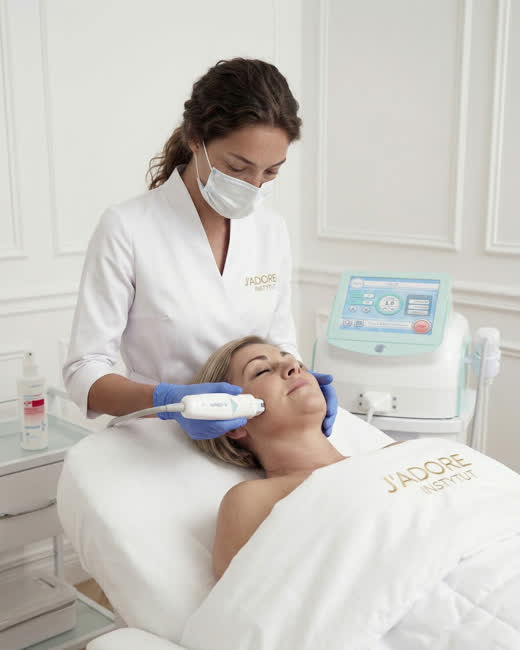
cosmetology treatments strengthen the skin barrier between laser sessions and reduce reactivity. A natural combination.
Azelaic peel + laser treatment
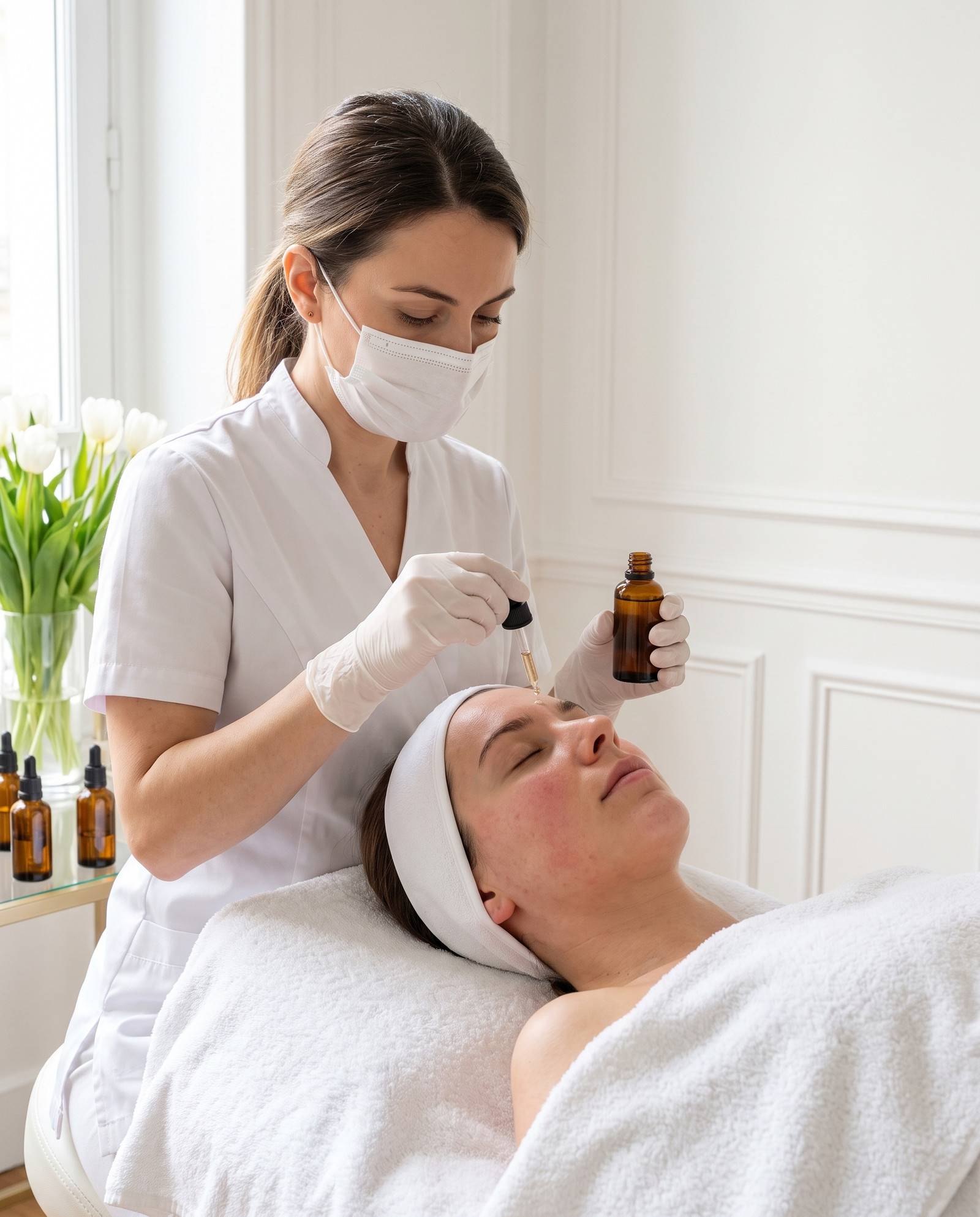
azelaic acid may precede a laser series, calming inflammation and regulating the epidermis. The sequence is determined by a doctor or cosmetologist after assessing your skin.
Blood vessel removal + photorejuvenation
for skin with established vascular changes and photoageing, both methods may complement each other’s scope of action.
Pharmacological treatment + laser treatment (sequentially)
with rosacea, medication comes first (to calm the skin), followed by laser treatment (for blood vessels). Not at the same time — the doctor determines the timing.
An important note: the order and choice of combinations are not an “internet recipe”. They result from an assessment of your skin’s current condition. What worked for a friend with a similar concern may not suit your clinical presentation. This is why it is worth having a consultation before every series and sharing your full treatment history.
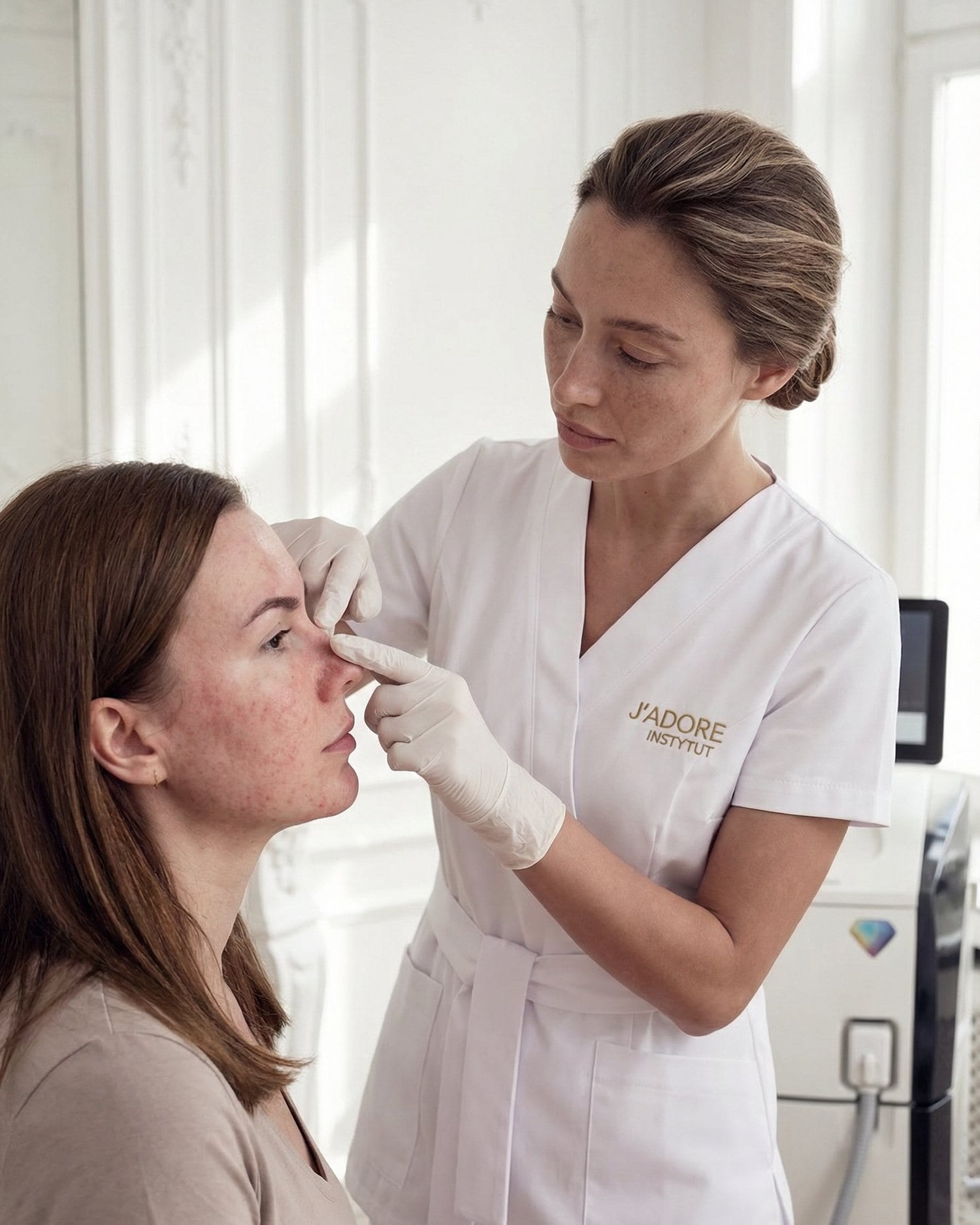
Lifestyle — what skin with rosacea likes and cannot tolerate
No treatment will provide a lasting effect if factors that aggravate rosacea are present every day. Reactive skin requires consistent trigger management — and no laser can do this for you.
Where to start — a practical guide
If you suspect rosacea and are considering laser treatment, here is the recommended order of steps:
- Appointment with a dermatologist or aesthetic medicine doctor — diagnosis is the foundation. Without it, it is not possible to know whether you have the vascular or papulopustular type, and this changes the entire plan.
- If there is active inflammation (papules, pustules) — pharmacological treatment comes first; laser treatment can wait. Do not rush.
- If redness and blood vessels predominate without an active rash — a laser therapy consultation is a good direction. Discuss your history, medications, tan and expectations.
- At the same time: build a skincare routine for sensitive skin — the barrier is your shield. Without it, treatment effects fade more quickly.
- Plan for the long term — rosacea is a marathon, not a sprint. A laser series, maintenance and avoiding triggers form a complete ecosystem, not a single treatment.