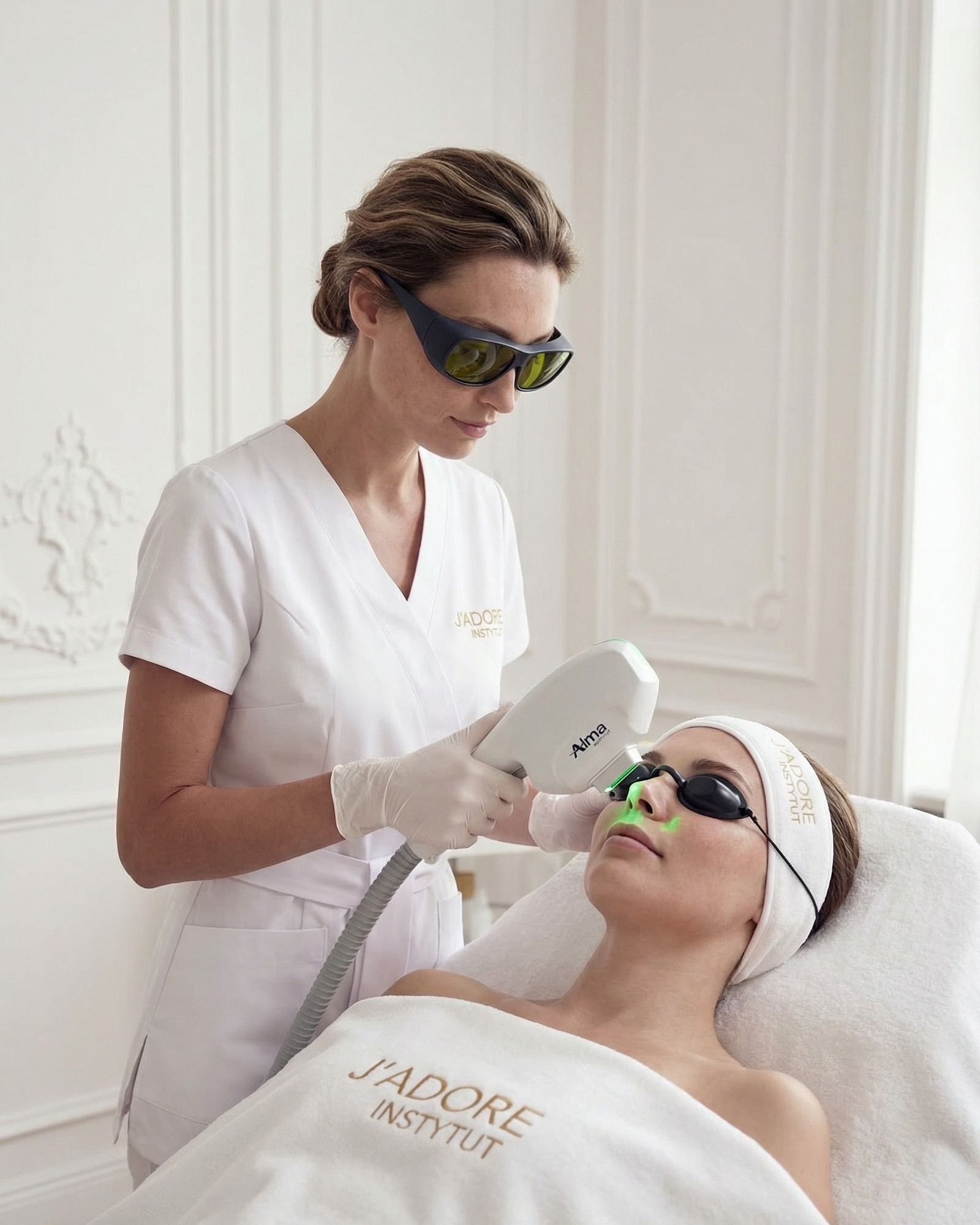
Where did the “lasers only in winter” myth come from?
Before we start debunking it, it is worth understanding where this myth came from. It has one solid source. The first generation of ablative lasers, which literally remove the upper layer of the epidermis, were indeed very demanding in terms of sun protection. After such treatment, the skin was like an open wound. It was red, with a compromised barrier and no protection against UV radiation. In summer, with a normal lifestyle, keeping skin away from the sun for several weeks was almost impossible.
Cosmetology has moved forward. Today, most photorejuvenation treatments use non-ablative or fractional technologies. They work in deeper skin layers without damaging the epidermis as a whole. The old rule — no sun for four weeks or hyperpigmentation will occur — still fully applies to the most intensive lasers. With newer technologies, the rule is different and more nuanced. Yet no one has rewritten it in public awareness.
Myth 1: “You cannot have any photorejuvenation in summer”
This is the most common and most costly myth. It unnecessarily removes several months from the calendar. The truth is precise: it is not about the season, but your level of tan and sun exposure. Skin prepared for treatment is not inflamed, has no active tan and has an intact barrier. If you work in an office, use SPF 50 daily and were not lying on the beach a week earlier, there is no reason to wait until September. If you have just returned from Greece, you wait, regardless of the month.
Myth 2: “Autumn and winter give better results”
This myth has a logical basis, even if it is slightly exaggerated. In winter, the sun is weaker, people wear more clothing and spend less time outdoors. Sun protection is simply easier to maintain. This is a genuine advantage, not a myth. The problem starts when an advantage becomes a necessary condition. The results of photorejuvenation — even skin tone, improved texture and softer fine wrinkles — do not depend on the season. They depend on the number and regularity of treatments, photoprotection during recovery and your skin’s individual response. The same results can be achieved in May as in October, provided the sun-protection protocol is followed.
Myth 3: “After photorejuvenation, skin is so sensitive that you cannot leave the house”
This myth most effectively prevents people from deciding on treatment. It usually comes from experience with, or stories about, ablative lasers, where the post-treatment reaction is genuinely intense: redness, swelling and exfoliation for several days to several weeks. With non-ablative and fractional technologies, downtime is incomparably shorter. Many people return to the office the following day. There may be mild redness, which settles quickly with appropriate care.
Skin after photorejuvenation requires greater caution — not staying in bed. Specifically, avoid friction, including exfoliation and mechanical treatments, strong active ingredients such as retinol and acids, and sun exposure without SPF 50+. This is a care plan for several days to two weeks, not surgical-style recovery. You can return to your normal daily routine very quickly, with skin covered and sunscreen applied.
Myth 4: “One treatment is enough for a lasting result”
This misconception does not directly concern seasonality, but it is closely linked to it. If “one treatment is enough”, there is no reason to plan a course for autumn. Photorejuvenation stimulates skin remodelling. Regenerative processes continue for weeks after the treatment, rather than occurring immediately. The full result of one session may only become visible after a few weeks. A single treatment can improve skin condition. However, a deep and lasting change in skin tone or texture usually requires a course. This means a very different timeline from “one visit before an event”.
- 01
Consultation
Assessment of your skin, skin phototype, current tan and holiday plans. This is when we decide on the technology and timing of the first session.
- 02
First session
The treatment itself. Redness and mild swelling may last from several hours to one day. This is a normal inflammatory response, not a complication.
- 03
Recovery at home
A few days of gentle care: a soothing base, no acids or retinol, and SPF 50+ without exception. The skin may exfoliate slightly.
- 04
Full session result
It appears gradually. For many people, it is more noticeable after 3–4 weeks than immediately after the treatment. The skin remodels in deeper layers.
- 05
Next session (if part of a course)
The interval between sessions is determined individually. It depends on your skin’s response and the technology used. Usually, it is a few weeks.
Myth 5: “Photorejuvenation is only for hyperpigmentation — and only for women”
“Photorejuvenation” is a broad term covering several technologies with different mechanisms and indications. Hyperpigmentation is indeed one of the most common indications, but it is not the only one. Light-based technologies can improve skin texture, pore visibility, fine wrinkles and overall skin tone. They are more effective than most skincare treatments because they work deeper than the epidermis.
As for sex, men’s skin is thicker and oilier. It has different characteristics, but the same needs in terms of skin tone and texture. Sun-induced hyperpigmentation, acne scars and uneven texture — these concerns have no sex. More men are choosing photorejuvenation because results are measurable and downtime with modern technologies is short enough not to interfere with everyday work.
Women’s skin
Typical indications
- Sun-induced and hormonal hyperpigmentation (melasma)
- Enlarged pores and uneven texture
- Fine wrinkles and loss of radiance
- Even skin tone after pregnancy or contraception
Men’s skin
Typical indications
- Sun-induced hyperpigmentation (neck, forehead, bridge of the nose)
- Acne scars and an uneven surface
- Dullness and lack of radiance in smokers or after prolonged stress
- Improved texture without affecting facial expression
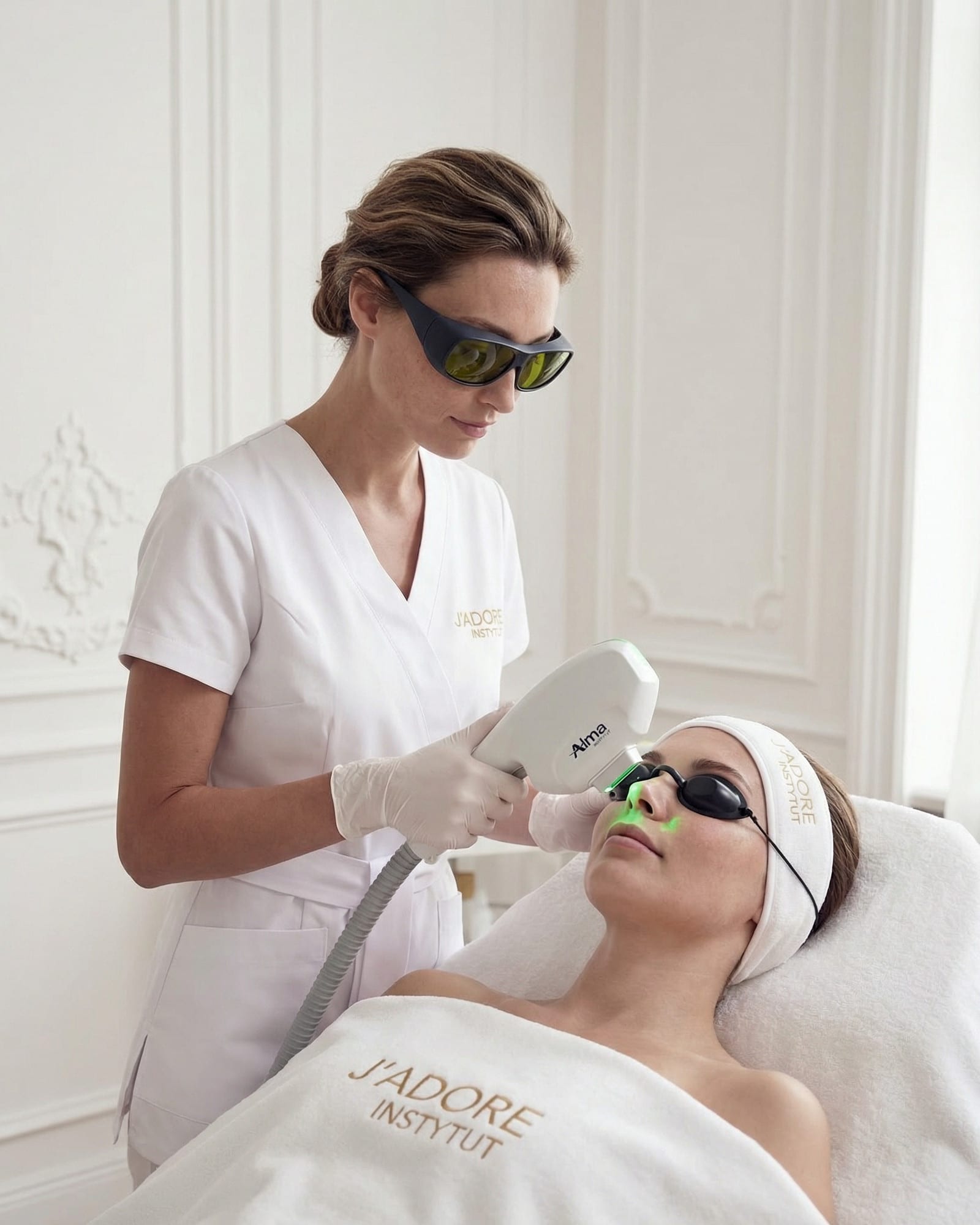
What really determines when you can start
Once myths are separated from facts, a short list remains of factors that really matter for the safety and effectiveness of photorejuvenation. None of them is “the month in the calendar”. The first is your level of tan. An active tan increases the risk of post-inflammatory hyperpigmentation and rules out treatment. A break of two to four weeks from intensive UV exposure is standard. The second is skin phototype. The darker the complexion, the greater the caution and the more precise the parameter selection must be. However, skin phototype alone does not rule out treatment.
The third is your plan for the next two weeks after treatment. A holiday in the Maldives one week after laser treatment is a bad idea, regardless of the month. The fourth — and often underestimated — factor is the consistency of your everyday skincare. Skin that has received SPF and a good moisturiser for months responds better and faster than neglected skin. It is an investment that pays off before you even go under the laser.
Combining photorejuvenation with other treatments — what makes sense
Photorejuvenation delivers the best results as part of a consistent skincare plan, rather than a one-off intervention. Well-hydrated skin with a restored barrier responds more strongly and for longer. Regular stimulation of regeneration also supports this response.
Needle mesotherapy or plasma
Deep hydration and nourishment before or between laser sessions. Better-hydrated skin responds more calmly to light energy. It also regenerates faster after the treatment.
Chemical peels
Used alternately with photorejuvenation in a series, they can enhance skin tone-evening results. This is particularly helpful for superficial hyperpigmentation. Important: do not combine them in one session. Your specialist plans the schedule.
Skin barrier-restoring treatments
Before a laser series, it is worth strengthening your skin. Regenerating biocellulose masks and ceramide products can help. Skin with a strong barrier tolerates treatment energy more easily. It also heals post-treatment reactions faster.
Manual or hydrogen cleansing
Clean, purified skin allows better energy penetration. The treatment works deeper and more evenly. Cleansing before a laser series is not an indulgence. It is part of the preparation protocol.