Two ablative lasers, two approaches to skin
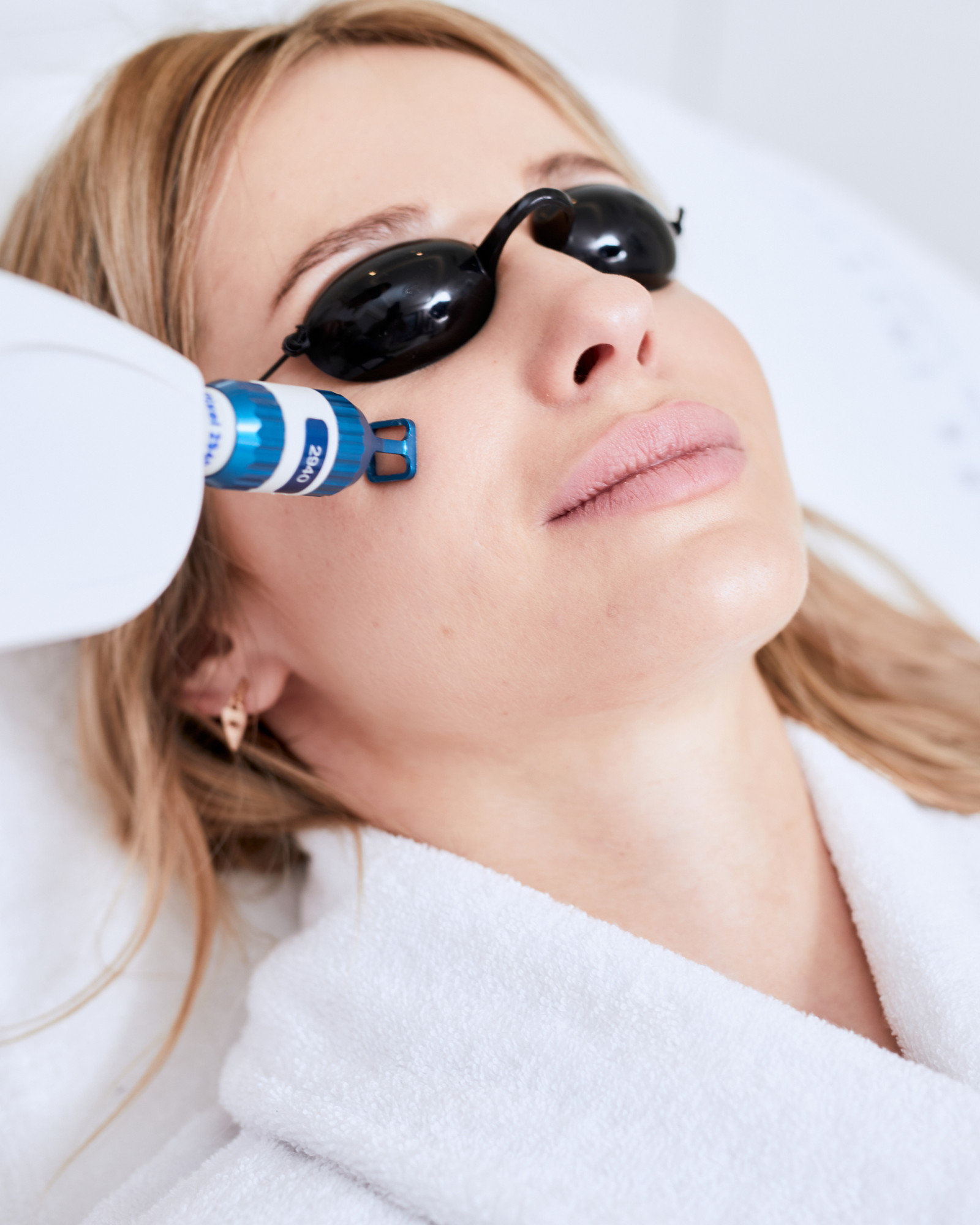
Both lasers remove tissue, but with different precision and at different depths. Er:YAG is absorbed very efficiently by water in tissue. The result is vaporisation of thin, precisely defined layers of the epidermis, with minimal spread of energy deeper down. CO2 reaches further and heats the surrounding tissue more intensely during ablation. This triggers stronger collagen remodelling — but also requires a longer healing time.
Er:YAG
precision and short healing time
- surface-level to medium-depth exfoliation of the epidermis
- minimal heat transfer to surrounding tissue
- fast return to normal activity for most people
- good results for hyperpigmentation, shallow wrinkles, delicate scars
- often used around the eyes and lips, where skin is thinner
CO2
deep tissue remodelling
- deep ablation combined with thermal collagen stimulation
- strong dermal remodelling — firmness, density, texture
- noticeable improvement for deep scars, enlarged pores, advanced wrinkles
- longer, more intensive long-term effect
- effective for concerns that need to be addressed on several levels at once
Which concern needs which laser
Instead of asking "which laser is better", it's worth asking: what exactly do I want to improve? The answer to that question often points the way on its own.
- Hyperpigmentation, sun spots, uneven skin tone — these often respond well to Er:YAG, which works precisely at the surface of the epidermis.
- Fine lines, superficial wrinkles, general texture improvement — Er:YAG gives a clear result here with an acceptable recovery time.
- Deep, wide, indented acne scars — CO2 reaches further and can deliver more thorough remodelling than a faster method can achieve.
- Advanced wrinkles, noticeable skin laxity, loss of density — CO2 triggers stronger collagen stimulation; the effect builds over the weeks following the treatment.
- Enlarged pores, uneven texture — both lasers can help here; the choice depends on the severity of the concern and your skin tone.
- The delicate eye or lip area — Er:YAG is often the first choice where skin is thinner and more sensitive to heat.
Healing after the treatment — what to expect
The recovery period isn't just about comfort — it's when your skin does its real work. Results from both lasers build over several weeks, and for many people the skin reaches its full appearance only after a few months. There is, however, a real difference in what this period looks like immediately after the treatment.
- 01
The first few days — redness and scabbing
After either laser, the skin is red and may swell slightly. After Er:YAG, these symptoms usually settle faster. After CO2, redness can last longer and be more intense. At this stage, protecting the skin and following aftercare instructions closely is essential.
- 02
The first week — epidermal regeneration
The skin may flake or develop a light scab — a natural part of renewal. After Er:YAG, the epidermis usually rebuilds faster. After CO2, this stage is more intense, but deeper remodelling continues long after the surface looks normal.
- 03
Weeks 2–4 — the first assessment
Redness gradually fades. The skin may look pink — a sign of active regeneration. Sun protection is essential: photosensitised skin after a laser treatment without SPF is a direct route to hyperpigmentation.
- 04
Months 1–3 — full results
Collagen remodels over months. For many people, the best results appear not right after healing, but a few months later — when improved texture, density and skin firmness become fully visible.
When it's worth combining with other treatments
Ablative lasers rarely work in isolation. The best, most comprehensive results often come from combining methods, planned by your specialist within a structured schedule. The logic is always the same: different methods address different levels of the concern.
Er:YAG + needle mesotherapy
The laser works on the epidermal layer, while mesotherapy delivers nutrients deeper. The combined effect on hydration and density can be more noticeable than either treatment alone.
CO2 + platelet-rich plasma (PRP)
After fractional CO2 ablation, the skin is exceptionally receptive to growth factors from PRP. The combination can intensify regeneration and shorten healing time for many people.
Ablative laser + chemical peels (within a plan)
Chemical peels and lasers target similar concerns but at different intensity levels. Within an annual plan, they often complement each other across different seasons — the laser for a deeper reset, the peel to maintain results in between.
A series of fractional laser treatments
Instead of a single intensive treatment, some indications — scars in particular — call for a series with appropriate intervals. A gentler protocol repeated several times can deliver results comparable to one intensive session, with less demanding recovery in between.
Before you head to your consultation — three questions worth asking
A consultation before an ablative laser treatment works best when you arrive with a specific concern, not an expectation of a specific treatment name. Your specialist matches the method to your skin — not the other way round. Three questions that help build a good conversation:
- Which concern shows the most? — hyperpigmentation, scars, wrinkles, texture, pores. The more specific you are, the more accurate the choice will be.
- How much recovery time can I set aside? — this isn't a question about comfort, but about choosing a realistic intensity. If you have an important event in three weeks, this changes the whole plan.
- What's my skin phototype, and do I spend a lot of time in the sun during summer? — skin tone and sun habits are key information when selecting an ablative laser.