Where the "laser is only for fair skin" myth came from
The history behind this myth is a fair one. It had real grounds — it simply stopped keeping pace with the technology. Early lasers used in cosmetology worked through selective photothermolysis: light energy targeted chromophores, mainly melanin and haemoglobin. The problem was that darker skin contains more melanin. And that melanin isn't confined to the lesions being treated — it's also present in the healthy tissue around them. A laser that couldn't tell the difference treated all of the skin similarly. The risk of overheating, post-inflammatory hyperpigmentation and, in extreme cases, scarring was real and well documented. People with phototypes IV–VI had good reason to avoid classic ablative lasers.
The trouble is that a warning from the 1980s still lives on today — never updated, repeated from memory — even though laser technology has changed radically since then. It's a bit like warning people against car travel using accident statistics from before seatbelts or airbags existed. The risk was real then. Today's safety standards are different.
How ClearLift differs from ablative lasers
ClearLift is a non-ablative laser — and that one word explains everything else. Ablative treatments remove or damage the epidermis. This requires healing time, involves more intervention and — precisely because of this — carries a higher risk for darker phototypes. Non-ablative means something entirely different: energy reaches the dermis without disrupting the surface of the epidermis. The epidermis stays intact, so chromophores in the surface layer are far less exposed to excess energy absorption.
Ablative laser (traditional)
Deep restructuring with epidermal removal
- Removes or damages the epidermal surface
- Visible result from the first session
- Requires a healing period
- Higher risk of post-inflammatory hyperpigmentation in phototypes IV+
- Seasonal restrictions (summer sun makes treatment harder)
ClearLift (non-ablative)
Restructures the dermis without disrupting the epidermis
- The epidermis remains intact
- Zero downtime
- Gradual improvement after a series of sessions
- Broader suitability across skin phototypes
- Possible at different times of year
This distinction has a direct impact on safety across different skin phototypes. When the epidermis stays intact, melanin in the surface layers of the skin doesn't absorb energy in a way that overheats healthy tissue. This is why the safety profile for phototypes IV–V is considerably broader than with ablative lasers — though, as always, this comes down to individual qualification, not automatic approval.
Six myths about laser and darker skin — one by one
Myth 1: "Laser always causes hyperpigmentation in people with dark skin." Post-inflammatory hyperpigmentation is the skin's response to damage or inflammation — melanocytes produce more melanin in reaction to injury. With ablative lasers, which disrupt the epidermis, this risk is indeed higher in darker phototypes. With ClearLift, which doesn't damage the skin's surface, the mechanism that triggers this type of discolouration is far less activated. That doesn't mean "impossible" — it means a different risk, at a different scale.
Myth 2: "The darker the skin, the fewer results from laser." This misunderstanding comes from confusing two different treatment goals. If the aim is reducing pigmented discolouration — melasma, freckles, sun spots — a higher phototype does call for a more cautious approach, because these areas contain melanin, just like the healthy skin around them. But with dermal restructuring — improving firmness, softening fine lines, refining texture — the treatment target lies in the dermis and isn't directly tied to the amount of melanin in the epidermis.
Myth 3: "Laser can only be done in winter, because summer sun causes damage." This is true for many ablative lasers — freshly disrupted skin is highly sensitive to UV radiation, and exposure can lead to discolouration. With ClearLift, the epidermis isn't disrupted, so the seasonal window is wider. UV protection after the treatment still applies, of course — but this isn't a strict "autumn-winter only" rule.
Myth 4: "Dark skin is more sensitive, so laser hurts more." Pain threshold is an individual matter, not a function of pigmentation. ClearLift is known for high comfort levels — the fact that it doesn't disrupt the epidermis means the treatment is well tolerated by the vast majority of people, regardless of phototype. This is one of the arguments in favour of this treatment for olive skin — there's no "healing" stage, which with ablative lasers can be genuinely uncomfortable.
Myth 5: "If you have dark skin, laser is always too risky for you." This is an overgeneralisation that has done real harm. Risk exists with every treatment — and it varies depending on the technology, the power settings, the practitioner's experience and individual skin characteristics. Qualification for treatment in someone with phototype IV or V looks different from qualification for phototype I — it's more detailed, requires a different consultation and often a test patch — but it's not an automatic "no".
Myth 6: "ClearLift results won't be visible on dark skin." The results of dermal restructuring — improved firmness, softer expression lines, more even texture — are visible regardless of phototype, because they relate to the structure of the dermis, not its colour. What does change is the approach to treatment parameters, the protocol, and the session schedule. The result is there, and can be comparable — only the path to it is personalised.
What really decides safety — not phototype, but qualification
Debunking the myth about laser and darker skin doesn't mean phototype stops mattering. It does matter — but not as an exclusion criterion, only as a qualification parameter. That's a fundamental difference. With phototypes IV–VI, a good specialist asks more questions than with phototypes I–II: are you prone to scarring? Does your skin discolour after injury? Have you taken any photosensitising medication? Have you had intense sun exposure recently? This isn't discouragement — it's gathering the information needed to carry out the treatment properly.
The second factor that determines safety, more so than phototype, is the experience of the person carrying out the treatment. Protocols for darker skin differ, and a specialist who understands this doesn't approach the treatment mechanically. ClearLift offers a certain technological safety margin, but it doesn't replace knowledge and careful observation. Asking how many treatments a given salon has performed on people with phototype IV+ is entirely reasonable.
Who ClearLift may suit — and when another option is worth considering
ClearLift is often considered in several situations where other lasers would raise more doubts. First — olive or dark skin showing signs of ageing: loss of firmness, fine lines, a tired appearance. Here, dermal restructuring can achieve results that would be harder to reach safely with a classic ablative laser. Second — people looking for a treatment with zero downtime: because the epidermis stays intact, there's no need to step out of everyday life for several days. Third — the summer season, when intense sun exposure limits the use of many other lasers.
There are also situations where ClearLift won't be the best choice — even with a favourable phototype. Deep acne scarring, advanced pigmentation issues that need precise targeting of melanin, or a history of keloids — these require a different conversation and often a different protocol. ClearLift isn't the answer to every skin question — it's one method that broadens access to laser treatments, but it doesn't replace a specialist's assessment.
- 01
Consultation & qualification
A skin consultation covering phototype, history of discolouration, tendency to scar and current skin condition. For phototypes IV+, this often includes a test on a small patch of skin before the full treatment.
- 02
Skin preparation
Depending on phototype and protocol, this may involve several weeks of using skin-tone-evening products, which lowers the risk of a pigmentary reaction after the treatment.
- 03
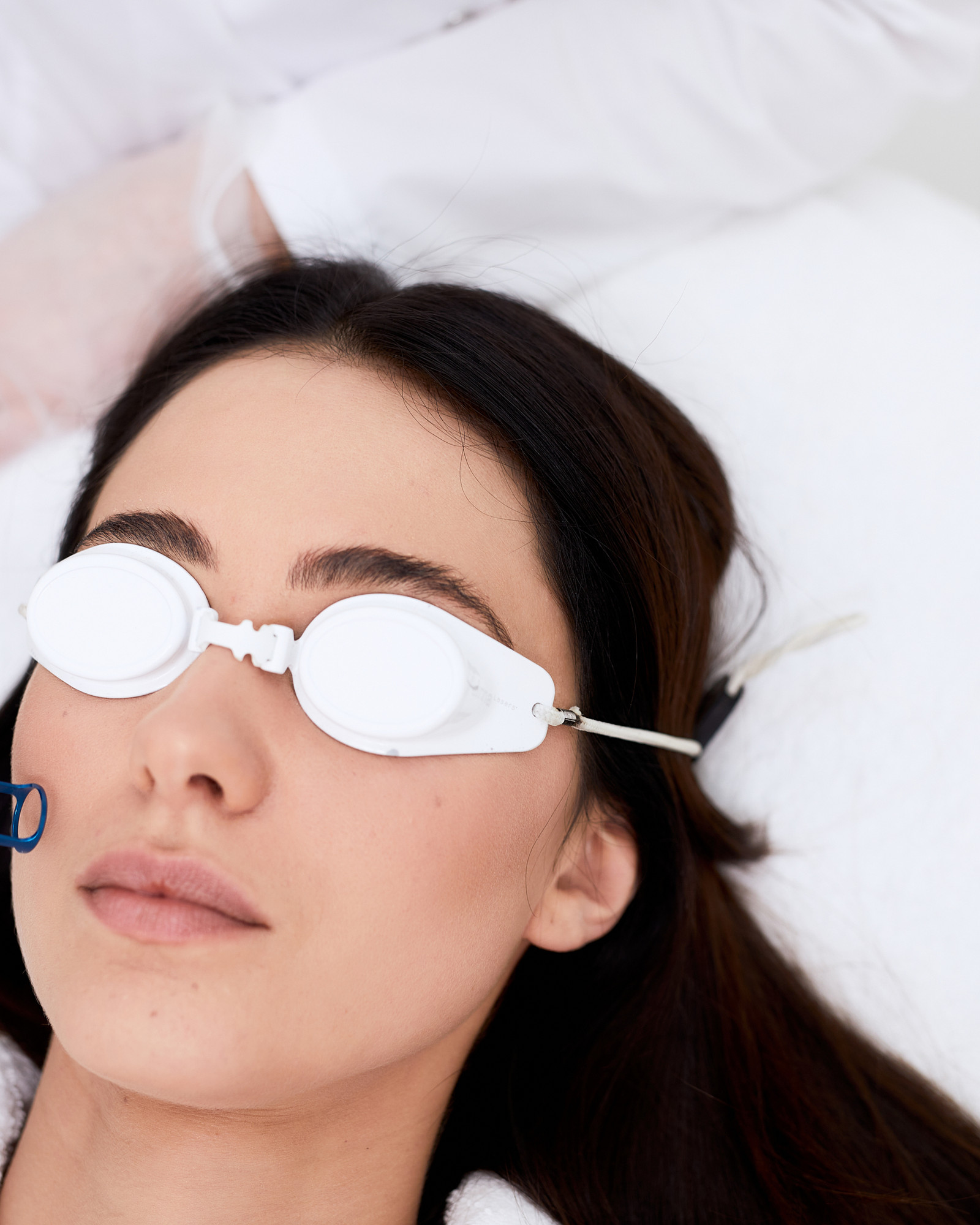
Treatment
The ClearLift treatment itself, without disrupting the epidermis. No bleeding, no open wounds, and the ability to return to normal activity the same day.
- 04
Immediately after the treatment
Mild redness, which often fades within a few hours. UV protection is mandatory and absolute, regardless of phototype.
- 05
Series of treatments
ClearLift results build up over a series of sessions. The schedule is personalised — for phototypes IV+, it may be spaced out more cautiously, with longer intervals and close monitoring of the skin's response.
Before you decide — what to take away from this
If you've heard "laser isn't for you" for years, it's worth asking again — this time at a salon with experience across different skin phototypes, one that understands the difference between technologies. "Laser" isn't a single treatment — it's dozens of different technologies, each with its own mechanism, its own risk profile and its own indications. ClearLift is a specific, non-ablative method with a safety profile for darker phototypes that differs from the lasers that gave rise to these myths in the first place.
Not every skin will respond the same way, and not every treatment goal will be reached in exactly the same manner. But the question "is laser for me?" deserves an answer based on your skin, not on a general fear of pigment. That's the starting point for a good consultation — and the consultation is free.