Where does hyperpigmentation actually come from?
Hyperpigmentation is an excess of melanin — the pigment your skin produces in response to sun exposure, inflammation, hormones, or simply time. Melanocytes (the cells that produce pigment) overreact for various reasons and leave behind a darker trace in the epidermis or dermis. The problem is that melanin doesn't disappear on its own — it needs a signal to break down. This is where physics comes in: darker structures absorb more energy, so a cluster of melanin can be targeted very precisely with light, triggering a reaction that eventually eliminates the excess pigment. But this reaction — contrary to what many people imagine — doesn't happen instantly, and it isn't a simple straight line.
What happens immediately after treatment — and why darkening is a good sign
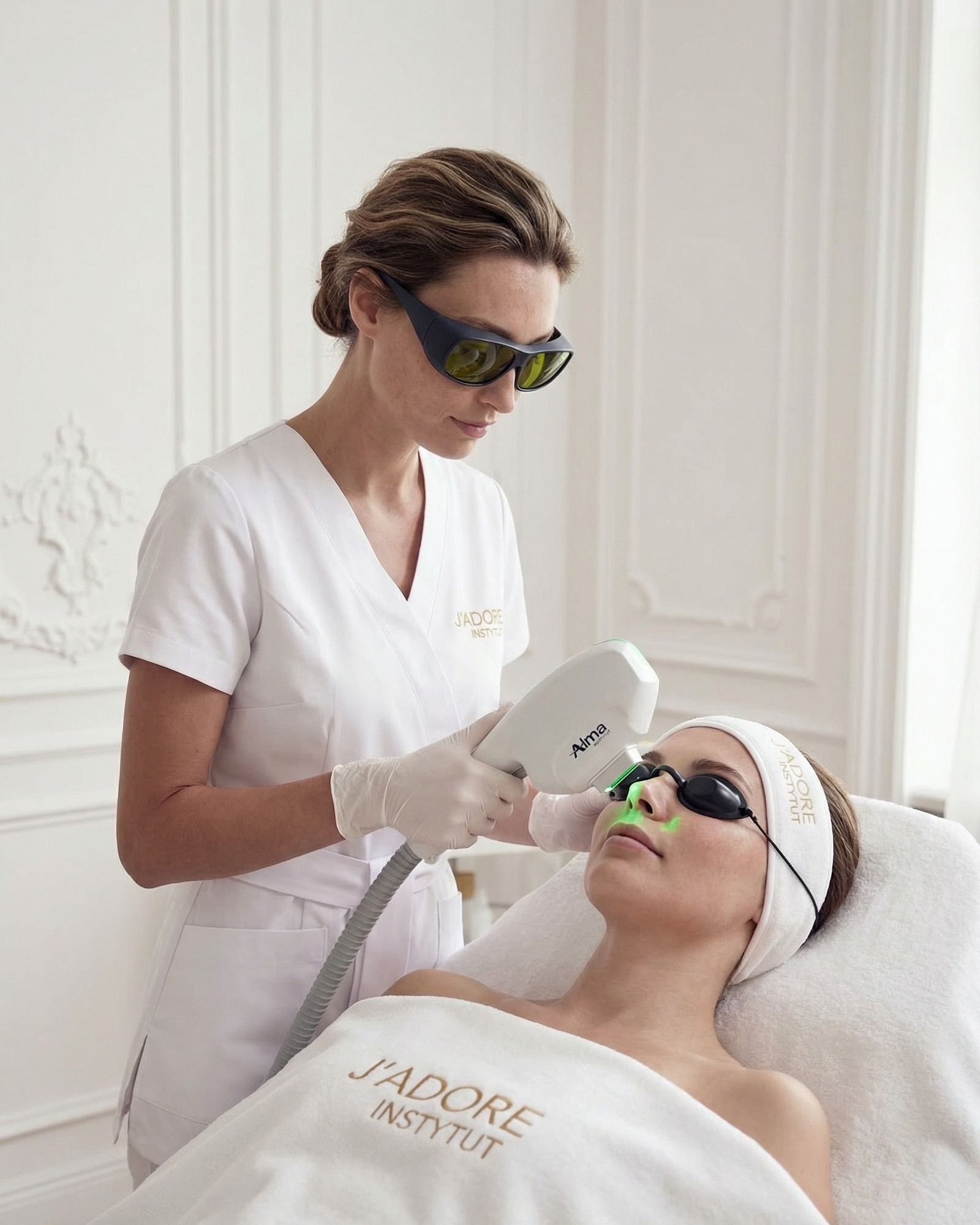
When a treatment (laser, IPL, or another light-energy-based method) targets a cluster of melanin, it triggers photothermal breakdown of the pigment — the cluster literally fragments, pigment-filled cells are damaged, and an inflammatory response begins. This inflammation — entirely controlled and intended — is exactly what makes the mark look worse than before treatment for several days to around two weeks.
- 01
Immediately after treatment
Skin may be red and slightly swollen. The mark may look similar to before treatment, or slightly darker.
- 02
Days 1–3
The mark darkens noticeably — often to brown or dark greyish-brown. It may be slightly raised, as if it's coming to the surface. This is a normal stage.
- 03
Days 4–10
The dark mark starts to flake or comes away as a small scab. The epidermis naturally sheds the damaged cells.
- 04
Weeks 2–4
Skin under the scab may look pink or lighter than the surrounding area — this is fresh epidermis. It may be more sensitive to sun for several weeks.
- 05
Weeks 4–8
For many people, the mark is now much lighter or no longer visible. Sometimes a further series of sessions is needed for full results.
The key word is "rising" — damaged cells carrying melanin migrate towards the surface of the epidermis before they're shed. This is why the mark can seem to "come to the surface". It isn't a setback — it's your skin clearing itself from within.
Five myths that make people give up too soon
Myth 1: "Darker pigmentation after treatment is a complication." Darkening is a standard part of your skin's response to treatment — not a sign that something has gone wrong. A genuine complication looks different: pain lasting more than a few days, blisters, deep redness across the whole area, or new marks appearing where there were none before. A darker mark in the first week — without these symptoms — is usually normal physiology.
Myth 2: "If the mark comes back, the treatment didn't work." After a successful treatment, some melanin is eliminated and the result is visible and lasting — provided you use sun protection. Melanocytes are still alive and active: if unprotected skin is exposed to the sun, the same cell can produce new pigment in the same spot. In most cases, "the mark came back" means new pigmentation has formed in a spot where your skin is prone to overproducing melanin — it isn't proof the treatment failed.
Myth 3: "One treatment lasts a lifetime." Sun-related pigmentation, melasma, post-acne marks — each has its own characteristics and sits at a different depth in the skin. Some pigmentation responds beautifully after a single session. Others — particularly deeper or hormonal pigmentation — need a series of sessions, sometimes spread over several months. This isn't a flaw in the method — it reflects how complex the problem can be.
Myth 4: "Laser pigmentation treatments only work for light skin." This belief comes from the history of laser technology — older devices did have limitations for darker skin tones. Choosing the right technology and settings for a given skin phototype is now a key part of the consultation. Extra caution is warranted for darker skin tones, but that doesn't rule out treatment — it only rules out an inexperienced practitioner.
Myth 5: "Vitamin C creams at home do the same job as a treatment." Brightening skincare — with vitamin C, kojic acid, niacinamide, retinoids — has proven supportive benefits and can help prevent new pigmentation. It can't, however, eliminate deeper pigment with the same effectiveness as energy-based treatments. The best results usually come from combining both approaches — home care as ongoing protection, in-clinic treatments as precise intervention.
What really determines the outcome — and why aftercare isn't optional
The treatment itself is only half the job. The other half happens after you leave the salon — and this is where most people make mistakes that either delay results or undo them completely.
- SPF 50 every single day — not just on holiday, not just when the sun is out. Even diffuse light through clouds activates melanocytes. This isn't a suggestion — it's a condition for lasting results.
- No mechanical exfoliation — no grainy scrubs, Clarisonic brushes or microfibre cloths for at least two weeks after treatment.
- Don't cover the scab with concealer or makeup — you can cover the surrounding skin, but not the scab itself.
- Gentle moisturising — skin can feel dry after treatment; a light, non-irritating cream supports healing.
- Report anything that concerns you — genuine complications need a prompt response from a specialist, not home-based waiting.

When hyperpigmentation really needs a doctor, not a beauty salon
The vast majority of pigmentation marks are benign: sun spots, post-acne marks, marks from pregnancy. But skin can be unpredictable, and not every dark mark is suitable for cosmetology treatment without a prior dermatological assessment.
A good cosmetology or aesthetic medicine salon isn't afraid to say "see a dermatologist first." That's not an excuse — it's professionalism. A consultation before treatment lets your specialist choose the right method, assess the depth of the pigmentation, and set a realistic plan: how many sessions, at what intervals, and what home care you'll need between them.
Summary: what to really expect from a pigmentation treatment
Pigmentation is one of those issues where patience and consistency make all the difference — and not understanding what normal healing looks like can spoil a good result. Darkening after treatment isn't your specialist's mistake — it's your skin doing its job. A scab that comes away after a week isn't a complication — it's the removal of leftover melanin. A pink patch that stays for a few weeks isn't new pigmentation — it's fresh epidermis that needs protection.
Chemical peel
Acids (such as glycolic or mandelic) work on the pigmented surface layer of the epidermis — an effective addition to laser therapy for shallow pigmentation.
Needle mesotherapy with vitamin C
A high dose of antioxidants delivered directly into the dermis — inhibits melanocyte activity and supports skin recovery.
Tissue biostimulators
Improve skin quality and resilience, reducing its tendency to overproduce melanin after future sun exposure.